When the prescriber tells the pt — YOU’RE FIRED

yourefired

http://www.fda.gov/MedicalDevices/ProductsandMedicalProcedures/InVitroDiagnostics/HomeUseTests/ucm125722.htm

If the test results are negative, can you be sure that the person you tested did not abuse drugs? No. No drug test of this type is 100% accurate. There are several factors that can make the test results negative even though the person is abusing drugs. First, you may have tested for the wrong drugs. Or, you may not have tested the urine when it contained drugs. It takes time for drugs to appear in the urine after a person takes them, and they do not stay in the urine indefinitely; you may have collected the urine too late or too soon. It is also possible that the chemicals in the test went bad because they were stored incorrectly or they passed their expiration date.

If you get a negative test result, but still suspect that someone is abusing drugs, you can test again at a later time. Talk to your doctor if you need more help deciding what steps to take next.

I have received TWO EMAILS TODAY regarding pts being “fired” for failing a pee in the cup drug test. Typically, the stories that I have heard, there is a denial of a repeat test, even though it is reported that these tests can have up to  a 40% false positive/negative.

We know that most chronic pain clinics have a waiting lists of pts wanting to be seen… Are these pts that are being “fired” are those that have run up a unpaid bill and reached a cut off point… Has their insurance become slow to pay and/or reduced their allowables for the services provided and/or paying less frequently for particular procedures.

Has the prescriber accepted too many pts into the practice that can safely handled and a negative/positive urine test is used to thin the heard of pts that they have little possibility of collecting monies due, have insurance issues of timely payments, reduced allowables or other issues that the prescriber and/or staff no longer wish to deal with… and use the “failed urine test” as the methodology to fire pts.

Most likely, the pt never see the actual test container and the results not does the practice make a digital of the results as proof.. all there is .. is the staff’s reading of the results that are recorded into the pt’s records.

What is a patient to do ? Normally the pt is given the “bad news” several days after the test was taken and likely all proof of the test results have been discarded or destroyed.  Going to a independent lab to get retested, the prescriber could claim that the pt started taking their medication again just to pass the test.

Of course, having a independent test would allow the pt to send a letter to the prescriber asking that a letter from the pt and the second test be included in their medical records.  Pt should also request a copy of all their medical records from their former physician.

Of course, the pt could fight the prescriber for being lied to and falsely fired.. but.. do you want a prescriber treating you.. who lied to you about urine test ?


Could this be the future of healthcare ?

Closed Formulary Could Decrease Use of ‘N’ Drugs

http://www.riskandinsurance.com/closed-formulary-decrease-use-n-drugs/

I may have missed it, but in this whole article on workman comp and medication therapy.. I did not see ONE WORD on pt outcomes. There is a lot about CUTTING COSTS…  In fact I can’t find the word PATIENT in this entire article either.  Doesn’t that give you the WARM FUZZIES ?

The recent success of the closed pharmacy formulary in the Texas workers’ comp system shows promise for other states, especially in regions where non-formulary drugs are prevalent.
By: | July 8, 2014 • 3 min read
 
Pharmacy

The recent success of the closed pharmacy formulary in the Texas workers’ comp system has caught the attention of practitioners in other states. A new report from the Workers Compensation Research Institute concludes that, all things being equal, other states could see similar results.

Texas was the first multi-payor state to adopt a formulary that requires pre-authorization for certain medications deemed as investigational, experimental, and those with “N” drug status under the Official Disability Guidelines, including many opioids. A study by the Texas Department of Insurance last year showed the formulary resulted in a decrease of about 80 percent in payments made for non-formulary drug prescriptions.

“If other states are able to successfully implement a Texas-like formulary, there is a huge potential for decreasing the utilization of the drugs designated as non-formulary drugs by Texas,” the report says, “which may in turn lead to substantial prescription cost savings in all states, particularly New York.”

The study looked at 23 states in terms of how a closed formulary might affect the prevalence and costs of drugs. Non-formulary drugs — those requiring pre-authorization in the Texas system — were most prevalent in New York.

The Texas study found physicians reduced prescriptions for non-formulary drugs by 70 percent and infrequently substituted formulary drugs for non-formulary drugs in response to the closed formulary. In assessing the potential impact of a closed formulary in the other states, the authors considered various alternative assumptions about how physician prescribing practices might change.

In the scenario where the response of physicians in other states is similar to that of their Texas counterparts, total prescription costs could be reduced by 14-29 percent among the study states with New York on the higher end. “Other states that could realize potential prescription cost savings of 20 percent and higher are New Jersey, Virginia, Massachusetts, Pennsylvania, Connecticut, and Maryland,” the report said. “Even at the lower end, states like California and Missouri might reduce their prescription drug spending by 14 percent.”

Some states may instead see physicians substitute with formulary drugs more frequently than Texas physicians did. “States may realize sizable but lower cost savings if all non-formulary drugs are substituted with other drugs,” the report states. “We estimated that within-class substitution of all non-formulary drugs with formulary drugs may reduce prescription costs by 4 to 16 percent in other study states.”

Cost savings could be greater in states where brand name medications are common. Even if physicians substituted all non-formulary drugs with cheaper generic alternatives, there could be substantial cost savings.

The researchers noted that the formulary is only one aspect of the Texas workers’ comp system that may differ from those in other states. States that do not have a “well-defined” utilization review process might see less cost savings due to the increased litigation.

Nonetheless, the authors said non-formulary drugs were prevalent in the 23 states studied, which could result in at least some cost savings. “States with higher prevalence [of non-formulary drugs] like New York, and Louisiana, have a larger scope for reducing the use of non-formulary drugs. In these states, workers’ compensation payors have an opportunity for more active management of prescribing patterns.”

Social workers going to “educate” prescribers how to treat pain in NM ?

 State gets federal grant to help combat overdose deaths

http://www.santafenewmexican.com/news/health_and_science/state-gets-federal-grant-to-help-combat-overdose-deaths/article_d2179dc8-8bf8-5395-ba9d-d42d0dd9ec2e.html

Just six weeks after New Mexico announced that the overdose death rate had unexpectedly climbed, the state received a federal grant to target opioid overdoses with big data, better monitoring and more education.

The New Mexico Department of Health said it received an $850,000-a-year grant for the next four years to enhance prescription drug overdose prevention.

If renewed each year, the grant would provide $3.4 million for five more staffers working on overdose prevention initiatives.

“This funding allows the New Mexico Department of Health to develop new partnerships with the Board of Pharmacy and the Workers Compensation Administration. It will increase our capacity to reach communities with a high overdose burden,” Health Secretary Retta Ward said in a statement.

After two years of decline, the number of people in New Mexico who died from a drug overdose in 2014 hit 536, a jump of 20 percent over 2013. Officials say 265 of those deaths were the result of prescription opioids. The statewide rate of 26.4 overdose deaths per 100,000 population stands at one of the worst in the United States, along with West Virginia and Kentucky.

A major focus of the grant will be to better coordinate a Board of Pharmacy registry that is to be used by medical professionals who prescribe pain medication — an online tool called the Prescription Monitoring Program. The information is meant to help monitor patients who misuse pain prescriptions by shopping for several different providers around the state to write scripts.

But because there are seven medical occupations that can prescribe — from medical doctors to dentists — there are inconsistencies in how the database is used, as each reports to a different regulatory board where enforcement varies.

“Sometimes people get introduced to opioids in different ways. They’ll get injured and go see a medical provider and they’ll prescribe opioids. In cases, that person can then get addicted and overdose can result,” said Dr. Michael Landen, an epidemiologist with the state Health Department. “This whole pathway starts with that initial prescription and ensuring that prescription is appropriate is important.”

The grant will not only allow the state to capture more data from prescription writers, but also to deploy caseworkers into areas where they see “prescription hot spots” for drugs such as oxycodone, fentanyl, methadone, hydrocodone and buprenorphine.

We’ll be able to use the data to work with individual doctor’s offices to improve prescribing in those offices,” Landen said.

Between 2001 and 2011, for instance, oxycodone sales in the state tripled, according to the Health Department.

Another emphasis for how the money is used will be to coordinate education efforts with the state Workers Compensation Administration, which has data on prescriptions for workers who were injured on the job — such as those with back ailments from heavy machine work or long-distance driving.

Landen said Washington state had success reducing overdoses in this population, which might come from a background where they haven’t seen addiction and don’t recognize it.

“We’d be able to analyze the data and make decisions on how to improve prescribing through their program,” he said.

Some states, for instance, have looked at a “lock in” requirement, in which workers filling pain prescriptions have to use one medical provider and one pharmacy to better monitor usage.

New Mexico is one of 16 states that successfully competed for the four-year grant from the U.S. Centers for Disease Control and Prevention. The grant is from a new program called Prescription Drug Overdose: Prevention for States that helps states address the ongoing prescription drug overdose epidemic.

The Health Department also will collaborate with the Human Services Department to increase public awareness of potential harm from prescription opioid medications.

Landen said the grant also will pay for an evaluator who can assess the state’s effort on overdose prevention and determine what approach is working.

Contact Bruce Krasnow at 986-3034 or brucek@sfnewmexican.com.

We care… just not all that much?

Patients Impacted by Dispensing Errors: Callous Response From Pharmacists

When patients report dispensing errors to ISMP, they are usually
more upset about the response they received when contacting the
pharmacist or pharmacy manager than the actual error itself. All too
often, consumers tell ISMP that pharmacy staff have responded in a
callous manner when confronted with the possibility of a dispensing
error, demonstrating a lack of empathy and concern for the adverse
effects the patient might have experienced. While pharmacy staff may
want to be more responsive to patients who report errors, they are
often following corporate policies that are focused on legal concerns.
As patients are continually encouraged to be active participants in
their health care, they want and deserve honest disclosure of errors,
and knowledge that there is an action plan to reduce the risk of it
happening again.

“Terrified’ Helena physician closes clinic temporarily

“Terrified’ Helena physician closes clinic temporarily

http://www.kxlh.com/story/29963964/terrified-helena-physician-closes-clinic-temporarily?config=H264

HELENA – Helena doctor Mark Ibsen, battling a state investigation of his prescribing practices for more than two years, is closing his Helena clinic, Urgent Care Plus, for at least a week because of what he calls a witch hunt against doctors who treat pain with narcotics. 

A note on the door of the clinic says it will reopen September 12. 

But Ibsen says he will not prescribe pain medications — and would feel ethically obligated to treat the pain if he met with the patients. 

“I’ve got to make myself totally unavailable,” he said. “I can’t see pain patients unless I’m safe.” 

In June, a state hearing examiner rejected charges from the Montana Board of Medical Examiners alleging over-prescribing by Ibsen for nine patients; but the matter still awaits final adjudication from the board. 

The examiner said Ibsen’s only violations involved record-keeping, and recommended six months of probation for Ibsen’s license, plus corrective action. 

But despite what appears to be vindication of the drug charges, Ibsen said Friday he’s “terrified” by the current “regulatory hostility” in the state and by the arrest of Dr. Chris Christensen, a Florence doctor charged last week with 400 felonies

Christensen’s office was raided by U.S. Drug Enforcement Administration agents in 2014, and his license was suspended thereafter, before being recently restored in a probationary status. 

“They reinstated Dr. Christensen’s license, and 10 days later the authorities came to arrest him,” he said. 

Ibsen sees that as a trap and suggested he’s afraid he might be next. 

He said that two years ago, agents with the DEA told him he risked not only his license but also his freedom for prescribing “to patients like these.” 

Ibsen, formerly an emergency physician at St. Peter’s Hospital in Helena, has become an advocate for people with chronic pain, and a critic of the medical establishment’s treatment of those with pain. 

He has recorded testimony of numerous patients who say they’ve been given a runaround from physicians, were treated like criminals, and came to him in desperation. 

He says he’s helped more than 1,000 patients — many of them “pain refugees” from other doctors, including Christensen — wean themselves from opiates (many by using medical marijuana); others, he says, remain on medications so they are able to lead functional lives. 

He said prosecutors in Florida are seeking the death penalty for a doctor facing charges similar to that of Christensen, and he finds the turn of events terrifying and exhausting. 

“In Montana it’s just not safe to prescribe any pain pills to anybody,” he said. “I think the stakes have become higher, and my well-being is at stake.” 

Ibsen said he too thought Christensen was a criminal when he first heard of the raid of his office by the DEA and suspension of his license in 2014. 

But he changed that view as many of Christensen’s patients came to him. 

“When I started following his patients, I saw that he was doing the right thing,” he said. “And I’m probably the only one who would know that.” 

He said that genetically, some patients metabolize the drugs much more quickly, and may need as much as 10 times the normal dosage for pain medication to be effective. 

That explains some of the reports of Christensen prescribing seemingly large amounts of pills, he said. 

Ibsen said the stress of the clinic hours, the complexity of the pain patients, the financial hardship, and the fear for his freedom has led him to this point. 

“I’m fried, he said. “I ‘m just basically melting after seeing 50 pain patients. It’s exhausting and I don’t know that I’m doing anybody any good by continuing the process. I might just be enabling a sick system to continue itself.” 

Ibsen has long maintained — and several patients have agreed — that for many he is the only doctor left in the community willing to prescribe opioids. He said many of them will be in crisis, and possibly seek medications illegally. 

“Pain patients are going to be in misery,” he said. “They were in misery when they came to me.” 

He says he’s told them for some time he cannot maintain the pace of seeing pain patients while losing money. 

“The more I work, the more broke I get,” he said. 

He said that Thursday, he and his staff met to discuss the issue: “They let me know in no uncertain terms how stressed they are, how afraid they are, how overwhelmed they are from the flood of pain patients that have come to them,” he said. 

Despite his commitment to no longer prescribe opioids for chronic pain patient, he said he hopes the clinic will “re-boot” after the hiatus.

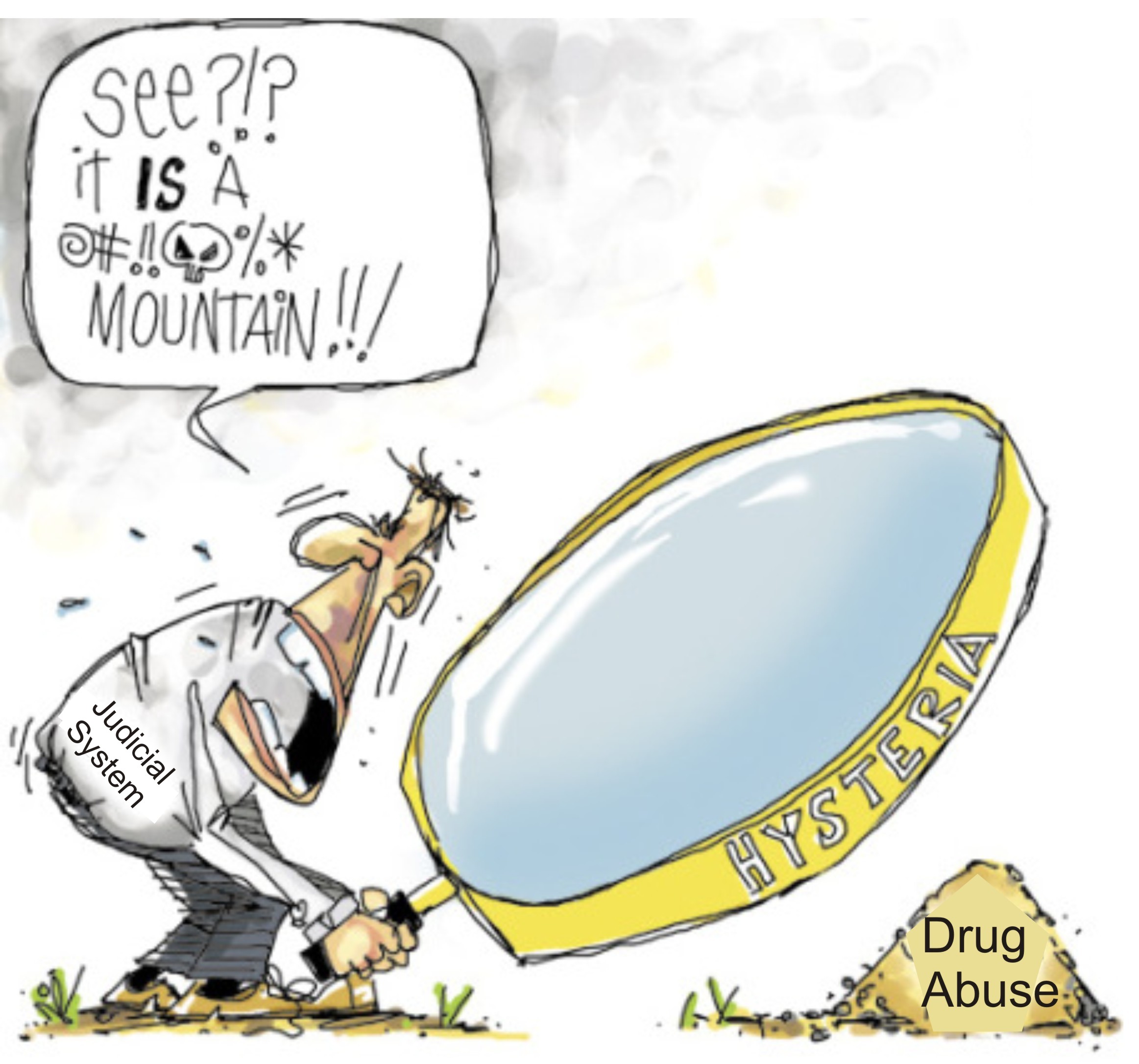
Drug abuse is a threat to national security ?

http://video.foxnews.com/v/4464740740001/acting-dea-chief-speaks-out-about-the-heroin-epidemic/?#sp=show-clips

According to the head of the DEA… “drug abuse” AKA “black market created by Congress” is a threat to national security.  It has been too many years since my 3 hrs of Logic class in college… but.. I will substitute common sense…

So Congress created the black market for illegal opiates and MJ in 1914 with the Harrison Narcotic Act..  which the criminal element in society was more than happy to fulfill the demand for these substances… now it is estimated that some/much of the profits from these criminal elements are being funneled back into terrorists groups.. that are trying to harm/kill us.

So we are now fighting two wars … war on drugs.. and war on terrorists… largely due in part to the racist/bigoted/opiophobic mindset of Congress 100 yrs ago.

Remember… there is no required educational requirements, credentialing, experience or basically NO REQUIREMENTS to be elected to be a member of Congress. Some days, it is like the blind reading to the deft 🙁


The common denominator in DEAth

deathbadge

When you stand back from all the SHOUTING… you basically have three groups in the war on drugs… those who need controlled meds for necessary medical condition, those who have a mental health medical condition (Addictive personality) that are attempting to self-medicate the demons in their head and/or monkeys on their back and the DEAth.

Here is a recent article about a area with a population of 200,000 had http://www.washingtonpost.com/national/health-science/the-heroin-epidemics-toll-one-county-70-minutes-eight-overdoses/2015/08/23/f616215e-48bc-11e5-846d-02792f854297_story.html EIGHT OVERDOSES in 70 MINUTES  and 25 over TWO DAYS.

The reason behinds these peoples’ deaths is not just their abuse of Heroin alone, but because they were buying – off the street – Heroin that had been “boosted” with a form of fentanyl. That they were probably not expecting and didn’t compensate on how much of this cocktail that they “shot up”.

This type of unanticipated deaths often galvanize the relatives/loved ones to organize around and aligning with the DEA in fighting the black market that Congress created in 1914 and the subsequent “war on drugs” that Congress declared in 1970.

At the same time we have untold millions of chronic pain pts and others with subjective diseases that are being forced to be house, chair or bed confined because of lack of being able to find a prescriber that will adequately prescribe the necessary medication for fear of the DEAth.  Many are also suffering from other health issues that are predominately caused by their untreated subjective disease.  Untold number are dying from these co-morbidity issues and/or end up committing suicide because they can no longer deal with their diseases’ manifestations.  Perhaps, many are driven to buying drugs off the street in attempting to deal with their medical issues, and may end up dying because of them getting their hands on more opiates than they had intended.

We have always had some portion (1%-2%) of the population that is/has abused some substance .. other than alcohol and tobacco . The war on drugs after 45 years has not changed/stopped that portion of the population from abusing some substances.

Other countries have decriminalized/legalized the use of many/most/all drugs with a responding reduction in over dosed deaths.

Should those groups, who have lost loved ones to abusing opiates/substances, and have aligned themselves with the DEAth’s war on drugs. Should they rather be allies of those fighting for proper treatment of their subjective diseases rather than adversaries. Because the same subjective diseases is what caused their loved ones’ to lose/take their life.. and the DEAth is the primary agency behind all that denial of care for those with subjective diseases.   IMO.. those two groups have more in common than they have differences …

England’s NHS has placed a $$$ on the value of a life ?

Life-extending cancer drugs to be axed by NHS

http://www.theguardian.com/society/2015/sep/03/life-extending-cancer-drugs-to-be-axed-by-nhs

NHS England de-lists costly Kadcyla drug, among 16 others, in wake of ‘overspent’ Cancer Drugs Fund

New and costly cancer drugs developed to extend the lives of patients are expected to be axed on Friday from an NHS list. Among the drugs NHS England is expected to “de-list” from the Cancer Drugs Fund is Kadcyla, which holds the record as the most expensive cancer drug brought to market, costing £90,000 annually per patient.

Kadcyla, made by Roche, was rejected from general NHS use by the National Institute for Health and Care Excellence (Nice), the body that assesses new medicines for their cost-effectiveness.

Nice agreed the drug was effective for women whose advanced breast cancer no longer responded to Herceptin, but its chief executive, Sir Andrew Dillon, was outspoken about the “unacceptable” price tag. “We had hoped that Roche would have recognized the challenge the NHS faces in managing the adoption of expensive new treatments by reducing the cost of Kadcyla to the NHS,” Dillon said in April 2014.
Who should I vote for in the Labour leadership election?
More than 400 women are able to take the drug, which can extend life by six months, because it is funded by the Cancer Drugs Fund, which was set up by the coalition government. The fund was a political response to the furore that broke out whenever Nice turned down a new cancer drug.

But the fund is now overspent. It was launched as a £200m-a-year fund in 2011, but by January this year it was on course to reach £380m a year. The government announced more money, which has brought it to £340m a year, but NHS England at the same time moved to shrink the list.

NHS England this March axed 16 drugs involved in 35 different cancer treatments (some drugs are used in more than one cancer), though at least one was reinstated after the manufacturer agreed to lower the cost.

Patients now using drugs that are de-listed will continue to get them, but new patients will not. According to Roche, 1,300 women a year could benefit from Kadcyla.

Breast cancer charities and the patients agree that Kadcyla (generic name, trastuzumab emtansine) is effective and the last hope for women with a certain type of advanced breast cancer. A second Roche breast cancer drug, Avastin, is also thought to be under threat, although it does not have the same life-extending efficacy as Kadcyla. Most of the drugs threatened with de-listing add only a few weeks of life for those with terminal cancers.
In May, a group of experts from the European Society for Medical Oncology said that many modern cancer drugs were of very little benefit to patients. They published a scoring system, unconnected with cost, which showed that many did not extend or improve people’s lives for very long.

Roche pre-empted criticism of its prices with a video on YouTube in which its medical director, Daniel Thurley, and director, Deborah Lancaster, said the fund had been hugely successful, enabling thousands of patients to get access to cancer drugs. Lancaster said the financial problems of the fund arose from the great demand for the drugs “because they are so effective”. The pair said they were still talking to NHS England.

NHS England has said that the fund will be replaced, but discussions over the mechanism to be put in its place continue. The fund has always been a political hot potato. Labour is expected to capitalise on the de-listing announcement and accuse the government of betraying cancer patients and backtracking on pledges to keep supporting the fund.

Labour will stress that the Tories’ general election manifesto stated: “We will continue to invest in our lifesaving Cancer Drugs Fund.” As recently as June, George Freeman, the life sciences minister at the Department of Health, told MPs that the government had “committed to continuing to invest in the fund”.

Texas: Med Board lets DEA sneak peeks at patient records

fishing

Texas: Med Board lets DEA sneak peeks at patient records

http://watchdog.org/236858/dea-medical-board/

The Drug Enforcement Administration has been sifting through hundreds of supposedly private medical files, looking for Texas doctors and patients to prosecute without the use of warrants.

Instead, the agents are tricking doctors and nurses into thinking they’re with the Texas Medical Board. When that doesn’t work, they’re sending doctors subpoenas demanding medical records without court approval.

The DEA can’t even count how many times it has resorted to the practice nationwide. A spokesman estimated it was in the thousands.

But, as a legal brief filed last week points out, lawyers for the federal government can’t find a single case in which a court has “authorized the use of such a broad array of patient information with such a sparse record as to why it needs such information.”

Earlier this year, a federal judge in Texas did just that, setting up a showdown in the 5th Circuit Court of Appeals over whether the DEA needs a reason to go rummaging through private medical records in search of pill mills and prescription drug abusers.

Without the legalese, the issue is simple: How good a reason does the DEA need to get access to medical records? The DEA doesn’t think it needs much of one.

Attorneys for Dallas-area doctors Joseph and Abbas Zadeh argue “the DEA should not be allowed to circumvent the requirements of a warrant, and should be required to show probable cause.” Failing that, they should at least have to justify their intrusions to a judge who’s acting as more than a rubber stamp.

The DEA’s practice of avoiding warrant requirements has produced this absurdity: If you have a prescription for Adderall or OxyContin, you might be safer getting your drugs on the street than through your own doctor.

Street dealers, after all, don’t keep patient records, and they’re afforded more constitutional protections than medical practitioners. That is, cops still need a warrant to search them.

In Texas, the DEA’s criminal investigators do an end run around the Constitution’s warrant requirements by getting the Texas Medical Board to order doctors to open their records.

In that 5th Circuit case that’s about to set an important precedent, DEA agents spent hours examining private medical records after tricking a nurse into believing they were with the Medical Board.

The trick was easy. Three DEA agents showed up at a Dallas doctor’s office accompanied by a medical board investigator who told the nurse “they were with the Texas State Medical Board,” according to a deposition in the case. “The other three persons along with her kept silent.”

Mari Robinson, the medical board’s executive director, testified last year in a legislative hearing that her agency does that sort of thing 20 to 40 times a year, but it took some grilling by state Rep. Bill Zedler, R – Arlington, to get that out of her.

“How many times do you show up (at a doctor’s office) with the DEA and not tell ‘em that the DEA is with you,” Zedler asked Robinson at a Sept. 24 hearing.

“I’m not sure what you mean by that,” Robinson said.

“Well, I mean that when they show up, they say, ‘We’re with the Texas Medical Board.’ Period.”

“That is what we do for our part,” Robinson said. “The DEA has its own responsibility.”

Zedler gave an example almost identical to the facts in the Zadeh lawsuit: Medical board investigators got the DEA two hours’ access to confidential medical records through misrepresenting who they were; when the doctor’s lawyer showed up demanding to see some ID’s, the party ended.

“You don’t find that an unconstitutional search through fraudulent non-disclosure,” Zedler demanded. “Did your investigators not know that they had DEA agents with them?”

There wasn’t “anything that we did” that could be unconsidered unconstitutional, Robinson answered, but she couldn’t speak for the DEA.

It turned out that each of the 20 to 40 times a year medical investigators turn up unannounced demanding to see records they’re actually working with the DEA.

The problem is this: The medical board has authority to issue “administrative subpoenas,” as they’re called, because it’s in the business of administering the medical industry. The DEA isn’t. It’s in the business of criminal investigations, which can be hindered by the Fourth Amendment.

The entire apparatus of administrative law is something of a shadow government grafted onto a constitutional system back in the New Deal era, and this shadow government has few safeguards. Rather than checks and balances, the regulatory state is characterized by agencies that handle all the investigation, prosecution, adjudication and appeals in-house, with little interference from other bodies.

The DEA has noticed how convenient it is simply to write a letter demanding all the evidence one might need. So in some cases, such as the Zadeh’s, where the initial subterfuge fails, the DEA simply writes the doctors its own administrative subpoena, even though, by its own admission, it’s looking for evidence in potential criminal cases against doctors and patients.

All too often, the doctors behave much like the telecom companies who were pressured by the National Security Administration to share customer records.

In fact, there are so few cases of doctors actually fighting back the government’s lawyers are building their argument on a case from 1950 in which regulators got access to the financial records of the Morton Salt Co.

RELATED: Texas Medical Board considers arming itself

In 2014, a federal court in Oregon agreed with the American Civil Liberties Union that a database of prescriptions was protected by medical privacy rights, and the DEA would need a warrant to access it.

That expectation of privacy will also factor into the decision before the 5th Circuit. Unlike some privacy rights, this one is no novelty.

Arguing on behalf of the Association of American Physicians and Surgeons, attorney Andrew Schlafly points out that patient privacy dates back 2,500 years to the Hippocratic Oath, which states, “All that may come to my knowledge in the exercise of my profession… which ought not to be spread abroad, I will keep secret and never reveal.”

The 5th Circuit may not decide to impose a standard of “probable cause” on law enforcement, but any standard of evidence would be an improvement on nothing, which is what investigators apparently have on the Zadehs.

Zedler has examined volumes of secret Medical Board records under his legislative privilege, and although he’s sworn to secrecy about them, he said during the hearing the medical board had confirmed the Zadehs weren’t running pill mills, and that there was “zero evidence of non-therapeutic prescribing.”

Yet a federal court upheld the subpoenas based on vague testimony from a DEA investigator that “(i)nformation developed in that investigation indicated (that) Dr. Joseph Zadeh (and Dr. Abbas Zadeh)… may have violated” the law.

That little phrase illustrates the difference between typical law enforcement and whatever the DEA is up to here.

Cops don’t swear that “information developed.” They tell the judge what it is if they want their warrant signed.

Contact Jon Cassidy at jon@watchdog.org or @jpcassidy000.

September is national suicide prevention month

40,000 people will commit suicide very year in the USA, including 22 veteran every day.

ONE MILLION people ATTEMPT suicide every year.