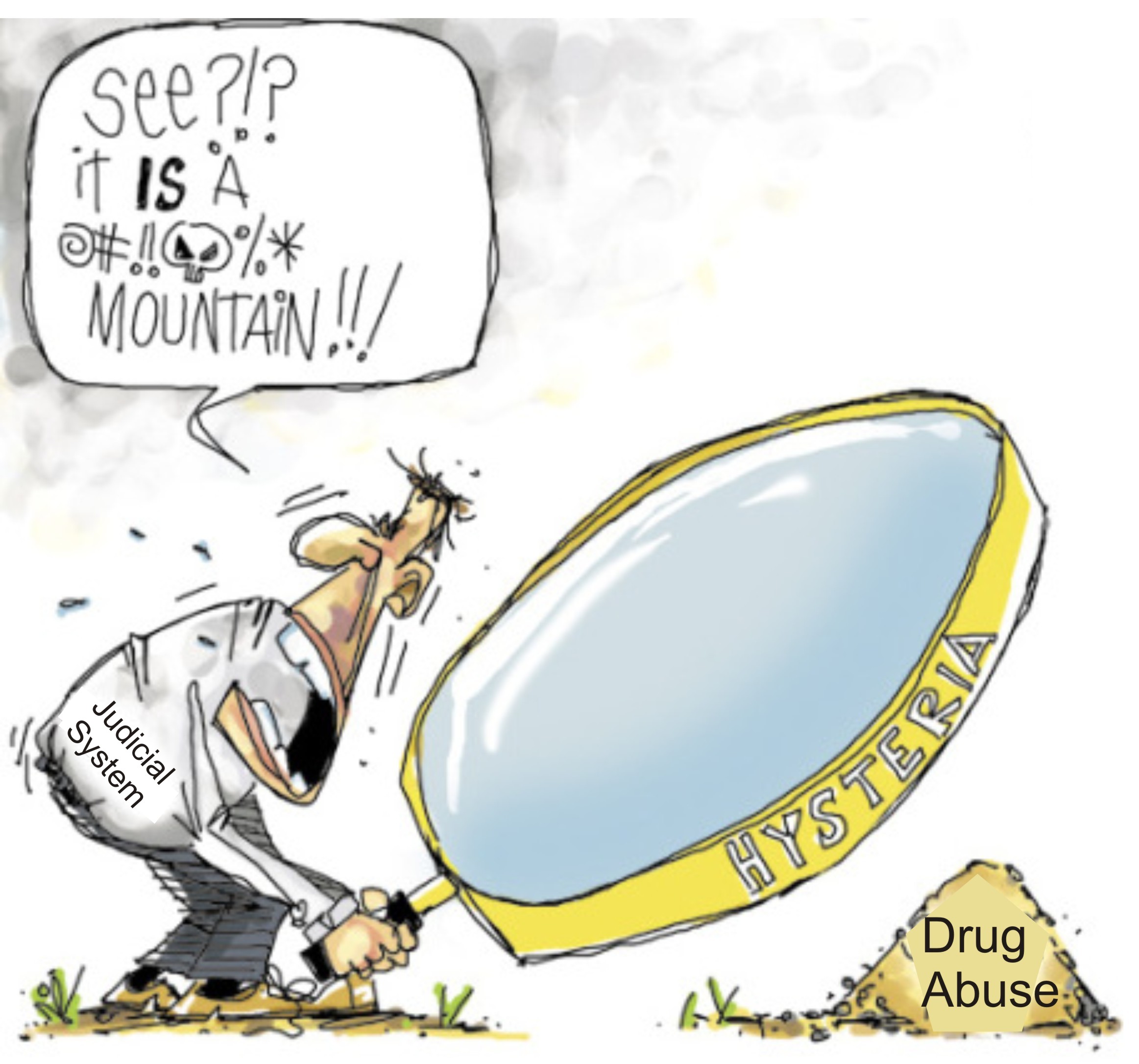
Equal Justice for All ?

Kentucky clerk who denied gay marriage licenses released from jail

http://www.foxnews.com/politics/2015/09/08/jailed-kentucky-clerk/?intcmp=hpbt1#

County official that fails to issue a marriage license to gays.. gets thrown in jail… CONSEQUENCES of being denied a marriage license ? Pharmacist(s) refuse to fill a legit Rx… throws a pt into elevated pain, withdrawal issues and the CONSEQUENCES  to the Pharmacist(s) ??? Equal justice for all ???

Kim Davis, the Kentucky clerk locked up for refusing to issue marriage licenses to gay couples, was released from jail on Tuesday — as her case also drew the personal attention of two presidential candidates. 

Davis was greeted by a crowd of singing and cheering supporters as she exited the jail. They sang “Amazing Grace” and “God Bless America,” as her attorney vowed Davis would be back to work “this week.” 

The order for her release came from U.S. District Judge David Bunning, the same judge who initially jailed the Rowan County clerk last Thursday on a contempt of court charge. But Bunning lifted that order Tuesday. He said the court is “satisfied” that since last week, the clerk’s office has been issuing marriage licenses “to all legally eligible couples” — those licenses have been handled by Davis’ deputy clerks. 

At the same time, Bunning directed Davis not to “interfere in any way” with the marriage licenses now being issued by her office. 

“If Defendant Davis should interfere in any way with their issuance, that will be considered a violation of this Order and appropriate sanctions will be considered,” he said in the order. Bunning is the son of former Kentucky Sen. Jim Bunning. 

CLICK TO READ THE ORDER

Her legal counsel did not say whether Davis had any intention to defy the courts. 

Rather, attorney Mat Staver said: “She loves God, she loves people, she loves her work — and she will not betray any of those three.” 

He said Davis will not violate her “conscience,” and said the court order “did not resolve the underlying issue.” He reiterated Davis’ request for an “accommodation” to remove her name from gay marriage certificates. “Kim still is asking for that today,” he said. 

Davis later took the stage at a rally outside the jail, crying as the crowd cheered. “Thank you all so much, I love you all so very much,” she said.

The decision from Bunning came down just before Davis received jailhouse visits from Republican presidential candidates Mike Huckabee and Ted Cruz. They were ushered into the building shortly after the judge’s order was issued, as was Davis’ husband, Joe Davis. 

“She was willing to go to jail for what she believed,” Huckabee said, as he accompanied Davis and her attorney out of the jail. He also tweeted: 

Davis’ stand has become a political lightning rod in the 2016 race, rallying social conservatives while drawing the scorn of Democrats; some Republican presidential candidates also have suggested she went too far in refusing marriage licenses. 

But 2016 candidates like Cruz and Huckabee, a former Baptist minister, have used her case to highlight the issue of religious freedom and reach out to evangelical Christians. 

Chronic Pain Social Media Slated for September 9

Chronic Pain Social Media Slated for September 9

http://nationalpainreport.com/chronic-pain-social-media-slated-for-september-9-8827381.html

“It’s time to tear down the wall that have separated us from the normal world for far too long.”

Those words from U.S. Pain Ambassador Heather Grace wants chronic pain patients to speak up on social media on Wednesday September 9.

“It’s time to finally fight the misconception about pain patients with a healthy dose of truth,” she said.

She’s calling it the First Annual Pain Reality Day and urges all chronic pain patients to use the hashtag #PainRealityDay on Wednesday.

“I started this event to change the conversation,” she said. “We are not a bunch of attention-seeking, lazy drug-addicted pill poppers. The world needs to see our truth.”

What should you say?

It is recommend that any information that expresses a patient’s pain reality is shared in blogs, Facebook, Twitter, YouTube or Instagram.

“Each of us has suffered isolation as loved ones walked away and also indignities, as we beg doctor after doctor to respond to our cries for help,” she said.

Grace hopes to make this an annual event on every September 9th as part of September being designated annually as Pain Awareness Month.

Chronic Pain impacts over 100 million people in the United States alone.

Ms. Grace, who lives in Southern California, didn’t mince words as she described what she hopes will result from this social media experiment.For her personal story about her battle with chronic pain, see here.

“We need to stand up for ourselves and be brave enough to share the unshowered, PJ-clad reality of one of those days when we’re just too damn sick to step outside and pretend everything is ok,” she wrote in a press release.

“Maybe then,” she continued,” people will think before they once again brazenly say, ‘you don’t look sick’ (or whisper it behind our backs).

Are you going to participate? Let us know what you say by including @NatPainReport in your tweets, Facebook posts or however you converse on social media.

Follow on Twitter

@NatPainReport

@edcoghlan

#PainRealityDay

While the DEA is taking out prescribers… Mexican Cartels set up shop in major cities

DEA Report Shows Infiltration of Mexican Drug Cartels in Major US Cities

http://www.breitbart.com/texas/2015/09/08/dea-report-shows-infiltration-of-mexican-drug-cartels-in-major-us-cities/

Mexican drug cartels control drug trafficking in multiple U.S. cities throughout the Southwest and continue to spread over the entire nation, a DEA report reveals.

While government officials continue to claim that the border is secure, a recently unclassified intelligence report by the U.S. Drug Enforcement Administration called Areas of Influence of Major Mexican Transnational Criminal Organizations shows that the entire nation is under the influence of drug cartels.

Transnational Criminal Organization (TCO) is a word commonly used by government agencies to describe drug cartels.

The DEA claims that the cartel’s currently active in the United States include the Sinaloa Cartel, the Gulf Cartel, the Juarez Cartel, the Knights Templar, The Beltran Leyva Cartel (BLO) Jalisco New Generation Cartel (CJNG) Los Zetas.

“No other group is currently positioned to challenge them,” the DEA said in their report as they label cartels as the single largest drug threat to America.

Areas of Cartel Influence in the U.S. (Photo: U.S. DEA)

The Sinaloa Cartel maintains the most significant presence in the United States,” the report revealed. “They are the dominant TCO along the west coast, through the Midwest and into the Northeast.”

The cartels influence is so vast that it shows their presence in the largest U.S. cities including New York, Los Angeles, Chicago, Houston, Philadelphia, Detroit and many others.

In the case of Chicago, which has seen out of control drug violence, the drug cartels operating in those areas are the Sinaloa Cartel and its rivals Los Zetas and the Beltran Leyva Cartel.

“(Mexican cartels) control drug trafficking across the Southwest Border and are moving to expand their share, particularly in the heroin and methamphetamine trade,” the report revealed.

In the case of regional cartels like the Gulf, Los Zetas and Juarez cartels, the have a strong control near the border but their influence and operational capacity wanes with distance from the border.

In Texas, the state is divided into three areas of influence with the Sinaloa Cartel controlling the panhandle and northern areas, the Gulf Cartel controlling the coast bearing its name and the Beltran Leyva Cartel controlling the area from Abilene to El Paso. The BLO further expands to the west to control most of the neighboring state of New Mexico.

In the border cities of McAllen, the Gulf Cartel dominates the area but the Sinaloa Federation and Los Zetas are also listed as being active in the region. Just 60 miles east in Brownsville the Gulf Cartel, Sinaloa and the Knights Templar are the active cartels.

In Laredo, Eagle Pass and San Antonio, Los Zetas appear to the dominant cartel. In Eagle Pass no other cartel appears to operate, however in Laredo there is some presence by the Gulf Cartel and Sinaloa.

San Antonio sees more variety with the presence of Sinaloa, knights Templar, Juarez Cartel and Beltran Leyva; however the major activity is linked to Los Zetas.

In Houston, region is evenly shared between Los Zetas, the Gulf Cartel, Sinaloa, Beltran Leyva and Knights Templars.

In Austin, the main cartel is the Knights Templar with Beltran Leyva and Los Zetas also having a presence there.

While Forth Worth is under complete control of the Sinaloa Federation, in nearby Dallas the drug trade is split between Sinaloa, Los Zetas, Beltran Leyva, the Knights Templar and CJNG.

Ildefonso Ortiz is an award winning journalist with Breitbart Texas you can follow him on Twitter and on Facebook.

Education, Prohibition, Naloxone the answer to opiate abuse ?

CDC funding helps states combat prescription drug overdose epidemic

Agency commits $20 million to advance prevention on multiple fronts

http://www.cdc.gov/media/releases/2015/p0904-cdc-funding.html

20 million dollars to help address opiate/substance abuse for 3-6 million addicts..  that is $3 – $7 /addict over the next FOUR YEARS…  Chances of success ?

Today, the Centers for Disease Control and Prevention (CDC) announced the launch of Prescription Drug Overdose: Prevention for States, a new program to help states end the ongoing prescription drug overdose epidemic. The Prevention for States program, as part of the U.S. Department of Health and Human Services’ Opioid Initiative, will make a strong investment in 16 states, giving them the resources and expertise they need to help prevent overdose deaths related to prescription opioids. The program builds upon the infrastructure of CDC’s Prevention Boost and Core Violence and Injury Prevention programs. 

Through a competitive application process, CDC selected 16 states to receive funds through the program: Arizona, California, Illinois, Kentucky, Nebraska, New Mexico, North Carolina, Ohio, Oklahoma, Oregon, Pennsylvania, Rhode Island, Tennessee, Utah, Vermont, and Wisconsin.

“The prescription drug overdose epidemic requires a multifaceted approach, and states are key partners in our efforts on the front lines to prevent overdose deaths,” said Secretary Sylvia M. Burwell. “With this funding, states can improve their ability to track the problem, work with insurers to help providers make informed prescribing decisions, and take action to combat this epidemic.”

In FY2015, CDC is committing $20 million to launch this program in 16 states.  Over the next four years, CDC plans to give the states annual awards between $750,000 and $1 million each year, subject to the availability of funds, to advance prevention, including in these areas:


  • Enhancing prescription drug monitoring programs (PDMPs).
  • Putting prevention into action in communities nationwide and encouraging education of providers and patients about the risk of prescription drug overdose.
  • Working with health systems, insurers, and professional providers to help them make informed decisions about prescribing pain medication.
  • Responding to new and emerging drug overdose issues through innovative projects, including developing new surveillance systems or communications campaigns.

States can also use the funding to:

  • Better understand and respond to the increase in heroin overdose deaths.
  • Investigate the connection between prescription opioid abuse and heroin use.

The President’s Budget for 2016 includes a request from Secretary Burwell for the resources needed to expand CDC’s state efforts to all 50 states and launch a national program that will focus on prevention and prescription drug overdose surveillance.

A national epidemic

Since 1999, overdose deaths involving prescription opioids have quadrupled in the U.S. More than 16,000 people died from prescription opioid overdoses in 2013. Heroin deaths have also been on the rise, with more than 8,000 overdose deaths involving heroin in 2013—a nearly three-fold increase since 2010.

The amount of opioids prescribed and sold in the United States has increased four-fold since 1999, but there has not been an overall change in the amount of pain that Americans report.

“The prescription drug overdose epidemic is tragic and costly, but can be reversed,” said CDC Director Tom Frieden, MD, MPH.  “Because we can protect people from becoming addicted to opioids, we must take fast action now, with real-time tracking programs, safer prescribing practices, and rapid response.  Reversing this epidemic will require programs in all 50 states.”

CDC works with states, communities, and prescribers to prevent opioid misuse and overdose by tracking and monitoring the epidemic and helping states scale up effective programs. CDC also improves patient safety by equipping health care providers with data, tools, and guidance so they can make informed treatment decisions. Learn more at www.cdc.gov/DrugOverdose.

Secretary Burwell has made addressing opioid abuse, dependence, and overdose a priority and work is underway within HHS on this important issue. The evidence-informed initiative focuses on three promising areas: informing opioid prescribing practices, increasing the use of naloxone—a drug that reverses symptoms of a drug overdose—and using medication-assisted treatment to move people out of opioid addiction. Learn more about HHS activities at: Opioid Abuse in the U.S. and HHS Actions to Address Opioid-Drug Related Overdoses and Deaths. The Obama Administration is also committed to tackling the prescription drug and heroin epidemic, proposing significant investments to intensify efforts to reduce opioid misuse and abuse.

###
U.S. DEPARTMENT OF HEALTH AND HUMAN SERVICES

First degree murder charge and accidental overdose ?

Six felony murder indictments in Pryor accidental overdose case part of a larger prescription drug problem

http://www.tulsaworld.com/news/courts/six-felony-murder-indictments-in-pryor-accidental-overdose-case-part/article_3d48d845-b746-5120-8945-9a2e39cc594d.html

Mike Miers is taken into custody at his apartment by a multi-agency task force serving warrants on Miers and five other people on drug distrubtion conspiracy and first degree murder charges in the drug death of Jennifer McNulty in Pryor on Sept. 2. Michael Wyke/Tulsa World

PRYOR — The felony murder indictments of a teenage son and five others in the accidental pain pill overdose of a Pryor woman is indicative of a larger prescription drug problem that Mayes County prosecutors are hoping to bottle up.

How our fellow man is killed/dies off ?

And we spend 51 billion a year fighting the war on drugs… look were deaths from drug overdoses is on the list

Rank War Years Deaths Deaths per Day US Population in First Year of War Deaths per Population
1 American Civil War 1861–1865 750,000[93] 420 31,443,000 2.385% (1860)
2 World War II 1941–1945 405,399 297 133,402,000 0.307% (1940)
3 World War I 1917–1918 116,516 279 103,268,000 0.110% (1920)
4 Vietnam War 1961–1975 58,209 11 179,323,175 (1960) 0.030% (1970)
5 Korean War 1950–1953 54,246 45 151,325,000 0.020% (1950)
6 American Revolutionary War 1775–1783 25,000 11 2,500,000 0.899% (1780)
7 War of 1812 1812–1815 15,000 15 8,000,000 0.207% (1810)
8 Mexican–American War 1846–1848 13,283 29 21,406,000 0.057% (1850)
9 War on Terror 2001–present 6,717 1.57 294,043,000 0.002% (2010)
10 Philippine–American War 1899–1902 4,196 3.8 72,129,001 0.006% (1900)

——————————————————————————————————————————————————-

2014  thru 12/22
Abortion: 1065068
Heart Disease: 581859
Cancer: 562463
Tobacco: 341365
Obesity: 299426
Medical Errors: 204819
Stroke: 125751
Lower Respiratory Disease: 139416
Accident (unintentional): 123319
Hospital Associated Infection: 96558
Alcohol: 97533
Diabetes: 72009
Alzheimer’s Disease: 82878
Influenza/Pneumonia: 52498
Kidney Failure: 41707
Blood Infection: 32638
Suicide: 38543
Drunk Driving: 32974
Unintentional Poisoning: 30974
All Drug Abuse: 24388
Homicide: 16385
Prescription Drug Overdose: 14630
Murder by gun: 11209
Texting while Driving: 5841
Pedestrian: 4877
Drowning: 3818
Fire Related: 3414
Malnutrition: 2704
Domestic Violence: 1424
Smoking in Bed: 761
Falling out of Bed: 584
Killed by Falling Tree: 146
Struck by Lightning: 80
Mass Shooting: 12
Spontaneous Combustion: 0

American Indian Movement DECLARES WAR ON DRUGS

Dennis Banks Issues a State of War Declaration between AIM and Drugs; Will Lead Longest Walk 5 – War on Drugs

http://nativenewsonline.net/currents/dennis-banks-issues-a-state-of-war-declaration-between-aim-and-drugs-will-lead-longest-walk-5-war-on-drugs/

GRAND RAPIDS, MICHIGAN —Dennis Banks, co-founder of the American Indian Movement, has announced he will lead the “Longest Walk 5 – War on Drugs,” along a three-thousand mile route from California to Washington, D.C.

“Because of the extremely high rate of suicides, and other drug-related deaths, I am issuing a state of war declaration between the American Indian Movement and drugs across America. The deaths are at a pandemic stage,” stated Banks in a news release issued on Thursday from Grand Rapids.

LW5The Longest Walk 5 – War on Drugs will begin on February 13, 2016 in La Jolla, California and end in Washington, DC on July 15, 2016.

“Today, I announce a walk across America to draw attention to and seek guidance on drug-related issues that are causing devastation on Indian reservations and communities in the United States,” stated Banks, who has been involved in several Longest Walks since 1978.

The Longest Walk 5 – War on Drugs will visit several American Indian reservations and communities as it makes its way to Washington, DC. At various stops, Banks will meet with tribal officials and other American Indians involved in substance abuse issues in Indian Country.

Orlando Vigil will serve as the national coordinator of the Longest Walk 5 – War on Drugs.

The charges included doctors submitting fraudulent claims for services that were not necessary or that never were provided.

White House Takes Aim at Billions in Medicare and Medicaid Fraud

http://www.thefiscaltimes.com/2015/09/04/White-House-Takes-Aim-Billions-Medicare-and-Medicaid-Fraud

Alarmed by the tens of billions of dollars in Medicare and Medicaid fraud and overpayments annually that are draining the federal health care system, the Obama administration has quietly stepped up its auditing and enforcement efforts to crack down on doctors, hospitals and other medical facilities cheating on their billings. 

The effort includes a strict review of reporting procedures and a “comprehensive corrective action plan” involving the Department of Health and Human Services, the Centers for Medicare and Medicaid Services and law enforcement officials. It comes on the heels of a Feb. 26 letter from White House Budget Director Shaun Donovan declaring the crackdown a “key priority” in the final two years of the Obama administration. 

Related: Medicare Drug Program Still Plagued by Fraud 

“While some progress has been made on this front, we believe a more aggressive strategy can be implemented to reduce the levels of improper payments were are currently seeing,” Donovan said in a letter to Health and Human Services Secretary Sylvia Mathews Burwell that was obtained by The Center for Public Integrity, a watchdog group. 

A spokesman for the Centers for Medicare and Medicaid said today that HHS and the Office of Management and Budget were working in tandem to address the costly problem. 

Overpayments by the Medicare and Medicare Advantage programs for seniors and Medicaid for low-income Americans have grown into a massive fiscal problem for the government and an endless source of public outrage over the vast scale of erroneous or fraudulent payouts to the medical profession.

In June, for example, a total of 16 people – including six doctors, a social worker and a pharmacist – were charged by federal prosecutors in Detroit in connection with a Medicare healthcare fraud and kickback scheme throughout Southeastern Michigan. The charges included doctors submitting fraudulent claims for services that were not necessary or that never were provided.

That same month, the federal government was under attack for having handed out hundreds of millions in erroneous benefits after the disclosure that about 200 people received $10 million worth of Medicaid benefits despite the fact they had been dead for years. The Government Accountability Office’s latest report on improper payments found – among other things – that in 2011, four states reported that at least 8,600 people received double benefits from different states – in effect bilking the government of about $18.3 million.

Related: The Government’s $125 Billion Slap in the Face to Taxpayers

Overall last year, Medicaid programs were stung by an estimated improper-payment rate of 6.7 percent, or $17.5 billion – an increase over the 2013 estimate of 5.8 percent, or $14.4 billion, as The Fiscal Times previously reported.

Meanwhile, errors in Medicare fee-for-service billings rose by 2.62 percent in fiscal 2014, at a cost of $9.7 billion more than the previous year, according to Donovan’s letter. The director of the Office of Management and Budget noted that some progress had been made in reducing Medicare Advantage payment mistakes but added that the estimated $12.2 billion in mistakes for fiscal 2014 “remains a concern,” according to his letter.

The Center for Public Integrity revealed last year that government officials made nearly $70 billion worth of improper payments to Medicare Advantage plans for wealthier Americans  between 2008 and 2013 because of overbillings. Medicare Advantage includes health maintenance organizations and private fee-for-service programs.

In his letter, Donovan instructed health officials to develop a comprehensive corrective action plan by April 30 that spells out the “root causes” of the problem and provides innovative ways of cracking down on overpayments. He also sought a plan to improve the integrity of the Affordable Care Act program to “insure payment accuracy.”

Related: $Millions in Medicaid Benefits Flow to Dead People

Aaron Albright, director of media relations for the Centers for Medicare and Medicaid Services, said today that the Health and Human Services Department “met both outlined response deadlines and has worked to reduce improper payments associated with inaccurate Medicare Advantage diagnosis data. CMS has recovered $13.7 million from all 2007 audits of the program.

“HHS and OMB are continuously working together to identify and reduce improper payments,” Albright said in a statement.

Judicial system is from Venus… healthcare is from Mars and chronic pain pts are sent to HELL ?

Federation of State Medical Boards
Of the United States, Inc.
MODEL POLICY FOR THE USE OF CONTROLLED
SUBSTANCES FOR THE TREATMENT OF PAIN
Introduction
The Federation of State Medical Boards (the Federation) is committed to assisting state medical
boards in protecting the public and improving the quality and integrity of health care in the United
States. In 1997, the Federation undertook an initiative to develop model guidelines and to
encourage state medical boards and other health care regulatory agencies to adopt policy
encouraging adequate treatment, including use of opioids when appropriate for patients with pain.
The Federation thanks the Robert Wood Johnson Foundation for awarding a grant in support of
the original project, and the American Academy of Pain Medicine, the American Pain Society, the
American Society of Law, Medicine, & Ethics, and the University of Wisconsin Pain & Policy
Studies Group for their contributions.
Since adoption in April 1998, the Model Guidelines for the Use of Controlled Substances for the
Treatment of Pain have been widely distributed to state medical boards, medical professional
organizations, other health care regulatory boards, patient advocacy groups, pharmaceutical
companies, state and federal regulatory agencies, and practicing physicians and other health
care providers. The Model Guidelines have been endorsed by the American Academy of Pain
Medicine, the Drug Enforcement Administration, the American Pain Society, and the National
Association of State Controlled Substances Authorities. Many states have adopted pain policy
using all or part of the Model Guidelines.1 Despite increasing concern in recent years regarding
the abuse and diversion of controlled substances, pain policies have improved due to the efforts
of medical, pharmacy, and nursing regulatory boards committed to improving the quality of and
access to appropriate pain care.
Notwithstanding progress to date in establishing state pain policies recognizing the legitimate
uses of opioid analgesics, there is a significant body of evidence suggesting that both acute and
1 As of January 2004, 22 of 70 state medical boards have policy, rules, regulations or statutes reflecting the
Federation’s Model Guidelines for the Use of Controlled Substances for the Treatment of Pain and two (2)
states have formally endorsed the Model Guidelines.
F e d e r a t i o n o f S t a t e M e d i c a l B o a r d s
o f t h e U n i t e d S t a t e s , I n c .
Federation of State Medical Boards
of the United States, Inc
chronic pain continue to be undertreated. Many terminally ill patients unnecessarily experience
moderate to severe pain in the last weeks of life.2 The undertreatment of pain is recognized as a
serious public health problem that results in a decrease in patients’ functional status and quality
of life and may be attributed to a myriad of social, economic, political, legal and educational
factors, including inconsistencies and restrictions in state pain policies.3 Circumstances that
contribute to the prevalence of undertreated pain include: (1) lack of knowledge of medical
standards, current research, and clinical guidelines for appropriate pain treatment; (2) the
perception that prescribing adequate amounts of controlled substances will result in unnecessary
scrutiny by regulatory authorities; (3) misunderstanding of addiction and dependence; and (4)
lack of understanding of regulatory policies and processes. Adding to this problem is the reality
that the successful implementation of state medical board pain policy varies among jurisdictions.
In April 2003, the Federation membership called for an update to its Model Guidelines to assure
currency and adequate attention to the undertreatment of pain. The goal of the revised model
policy is to provide state medical boards with an updated template regarding the appropriate
management of pain in compliance with applicable state and federal laws and regulations. The
revised policy notes that the state medical board will consider inappropriate treatment, including
the undertreatment of pain, a departure from an acceptable standard of practice. The title of the
policy has been changed from Model Guidelines to Model Policy to better reflect the practical use
of the document.
The Model Policy is designed to communicate certain messages to licensees: that the state
medical board views pain management to be an important and integral to the practice of
medicine; that opioid analgesics may be necessary for the relief of pain; that the use of opioids for
other than legitimate medical purposes pose a threat to the individual and society; that physicians
have a responsibility to minimize the potential for the abuse and diversion of controlled
substances; and that physicians will not be sanctioned solely for prescribing opioid analgesics for
legitimate medical purposes. In addition, this policy is not meant to constrain or dictate medical
decision-making.
Through this initiative, the Federation aims to achieve more consistent policy in promotion of
adequate pain management and education of the medical community about treating pain within
the bounds of professional practice and without fear of regulatory scrutiny. In promulgating this
2 SUPPORT Study Principal Investigators. A controlled trial to improve care for seriously ill hospitalized
patients: JAMA, 274(20) (1995): p. 1591-1598.
3 A.M. Gilson, D.E. Joranson, and M.A. Mauer, Improving Medical Board Policies: Influence of a Model,
J. of Law, Medicine, and Ethics, 31 (2003): p. 128.
Federation of State Medical Boards
of the United States, Inc
Model Policy, the Federation strives to encourage the legitimate medical uses of controlled
substances for the treatment of pain while stressing the need to safeguard against abuse and
diversion.
State medical boards are encouraged, in cooperation with their state’s attorney general, to
evaluate their state pain policies, rules, and regulations to identify any regulatory restrictions or
barriers that may impede the effective use of opioids to relieve pain. Accordingly, this Model
Policy has been revised to emphasize the professional and ethical responsibility of the physician
to assess patients’ pain and update references and definitions of key terms used in pain
management.
The Model Policy is not intended to establish clinical practice guidelines nor is it intended to be
inconsistent with controlled substance laws and regulations.
Model Policy for the Use of Controlled Substances for the Treatment of Pain
Section I: Preamble
The (name of board) recognizes that principles of quality medical practice dictate that the people
of the State of (name of state) have access to appropriate and effective pain relief. The
appropriate application of up-to-date knowledge and treatment modalities can serve to improve
the quality of life for those patients who suffer from pain as well as reduce the morbidity and costs
associated with untreated or inappropriately treated pain. For the purposes of this policy, the
inappropriate treatment of pain includes nontreatment, undertreatment, overtreatment, and the
continued use of ineffective treatments.
The diagnosis and treatment of pain is integral to the practice of medicine. The Board encourages
physicians to view pain management as a part of quality medical practice for all patients with
pain, acute or chronic, and it is especially urgent for patients who experience pain as a result of
terminal illness. All physicians should become knowledgeable about assessing patients’ pain and
effective methods of pain treatment, as well as statutory requirements for prescribing controlled
substances. Accordingly, this policy have been developed to clarify the Board’s position on pain
Federation of State Medical Boards
of the United States, Inc
control, particularly as related to the use of controlled substances, to alleviate physician
uncertainty and to encourage better pain management.
Inappropriate pain treatment may result from physicians’ lack of knowledge about pain
management. Fears of investigation or sanction by federal, state and local agencies may also
result in inappropriate treatment of pain. Appropriate pain management is the treating physician’s
responsibility. As such, the Board will consider the inappropriate treatment of pain to be a
departure from standards of practice and will investigate such allegations, recognizing that some
types of pain cannot be completely relieved, and taking into account whether the treatment is
appropriate for the diagnosis.
The Board recognizes that controlled substances including opioid analgesics may be essential in
the treatment of acute pain due to trauma or surgery and chronic pain, whether due to cancer or
non-cancer origins. The Board will refer to current clinical practice guidelines and expert review in
approaching cases involving management of pain. The medical management of pain should
consider current clinical knowledge and scientific research and the use of pharmacologic and
non-pharmacologic modalities according to the judgment of the physician. Pain should be
assessed and treated promptly, and the quantity and frequency of doses should be adjusted
according to the intensity, duration of the pain, and treatment outcomes. Physicians should
recognize that tolerance and physical dependence are normal consequences of sustained use of
opioid analgesics and are not the same as addiction.
The (name of board) is obligated under the laws of the State of (name of state) to protect the
public health and safety. The Board recognizes that the use of opioid analgesics for other than
legitimate medical purposes pose a threat to the individual and society and that the inappropriate
prescribing of controlled substances, including opioid analgesics, may lead to drug diversion and
abuse by individuals who seek them for other than legitimate medical use. Accordingly, the Board
expects that physicians incorporate safeguards into their practices to minimize the potential for
the abuse and diversion of controlled substances.
Physicians should not fear disciplinary action from the Board for ordering, prescribing, dispensing
or administering controlled substances, including opioid analgesics, for a legitimate medical
purpose and in the course of professional practice. The Board will consider prescribing, ordering,
dispensing or administering controlled substances for pain to be for a legitimate medical purpose
if based on sound clinical judgment. All such prescribing must be based on clear documentation
of unrelieved pain. To be within the usual course of professional practice, a physician-patient
Federation of State Medical Boards
of the United States, Inc
relationship must exist and the prescribing should be based on a diagnosis and documentation of
unrelieved pain. Compliance with applicable state or federal law is required.
The Board will judge the validity of the physician’s treatment of the patient based on available
documentation, rather than solely on the quantity and duration of medication administration. The
goal is to control the patient’s pain while effectively addressing other aspects of the patient’s
functioning, including physical, psychological, social and work-related factors.
Allegations of inappropriate pain management will be evaluated on an individual basis. The board
will not take disciplinary action against a physician for deviating from this policy when
contemporaneous medical records document reasonable cause for deviation. The physician’s
conduct will be evaluated to a great extent by the outcome of pain treatment, recognizing that
some types of pain cannot be completely relieved, and by taking into account whether the drug
used is appropriate for the diagnosis, as well as improvement in patient functioning and/or quality
of life.
Section II: Guidelines
The Board has adopted the following criteria when evaluating the physician’s treatment of pain,
including the use of controlled substances:
1. Evaluation of the Patient—A medical history and physical examination must be
obtained, evaluated, and documented in the medical record. The medical record should
document the nature and intensity of the pain, current and past treatments for pain,
underlying or coexisting diseases or conditions, the effect of the pain on physical and
psychological function, and history of substance abuse. The medical record also should
document the presence of one or more recognized medical indications for the use of a
controlled substance.
2. Treatment Plan—The written treatment plan should state objectives that will be used to
determine treatment success, such as pain relief and improved physical and
psychosocial function, and should indicate if any further diagnostic evaluations or other
treatments are planned. After treatment begins, the physician should adjust drug therapy
to the individual medical needs of each patient. Other treatment modalities or a
rehabilitation program may be necessary depending on the etiology of the pain and the
extent to which the pain is associated with physical and psychosocial impairment.
3. Informed Consent and Agreement for Treatment—The physician should discuss the
risks and benefits of the use of controlled substances with the patient, persons
designated by the patient or with the patient’s surrogate or guardian if the patient is
Federation of State Medical Boards
of the United States, Inc
without medical decision-making capacity. The patient should receive prescriptions from
one physician and one pharmacy whenever possible. If the patient is at high risk for
medication abuse or has a history of substance abuse, the physician should consider the
use of a written agreement between physician and patient outlining patient
responsibilities, including
a. urine/serum medication levels screening when requested;
b. number and frequency of all prescription refills; and
c. reasons for which drug therapy may be discontinued (e.g., violation of
agreement).
4. Periodic Review—The physician should periodically review the course of pain treatment
and any new information about the etiology of the pain or the patient’s state of health.
Continuation or modification of controlled substances for pain management therapy
depends on the physician’s evaluation of progress toward treatment objectives.
Satisfactory response to treatment may be indicated by the patient’s decreased pain,
increased level of function, or improved quality of life. Objective evidence of improved or
diminished function should be monitored and information from family members or other
caregivers should be considered in determining the patient’s response to treatment. If the
patient’s progress is unsatisfactory, the physician should assess the appropriateness of
continued use of the current treatment plan and consider the use of other therapeutic
modalities.
5. Consultation—The physician should be willing to refer the patient as necessary for
additional evaluation and treatment in order to achieve treatment objectives. Special
attention should be given to those patients with pain who are at risk for medication
misuse, abuse or diversion. The management of pain in patients with a history of
substance abuse or with a comorbid psychiatric disorder may require extra care,
monitoring, documentation and consultation with or referral to an expert in the
management of such patients.
6. Medical Records—The physician should keep accurate and complete records to include
a. the medical history and physical examination,
b. diagnostic, therapeutic and laboratory results,
c. evaluations and consultations,
d. treatment objectives,
e. discussion of risks and benefits,
f. informed consent,
g. treatments,
h. medications (including date, type, dosage and quantity prescribed),
i. instructions and agreements and
Federation of State Medical Boards
of the United States, Inc
j. periodic reviews.
Records should remain current and be maintained in an accessible manner and
readily available for review.
7. Compliance With Controlled Substances Laws and Regulations—To prescribe,
dispense or administer controlled substances, the physician must be licensed in the state
and comply with applicable federal and state regulations. Physicians are referred to the
Physicians Manual of the U.S. Drug Enforcement Administration and (any relevant
documents issued by the state medical board) for specific rules governing controlled
substances as well as applicable state regulations.
Section III: Definitions
For the purposes of these guidelines, the following terms are defined as follows:
Acute Pain—Acute pain is the normal, predicted physiological response to a noxious chemical,
thermal or mechanical stimulus and typically is associated with invasive procedures, trauma and
disease. It is generally time-limited.
Addiction—Addiction is a primary, chronic, neurobiologic disease, with genetic, psychosocial,
and environmental factors influencing its development and manifestations. It is characterized by
behaviors that include the following: impaired control over drug use, craving, compulsive use, and
continued use despite harm. Physical dependence and tolerance are normal physiological
consequences of extended opioid therapy for pain and are not the same as addiction.
Chronic Pain—Chronic pain is a state in which pain persists beyond the usual course of an
acute disease or healing of an injury, or that may or may not be associated with an acute or
chronic pathologic process that causes continuous or intermittent pain over months or years.
Pain—An unpleasant sensory and emotional experience associated with actual or potential tissue
damage or described in terms of such damage.
Physical Dependence—Physical dependence is a state of adaptation that is manifested by drug
class-specific signs and symptoms that can be produced by abrupt cessation, rapid dose
reduction, decreasing blood level of the drug, and/or administration of an antagonist. Physical
dependence, by itself, does not equate with addiction.
Pseudoaddiction—The iatrogenic syndrome resulting from the misinterpretation of relief seeking
behaviors as though they are drug-seeking behaviors that are commonly seen with addiction. The
relief seeking behaviors resolve upon institution of effective analgesic therapy.
Substance Abuse—Substance abuse is the use of any substance(s) for non-therapeutic
purposes or use of medication for purposes other than those for which it is prescribed.
Federation of State Medical Boards
of the United States, Inc
Tolerance—Tolerance is a physiologic state resulting from regular use of a drug in which an
increased dosage is needed to produce a specific effect, or a reduced effect is observed with a
constant dose over time. Tolerance may or may not be evident during opioid treatment and does
not equate with addiction.
©Copyright May 2004 by the Federation of State Medical Boards of the United States, Inc.

In the USA … human rights.. pursuit of life, liberty, happiness..unless you suffer from a subjective disease ?

Outspoken Helena doctor to stop treating pain patients

http://ravallirepublic.com/news/local/article_669903bc-540a-11e5-9480-8b21610dba53.html

Dr. Mark Ibsen of Helena has been an outspoken advocate for providing chronic pain patients with the medications, including opiates, they need to carry on with their lives.

This week, in a short note, Ibsen told his patients he would no longer be able to do that.

Ibsen’s decision follows the Ravalli County indictment of Dr. Chris Christensen of Florence on 400 felonies, including two counts of negligent homicide.

Prosecutors allege that Christensen distributed prescription drugs to patients outside the course of his professional practice, including providing methadone to two Missoula patients who overdosed and died.

Ibsen’s note read: “To our patients: in solidarity with Dr. Christianson (sic), and in acknowledging the extreme hostility of the regulatory environment in which we are operating, Dr. Ibsen will no longer be prescribing any pain medications to chronic pain patients. Dr. Ibsen will be taking some time off to plan the next safe course of action. We wish you all the best.”

Ibsen’s announcement set off a panic for the hundreds of people who depend on him to treat their chronic pain, said Kate Lamport of Helena.

She knows. She’s one of them.

A mother of four, the 32-year-old Lamport suffers from fibromyalgia, a chronic disorder characterized by deep, general pain, fatigue and tenderness.

“My entire body hurts,” she said. “My joints feel swollen. Bending over and standing hurts. My muscles ache and spasm to the point I can’t use my arms. I lose feeling in parts of my body. I drop things. I fall. I run into things.”

When Lamport’s previous physician was unable to treat her pain, she turned to Ibsen.

“He listened to me,” she said. “I spent two or three hours with him that first day … He’s a person who listens to you and explores alternatives. He wants you to get better. He doesn’t just say ‘take these medications’ and then sends you on your way.”

Ibsen prescribed a course of medications, including opiates, that Lamport said helped her function again.

Lamport was so impressed with Ibsen that she began volunteering at his Helena clinic to help other chronic pain patients fill out forms and find alternative resources.

Many of those patients are now contacting her and looking for answers that she can’t give.

“I get messages all day,” she said. “People are saying to me: ‘What am I going to do? No doctor will treat me. I’ve called all over.’”

Lamport said she doesn’t know what to tell them.

“They really don’t have any choices,” Lamport said. “They don’t have a doctor they can turn to. Every doctor that I called, especially after this Christensen thing, does not want to take anybody with a pain condition.

“They call up asking me for help, and I don’t have an answer,” she said. “That’s because I really don’t know. Some of them can’t even afford to get a medical marijuana card.”

Lamport is quickly weaning herself off her medications while looking for some alternative ways to treat her chronic pain.

“Withdrawal is not fun,” she said.

Before she received treatment from Ibsen, her days were often spent curled up on her bed or her couch crying out in pain, she said.

“Right now, I’m afraid of going back to my couch,” Lamport said. “There are so many of us who are just trying to live our lives. I just want to be able to make dinner for my kids and go to their football games. My kids are what keep me going. Without them, I would have given up a long time ago.”

Ibsen said last week that his decision to stop prescribing pain medications to his patients with chronic pain was heartbreaking.

“I tried to figure out a way to cut down on the volume of chronic patients that I treat,” he said. “How do you make the decision on who gets thrown off the island?”

His decision has been a long time coming.

In June, a state examiner found that the Montana Board of Medical Examiners had failed to meet its burden of proof that the longtime Helena doctor had over-prescribed pain medication to nine patients. The examiner did rule that Ibsen needed to improve his record keeping.

The board brought the action two years earlier against Ibsen, owner of Urgent Care Plus and a former emergency department doctor at St. Peter’s Hospital.

Ibsen said the matter was incredibly stressful.

The action by the board was initially filed in July 2013 after a former employee made allegations that Ibsen over-prescribed medications to nine patients. The investigation later expanded to include 21 former patients of Christensen who sought Ibsen’s care after a drug task force raided and shut down the Florence clinic.

Ibsen is certain that he’s still being investigated by the federal Drug Enforcement Administration (DEA).

In 2014, Ibsen said a DEA agent told him: “You are not only risking your license by prescribing to these folks, you are risking your freedom.”

Ibsen said he asked the agent what he could do to ensure that he was doing things right.

He said the agent replied: “I can’t tell you. We’re not doctors.”

Since then, Ibsen said he’s taken to wearing a GoPro video recorder around his neck to document all of his interactions with patients.

After hearing about the charges against Christensen and reading a similar story from Florida where authorities are seeking the death penalty against a physician in a similar case, Ibsen said it was “too dangerous” for him to continue in this regulatory climate.

“That was pretty much it for me,” he said. “These guys are not going to stop.”

Ibsen said he has already heard from patients who are preparing themselves for a life without the medications that have kept their chronic pain at bay.

One patient suffers from a relatively unknown malady called adhesive arachnoiditis that causes unbearable chronic pain.

“Under my care, she has gone on pain medications that allowed her to go back to work,” Ibsen said. “She couldn’t work before that happened. She can’t function without high doses of opiates … She told me she’s going to quit her job because she knows she won’t be able to do it.

“I have case after case after case like that,” he said. “It’s heartbreaking.”

 He recently learned of a new complaint filed against him with the Board of Medical Examiners.

He said the stress has finally taken its toll.

“I can’t even think straight any more,” he said.

Ibsen said his staff was on board with his decision to take some time off to consider his options.

“I think we need to return to the urgent-care model,” Ibsen said. “We’ll have to limit how many prescriptions for pain medication that we write … I treated the most difficult patients. Other doctors wouldn’t do it. I now see why.

“I’ve done my best for my patients and I wish them well,” he said. “I’m on some kind of path and I’m not sure where it’s going to take me.”

Pain-patient advocate Terri Anderson of Hamilton said it’s time for chronic-pain patients and their families to step forward and let regulators know about this growing health care crisis.

“Pain patients are committing suicide, and families don’t want to talk about this as they view it as bringing shame on them,” Anderson said.

Anderson said 40 percent of all suicides in Montana are directly related to chronic pain and illness.

Anderson suffers from adhesive arachnoiditis caused by a failed medical procedure that misplaced steroids in her spine. She lost her civil engineering career with the U.S. Forest Service because of it.

Anderson will rely on high powered opiates for the rest of her life to address the “suicide-level pain” that’s been created, she said.

“Spinal injections expose patients to many risks for temporary benefits,” Anderson said. “Patients are bullied, shamed, dismissed and abandoned if they do not submit to profitable procedures in Montana pain clinics.”

Anderson said it’s time for patients and their families to file complaints with the Board of Medical Examiners if they are coerced to undergo risky procedures or if they are denied appropriate medications.

“Only then will we get the attention of the regulators,” she said.

The Montana Medical Association did not return a phone call for comment on this story.

The inability of chronic-pain patients to obtain medications will drive some to look to the black market, Lamport said.

“There will be a rise in the number of people using heroin and other street drugs,” she said. “This is a health care crisis. Everyone is afraid.

“There’s only so much pain a person can endure before they give in,” Lamport said. “That’s just the reality of our lives. When you can’t eat, can’t get out of bed and you just lay there in a ball crying all day and all night, there’s just only so much you can take.

“If a doctor can give you a medication that allows you to work and be a productive member of your community and take care of your family, why would you take that away?” she said. “This is really inhumane. We’re backed into a corner without any treatment options. It’s just not right.”