

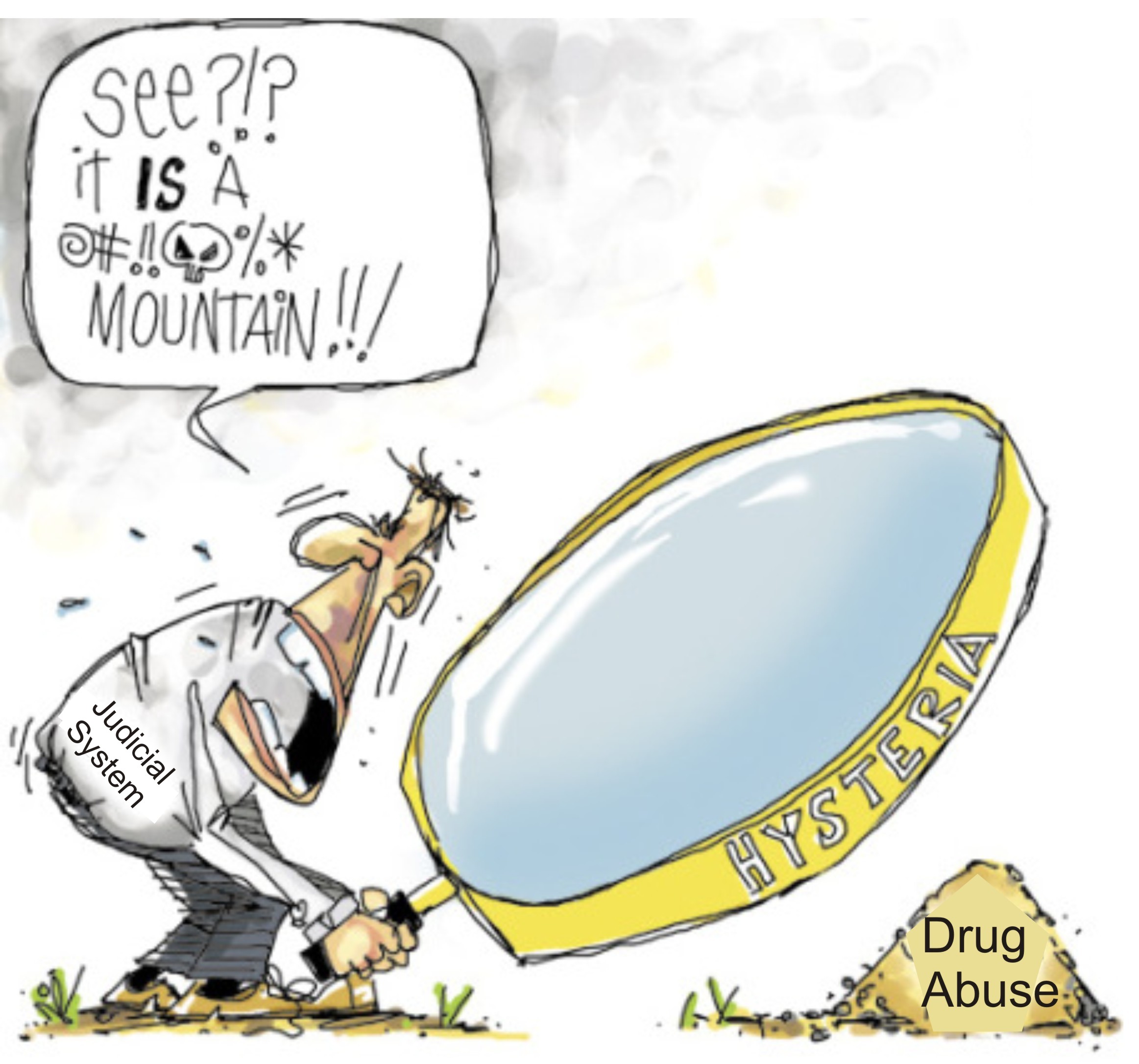
More incentives to JUST SAY NO ?

NABP Announces New Website on Rx Abuse

http://www.pharmacytimes.com/publications/issue/2015/September2015/NABP-Announces-New-Website-on-Rx-Abuse?utm_source=GoogleNews&utm_medium=GoogleNews&utm_campaign=PharmacyTimesNews

Pharmacists Pledge   JUST SAY NO ????

  • I pledge that I will make a difference, as a pharmacist and member of my community to help with the drug abuse epidemic. I will provide information about prescription drug abuse in my pharmacy, office, or other practice setting to make my patients and colleagues aware of the epidemic facing our nation. I will address prescription drug abuse as a pharmacist should by applying my knowledge, skills, and experience. I will be involved. I will take action. I will be a pharmacist who saves peoples’ lives!


The National Association of Boards of Pharmacy (NABP) launched a new program and website during its annual meeting in May. The program revolves around the request that pharmacists pledge to put forth more effort in attempting to reduce pharmaceutical diversion in all facets.

The new website, www.awarerx.org, details the pledge for pharmacists and gives resources for a variety of drug diversion problems. It talks about the new rules from the Drug Enforcement Administration (DEA) for the collection of controlled substances by DEA license holders. The Secure and Responsible Drug Disposal Act is detailed, giving pharmacists the guidelines if they choose to participate in this program. The Red Flags of Diversion video is also available for viewing and uses actors to recreate some common forms of diversion by drug seekers and retail pharmacists. This product came out of NABP’s 2014 meeting in Phoenix and does a good job of educating retail pharmacists as they do their everyday job.

A variety of posters and flyers are available on the website for patients, as well. They discuss rogue Internet drug sites and proper disposal of medications from medicine cabinets. These are 2 topics for the average patient that cannot be stressed enough. The majority of prescription websites are illegal, with no doctor–patient relationship, and the need to get outdated or unused medications out of the family’s medicine cabinet should be a constant reminder for patients. I strongly feel we do not do enough in educating patients—often the individuals who can prevent the diversion issue in the first place. The website also contains tips for compounding pharmacists. This information is the product of the 2013 NABP meeting and stems from a Michigan board member’s explanation of the difference between compounding and manufacturing.

Pharmacy robberies continue to increase in frequency across the country and this, too, is discussed on the website. RxPATROL, a product of Purdue Pharma LP, helps to track and analyze pharmacy robberies across the country. Its ultimate goal is to foster collaboration between retail pharmacies and law enforcement. This valuable service allows law enforcement to identify a possible pattern in pharmacy robberies and has been very effective in tracking down these criminals for prosecution. It is important to promptly report to these folks if your store has a robbery.

The website also provides some of the most common federal agencies to consult when having an issue with the diversion of controlled substances. I would have liked to see, however, some mention of state and local law enforcement since they are the most likely partners you will have in everyday drug diversion issues in your store. In prior articles, I have discussed at length that getting to know local law enforcement is huge in trying to prevent these robberies and in investigative efforts if the prevention efforts fail; they will be the first ones to respond in case of an emergency and will likely provide the follow-up investigation if a crime has been committed. The last section of the website asks the pharmacist for suggestions on stopping diversion.

I urge all of you to strongly consider taking the pledge on the NABP website and getting more involved in preventing prescription drug abuse. Reducing prescription drug abuse is our responsibility as health professionals or members of law enforcement. Prescribers must become more educated about the red flags of diversion and be willing to listen and consider constructive remedies offered by pharmacists. We hear the need to all work together in any number of situations daily, but many times, this is easier said than done.

I think hard work by all parties in reducing prescription drug abuse, along with the public’s cooperation, can make a big difference. We need to get everybody on the same page and work in a positive manner toward reducing this killer called drug diversion.


Cmdr Burke is a 40-year veteran of law enforcement and the past president of the National Association of Drug Diversion Investigators. He can be reached by e-mail at burke@rxdiversion.com or via the website www.rxdiversion.com.

Not properly treating pain to allow a pt to get full night’s sleep TORTURE ?

Expert says sleep deprivation is ‘torture,’ calls for later work day

http://www.whas11.com/story/news/nation-now/2015/09/09/expert-sleep-deprivation-torture-later-work-day/71936336/

An Oxford University researcher says forcing ourselves to work before 10 a.m. doesn’t line up with our bodies’ circadian rhythms.

If you need validation that being at work before 10 a.m. feels like “torture,” here it is.

Early schedules go against the body’s natural “clock” and can impact learning and health, Paul Kelly, an honorary clinical research fellow at Oxford University’s Sleep and Circadian Neuroscience Institute said, BBC reported.

Kelly addressed a crowd at the British Science Festival in Bradford, England, and said making people under age 55 work before 9 a.m. is not conducive to a productive work force.

‘We cannot change our 24-hour rhythms,” Kelly said. “You cannot learn to get up at a certain time. Your body will be attuned to sunlight, and you’re not conscious of it because it reports to the hypothalamus, not sight.”

He noted that staff and students are usually sleep deprived and called the problem an “international issue.”

Kelly and researchers at Oxford University are currently recruiting 100 schools around the United Kingdom to take part in a study on delayed school start times and student performance.

Protecting the few…that don’t want to be protected.. and harming the many ?

FDA Panelists to Assess Opioid/Food Interactions

http://www.medpagetoday.com/Neurology/GeneralNeurology/53477?xid=nl_mpt_DHE_2015-09-10&eun=g578717d0r

If this follows the same path as to when Purdue make Oxycontin abuse-deterrent… the FDA revoked the NDA (New Drug Application) which meant that a LESS EXPENSIVE GENERIC could no longer be produced… This abuse-deterrent IR form of Oxycodone could mean that the LESS EXPENSIVE GENERIC could be pulled from the market if/when the FDA pulls the NDA for that form of Oxycodone.  If this comes to pass, pts can expect higher out of pocket costs and more resistance of health insurance companies to pay for a more/very expensive form of Oxycodone .

Two FDA advisory committees will meet jointly this week to evaluate two new abuse-deterrent opioids — one of them an immediate-release version, potentially the first of its kind to incorporate anti-abuse technology.

Most abuse-deterrent formulations have thus far focused on extended-release opioids.

Both of the investigational opioids have issues with food; the immediate-release drug becomes less bioavailable with a meal, while the extended-release version becomes more potent.

The Anesthetic and Analgesic Drug Products Advisory Committee and the Drug Safety and Risk Management Advisory Committee will evaluate Purdue Pharma’s abuse-deterrent, immediate-release oxycodone (Avridi) on Thursday, Sept. 10 and Collegium Pharma’s abuse-deterrent, extended-release oxycodone (Xtampza) on Friday, Sept. 11.

Purdue’s Drug

Like other abuse-deterrent opioids, Avridi is shored up against intravenous and intranasal routes, although the immediate-release drug can still be abused orally, the FDA said.

But the bigger issue highlighted by FDA is that the drug appears to be less bioavailable when taken with food — and for a product that’s supposed to be dosed as frequently as every 4 hours, the agency has questioned whether that’s possible.

If patients mistakenly dose the drug with food and don’t feel pain relief shortly thereafter, they may take more medicine, the FDA said — potentially leading to a greater risk of overdose.

“Opioid analgesics are generally taken without regard to food, and it is not clear whether labeling would be sufficient to change long-standing behaviors of both prescribers and patients,” the agency wrote in a briefing document.

Purdue argues that a label indicating the drug must be taken with food should take care of those concerns.

The company didn’t perform any new efficacy studies of the drug. Instead, it is relying on efficacy data from immediate-release oxycodone (Roxicodone) studies done before that formulation’s approval in 2000.

Purdue did perform four new safety studies totaling 264 patients.

 In addition to questions about abuse deterrence, panelists will also be asked to debate the food and absorption issue, before voting on a recommendation for approval.

Collegium’s Drug

On Friday, the two advisory committees will decide whether a fifth abuse-deterrent, extended-release opioid should be on the market.

Collegium’s Xtampza uses DETERx technology to prevent abuse via the intravenous and intranasal routes. It’s comprised of tiny beads of oxycodone in solution, which are stored in a capsule.

In a press release, the company said it provides label information for patients who have difficulty swallowing to “administer the capsule contents directly into their mouth, sprinkled onto soft food, or via feeding tubes.”

But the product is still supposed to be a deterrent against intravenous and intranasal abuse.

Unlike Avridi, Xtampza’s bioavailability is increased when taken with food — as much as five-fold, according to FDA briefing information.

“Fluctuations in oxycodone levels may occur if the product is not taken consistently with the same amount of food,” the agency warned.

Collegium argues that label instructions to take their product on an empty stomach should take care of that problem — but as with Avridi, the FDA notes that opioids are not typically taken with food and it’s unclear “if labeling would be sufficient to change long-standing behaviors.”

The FDA said it initially advised Collegium to reformulate the product to avoid the food effect, but its final version was still susceptible to increased bioavailability with food, so the agency recommended additional studies to demonstrate safety when taken with food.

Panelists will rely on that data to decide whether Xtampza should be the fifth abuse-deterrent, extended-release opioid approved for marketing.

The four others include three from Purdue — OxyContin, Targiniq, and Hysingla — and Pfizer’s Embeda.

Those that cause a corporation to do the CRIME.. may end up doing some TIME ?

New Justice Dept. policy aims to get tough on Wall Street fraud

WASHINGTON  — The Justice Department issued a new policy Wednesday that made the prosecution of Wall Street executives involved in financial fraud a major priority, all but acknowledging nagging criticism that powerful corporate figures have escaped criminal charges in favor of giant monetary penalties.

“Effective immediately, we have revised our policy guidance to require that if a company wants any credit for cooperation, any credit at all, it must identify all individuals involved in the wrongdoing, regardless of their position, status or seniority in the company, and provide all relevant facts about their misconduct,’’ according to Deputy Attorney General Sally Yates’ prepared remarks for a Thursday speech at New York University Law School.

“It’s all or nothing. No more picking and choosing what gets disclosed. No more partial credit for cooperation that doesn’t include information about individuals,’’ Yates said.

The New York Times first reported the policy change Wednesday night.

Yates’ prepared remarks elaborate on policy issued to federal prosecutors nationwide Wednesday, calling for federal authorities not to provide individuals “protection from criminal or civil liability,’’ absent extraordinary circumstances.

“The rules have just changed,’’ Yates said. “Effective today, if a company wants any consideration for its voluntary disclosure or cooperation, it must give up the individuals, no matter where they sit within the company.’’

In the aftermath of the financial crisis and housing market collapse, Justice has long been criticized for failing to target executives who presided over the rampant fraud that facilitated the crises.

“Corporate matters cannot be resolved without clear plan to resolve cases against individuals and all decisions declining to prosecute potential culpable individuals must be approved by the U.S. attorney of the head of the division handling the case,’’ according to the new Justice guidelines.

“Civil attorneys will consistently focus on individuals as well as the company and evaluate whether to bring suit against an individual based on considerations beyond that individual’s ability to pay.’’

Some of the changes, according to the memo distributed to all 93 U.S. attorneys’ offices across the country, “represent a departure from the department’s long-standing approach to corporate prosecutions.’’

“The policy will apply to all future investigations of corporate wrongdoing,’’ the memo states.

Yates, in remarks to the NYU law school, said the “mission here is not to recover the largest amount of money from the greatest number of corporations.

“Our job is to seek accountability from those who break our laws and victimize our citizens.  It’s the only way to truly deter corporate wrongdoing.’’

We practice medicine without a license… legal ?? probably not… do we care ??? NO ???

unclesambad

ONE Board of Medicine member – hopefully a physician – along with appointed bureaucrats from the Governor’s office and of course, a number of people from the judicial system… making medical decisions on people that they have never seen and well probably never see. To set up rules/regulations/guidelines how prescribers are to practice medicine..

CONCORD — New Hampshire Gov. Maggie Hassan is calling on the state’s Board of Medicine to develop stronger rules for prescribers of painkillers to help prevent opioid abuse.

Hassan called on the board to select one of its members by week’s end to work with her office and the attorney general’s office to come up with proposed rules by the board’s Oct. 7 meeting.

Hassan said the current recommendations are not rules and appear to be “outdated and inconsistent with the current understanding of the addictive propensities of opioids.”

She cited as a “glaring example” of the inadequacy of the present recommendations a patient consent form containing the language “I am aware that the chance of becoming addicted to my pain medication is very low.”

I am sure that this girl’s parents are SO PROUD !

Is this an example of the outcomes of the COMMON CORE CURRICULUM


AARP has moved over to the “DARK SIDE ” ?

When Pain Kills

http://member.aarp.org/health/conditions-treatments/info-2015/opioid-pain-medication-overdose.html

46 Americans overdose on painkillers each day — and the numbers are rising for those over 55

 When you ask the opinion of an addiction specialist… expect to get an article full of scare tactics about addiction.


Pain Killer with Skull and Crossbones Etching, When Pain Killsoverdosedeath

“We know that people who take an opioid drug for three to six months are highly likely to still be taking it years later,” says Roger Chou, professor of medicine at Oregon Health and Science University — Illustrator: Sam Kaplan, Prop Stylist: Angela Campos

After years of suffering from a degenerative back condition, Betty Tully worried that she was already taking too many pills. But when her doctor reassured her that a long-acting opioid medication called OxyContin would fight her pain without any negative repercussions, she decided to try it. At first the pills helped. As their effectiveness diminished, though, she had to take more and more pills to get any relief at all. “Within seven months I was taking 280 milligrams a day,” says Tully, 68, who lives in Chicago. “That’s the equivalent of 56 Percocets a day. I was completely addicted.” When a new doctor balked at refilling her prescription, she discovered what heroin addicts go through when they can’t get a fix. “My body was screaming for the drug. My brain was screaming for it.”

Health experts have long warned of a growing epidemic of addiction and overdose related to opioid prescription pain meds (morphine, oxycodone and hydrocodone are the most common). Every day, 46 Americans die from using prescription painkillers. In recent years, older Americans like Tully have increasingly fallen victim. Between 1993 and 2012, the rate of hospitalizations for prescription pain-pill overdoses increased fivefold among people 45 to 85 — much faster than for younger adults, according to data from the Agency for Healthcare Research and Quality. The rate of overdose deaths for adults ages 55 to 64 soared sevenfold. The group with the highest death rate was the 45-to-54 age group — more than four times the rate for teenagers and young adults.

And those statistics probably underestimate the true toll the epidemic of pain pills is taking on older Americans. “If a young or middle-aged person doesn’t wake up in the morning, the death immediately looks suspicious and the medical examiner is called in,” says psychiatrist Andrew Kolodny, chief medical officer for Phoenix House, a national nonprofit addiction treatment agency, and a leading expert on opioid addiction. “But when an older person with multiple medical problems doesn’t wake up, death is more often attributed to natural causes, even when the true cause is an accidental opioid overdose.”

Older Americans are at high risk of running into trouble for several reasons, explains David J. Tauben, M.D., clinical professor and chief of the University of Washington’s Division of Pain in Seattle. “For one, they’re more likely to suffer chronic pain and to be prescribed an opioid drug for it. Second, the body’s ability to clear drugs from the system declines with age, so a safe dose for younger people can be an overdose for older patients.” The danger is compounded when people are taking several different drugs that have to be cleared through the liver or kidneys — such as medications for heart disease or diabetes — as many older people do. “Adding opioid pain medications to a stew of other drugs is a very risky venture,” Tauben says.

Opioid pain medications can also prove deadly for older patients who have trouble keeping track of their pills. “If someone on an 80-milligram dose of oxycodone forgets they took it and takes another, there’s a good chance of a fatal overdose,” Kolodny says.

Good intentions gone bad

Opioid pain medications can help for acute pain — following an injury or surgery, for example, when they provide relief while the body heals. They can also control pain at the end of life. But because of the risk of addiction and overdose, opioids traditionally were rarely prescribed for cases of chronic pain.

That changed in the late 1990s with new campaigns that encouraged doctors to take chronic pain more seriously. Backed by the American Pain Society, the American Academy of Pain Medicine and other professional groups, the campaigns had the laudable goal of encouraging doctors to be more aggressive in relieving chronic pain, which afflicts an estimated 100 million Americans. One campaign, called “Pain is the Fifth Vital Sign,” suggested that pain should be considered as important an indicator of health as blood pressure or pulse.

But the push for wider use of painkillers was largely financed by drugmakers with a vested interest in making money, Kolodny says, “and they vastly understated the risks of addiction and greatly overstated the effectiveness of these drugs. Physicians were given the impression that the drugs are far safer and more effective for chronic pain than they actually are.”

Between 1996 and 2002, Purdue Pharma, the maker of OxyContin, funded more than 20,000 educational programs for doctors, many of them promoting long-term use of opioids for chronic pain.

“For more than a decade, we were told that these medications are safe and effective,” says Jason Hoppe, an emergency room physician who has studied how opiates are prescribed by ER doctors.

The campaigns worked. Over the next 15 years, the rate of opioid pain reliever use more than doubled in the U.S. Consumption of oxycodone — the drug Tully was given — increased nearly fivefold. By 2012, 8 percent of adults 40 and over reported taking an opioid painkiller in the past 30 days.

The irony, say experts, is that despite decades of prescribing, researchers still know little about the actual risks and benefits of taking these powerful drugs long-term. In 2014, Roger Chou, a professor of medicine at Oregon Health and Science University, and his colleagues searched the medical literature and found almost no studies that looked at the long-term use of opioids. Do the drugs enable people beset by chronic pain to function better? No one really knows.

“Most trials followed patients for about six weeks,” said Chou — certainly not long enough to see what happens when people take them for months or even years, the way chronic pain patients typically do. “We know that people develop tolerance over time, which means you need a bigger and bigger dose. That’s something we see with very few other drugs, and don’t see with other non-opioid pain medications. And we know that people who take an opioid drug for three to six months are highly likely to still be taking it years later.”

While Chou and his team found little evidence that long-term opiate use helps, they did find compelling evidence of potential harm, including risk of overdose, abuse, heart attacks, falls, fractures, constipation and sexual dysfunction.

A delicate balance

In response to this runaway painkiller epidemic, federal officials in recent years have launched educational programs for physicians, designed to halt the overuse of opioid drugs. The Centers for Medicare & Medicaid Services have established a monitoring system to spot patients who may be overusing opioids. And the FDA has issued separate guidelines on the safe use of opioid painkillers.

Those efforts are beginning to work. The rising curve of opioid prescriptions has begun to level off. But while most experts agree that opioids should be used much more cautiously, there’s less agreement about exactly who should take them, and for how long.

“Based on everything we know, daily use of strong opioid pain medications is a lousy option for most patients with chronic pain,” Kolodny says. “These are drugs that become less effective at controlling pain over time, and ultimately may even make people more sensitive to pain. And once people have been taking them daily for a few weeks, it can become very, very difficult to stop.”

At many major pain clinics around the country, in fact, including the Mayo Clinic, one of the first goals is often to get chronic pain sufferers off opioid medications.

But some experts say opiates still have a role in treating chronic pain, as long as they are very carefully prescribed. “We take some patients off opiates. But we also leave some patients on them,” says James W. Atchison, medical director of the Rehabilitation Institute of Chicago’s Center for Pain Management. “Everything comes down to how you are functioning. If your pain medication helps you function, great. If it’s making you groggy and you’re still in a lot of pain, you need to come off the medication.”

One challenge with opioid painkillers is the exceedingly narrow line between benefit and harm, according to Joseph W. Shega, M.D., an expert in geriatric medicine who is regional medical director for VITAS Healthcare. “Doctors need a lot of expertise in prescribing and monitoring patients on these drugs.” Still, he says, some chronic pain patients can benefit from low doses of opioids. He describes an older patient with severe neck and shoulder pain who was referred to him when her physician became concerned that she was addicted to opioids. Shega kept the patient on the medication but strictly limited how much she could take a day. He also treated her pain in other ways.

No magic bullets for pain

“What we’ve learned is that throwing medication at chronic pain isn’t going to make it go away,” Chou says. “And there are clear risks to using these drugs.” Even nonsteroidal anti-inflammatory drugs, or NSAIDs, can be hazardous. In July the FDA issued new alerts about the risk of heart attack and stroke associated with drugs such as ibuprofen and naproxen.

If opioid pain medications are used at all, they need to be carefully prescribed and closely monitored. Patients need to be better informed about the limitations and hazards of pain medications. “Opiates and other pain medications are not a panacea,” Tauben says. “Studies suggest they can reduce chronic pain intensity by at most 30 percent.”

Fortunately, other approaches to pain relief — physical therapy, stress management, yoga — can help.

Betty Tully eventually turned to physical therapy and weight loss to help control her pain — but not before she checked herself into a detox program to wean herself off the opioids. “No one told me that what I was on was comparable to heroin,” she says. “If I’d known, I would have never started taking it.” To spare other patients the anguish she experienced, she joined Kolodny to form the nonprofit Physicians for Responsible Opioid Prescribing, to inform others about the risks and benefits of pain medications. “Mostly I’ve learned to live with a certain amount of pain. I accept it and try to live as full a life as I can.”

How to Stay Safe

If you’re currently taking an opioid pain medication, here’s what you need to know to use it safely and effectively:

Start low and go slow

“Older adults should start with half or even one-quarter of a standard dose,” says Joseph W. Shega, M.D., a pain expert at VITAS Healthcare.

Tell your doc about other meds you take

One of the biggest risk factors for overdose and death from opiates is mixing them with alcohol or other medications. The combination of benzodiazepines (sometimes prescribed for anxiety or insomnia) and opioids is especially hazardous.

Follow up frequently

To monitor how you’re doing, your doctor may need to see you frequently, in some cases monthly. Your doctor may also order a urine test to measure opiate levels in your system.

Be realistic

Don’t expect any pain medication to be a magic bullet. Most only ease pain, and all of them have risks. “Often we can’t eliminate the pain,” says James W. Atchison of the Rehabilitation Institute of Chicago’s Center for Pain Management. “But we can help people with chronic pain live their lives as fully as possible.”

Keep medications safe

Opioid pain relievers are a frequent target of thieves, who then sell them on the street. Store painkillers in their original packaging in a locked cabinet or lockbox, and keep track of how many you’ve taken. 

Denial of care issues… may end up being settled in our court system ?

Defamation Case SLAPPED on Pharmacies

www.nabp.net/…/001/102/original/september2015nabpnewsletterfinal.pdf  

start reading on page 160

Pharmacists must exercise professional
judgment when assessing the validity
of a prescription and determining whether
to dispense medications. The board of
pharmacy may become involved to the extent
a pharmacist is accused of violating the
relevant standards of practice related to filling
prescriptions. In addition to the administrative
authority of the board of pharmacy, civil and
criminal consequences to the licensee may
be relevant under certain factual scenarios.

CVS employees express concern over pharmacy robberies

A suspect drove off after an armed robbery at a Zionsville CVS on Thursday, July 23, 2015. (WISH Photo/Marcus Collins)

CVS employees express concern over pharmacy robberies

http://wishtv.com/2015/09/08/cvs-employees-express-concern-over-pharmacy-robberies/

INDIANAPOLIS (WISH) — Indiana has an unfortunate distinction.

The state leads the nation in the number of pharmacy robberies.

To date, there have been 139 pharmacy robberies in Indianapolis, according to authorities. The methods are usually similar: suspects walk in with a threatening note demanding Oxycontin, Oxycodone or some other pain medication and often walk out with thousands of dollars worth of pills. CVS, Walgreens and other family-owned pharmacies all have been targeted within the past year.

Authorities aren’t sure what’s causing them, but one theory among law enforcement is that Indiana’s struggle with heroin and opiate-based medications has fueled a black-market demand for more pills on the streets.

“The rate that they are happening now is unacceptable, so we definitely want to work hard to reduce those numbers,” said Lt. Craig McCartt with the Indianapolis Metropolitan Police Department.

The figures show no signs of slowing down, which is worrisome to both past and current CVS employees.

“It’s sad when we go to work day in and day out, we fear for our lives,” said one CVS former employee, who asked that her identity be withheld. “I would like for CVS to care more about its employees versus their profit-making ability. We’ve been screaming for years for protection.”

The woman, who agreed to speak on a condition her name and position not be revealed, said she was a CVS employee up until a few weeks ago. She says she is no longer with the company.

“It’s kinda like walking into a war zone. Every customer – and we shouldn’t feel this way — but every customer is a suspect,” she said.

Last week, CVS added time-delay safes to all 150 Indianapolis-area stores in an effort to pare down the high number of robberies. It’s a mechanism that CVS’s competitor, Walgreens, adopted more than a year ago. Phil Caruso, a Walgreens spokesman, told I-Team 8 by phone that the company has seen a decline in general in the number robberies since the devices were installed. Walgreens currently has them in 13 states.

Before accessing the medications, pharmacists must first active the safes, which are on timers and can take several minutes to open. The hope from CVS officials and law enforcement is that would-be robbers will become frustrated and leave. Such has been the case in at least one robbery attempt earlier this summer at a Walgreens near downtown Indianapolis. In that case, police records show the pharmacists told the suspect that the safe was “on a timer and that it could take awhile.” The report notes that the suspect “then took the note and left.”

Other current CVS employees who spoke to I-Team 8 by phone declined to be interviewed on camera or identified out of fear of retaliation from the company. But some said the robberies are worrisome. Others wondered why it CVS took so long to act.

At least three past employees told I-Team 8 they either quit or were let go as a direct result of the robberies.

During interviews last week with CVS company officials, they acknowledged that the high number of robberies were concerning, but that customer and employee safety were “a number one priority.”

“Our highest priority is the safety of our colleagues and our customers. We are going to do everything within our power and our resources to deter these robberies,” said Michael Silveira, CVS Vice President of Loss Prevention.

CVS has added the time-delay safes in all its Indianapolis-area stores and is considering adding them in other states.

“This was one (measure) that we had considered very carefully and based on the study, we feel it’s the right thing for us to do at this point,” Michael Silveira, CVS Vice President of Loss Prevention, said during a recent exclusive interview with I-Team 8.

But Walgreens added the devices to its stores in 13 states more than a year ago, which has led some CVS employees to question why it took so long.

When asked about this, Silveira said: “Well, we have a number of different protocols that we employ and after studying and revisiting our protocols we considered time-delay and figured it was time to do it after a careful study.”

During the past year, an I-Team 8 analysis found CVS pharmacies have been robbed more than 80 times, compared to more than 30 robberies at Walgreens stores in the Indianapolis area, which already have the time-delay safes. CVS regional pharmacy supervisor, Kara Williams, says that she think the time-delay safes – in conjunction with security officers and high-definition security cameras – will work to reduce the number of robberies.

“Potential robbers like to get in and out as quickly as possible. With time-delay safes we will not have access to our narcotic medications on demand, there will be a wait period, which we’ve seen through studies has been a significant deterrent.”

The former CVS employee said she worries suspects will just become frustrated.

“I don’t know about a time delay. To me, if I’m a bad guy, it is just going to frustrate me. To me, CVS just needs to step up and put the proper safety mechanisms in place.”

In her mind, that would include armed security officers.

Lt. Craig McCartt with IMPD said he thinks the new devices will aid in the effort to reduce these crimes, but acknowledges that placing armed off-duty guards at every pharmacy is unlikely given the current IMPD staffing levels.

“CVS and Walgreens have both been a great team in trying to put some policies and procedures in place to reduce the chances that their places are going to be victimized,” McCartt said.

But he acknowledged there could be some limitations, and police records show the robberies still continue. I-Team 8 found there have been at least three in the past week – including at two Walgreens locations and a third privately-owned pharmacy.

“There’s no perfect answer — minus shutting every pharmacy down — we are not going to stop them completely,” Lt. McCartt said.

I-Team 8 has created an interactive database which shows the dates and locations of each robberies, which can be found by clicking here.

As of September 8, there had been approximately 139 pharmacy robberies in the Indianapolis area, records show.

An I-Team 8 investigation has found that in many of the cases the suspects have walked in armed with only a threatening note and made off with thousands of dollars worth of prescription pills. At a robbery last month at a CVS pharmacy along East Washington Street, a police report notes the suspect made off with more than $6,000 worth of pills. Another one in early May along East 38th Street shows the suspect made off with $10,000 worth of pills, according to police records.

“Many of these notes have essentially a laundry list of what they want, so they don’t have to remember anything. I just think it’s simple for them.” McCartt said.

If Another Democrat gets the Whitehouse… guess who will probably keep his job ?

New DEA Chief: Marijuana Has No Medical Use, Should Stay in Schedule I

http://www.marijuana.com/blog/news/2015/09/new-dea-chief-marijuana-has-no-medical-use-should-stay-in-schedule-i/

The head of the Drug Enforcement Administration (DEA) made headlines last month by admitting that marijuana is less harmful than heroin, but in a new interview he says that cannabis should not be reclassified under federal law even though “it certainly is not as dangerous as other Schedule I controlled substances.”

Chuck Rosenberg, acting DEA administrator, told Fox News that he doesn’t “frankly see a reason to remove” marijuana from Schedule I, a category that’s supposed to be reserved for drugs that have a high potential for abuse and no legitimate medical value.

Rosenberg says that while he supports doing research on cannabis’s medical benefits, he doesn’t think the evidence is there yet. “If we come up with a medical use for it, that would be wonderful. But we haven’t.”

And, despite reaffirming that marijuana is less dangerous than heroin, the DEA chief is adamantly opposed to legalization. “I’m not willing to say that it’s good for you, or that it ought to be legalized. I think it’s bad for you and that it ought to remain illegal.”

When Fox interviewer Jay Rosen pointed out that there is a “common-sense disparity, or irony, or disconnect” stemming from the fact that alcohol is legal but marijuana is not, Rosenberg seemed to acknowledge as much.

“Probably, yeah,” he said, before insinuating that alcohol prohibition was a failure. “We tangled with that as a society in the 1930s. And we know how that went.”

But Rosenberg didn’t seem to notice the inconsistency of his own views when he added, “I choose not to drink alcohol but I’m not going to impose that on anyone else.”

Video of parts of the interview is online here.