“The moral test of a government is how it treats those who are at the dawn of life, the children; those who are in the twilight of life, the aged; and those who are in the shadow of life, the sick and the needy, and the handicapped.” – Hubert Humphrey
passionate pachyderms
Pharmacist Steve steve@steveariens.com 502.938.2414
STAMFORD, Conn. — Purdue Pharma this week announced that it had VM902A, acquired an allosteric selective tropmyosin receptor kinase A (TrkA) inhibitor, from VM Pharma. TrkA inhibitors are part of a growing class of pain management therapies. VM902A has been tested in Phase I clinical trials, and Purdue plans to continue trials, with Phase II enrollment opening in early 2016.
“As leaders in the pain market, Purdue Pharma’s proven expertise in developing and commercializing therapies for pain, makes them the ideal company to advance the work of the VM Pharma team,” said Jay Wu, PhD, Chief Executive Officer, VM Pharma LLC. “I have confidence they will take this TrKA program forward to develop innovative pain management therapies.”
Under the agreement, VM Pharma received an upfront payment, which when combined with development, regulatory and commercial development payments could end up totaling $213 million.
Purdue sees a lot of potential in the new acquisition.
“The TrKA mechanism and VM-902A specifically hold great promise in treating pain,” Purdue president and CEO Mark Timney said. “This acquisition expands and diversifies our pipeline by adding a potentially innovative non-opioid, non-NSAID treatment to our portfolio.”
Flood damage is a devastating event, leaving a trail of destruction in its wake. While the immediate damage – ruined furniture and soaked carpets – is readily apparent, the hidden threat of mold growth can pose serious health risks and long-term structural problems for your home.
Flood Fury: The Perfect Breeding Ground for Mold
Floodwater is more than just an inconvenience. It can be contaminated with sewage, bacteria, and chemicals, posing a health hazard. Additionally, standing water quickly saturates building materials like drywall, wood, and insulation, creating the perfect breeding ground for mold.
Mold thrives in damp environments, and within 24-48 hours of floodwater exposure, spores can begin to germinate. These spores, invisible to the naked eye, can easily become airborne and inhaled, leading to a variety of health problems.
Dr. Sarah Jones, a pulmonologist, warns, “Exposure to mold spores can trigger a range of respiratory issues, especially for vulnerable individuals like children, the elderly, and those with asthma or allergies. Symptoms can range from coughing and wheezing to difficulty breathing.”
Mold Mayhem: A Spectrum of Health Risks
Exposure to mold can have a wide range of negative health impacts beyond respiratory problems. Here’s a closer look:
Skin and Eye Irritation: Mold spores can irritate the skin, causing itching, redness, and rashes. Similarly, exposure can irritate the eyes, leading to redness, watering, and burning.
Headaches and Fatigue: Mold exposure has been linked to headaches, dizziness, and overall fatigue. These symptoms can be debilitating and impact your daily life.
More Serious Concerns: In severe cases, long-term mold exposure can lead to neurological problems and even a weakened immune system.
Why DIY Mold Removal is a Risky Gamble
While small mold patches might seem like a manageable DIY project, the reality is more complex. Mold remediation requires specialized knowledge, equipment, and safety protocols. Here’s why contacting an expert is crucial:
Identifying the Threat: Different mold species exist, and some are more toxic than others. An expert can accurately identify the type of mold present and determine the best course of action.
Containment is Key: Mold remediation requires containment measures to prevent spores from spreading throughout the house. Professionals have the necessary equipment and expertise to isolate the affected area effectively.
Safe Removal Techniques: Removing mold safely involves specific techniques and protective gear. Improper removal can stir up spores, worsening the problem.
Addressing the Root Cause: Mold thrives in damp environments. An expert will not only remove the mold but also identify and address the source of moisture to prevent future growth.
Post-Remediation Verification: After removal, experts can test the air quality to ensure complete mold eradication, providing you with peace of mind.
Don’t Risk Your Health or Your Home
As Dr. Jones emphasizes, “Mold remediation is an investment in your health and the well-being of your family. Ignoring mold growth can lead to expensive repairs down the line as the mold damages building materials.” By contacting a certified mold remediation Property development and restoration professional , you can ensure a safe, thorough, and lasting solution that protects both your health and your home. Don’t wait until a minor mold patch becomes a major health hazard. Take action today and breathe easy knowing your home is a safe haven, not a breeding ground for mold.
If you are losing the war… isn’t it best to retreat, surrender or change the plan(s) ? How many wars continue to be fought as the bodies keep piling up and the more bodies that pile up.. the more those declaring the war want to continue fighting.. It is almost like they relish at the mounting body count !
CVS and others have begun using time-delay safes and other measures to curb snatch-and-run prescription drug thefts.
Pharmacy robberies are rising nationwide as the prescription drug epidemic increases, and Indiana has the unwelcome distinction of leading the U.S. in these crimes.
More than 130 Indiana pharmacies have reported robberies since the start of 2015, according to the Drug Enforcement Administration, which tracks any incident in which prescription drugs are lost, said Greg Westfall, assistant special agent in charge in Indianapolis.
The Indiana Board of Pharmacy cites an even higher number, calculating a total of 151 robberies since the beginning of the year, said Ted Cotterill, the board’s director. Robbery attempts aren’t included in that figure.
Indianapolis alone has had more 130 pharmacy robberies, including attempts, according to the Indianapolis Metropolitan Police Department.
Although the numbers may differ, all agree that this year, Indiana has had more pharmacy robberies than any other state.
“This puts us at number one in the country at the moment, which is not the kind of number one that Indiana wants to be in any category,” Cotterill said.
To counter such thefts, CVS/pharmacy announced last week that it has installed time-delay safes in more than 150 stores in the Indianapolis metro area to deter would-be robbers.
Such thieves like to get in and out of a store as quickly as possible, but time-delay safes require pharmacy employees to enter a code and then for a period of time before a safe will open.
No other CVS market in the nation has time-delay safes, Michael DeAngelis, a CVS/pharmacy spokesman said in an email.
“After completing our study of time-delay safes this summer, we determined that now was the appropriate time to implement them in our Indianapolis stores,” DeAngelis said.
Walgreens, which also has the safes in a number of its stores in other states, installed them in Indiana last year, too.
While many hope that the time-delay safes can help turn around the pharmacy robbery rate, they shed no light on why these crimes are so prevalent in Indiana, a question many in the field have been asking for some time now.
“If I had the answer, I would tell you right now,” Cotterill said. Later this fall, the Indiana Board of Pharmacy plans to hold a roundtable with pharmacists and law enforcement experts to explore the question further and potentially arrive at some solutions.
Earlier this month, Gov. Mike Pence announced the creation of a task force specifically to address prescription drug abuse and heroin use.
But Indiana is far from alone. Many other states also are also battling such problems.
So why have pharmacy robberies skyrocketed here?
“It is kind of baffling,” said Todd Meyer, prosecuting attorney for Boone County, which has seen a number of major pharmacy robberies in recent months.
In recent years, Indiana also has cracked down on doctors overprescribing prescription narcotics, shutting down several so-called “pill mills.” In addition, the statewide database Inspect aims to identify patients filling multiple prescriptions for narcotics, who could then be diverting those pills.
These efforts, although positive, may have inadvertently fueled robberies, Cotterill said.
“While we have tightened the grip on prescribing and dispensing, we may have just driven that traffic elsewhere,” he said.
Another factor may have to do with the state’s penalty for juvenile offenders, those in law enforcement say. Many of the robberies have involved juveniles, in some cases, as young as 13.
If they get caught, the sentences they face likely will not be as harsh as for adults, said Patricia Baldwin, a prosecuting attorney for Hendricks County, where many Rockville Road pharmacies have been hit. Depending on the circumstances, they could get probation or a suspended commitment.
“The juveniles assume not much will happen,” Baldwin said. “If you can walk in and walk out with something that’s worth a lot of money, a lot of people take advantage of something like that.”
Pharmacy robberies have been going on in the state for almost a decade, says Ken Fagerman, author of the book “Staring Down the Barrel.” The former South Bend pharmacist recalled how his community organized to fight back with efforts such as a pharmacy crime watch.
Other measures that could help prevent such robberies include installing panic buttons in every pharmacy to allow employees to contact police immediately and alert other nearby stores to be on the alert. In one instance, four pharmacies close to one another were robbed within a matter of hours.
Implementing such initiatives would help empower pharmacists, Fagerman said.
“Because pharmacists are intimidated or practicing in fear, sometimes they do not question or defend the prescription drug supply the way they should,” he said. “This criminal element has been accustomed to this passivity and being issued anything they want on demand and getting away with it. … When you allow this situation to get out of hand which it has, it’s a self-perpetuating system.”
No one disputes that in Indiana, pharmacy robberies have gotten out of hand.
In the past year, the commercial robbery unit of the Indianapolis Metropolitan Police Department has focused almost entirely on pharmacy robberies, Lt. Craig McCartt said.
A few years ago, most of these robberies were conducted by people who were addicted to the drugs they were stealing. More recently, though, the bulk of the robberies have been committed by people who plan on selling the ill-gotten goods, McCartt said.
In many cases, the robber hands the pharmacy employee a note with a list of narcotics he is seeking. The note may imply that the robber has a weapon but rarely does he reveal it.
In some cases, adults approach youths and recruit them for such crimes, McCartt said. In other cases, the juveniles act on their own and wind up selling whatever prescription drugs that they steal.
“I think that the word spread at the high schools, through social media, that this was an easy source of money and everybody started doing it,” he said. “As we arrest these guys, there’s somebody right there to take their place immediately.”
The criminals also have not restricted their activity to Indianapolis city limits. Both Boone and Hendricks counties have seen a number of pharmacy robberies as well.
In many cases, the criminals have ties to Indianapolis gangs, Meyer said.
“All of us in the doughnut counties are kind of susceptible,” he said.
But at the end of the day, even the police say they do not know what’s driving the high number of robberies in this state.
“I wish I knew exactly,” McCartt said. “Honestly I think it could be any other city, any other state in the nation truly, but we just have misfortune of it being here.”
Call Star reporter Shari Rudavsky at (317) 444-6354. Follow her on Twitter: @srudavsky.
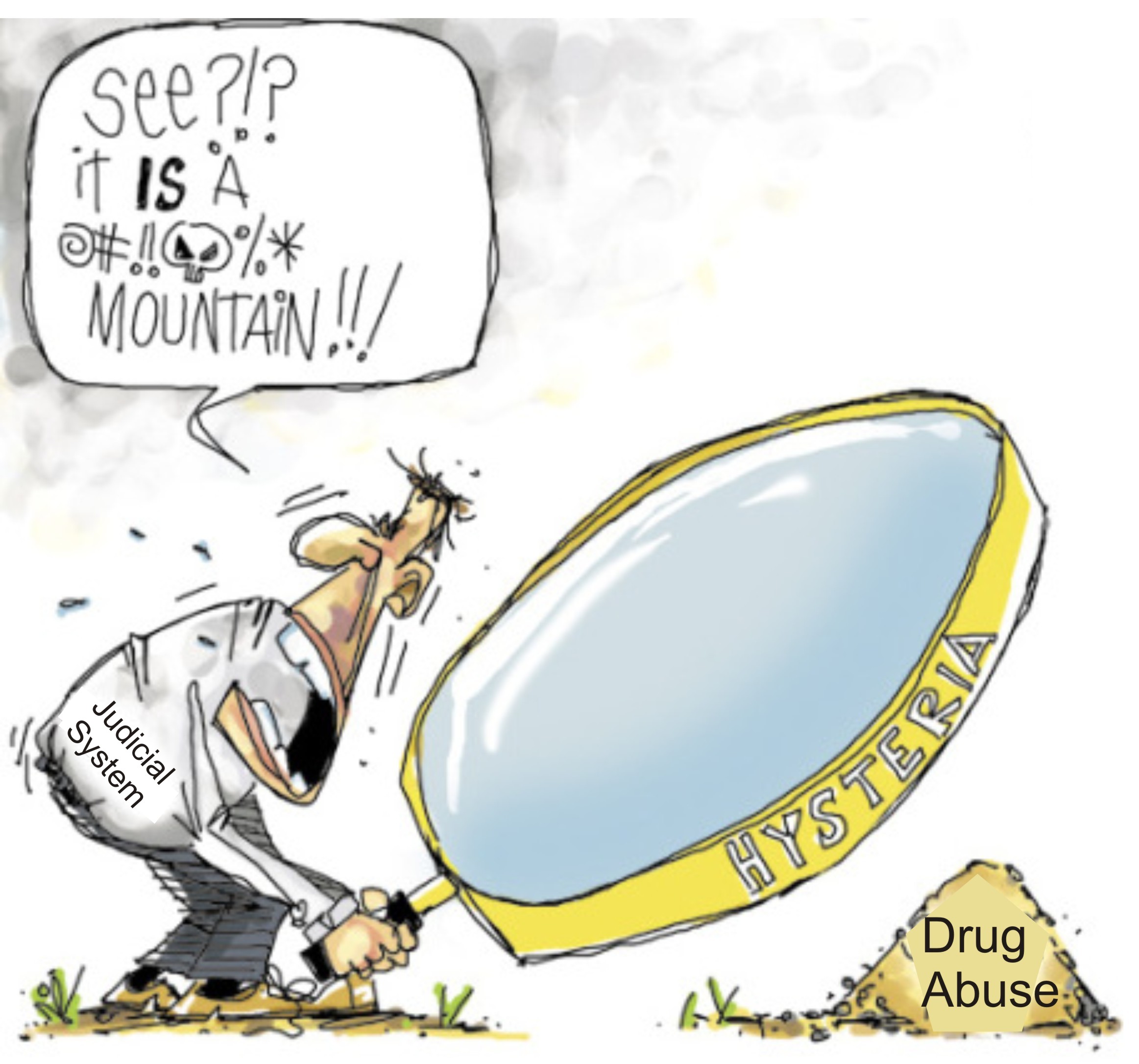
Eighteen months after the introduction of Zohydro, there is little evidence the controversial painkiller is being abused or diverted, according to a new report from a nationwide drug monitoring program.
The report covered the first quarter of 2015. RADARS monitors hundreds of hospitals, poison control centers and addiction treatment clinics in the U.S. to track the abuse, misuse and diversion of prescription drugs.
“Everyone thought this was going to be some horrible, horrible thing. And it didn’t materialize that way,” said Errol Gould, PhD, Director of Medical Affairs for Pernix Therapeutics, which bought the rights to Zohydro from Zogenix Inc. earlier this year.
“There have been very few reports of people checking into treatment centers and reporting Zohydro ER as the drug they were abusing. In the past 18 months I can tell you there have been less than 40.”
There was a storm of controversy surrounding Zohydro when it was first introduced in March 2014. The first single ingredient hydrocodone painkiller sold in the U.S. was approved by the Food and Drug Administration over the objections of its staff and an advisory committee — which warned there was a potential for Zohydro to be abused even more than other hydrocodone products.
Addiction treatment experts also predicted Zohydro would fuel a new wave of painkiller addiction and overdoses. The Governor of Massachusetts even declared a state of emergency and tried unsuccessfully to ban Zohydro sales in his state.
“All the media attention sort of scared people, so there weren’t a lot of prescriptions written in the beginning,” said Gould. “But now over time the prescription rate has picked up. But we’re still not seeing diversion. The abusers already know what hydrocodone is like and they’re not going out and looking for Zohydro when they can get other things that are more readily available to them.”
Only about 1,600 prescriptions are being written for Zohydro each week, a tiny fraction of the 130 million hydrocodone prescriptions that are filled each year in the U.S. Prescribing of Zohydro is also closely monitored to keep it away from pain patients who might misuse or abuse it.
“I think the growth has been slow. Most of that has been because of the prior perceptions. We fully expect that to change over time. It just takes time to change people’s views and minds. We’ve had a bit of an uphill battle,” said Doug Drysdale, President and CEO of Pernix. “The good news here from RADARS is that the product is not being abused. And I think that’s very encouraging.”
The biggest problem faced by Pernix going forward may not be the hysteria over Zohydro’s introduction — but competition from rival drug makers.
Purdue Pharma has introduced its own “pure” hydrocodone product — sold under the brand name Hysingla ER. Hysingla is designed to be taken once a day, while Zohydro is meant to be taken twice daily for chronic pain. Both products are sold in abuse deterrent formulas that make them harder for drug abusers to snort or inject.
Until the introduction of Zohydro, most hydrocodone products on the market were combined with acetaminophen, which at high doses can cause liver damage. Hydrocodone combination drugs such as Vicodin, Lortab and Lorcet are the most commonly prescribed and abused painkillers in the U.S. In 2014 hydrocodone was reclassified by the Drug Enforcement Administration as a Schedule II medication to make it harder to obtain.
Drug Enforcement Administration agents have been accessing personal medical files without a warrant, generating a backlash from doctors and privacy advocates who say the practice is intrusive and unconstitutional — and have taken the agency to court.
“It’s just not right,” Texas attorney Terri Moore said.
The controversial record searches are part of the government’s effort to crack down on illegal “pill mills” and prescription drug abuse. But they’ve set up a clash over privacy rights, and a legal battle is now playing out in the 5th and 9th Circuit appeals courts. Lower courts have issued conflicting rulings to date, with one backing the DEA and another demanding the agency get warrants if it wants to look at patient records.
The DEA has been able to access medical files as well as private state prescription drug records that track patient medical histories by using what are known as administrative subpoenas, which unlike warrants signed by a judge do not require probable cause. Further, critics say the agency has “tricked” doctors into handing over documents by showing up with state medical board officials for searches and not identifying themselves, in turn giving the impression they’re with the board.
Mari Robinson, executive director of the Texas Medical Board, did not deny in a 2014 congressional hearing that the DEA did this on numerous occasions. She said the board often conducts joint investigations with the DEA, and “what they [DEA] do is up to them.”
Moore, lead attorney in one of the federal court cases, said doctor-patient confidentiality is sacrosanct and the DEA’s practices could undermine that trust. “People are going to doctors and giving over private information they believe is absolutely confidential,” Moore said. “Now they are going to be on guard, they’re going to say, ‘why am I going to tell my doctor everything if I think the government is going to get that information?’”
The DEA strongly disagrees. “It is the DEA’s position that the DEA has issued administrative subpoenas in compliance with all applicable laws, policies and procedures,” DEA spokesman Lawrence Payne told FoxNews.com Friday.
Payne also sharply disputed claims that investigators are posing as state board officials. “Recent reports of DEA investigators impersonating state medical board personnel are blatantly false. Because of ongoing litigation, DEA cannot comment further,” he said.
Moore is lead attorney in the case of U.S. v. Abbas T. Zadeh, a Texas doctor who refused to hand over the records of 35 of his patients when the DEA demanded them through an administrative subpoena in 2013.
Zadeh, a general family practitioner with over 60 years of experience in medicine, died Sept. 5 at the age of 90, according to Moore. Moore said before he died, Zadeh told her not to give in.
“It was very important for him to stand up for the privacy of his patients,” said Moore, who believes the DEA is using the administrative subpoenas to circumvent the 4th Amendment, which prohibits unreasonable searches and seizures by the government.
After losing his battle in a lower federal court earlier this year, Zadeh’s attorneys filed an appeal, which is pending before the 5th Circuit. They are waiting to see if the court will hear oral arguments, Moore said.
“Conceivably, there is nothing more private than medical communications,” Nathaniel Lacktman, a Tampa, Fla., attorney who specializes in telemedicine, told FoxNews.com. “This could have a chilling effect on patients, if they think their records could be subpoenaed without probable cause.”
The government argues they are legitimately pursuing violators of the Controlled Substances Act by tracking prescriptions on the Schedule II-IV list of controlled substances, which can include anything from oxycodone, morphine and percocet to amphetamines and anabolic steroids. These drugs normally are used with legitimate prescriptions to treat chronic pain, psychiatric disorders, addiction, ADHD, AIDS and more.
The DEA says Congress gave the agency the tools to do this, and agents don’t need probable cause — they merely have to maintain that the records are relevant to an investigation, that the investigation is legitimate, and that the information gleaned from the search won’t be used inappropriately.
The lower federal court in Zadeh’s case sided with the government, saying the DEA followed the law and did not violate the 4th Amendment because, “Congress granted the DEA the administrative subpoena power as a tool to conduct those investigations.”
But, separately, an Oregon federal judge ruled in February that the DEA has no right to access prescription records in the state’s Prescription Drug Monitoring Program (PDMP) database without a court order. Most states have these databases, in which all pharmacies are mandated to record names, addresses and other information for patients who receive prescriptions for Schedule II-IV drugs.
In one request, according to The Oregonian, the DEA asked for a year’s worth of records for all controlled substances prescribed by two unidentified doctors. In another, according to court documents, the state of Oregon was forced to comply with a subpoena forcing the PDMP to turn over all prescriptions written by one particular doctor over the course of seven months.
The government has appealed the judge’s ruling and that case is now pending before the 9th Circuit.
“We cannot argue that the DEA or any other law enforcement should be totally shut out of these records,” said Nate Wessler, staff attorney for the American Civil Liberties Union, which is representing four unnamed plaintiffs in the Oregon case whose records were searched, they believe, illegally.
“We are saying they should go to a judge first and demonstrate probable cause and get a warrant — that is what the Fourth Amendment requires.”
“… THERE IS NO CONSISTENT, HIGH QUALITY, EVIDENCE THAT THOSE WITH THE DEGREE OF “MD” BEHIND THEIR NAME… THAT THEY ARE CAPABLE OF PROVIDING COMPETENT MEDICAL CARE OR ADVICE …”
I was wondering if you could help me decide if my rights of a customer have been violated or not at a Walgreens. I went to have a prescription for percocet refilled on 9/10. The pharmacist said my insurance would not accept the prescription because the prior Dr. authorization letter I had on file expired after one year and a new one was necessary. I agreed to wait however since my prescribing doctor was away for the week for vacation, I knew it could be a few days until the matter is resolved. I then said I don’t mind bypassing my insurance for now and offered to pay for the prescription out-of-pocket in full just for this month. The pharmacist said that they could not as it is against policy to fill pain meds without having insurance. Can they legally turn me down even offering to pay out of pocket with a prescription in hand?
Do I have some sort of case here? Is this legal? If not, what may I do about it?
Thank you for your time
Of course, a pt wanting to pay CASH for a controlled med when they have insurance is a RED FLAG … however when the pt has insurance that won’t pay – because of a PA and the prescriber is on vacation… and the not filling the Rx is going to throw the pt in withdrawal.. refusing to fill for cash because of extenuating circumstances because of company policy… does this mean that the Pharmacists has relinquished their professional discretion to some corporate bureaucrat ? We can program computers to make such black/white decisions… do we need six year collage PharmD’s to follow a “decision chart”
I am sure that these 100 pts have other co morbidity issues… so is this prescriber “tapering” them off of the meds for their other medical issues ? Doesn’t suggest this in the article ? More discrimination by the medical community ?
A noted Denver area pain physician has a dilemma.
He’s retiring. He has over 100 patients who use opioids on a daily basis and he’s pretty sure no other doctor will take them.
Dr. Richard Stieg is not your normal run of the mill pain physician. The 78-year old Aurora, Colorado doctor is a founding member and former president of the American Academy of Pain Medicine who has served the pain world in many capacities. (Here’s his bio)
He understands as well as anyone that given the intense scrutiny that the federal government has put on the medical profession regarding opioid prescribing practices the chances are these patients will not be picked up by other doctors if they are using opioids daily. It’s a trend being seen all over the country.
So he’s created a project to help patients taper off their use of opioids.
“Reaction from patients has been less enthusiastic that I had hoped,” Dr. Stieg told the National Pain Report. “Many have refused to comply with even starting a tapering program.” Dr. Stieg understands that and believes it is a combination of fear and reluctance on part of patients who have used opioids for a long time.
Stanford Pain Psychologist Beth Darnall understands the slow rate of adoption.
“We have done a poor job in giving non-addicted people with chronic pain outpatient pathways to support them with opioid tapering. The program we are testing aim to gives patients pain psychology support with their opioid taper.”
Dr. Stieg read Beth Darnall’s Less Pain, Fewer Pills and the two are working together on the project and have created a study that may ignite a conversation about how pain patients are being treated, or not treated, when it comes to reducing opioid use.
Even for patients who are on board with the program, there are barriers to tapering.
The insurance companies aren’t cooperating with reducing patients’ opioid doses.
“It’s beyond frustrating when you write a new prescription for an opioid that they want pre-authorization even if you are reducing the prescription,” Dr. Stieg said. “It’s an unnecessary roadblock and one that most single doctor practices like mine aren’t staffed to do.”
A doctor’s office can spend 30 minutes on hold waiting to talk to someone at the insurance company and then according to Dr. Stieg, “have to explain my reasoning to someone who doesn’t have the training or the background to understand.”
The insurance companies, he thinks, have put these roadblocks to save money.
Another problem is the big-chain pharmacies who he said “have put arbitrary guidelines based on no science whatsoever into place which make it difficult to write a prescription.”
Dr. Stieg will soldier on with his project because, as he says, “my patients need it.”
The project is time consuming for his practice.
He has sent a letter to each patient letting them know he is retiring and has met with dozens of them already.
Following the initial meeting, there is follow-up by Dr. Stieg and his staff every two weeks for four months. The tapering program includes urine drug screens and tracking for marijuana use.
A second tier of the program, depending on the insurance coverage the patient has, will include follow up with psycho-therapeutic support.
A third tier of the program, also again depending on the insurance coverage, includes biofeedback therapy.
The plain-speaking Dr. Stieg says his program isn’t new.
“30 years ago all pain centers were trying to get people off drugs and center on therapies that addressed the cause of the pain,” he said. “It’s what we are trying to do.”
For Dr. Darnall, the project will gather important information and give a “real world look at what people are going through and what’s needed to better support them. A medical taper alone does not address symptoms of distress that may arise when reducing opioids. We need to provide better pathways to help patients reduce their distress and their pain so that they can succeed with the taper. Also, people need to know that when opioids are tapered slowly and successfully, most patients report less pain.”
And she believes it will make the case that systematic psychological support services should be part of any tapering effort. (Most insurance health plans don’t cover them, which is another hurdle for many chronic pain patients)
But the project goes forward. And there is a lot to learn.
For Dr. Stieg, what is learned from his mandatory opioid tapering program is one last gift he hopes to give the profession of treating pain.
Committed to Rx Drug Abuse Education and Prevention
I pledge that I will make a difference, as a pharmacist and member of my community to help with the drug abuse epidemic. I will provide information about prescription drug abuse in my pharmacy, office, or other practice setting to make my patients and colleagues aware of the epidemic facing our nation. I will address prescription drug abuse as a pharmacist should by applying my knowledge, skills, and experience. I will be involved. I will take action. I will be a pharmacist who saves peoples’ lives!
The National Association of Boards of Pharmacy (NABP) launched a new program and website during its annual meeting in May. The program revolves around the request that pharmacists pledge to put forth more effort in attempting to reduce pharmaceutical diversion in all facets.
The new website, www.awarerx.org, details the pledge for pharmacists and gives resources for a variety of drug diversion problems. It talks about the new rules from the Drug Enforcement Administration (DEA) for the collection of controlled substances by DEA license holders. The Secure and Responsible Drug Disposal Act is detailed, giving pharmacists the guidelines if they choose to participate in this program. The Red Flags of Diversion video is also available for viewing and uses actors to recreate some common forms of diversion by drug seekers and retail pharmacists. This product came out of NABP’s 2014 meeting in Phoenix and does a good job of educating retail pharmacists as they do their everyday job.
A variety of posters and flyers are available on the website for patients, as well. They discuss rogue Internet drug sites and proper disposal of medications from medicine cabinets. These are 2 topics for the average patient that cannot be stressed enough. The majority of prescription websites are illegal, with no doctor–patient relationship, and the need to get outdated or unused medications out of the family’s medicine cabinet should be a constant reminder for patients. I strongly feel we do not do enough in educating patients—often the individuals who can prevent the diversion issue in the first place. The website also contains tips for compounding pharmacists. This information is the product of the 2013 NABP meeting and stems from a Michigan board member’s explanation of the difference between compounding and manufacturing.
Pharmacy robberies continue to increase in frequency across the country and this, too, is discussed on the website. RxPATROL, a product of Purdue Pharma LP, helps to track and analyze pharmacy robberies across the country. Its ultimate goal is to foster collaboration between retail pharmacies and law enforcement. This valuable service allows law enforcement to identify a possible pattern in pharmacy robberies and has been very effective in tracking down these criminals for prosecution. It is important to promptly report to these folks if your store has a robbery.
The website also provides some of the most common federal agencies to consult when having an issue with the diversion of controlled substances. I would have liked to see, however, some mention of state and local law enforcement since they are the most likely partners you will have in everyday drug diversion issues in your store. In prior articles, I have discussed at length that getting to know local law enforcement is huge in trying to prevent these robberies and in investigative efforts if the prevention efforts fail; they will be the first ones to respond in case of an emergency and will likely provide the follow-up investigation if a crime has been committed. The last section of the website asks the pharmacist for suggestions on stopping diversion.
I urge all of you to strongly consider taking the pledge on the NABP website and getting more involved in preventing prescription drug abuse. Reducing prescription drug abuse is our responsibility as health professionals or members of law enforcement. Prescribers must become more educated about the red flags of diversion and be willing to listen and consider constructive remedies offered by pharmacists. We hear the need to all work together in any number of situations daily, but many times, this is easier said than done.
I think hard work by all parties in reducing prescription drug abuse, along with the public’s cooperation, can make a big difference. We need to get everybody on the same page and work in a positive manner toward reducing this killer called drug diversion.
Cmdr Burke is a 40-year veteran of law enforcement and the past president of the National Association of Drug Diversion Investigators. He can be reached by e-mail at burke@rxdiversion.com or via the website www.rxdiversion.com.
An Oxford University researcher says forcing ourselves to work before 10 a.m. doesn’t line up with our bodies’ circadian rhythms.
If you need validation that being at work before 10 a.m. feels like “torture,” here it is.
Early schedules go against the body’s natural “clock” and can impact learning and health, Paul Kelly, an honorary clinical research fellow at Oxford University’s Sleep and Circadian Neuroscience Institute said, BBC reported.
‘We cannot change our 24-hour rhythms,” Kelly said. “You cannot learn to get up at a certain time. Your body will be attuned to sunlight, and you’re not conscious of it because it reports to the hypothalamus, not sight.”
He noted that staff and students are usually sleep deprived and called the problem an “international issue.”
Kelly and researchers at Oxford University are currently recruiting 100 schools around the United Kingdom to take part in a study on delayed school start times and student performance.