September is Chronic Pain Awareness Month

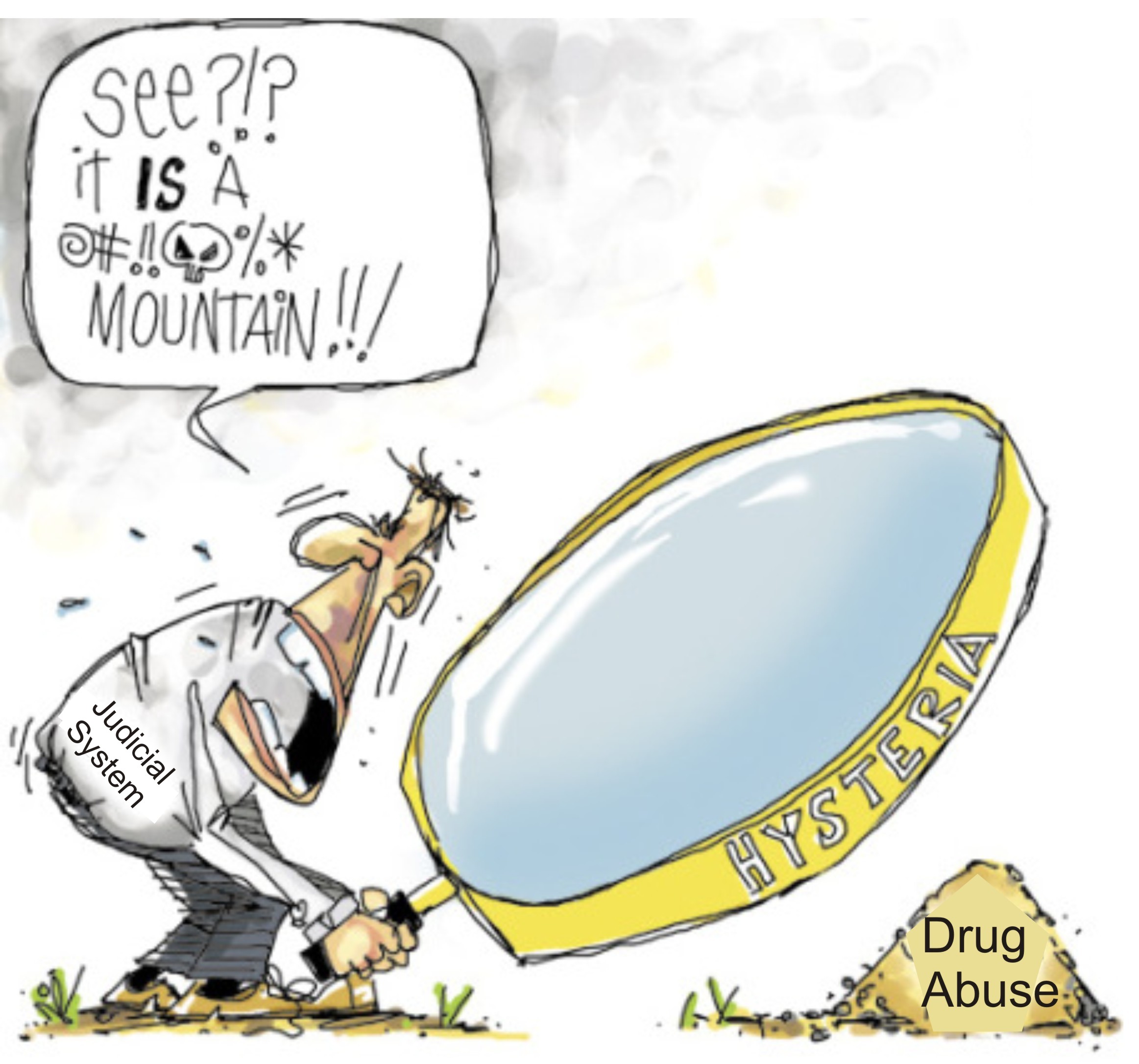
US retailers lose about 1.5% to shoplifting… the drug cartels lose abt 1% to the DEA’s enforcement actions… and we are winning the war after 45 yrs ?

Embedded image permalink

For every ton of cocaine the DEA seized en route to the US, up to 100 more made it through undetected

US retailers lose about 1.5% to shoplifting… the drug cartels lose abt 1% to the DEA’s enforcement actions… and we are winning the war after 45 yrs ?


When pained lives are pushed to “end it all “

This is a comment that was made on this post on my blog

Do some lives matter more than others ?

IMO, this brings home the point as to the physical/mental desperation that some chronic painers have reached, who have been denied pain management or provided some “token doses” to treat their otherwise debilitating pain.  This is no small minority in our society.  I did not want this person’s story to be just a comment or “foot note” that may have otherwise gone unnoticed.

I have Adhesive Arachnoiditis, CRPS and a host of diagnoses that cause constant, debilitating pain. At 31 years old, I was on a small dose of Vicodin, antidepressants (low dose for neurogenic pain), Gabapentin, Flexeril and NSAIDS. At this point, I’d been living with this pain for four years. I now know that I was horribly under medicated for my condition. I wrote a clear note as to why I was leaving, left my drivers’ license with organ donor status and called 911 with the hope that my organs could be preserved for donation. I was outside and put the gun to my brain stem. At that moment, I was tackled by a neighbor who’d overheard my brief call to 911.
Had I been successful in my attempt, I have little doubt that my death would have been documented as Opiod related or R/T “Opiod use disorder” rather than unrelenting physical pain.
I have little doubt that suicides resulting from Chronic Pain are oft reported as Opiod related deaths, fueling the misleading data on the number of deaths related to “drugs” weather they are legally prescribed and being taken as directed or not.
In my County, no matter the cause of death, if Opiates are in the system of the deceased, the death is automatically recorded as drug related. HOW is this fair, accurate or providing accurate information about drug related deaths? It seems to me it aids those who wish to ban pain relieving medications for all but cancer patients, those working in the drug and alcohol treatment field and the DEA.
People living with pain that is oft more severe than cancer pain do not seem to matter in the U.S.A.
Pained lives DO matter.

Pharmacogenomics is the science that allows us to identify a patient’s response to drugs based on their genetic makeup.

https://youtu.be/fGjG_9EEeeA

Pharmacogenomics is the science that allows us to identify a patient’s response to drugs based on their genetic makeup.

#CVS customer SHOT during robbery

Customer shot during robbery at DeKalb CVS

http://www.wsbtv.com/news/news/local/shots-fired-during-armed-cvs-robbery/nnXf8/

DEKALB COUNTY, Ga. —

DeKalb County police say they are searching for at least one person who opened fire during a robbery inside a CVS Pharmacy Thursday.
 
The incident happened at the location on 2586 Lawrenceville Highway near Frazier Road in Decatur around 9:15 a.m.
 
According to police spokesperson Mekka Parish, one of the men fired shots inside the pharmacy. One customer was shot in the hand.

Witnesses say an 18-year-old cashier was held up and had a gun shoved in her face. She hugged her mom and then told Channel 2’s Rikki Klaus about her terrifying experience.

“I was ringing up a customer, and then all I saw was a red mask and a gun pointed in my face, telling me to empty out the drawer,” said cashier Briana Sanders. “And then while him – the first suspect did that – he went to the back, and then suspect number two stayed in the front and made sure I emptied out the drawers, they got a pretty good amount of cash.”

Officers are currently searching for the suspects. Some officers had to rush over to a second robbery at a Dollar General in Clarkston. Investigators think it was the same two men.

Protect the controlled meds.. pts and employees are on their own ?

Pharmacy robberies soar; CVS makes move to curb them

INDIANAPOLIS (WISH) — Indiana has a new distinction as the nation’s leader in pharmacy robberies with nearly 130, according to authorities.

An I-Team 8 investigation has found that the bulk of the robberies, more than 80, have occurred at CVS stores in Indianapolis.

CVS, up until five days ago, did not have time delay safes in any of their stores. This week, CVS executives were in Indianapolis installing those safes in all 150 stores in the Indianapolis area.

The pharmacy giant’s competitor, Walgreens, installed them more than a year ago and claims to have seen a significant reduction in pharmacy robberies in 13 states where they have been used, company officials told I-Team 8.

The time delay safes require pharmacists to activate the safes before they can gain access to highly sought-after medications like Oxycontin and Hydrocodone. The delay, company officials with both Walgreens and CVS contend, will lead to a reduction in robberies.

During an exclusive interview with I-Team 8 this week, CVS Vice President of Loss Prevention Michael Silveira said that the company has installed time delay safes in Indianapolis in direct response to the problem with robberies.

“In this particular case we know it’s been a successful deterrent for other retailers. We studied it over the summer and determined it was the best thing for us to do at this time,” said Silveira.

When asked why the company took more than a year to act after Walgreens, Silveira said “Well, we have a number of different protocols that we employ and after studying and revisiting our protocols, we considered time delay and figured it was time to do it after careful study.”

Sources tell I-Team 8 that the company has been somewhat hesitant to make changes, according to current employees who spoke on a condition of anonymity.

During the past year before CVS had installed the time delay safes, an I-Team 8 analysis of crime data found that pharmacy robberies occurred at more than 80 CVS pharmacies in the Indianapolis area; compared to less than 30 at Walgreens pharmacies, which had installed time delay safes in 13 states.

“It is a concern, but we are not relying solely on the time delay safes,” said Kara Williams, the pharmacy supervisor for the Indianapolis district.

Williams said she has spoke to CVS employees who said they were encouraged that the company was making efforts to address the high number of robberies.

“Potential robbers like to get in and get out as quickly as possible. With time delay safes, we will not have access to our narcotic medications on demand. There will be a wait period, which we’ve seen through studies has been a significant deterrent,” said Williams.

Four days into the new year, the CVS pharmacy at the corner of 38th Street and Illinois Street was robbed by a 16-year old suspect who police say used a note demanding pills and threatening to kill everyone if his demands weren’t met.

The robberies began in Indianapolis one day into the new year and have continued at a steady pace. In the 36 weeks marked off the calendar this year, pharmacy robberies have occurred in 32 of them, an I-Team 8 analysis found.

That same store at 38th Street and Illinois Street would be robbed four more times in the coming weeks.

It has happened again and again at other pharmacies all over Indianapolis.

In fact, the robberies are still happening. This year, Indianapolis has seen at least 112 pharmacy robberies, according to an I-Team analysis of crime data. I-Team 8 has created an interactive database which shows the dates and locations of each robberies, which can be found by clicking here.

When the surrounding feeder communities are factored into the equation, the number grows closer to 130, a figure that gives Indiana its own distinction – as the number producer in the United States of pharmacy robberies.

An I-Team 8 investigation has found that in many of the cases the suspects have walked in armed with only a threatening note and made off with thousands of dollars worth of prescription pills. At a robbery last month at a CVS pharmacy along East Washington Street, a police report notes the suspect made off with more than $6,000 worth of pills. Another one in early May along East 38th Street shows the suspect made off with $10,000 worth of pills, according to police records.

“The rate that they are happening now is unacceptable,” said Lt. Craig McCartt with IMPD’s robbery unit. “Many of these notes have essentially a laundry list of what they want, so they don’t have to remember anything. I just think it’s simple for them.”

While authorities cannot say with certainty why these are occurring at such a high rate, one theory among law enforcement agencies is that Indiana’s struggle with opiates – in particular heroin – has created a rich black market demand for more prescriptions pills on the streets.

“If that is in fact the case, if that scenario is accurate, then it’s an organized crime problem that’s fueling an addiction problem,” said Noblesville Police Chief Kevin Jowitt. “But to answer your question, is it unsettling? Yes it is.”

Noblesville Police Chief Kevin Jowitt was one of the arresting officers at a robbery at CVS pharmacy in Noblesville last month, a suburban town about 25 minutes north of Indianapolis. The community had not recorded a robbery in more than a year – until this summer where two have occurred in the last two months.

At the most recent robbery, court records 18-year old Shawn Baker went into the CVS store, handed over a note implying that he had “a gun and would shoot” and demanded Perocet, Roxicodone, Xanax and Hydrocodone. He was arrested a short time later at a nearby McDonald’s where police say he was attempting to make a phone call. Court records show Baker admitted to officers that he did not have a job and “needed the money.”

A not guilty plea was entered on his behalf at his initial court appearance. Baker is awaiting an October trial. He declined a request to be interviewed.

Just grab anything of value ?

Wife of accused WPB pill mill doc wants her jewels back

http://www.palmbeachpost.com/news/news/crime-law/wife-of-accused-wpb-pill-mill-doc-wants-her-jewels/nnDQ9/

WEST PALM BEACH — The wife of a West Palm Beach doctor who is accused of causing the overdose deaths of two patients wants her diamond jewelry back.

In a lawsuit filed last week in Palm Beach County Circuit Court, Misuk Christensen claims law enforcement officers wrongly seized nearly $139,000 worth of her jewelry when they raided her home along Flagler Drive in August 2011, seeking evidence against her husband, Dr. John Christensen.

Dr. John Christensen photo

Damon Higgins

The warrant agents used to enter the couple’s house did not authorize agents from the Palm Beach County Sheriff’s Office and the Florida Department of Law Enforcement to grab the jewelry, which included a $38,000 gold necklace with a 2.67-carat diamond, diamond earrings valued at $17,850 and a wedding ring, valued at nearly $30,000, according to the lawsuit filed by attorney Gary Dunkel, who represents Misuk Christensen.

While she asked for the jewelry back, her request was ignored, Dunkel claims. He is accusing the agencies of civil theft, which carries the possibility of triple damages.

Dr. Christensen, who for years operated A1A Health and Wellness Clinic on Broadway in West Palm Beach, was charged in 2013 with two-counts of first-degree murder and dozens of drug trafficking charges. Agents said he doled out oxycodone and other powerful narcotics like candy to drug addicts as part of a long-running pill mill operation.

Originally facing the death penalty, prosecutors were forced to reduce the murder charges to manslaughter. He posted a $600,000 bond and is on house arrest awaiting trial.


The BULLIES WITH BADGES HAVE WON !

kickyourass

To got this email this AM… even the STRONGEST can be intimidated… I wonder how many deaths/suicides this will cause ? Of course, no one in the judicial system will be considered guilty or contributing to those deaths.  The judicial system TORTURES our citizens… to either secure their jobs or self affirm their own importance.

To our patients:

in solitary with Dr. Christianson, and in acknowledging the extreme hostility of the regulatory environment in which we are operating, Dr. ibsen will no longer be prescribing any pain medications to chronic pain patients. Dr. Ibsen will be taking some time off to plan the next safe course of action.

We wish you all the best.

Mark S Ibsen MD
Urgent Care Plus

Corrections Officers Took Away Diabetic Man’s Insulin, Then Watched Him Slowly Die

Corrections Officers Took Away Diabetic Man’s Insulin, Then Watched Him Slowly Die

http://thinkprogress.org/justice/2015/09/01/3697394/carlos-mercado-diabetes-video/

The New York Times has obtained harrowing new jail footage of the final hours of diabetic Rikers Island inmate Carlos Mercado, who died because correctional officers had taken away his insulin.

Mercado, 45, was arrested in August 2013 for attempting to sell a small amount of heroin to an undercover officer. He died in in jail at Rikers Island 15 hours later, as corrections officers ignored his pleas for help and his quickly worsening symptoms.

The video shows Mercado collapse face-first when officers open the cell door. Rather than check his condition, officers step over and around his prone body. Later, he weaves around the jail, vomiting repeatedly and carrying a plastic bag of his own vomit.

Internal investigations found that Mercado repeatedly asked for a doctor and told the officers he was diabetic. According to the Department of Corrections report, officers dismissed his pleas, saying he was just withdrawing from drugs.

Mercado’s symptoms were somehow ignored even after New York paid out $17.5 million five years ago for denying insulin to another diabetic man, Jose Vargas. Vargas was kept in a holding cell for about 60 hours and went into a coma. He now has permanent brain damage and is confined to a wheelchair. When asked during the trial what he looked forward to, Vargas answered, “Nothing. I just sit there all day in the chair,” his lawyer told the New York Post.

The NYPD consistently poses a life-threatening danger to diabetics. Another diabetic man was arrested for putting his feet up on the subway while he injected insulin into his thigh. He nearly died during his 30-hour stint in a holding cell and was in the hospital for two days after being released.

Even Shepard Fairey, the celebrated street artist behind the iconic Obama “Hope” poster, has come close to dying in a New York jail because guards withheld insulin. “After two days without insulin, I started throwing up something that looked like radiator fluid,” he told Slamm Magazine in 2000. He now has a tattoo of the word “diabetic” because of the number of times he’s gotten sick after jailers have taken away his insulin.

it is shameful that people are stigmatized because they have pain, they’re isolated, and they’re denigrated often.

The Painful Truth: How Patients Are Treated Shamefully

http://www.painnewsnetwork.org/stories/2015/8/25/the-painful-truth-how-pain-patients-are-treated-shamefully

Lynn Webster, MD, is past President of the American Academy of Pain Medicine, vice president of scientific affairs at PRA Health Sciences, and one the world’s leading experts on pain management. He treated people with chronic pain for more than 30 years in the Salt Lake City, Utah area.

Dr. Webster’s new book, “The Painful Truth,” is a collection of stories involving several of his former patients, who struggled with the physical, emotional and financial toll that many chronic pain sufferers experience.  

Pain News Network editor Pat Anson recently spoke with Dr. Webster about “The Painful Truth: What Chronic Pain Is Really Like and Why It Matters to Each of Us.” The interview has been edited for content and clarity.

Dr. Lynn webster

Dr. Lynn webster

Anson: Dr. Webster, you’re no longer practicing medicine, but you’re still very involved in the pain community and in research. Why write this book now at this stage of your career?

Webster: It takes a lot of time to write a book, as you can imagine, and it’s taken me four years to get to this point.  I think that at this stage in my career I can look back and put together a story about the people who I’ve taken care of for most of my career that I’m not sure I could’ve done in the middle of it. I think that’s given me the ability to look back and reflect and feel the heartache that patients have, and my inability to deliver to them everything that I wanted to deliver to them, because of all of the barriers and obstacles in healthcare.

I’m hoping that my book is going to be a seed that will contribute to a cultural change, a social movement that will bring some dignity and humanity to a large population of our country.

Anson: In your book you said the painful truth is that people in pain are treated shamefully. What did you mean by that?

Webster: When I was growing up on a farm I observed something as a young boy that always puzzled me and that was watching the injured or sick animals. We had all sorts of animals; cows, pigs, sheep, and chickens, and I could see that the injured somehow were always separated from the healthy ones. It wasn’t that the sick separated themselves from the healthy, but the healthy separated themselves from the injured or the ill.

I see that to some degree in people and I wonder if this hasn’t been a biological aspect of survival for man from the beginning. We as humans are better than that; we’re better than we may have been thousands of years ago.

Today, I think that it is shameful that people are stigmatized because they have pain, they’re isolated, and they’re denigrated often. Because of our healthcare system, at least in this country, they’re viewed as addicts, lowlife’s, and druggies. That’s rarely true and it absolutely prevents, it really contributes to the harm that pain sufferers feel towards themselves and their inability to get the type of care they need. I think that it hurts our society in so many different ways, but most importantly the people in pain.

Anson: A lot of your book is dedicated to telling the stories of some of the pain patients that you treated. Virtually every one went through what you just described, where they had trouble getting proper treatment, they had trouble with their jobs, with their families, and with their friends. Is that why you write the book in this way, so that their stories get across the point you’re trying to make?

Webster: Absolutely. It’s less important that a physician tells a story than a patient tells their story. I wanted this book to be felt by the readers, to understand what people in pain experience and the struggles they have.

Anson: You wrote that, “People in pain need to be both treated by medical professionals and supported by all the important people in their lives.” Is that happening?

Webster: No, of course not. There are some patients that have pain who have great support structures in their personal life. For example Alison, she is an individual who had what I thought was the quintessential family support. Were it not for her mother, father and sister, she could’ve gone down the path that too many others take, which would be resignation rather than resilience. It’s one where drugs are used to cope and to escape the pain, physical but also the emotional.

Too many people are separated and too few have the structure of the support system that Alison had.  Our healthcare system is abominable. It shamelessly abandons them with limited resources, limited access and actually a labeling of the individual as if they’re a leper; they have a disease that is contagious.

Anson: Is the average physician in U.S. prepared to treat chronic pain?

Webster: No. I think it’s been reported that medical schools average less than 10 hours of education on pain and even less for addiction. Yet this is the number one public health problem in America and it’s not recognized by the CDC like many other disease states have been.

And so very few physicians understand what pain is. In fact, many think that it’s just a symptom and you never die from pain which is categorically wrong. As I write in my book, pain can be as malignant as any cancer and it can be just as devastating. It can take the soul but it also takes the life of some individuals when we ignore it and when we’re unable to provide them the relief that they deserve.

Anson: If you were a young man again in medical school and trying to decide what specialty to go into, knowing what you know today, would you go into pain medicine?

Webster: Without a doubt, there is no hesitancy in this response; I love the field that I’ve been in. As an anesthesiologist I could’ve stayed in the operating room and honestly the compensation of doing that would have been far better than the path that I chose. But the rewards I’ve received from trying to make a difference and the thank you’s that I’ve received will never be matched by any kind of financial or professional recognition in any other areas.

The most rewarding part of life is really to be able to make a difference in someone else’s life. And I think I’ve been able to do that with hundreds, if not thousands of individuals. That actually is the reason for the book. I’m hoping the book is going to make a difference for more people than I could physically touch in my clinic.

Most of the people that I saw as patients were already experiencing a large amount of pain, they’ve been through the mill and many had their chronic pain for years before they came to see me. We are basically going to be taking care of them the rest of their life. We do get to know them, much like a primary care person does to a family they’ve been caring for, and so we get to know them well. They get to know us. We also begin to see the struggles that they have in the system and with the rejection of their families sometimes, their friends, the isolation. And we become the only source that’s grounded, that gives them potential hope. I took that very seriously and I think that’s why it was so rewarding for me.

Anson: You wrote that you’re neither pro-opioid or anti-opioid. What do you mean by that?

Webster: My focus has never been about making opioids available or that they should be used. In fact ten years ago I started the first national campaign about the risk of opioids. My campaign was called Zero Unintentional Overdose Deaths and you can still find that on the Internet. I did a lot of work at trying to understand the potential risks and mitigate those risks so we can prevent people from harm because I knew one day that if we couldn’t prevent people from being harmed from opioids that there would be political response to this that could be very harmful to a large number of people who are not harmed by opioids.

I think the focus should always be about what’s best for a patient and not about whether a drug or a certain treatment is good or bad. All treatments have potential risks and complications, and we need to evaluate whether or not the potential benefit outweighs the potential risk or harm and it has to be patient centered. So my focus has never been about really any treatment, but it’s always been about what’s best for the patient. I’m more anti-pain than I am pro or anti-opioid.

Anson: You prefer a multi-disciplinary approach to pain treatment?

Webster: Yes, it’s been demonstrated that for people with moderate to severe chronic pain, the type that’s not likely to be resolved, it is best managed in a multi-disciplinary, integrative approach. I see the need for more cognitive behavioral therapy. We should always tap into the different treatments that have low risk associated with them before we ever tap into something that has more risk, for example opioids or even interventional treatments we as anesthesiologists and some of the other pain specialists can provide.

Much about pain is really learning how to cope, how to deal with it from day to day and how to manage the stress that’s associated with it because stress augments all pain. And so it’s really important that we use all of the resources that we have to manage the pain and not just a single modality, certainly not opioids or spinal cord stimulators, but look at how we can manage this in a more mindful way, even as clinicians. I use that word intentionally because mindfulness is really what the doctor needs to use as much as the patient in order to optimize the treatment with the lowest risk.

Anson: Has the pendulum swung too far against use of opioids?

Webster: I think there’s too much focus on opioids by almost everyone. And what it has done is it’s forgotten about people. Opioids can cause a great deal of harm, we see way too many people harmed from opioids. But certainly a vast majority of people who have been exposed to opioids are not harmed by them and there are countless number of people, a huge number of individuals who have been on opioids for decades, that believe very strongly that they’ve improved their lives and they could not live without them.

I think the focus is in the wrong place. Our focus should not be on opioids and whether they should or should not be prescribed, but what is the best treatment for the patient? And if opioids are inappropriate as a pain treatment, then I say all of the anti-opioid people as well as the individuals who are interested in helping people with pain should come together and demand that we have more money invested in research so we can replace opioids entirely.

We cannot always know who’s going to have an addiction triggered by exposure. As I pointed out in my book, Rachel just went in for an appendectomy and that initial opioid that she received lead her down a serious, dreadful path because she didn’t have the social support to keep her from taking that path.

I think that the anti-opioid people and those of us who are interested in bringing some dignity and humanity to a large population of people in pain need to come together and insist that we have a Manhattan Project basically and to discover safer and more effective therapies that are not addictive.

Anson: The final version of National Pain Strategy will soon be released, with the goal of advancing pain research, healthcare and education in the U.S.  From what you’ve seen and heard so far about it, are they on the right track?

Webster: Yes, I think it’s an important step forward. I think that it brings most importantly the government into the picture, recognizing the need that we do something on a national scale and that alone is a big step forward.

It’s kind of like in my book there are three important words, “I believe you.” This is really the way the government can say, “I believe you.”  There is a problem in this country with the way in which we treat pain and the National Pain Strategy is about how they’re going to address that. Having the federal government say I believe you, there is a problem, let’s see if we can change the way pain is treated in this country is a huge step forward.

Anson: Thank you, Doctor Webster.