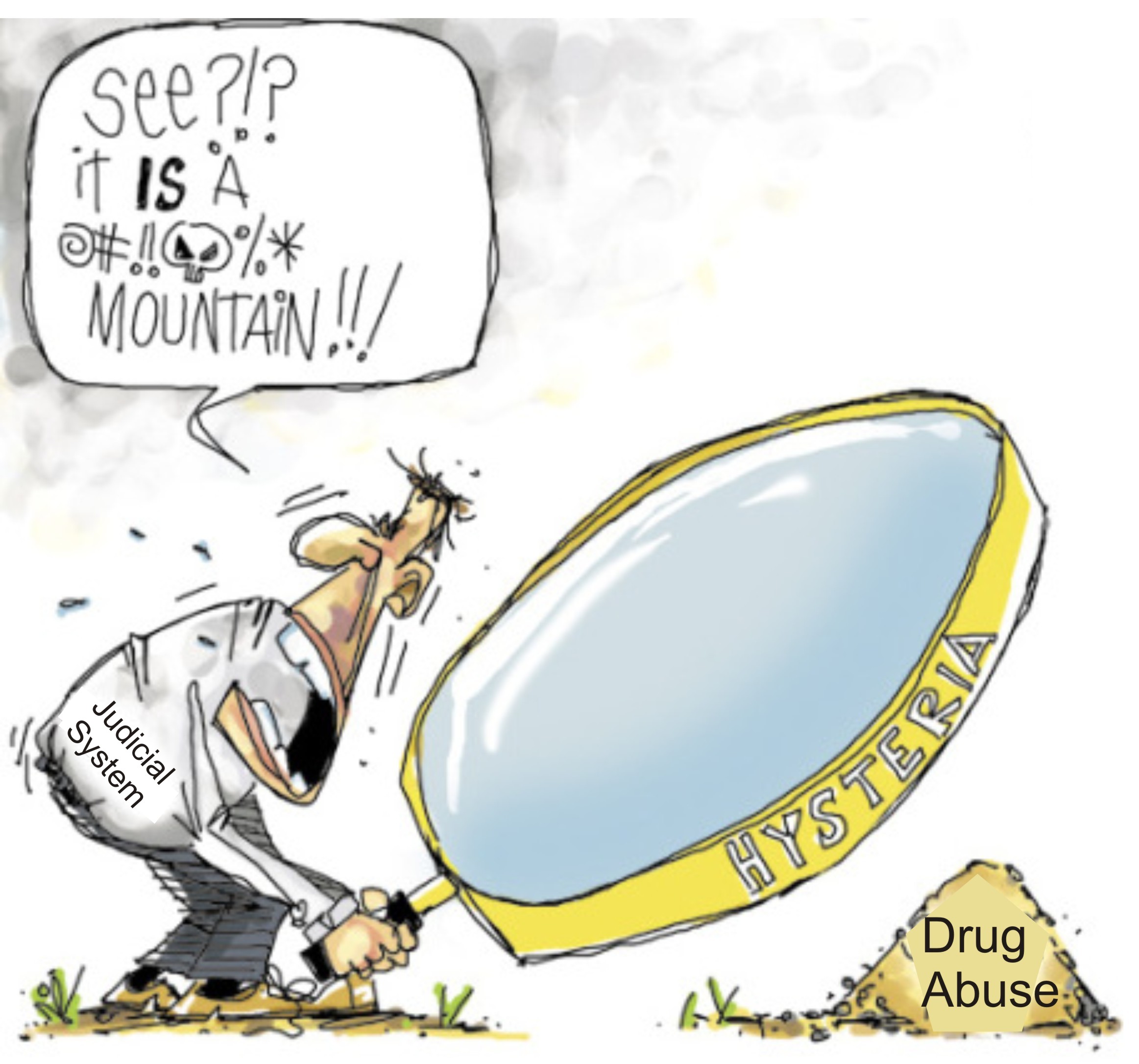
“Black Market” Congress created in 1914 is alive, well, and GROWING !

DEA: ‘Meth … is dark horse riding side by side with heroin’; Mexican cartels operating in Northwest

http://q13fox.com/2015/08/31/dea-methamphetamine-is-a-dark-horse-riding-side-by-side-with-heroin-mexican-drug-cartels-in-the-pacific-nw/

A drug epidemic is fueling crime in western Washington and now we know where it is coming from. The DEA has already seized more meth this year than ever before and it can be traced right back to the cartels.

Robert Dixon weighed just 129 pounds last November. His drugs of choice? Meth and heroin.

“It just gives you a burst of energy and it winds you up and you go and go,” said Dixon who is 45 days clean.

For 9 out of 10 heroin users, meth is their secondary drug of choice.

“Methamphetamine is a dark horse riding side by side with heroin,” said DEA Acting Special Agent in Charge Doug James.

The agency has seized more than 430 pounds of meth so far this year compared to 100 pounds in 2009.

Likewise, deaths have risen as well. In King County, there were 15 meth related deaths in 2009, 70 last year and the DEA says the drugs can be traced back to the Mexican Cartels.

“You know we’re 1,277 miles from the SW border, but that’s a 20 hour car drive, 20 hours they can have the drugs up here for distribution and this is a lucrative market here in the Pacific NW,” said James.

Calling them the greatest criminal drug threat to the U.S., a newly unclassified DEA intelligence report uses graphics to show which cartels are the most active here. The Sineloa cartel, led by Joaquin Guzman who escaped from a Mexican prison in July has the biggest presence. The cartel is active in Seattle, Tacoma, Yakima and Spokane.

“The Sineloa cartel is like a consortium of independent trafficking groups that have come together for a common goal. There are multiple heads to the organization with lieutenants. It’s run like a Fortune 500 company and if you cross them, they’re gonna do harm to you,” said James.

The DEA says next in size is the Beltran-Leyva cartel operating on the Canadian border in Bellingham. The Knights Templar cartel is operating in Seattle, Tacoma and Portland. The New Generation cartel has a small foothold in Seattle but is one of the most dangerous and fastest growing criminal organizations in Mexico. And the DEA worries could spread here.

“More often than not, we’re seizing weapons associated with large quantities of drugs and that’s alarming,” said James.

The DEA has set up a tip line where you can report dealers anonymously. Just text “TIP411” and start your message with “TIP-DEA.”

Is MJ a gateway drug to alcoholism ?

marijuana dispensary

Alcohol sales get higher after weed legalization contrary to industry fears

http://www.theguardian.com/politics/2015/aug/31/alcohol-industry-sales-marijuana-colorado?CMP=ema_565

Underlying the debate over marijuana legalization has been an equally fierce battle between marijuana and another so-called vice industry: alcohol.

As an increasing number of states look to join the four states and Washington DC in legalizing recreational marijuana, many in the alcohol industry have feared that legalized weed will cut into their existing profits.

But a few years into Colorado legalization, alcohol sales are up in the state, and those in the alcohol business have embraced their fellow industry.

In the 18 months since recreational sales were legalized in Colorado, “we’ve just seen phenomenal growth”, said Justin Martz, 32, who runs Mr B’s Wine & Spirits in downtown Denver. He noted that there was some concern initially about legalization, “but it’s really turned out to be a non-issue”. In fact, he said, “if anything it’s kind of helped us. A high tide lifts all boats.”

Bryan Simpson, spokesman for the Fort Collins craft brewery New Belgium, agreed that doomsayers in the alcohol industry were wrong. He argued that rather than alcohol and pot directly competing against one another for consumers’ dollars, the two can be mutually beneficial in boosting overall sales. “There’s definitely some crossover in the two communities of beer drinkers and herb enjoyers,” Simpson said. “But I don’t think people are doubling down in one category or the other.” To underscore that point, he noted that legal marijuana has had “no demonstrable impact at all in terms of sales” at New Belgium.

Tax records show that alcohol sales have continued to grow in Colorado despite the rapid rise of recreational marijuana. Even as tax revenues from marijuana nearly tripled between June 2014 through May 2015, alcohol sales continued to steadily increase as well, with alcohol excise taxes rising 2.1%, the same increase as the year prior.

This symbiotic relationship comes after the two groups went head-to-head in the fight over legalization.

Industry groups have feared that marijuana legalization would deplete interest in alcohol. “Consumer preferences and purchases may shift due to a host of factors,” including “the potential legalization of marijuana use on a more widespread basis within the United States,” warned the Brown-Forman Corporation, a publicly traded liquor manufacturer that produces many well-known brands including Jack Daniel’s and Southern Comfort, in a recent SEC filing.
Advertisement

This fear is backed by some academic research, which has found that many consumers consider alcohol and marijuana to be substitutes. One study found that legalization of medical marijuana in many states led to sharp decreases in alcohol consumption. The alcohol industry is “smart to worry about it”, one of the study’s authors, University of Colorado Denver economics professor Daniel Rees, told the Denver Post.

In some cases, alcohol groups have openly opposed weed legalization initiatives and backed that opposition up with major campaign donations. In 2010, the California Beer & Beverage Distributors made a $10,000 contribution to Public Safety First, a group fighting Proposition 19, a measure to legalize recreational marijuana in the Golden State. The initiative ended up losing by seven points.

The marijuana industry has taken aim at alcohol as well. Nearly every marijuana legalization campaign bases its argument on comparisons to alcohol, contending that the plant is less dangerous and frequently using campaign name variations of “regulate marijuana like alcohol”.

In 2013, there was a big dust-up between the Marijuana Policy Project and the Beer Institute after the former put up advertisements in Portland, Maine with middle-aged people declaring: “I prefer marijuana to alcohol because it’s less harmful to my body” and “I prefer marijuana to alcohol because it doesn’t make me rowdy or reckless”. Chris Thorne of the Beer Institute responded that it’s misleading to compare marijuana to beer, because it’s “distinctly different both as a product and an industry”.

Part of the reason for the alcohol and marijuana industries’ success may be a boost in Colorado tourism. Though some state officials insist marijuana is not attracting new visitors, Colorado tourism set record highs in 2014, the first year of legalization, with 71.3 million visitors who collectively spent $18.6bn.

Many in the alcohol industry credit marijuana with helping boost tourism. Martz said he frequently asks tourists in his downtown store what brought them to Colorado. “Legalization adds to the overall draw,” he noted, even if most tourists don’t come solely for pot. Simpson concurred that the number of tourists visiting New Belgium has continued to increase steadily, including from some pot-inclined tourists.

And alcohol isn’t simply a remora to the marijuana shark; the two industries are even finding ways to help one another out. Many out-of-towners who visit Mr B’s Wine & Spirits ask Martz where the closest dispensary is. He’s not only happy to help direct them, but also has a stack of coupons from the dispensary in his shop to hand out.


Blood Thinners – convenience vs safety ?

Slippery Slope: Does Convenience Trump Safety With NOACs?

http://www.medpagetoday.com/special-reports/slipperyslope/52867

At 88-years-old, Gloria Glatz still embraced life.

The mother of three was an avid Scrabble player and made a phenomenal potato salad in between occasional visits to the casino.

Like as many as 5 million Americans, Glatz had atrial fibrillation, a known risk factor for stroke.

In December 2011, her doctor decided it was time to put her on an anticoagulant drug, but rather than choosing the decades-old standby, warfarin, the doctor prescribed Xarelto (rivaroxaban), which had been approved by the U.S. Food and Drug Administration just a few months earlier.

Xarelto is one of four anticoagulants approved since 2010 that make up a class of drugs known as novel (or newer) oral anticoagulants, NOACS (pronounced No-aks) for short. Widely promoted as more convenient than warfarin, the drugs came to market with much fanfare anticipating blockbuster status.

But unlike warfarin, which is a vitamin K antagonist that can be turned off in a bleeding emergency or prior to surgery by administering vitamin K, all of the NOACs were approved without an antidote, although packed red blood cells can slow their anticoagulation action.

When Glatz developed gastrointestinal bleeding, months after she started taking Xarelto, doctors could not make it stop. She died March 23, 2012 at a Kenosha hospital.

“They said there was nothing they could do,” said her daughter, Dottie Glatz.

Convenience: Yes, Antidote: No

Since 2010, more than 58,000 people have reported a serious side effect, such as a major bleeding episode, after using one of the anticoagulants designed to replace warfarin, a MedPage Today/Milwaukee Journal Sentinel investigation found.

At least 8,000 deaths have been linked to three of the new anticoagulant drugs since 2010, compared with about 700 for warfarin. Mortality data for the fourth drug, approved in January, is not yet available.

These numbers are drawn from the FDA’s adverse events reporting system, which is largely voluntary. Though the reports are not verified, the numbers suggest an imbalance: the three newer drugs accounted for less than 10% of all anticoagulant prescriptions, yet they were linked to more than 90% of deaths reported to the FDA since 2010.

Doctors are increasingly prescribing the newer, more expensive drugs to people with afib as a way to prevent strokes and also for short term use for both prevention and treatment of deep vein thrombosis (DVT).

A primary selling point to the drugs is that they don’t require regular INR testing. With warfarin, also known as Coumadin, patients must have regular INR testing, which can be done at a doctor’s office, an anticoagulation clinic, or can be monitored with home testing.

Patients must also follow dietary measures, such as not eating large or inconsistent amounts of foods that are rich in Vitamin K, which can lessen warfarin’s effectiveness. That includes spinach, kale and brussels sprouts.

Alcohol also should be limited to small amounts.

Marketing campaigns highlight the convenience of the new drugs, including a recent TV ad for Xarelto featuring comedian Kevin Nealon, who has atrial fibrillation, and golfer Arnold Palmer and NASCAR driver Brian Vickers, who both had blood clots in their legs.

The three sit at a table at a golf course.

“Let’s see, golf clinic or blood clinic?” Nealon says. “Ooh, that’s a tough one.

More than 10 million prescriptions for the new drugs, costing about $3.5 billion, were dispensed in 2014, according to data from IMS Health, a market research firm. Prescriptions for warfarin, which is a fraction of the price, went down slightly in 2014 compared with 2013 and 2012.

The NOAC Boom

The surge in use of the drugs has been bolstered by a new system for determining stroke risk that was devised by a British doctor who, the MedPage Today/Journal Sentinel investigation found, has extensive financial ties to companies that make or market the new drugs.

The new system was adopted as part of treatment guidelines by leading medical societies in the U.S. and Europe — ones that themselves have received millions from drug manufacturers.

In addition, many of the doctors who wrote those guidelines or issued other recommendations had personal financial ties to those companies, such as working as speakers or consultants.

Some 5.2 million Americans have atrial fibrillation, according to a 2013 paper published in The American Journal of Cardiology. That’s higher than past estimates of about 3 million.

How many qualify for an anticoagulant under the new guidelines?

Applying new scale, the number of Americans deemed in need of an anticoagulant jumped overnight from an estimated 3.7 million to 4.7 million, according to a paper published in May in the journal JAMA Internal Medicine.

That number includes nearly all women with atrial fibrillation and virtually everyone 65 or older with the condition are considered candidates for being on the drug.

Rita Redberg, MD, a cardiologist and editor of JAMA Internal Medicine, said she tells patients to wait a few years until the true risks and benefits of the new drugs are known.

“I don’t prescribe any of the newer oral anticoagulants,” said Redberg, a professor of medicine at the University of California, San Francisco. “My concern is that a lot of the people being put on the novel oral anticoagulants will have more harm than good.”

The new drugs have proven to be an expensive alternative to warfarin, now a generic, which remains more frequently used.

In 2013, taxpayers paid more than $1 billion for prescriptions of just two of the drugs, Xarelto and Pradaxa (dabigatran), according to an analysis of Medicare data. Warfarin was  dispensed about six times more often, but cost taxpayers significantly less — $240 million.

The data for 2013 are the most recent available.

And medical errors, often caused by doctors not knowing their patients, have become the third leading cause of death in the US.

“Please empathize with me, Doctor!”

http://www.psychiatrictimes.com/blogs/couch-crisis/please-empathize-me-doctor

The doctor/patient relationship has been the central instrument of healing throughout the history of medicine. Specific treatments come and specific treatments go. Some help patients; some hurt patients; many have no impact at all. But the constant of 4000 years of modern medicine has been the healing impact of the relationship with a doctor, however ineffective or harmful the type of treatment provided.

In recent years, high tech medicine has undercut the value previously placed on the doctor/patient relationship. Doctors spend more and more time tending their powerful medical toys, less and less time getting to know their patients. They treat lab values, not people.

This would be OK if the new medicine lived up to its promise of razzle/dazzle, technically-based cures. But usually it doesn’t. Diseases are really complicated and we are much better at finding abnormalities than at making people better. And medical errors, often caused by doctors not knowing their patients, have become the third leading cause of death in the US.

We need to combine the science of medicine with its art and to get our doctors and our patients back in sync. Medical schools are finally beginning to recognize this and are revising their entrance test to place more emphasis on the social, not just the biological sciences. It is crucial that we make medicine more humane.

The “Empathize With Me, Doctor!” project is a promising initiative in this direction, developed by Vassilios Kiosses and Ioannis Dimoliatis of the Medical Education Unit at the University of Ioannina in Greece. They write:

“We provide an experiential training program aimed at improving health care professionals’ empathy, based on the Person-Centered Approach (PCA) founded by Carl Rogers. Unconditional positive regard, empathy, and congruence are elements that can create a safe climate where students develop alternative ways to relate with each other and with their patients.

The training in empathy lasts 60 hours, distributed in three 3-day intense workshops, occurring at 4 week intervals. There are three modules: theory, personal development, and skills development.

Empathy is not taught as a technique but as a philosophy and a new way of being and relating. This is why an experiential training program is needed.

The theory part of the training includes an introduction to communication skills and specifically the importance of non-verbal communication. The student is taught how to gather a medical history in a person-centered way, combining open ended questions that allow patients to take the lead with more structured medical interviewing. The clarification of what empathy is, how it is used in medicine and how it can be applied during doctor/patient relationship, constitutes a large part of the training.

Last but not least, medical undergraduates are introduced to the theory of bereavement in the medical context, and also how to break bad news empathetically.

It is important in creating an empathic climate to be aware of one’s own needs and boundaries during encounters with patients. That is why a personal development section is included, with experiential exercises in self-awareness, self-knowledge, and identification of others. To facilitate this process, we use artwork as triggers for introspection and increased awareness of their own and patient’s inner needs. Creating in clay or collage allows students to be more freely expressive. Through this section students seek to answer “what scares me during my practice?”, “what am I expecting from me?” or “how can I respect myself and my patient?”

Encounter groups provide an opportunity for verbal interaction and emotional expression. Students are encouraged to examine and explore their reactions and feelings about their relationship with their patients and others in the group.

The skills development section contains active listening exercises, role plays, non- verbal communication games and more practical implications of empathy. Medical undergraduates have the chance to try and develop such skills aiming at improving person-centered interviewing with a patient. Case studies are also used to help medical undergraduates to work on real, everyday problems in empathy.

This training aims at improving each student’s interaction in the training group with the hope it will then lead to more empathic encounters with patients. Trainers try to create a condition full of acceptance, genuineness, and empathy to help trainees try new ways of interacting and relating. This not only trains professionals in a more effective communication techniques, but also sensitizes them to act in a more genuine and humanistic way.

The experiential nature of the training, has elements far different from what is usual in medical school. No lectures or study at home is needed. Student often describe it as “a life-changing experience” and “this empathy training taught me a whole new way to relate.”

Hippocrates stated that patients often recover because they believe in their doctors. This training helps build that trust. Most doctors currently don’t even ask their patients what scares them and if they are anxious about their treatment and health outcomes. We need to make them more alive to the emotional reality of the medical contact.”

Amen.

On the first day of medical school 50 years ago, the spare, spectral chairman of medicine wished all of us students a life threatening illness that we would recover from. Only in this way, he said, would we fully understand what it was like to be a patient. When he retired soon after, he did an astounding thing- he entered medical school as a student and did everything all students were required to do over the four years. He wanted to experience first hand from both sides what was wrong and what was right about medical training.

I don’t have the dedication or endurance to repeat his heroic experiment. But I think there is no mystery in what is currently wrong with medical education. It has become far too technical and has lost its central focus on the relationship to the patient.

This is bad in emotional terms. But it is also bad in terms of medical outcomes. Doctors who don’t know their patients make easily avoidable technical mistakes that can have tragic consequences.

The best way “to do no harm” is to know and understand your patient.

More funding for addicts “frequent flyer” program ?

New deal brings more NARCAN funding to Mass.

BOSTON (NEWS10) – Attorney General Maura Healey has announced a deal that will bring more funding for NARCAN to the Commonwealth.

Healey’s office said they reached a deal with a national pharmaceutical manufacturer that will require the company to pay $325,000 to help offset the costs of NARCAN.

The drug is used to counter the effects of opioid overdose. The first-of-its-kind payment is the equivalent cost of 10,000 units of NARCAN.

Ken Mc Kim explaining Myelomalacia

Feel This Pain: MyelomalaciaMyelomalacia is term referring to the softening of the spinal cord. It’s no laughing matter.I would be remiss if I didn’t take this opportunity to thank everyone at the Myelomalacia support group on Facebook who were kind enough to allow me into their group, and who were very open with me, answering my questions and sharing their experiences with me.If you suffer from this condition, I encourage you to reach out to this group. They are a great resource, and a wonderful group of people.https://www.facebook.com/groups/1385536881729549/

Posted by Don’t Punish Pain on Monday, August 31, 2015

Reducing pain during vaccination ??? Just suck it up !!!

Reducing pain during vaccination: New guideline to help manage pain in children and adults

A new Canadian guideline aims to ensure that pain during vaccination is minimized in both children and adults. The guideline, published in CMAJ (Canadian Medical Association Journal), is targeted at all health care providers who administer vaccines.

“Pain from vaccinations is common and can make people hesitate about getting future vaccines even as adults,” states Dr. Anna Taddio, Senior Associate Scientist at The Hospital for Sick Children (SickKids), Toronto, Ontario, and Leslie Dan Faculty of Pharmacy, University of Toronto. “This can put people at risk of contracting infectious diseases that are largely preventable through vaccination.”

This expanded and updated guideline includes recommendations for both children and adults; the 2010 guideline focused on children only. A multidisciplinary group of 25 people from across the country (HELPinKids&Adults team) with expertise in pain, fear, vaccines, nursing, epidemiology and other related fields reviewed the literature to develop the guideline.

“Many of these recommendations can be used in a variety of settings where vaccines are delivered, whether in a physician’s office, a public health setting such as a school or a workplace,” states Dr. Taddio.

Key recommendations:

All ages:

  • Aspiration should not be used during intramuscular injections in people of all ages. (Aspiration is pulling back on the syringe to make sure the needle is not in a blood vessel.)
  • Inject the most painful vaccine last during visits for more than one vaccination.

Children:

  • Breast- or formula-feed infants under age 2 years during vaccination or give sugar solutions before injection.
  • Hold children aged 0-3 years during injections to provide comfort.
  • An upright position is recommended for children and adults over age 3 years because it provides a sense of control and can decrease fear. Restraining children is not recommended.
  • Apply topical pain analgesics before injection in children under age 12 years.
  • Parents of children aged 10 years and under should be present during vaccination to lower the child’s distress levels.

The authors also recommend educating parents, older children and adults about what to expect with a vaccination, how it might feel and what they can do to manage any pain.

“No single intervention in this guideline is expected to prevent all pain (i.e., achieve a level of pain of “0”), write the authors. “Individual interventions can be combined, as appropriate, to improve pain relief. For young and school-aged children, because of the high levels of distress with vaccine injections and higher potential for long-term harm (i.e., development of needle fear and health care avoidance), a more comprehensive and consistent approach is recommended.”

However, evidence for specific groups is lacking.

“There was a noticeable gap in research evidence for adolescent and adult populations, and mass immunization settings, even though concerns about pain and fear are well documented and contribute to vaccine hesitancy,” write the authors.

Efforts should focus on making school vaccination campaigns a more positive health care experience for children.

Patient records are far more valuable than credit card information for people who plan to commit fraud,

Cyberattacks on health systems on the rise

https://drugstorenewsce.com/editorial-news-item/3/6781

NEW YORK — As many as eight-in-10 health care executives say that their organizations have been compromised by at least one malware, botnet or other cyber-attack during the past two years, and only half feel that they are adequately prepared in preventing attacks, according to the 2015 KPMG Healthcare Cybersecurity Survey.
 
Furthermore, in polling 223 chief information officers, chief technology officers, chief security officers and chief compliance officers at health care providers and health plans, KPMG found the number of attacks increasing, with 13% saying they are targeted by external hack attempts about once a day and another 12% seeing about two or more attacks per week. More concerning, 16% of healthcare organizations said they cannot detect in real-time if their systems are compromised.
 
“The vulnerability of patient data at the nation’s health plans and approximately 5,000 hospitals is on the rise and health care executives are struggling to safeguard patient records,” Michael Ebert, leader in KPMG’s Healthcare & Life Sciences Cyber Practice, said. “Patient records are far more valuable than credit card information for people who plan to commit fraud, since the personal information cannot be easily changed. A key goal for execs is to advance their institutions’ protection to create hurdles for hackers.”
 
Greg Bell, who leads KPMG’s Cyber Practice, feels also that many organizations not seeing frequent cyber-attacks may underestimate the threat.
 
“Healthcare organizations that can effectively track the number of attempts have less cause for worry than those who may not detect all of the threats against their systems,” said Bell. “The experienced hackers that penetrate a vulnerable health care organization like to remain undetected as long as they can before extracting a great deal of content, similar to a blood-sucking insect.”
 
When asked about readiness in the face of a cyber-attack, 66% of execs at health plans said they were prepared, while only 53% of providers said they were ready. Larger organizations, in terms of revenue, are better prepared than smaller ones.
 
Malware, software designed to disrupt or gain access to private computer systems, is the most frequently reported line of attack during the past 12 to 24 months, according to 65% of survey respondents. Botnet attacks, where computers are hijacked to issue spam or attack other systems, and “internal” attack vectors, such as employees compromising security, were cited by 26% of respondents.
 
According to the KPMG survey, the areas with the greatest vulnerabilities within an organization include external attackers (65%), sharing data with third parties (48%), employee breaches (35%), wireless computing (35%) and inadequate firewalls (27%).
 
The KPMG survey found that spending to prevent cyber-attacks has increased at most institutions, but it has to be on the right initiatives and fit the organization’s strategy, accordint to Bell.  
 
“There are no cookie cutter approaches to security,” Bell said. “An organization with a mobile workforce may have a far different technology need from an organization that processes healthcare claims, for example.”

Cowboy Doctors” and Health Costs

Cowboy Doctors” and Health Costs

http://harvardmagazine.com/2015/08/cowboy-doctors-and-health-costs

Who’s driving up U.S. healthcare costs? A recent study by Harvard professors and colleagues revealed that the culprits may be “cowboy doctors”—physicians who provide intensive, unnecessary, and often ineffective patient care, resulting in wasteful spending costing as much as 2 percent of the nation’s Gross Domestic Product—hundreds of billions of dollars annually. The authors, including Eckstein professor of applied economics David Cutler and assistant professor of business administration Ariel D. Stern, found that physicians’ beliefs in clinically unsupported treatment procedures can explain as much as 35 percent of end-of-life Medicare expenditures, and 12 percent of Medicare expenditures overall.

Physicians treating a critically ill patient may decide either to provide intensive care beyond the indications of clinical guidelines (such as implanting a defibrillator to counter severe heart failure), or attempt to make the patient more comfortable by administering palliative care. The researchers called the former group “cowboys” and the latter “comforters,” and found that their respective concentrations in a region closely tracked end-of-life spending as a whole. “It was absolutely amazing how strong [the correlation] was,” Cutler said. The data indicate that cowboy doctors tend to congregate in southeastern states such as Florida. They are also more likely to be male, and less likely to be specialists.

Though these cowboy doctors may be pushing the frontier of medicine by going above and beyond, said coauthor Jonathan Skinner, a professor of economics at Dartmouth, clinical evidence showed little or no marginal benefit derived from the extra procedures, resulting in wasteful spending. Cutler suggested that doctors’ beliefs in these ineffective treatments may spring from their self-perception as “interventionists”: “I think some doctors are saying: ‘I just can’t accept that this patient is dying and there’s absolutely nothing I can do. I’ve got to do something.’”

The study noted that very few doctors wanted to discuss the option of palliative care with patients, prompting Cutler to draw an analogy to auto mechanics: “You want this engine fixed, I’ll fix it. I’m not going to talk to you about whether you should get a new car—that’s someone else’s’ job.” But as a result, he said, patients are “Ping-Ponged back and forth” between the primary-care physician, who recommends a specialist, and the specialist, who prefers to leave the question of whether certain treatments are necessary to the primary-care physician. Meanwhile, medical bills rise.

Traditionally, researchers attempt to get a picture of physicians’ beliefs by analyzing their actual behaviors. The problem is that other actors, such as patients, can have a say in these behaviors as well. The ability to tease out doctors’ actual beliefs proved to be the study’s biggest innovation, Cutler said. This was achieved by using “strategic surveys” that included vignettes of specific patient scenarios, and asking the responding physicians what they would do in each situation. Such surveys are often used in other areas of social science, Stern explained, but had rarely been used before to study healthcare economics.

Self-reports are sometimes unreliable, because respondents attempt to give the “textbook answer” rather than express their true beliefs. But this time, the researchers found that many physicians reported making decisions supported neither by clinical guidelines nor by medical literature. “Doctors are basically not relying on public scientific evidence,” Skinner said. “They are relying on their own beliefs, developed through…time.”

The study also found that most doctors who recommended unnecessary procedures weren’t seeking extra income—suggesting to Cutler that the lack of financial penalty, rather than the presence of financial reward, accounts for “cowboy” doctors’ actions. The healthcare system’s current incentives, he said, often do not prompt doctors to ask the right questions, such as whether a proposed treatment truly benefits the patient. “If doctors restrict themselves to performing what is evidence-based,” Skinner pointed out, “we can save hundreds of billions of dollars a year.”

According to Elliott Fisher, a professor of health policy at Dartmouth, a movement is under way to shift the healthcare-payment system toward incentivizing concrete benefits for patients. (A case in point is the hundreds of accountable-care organizations around the country, which seek to reward high-quality, low-cost care.) The new study, Fisher suggests, is important because it highlights a power imbalance in the physician-patient relationship: doctors tend to follow their own beliefs about the right treatment to use, leaving patients little say in the process. How to treat a patient is often a multiple-choice question without a straightforward, single “correct” answer. When making these decisions, Fisher said, doctors should pay more attention to the patient’s preferences, instead of relying on their own experience.

The research suggests that it’s time for the cowboys to rein themselves in, and learn to listen.

Requirements of PIC in Mississippi

An inventory which shall include such drugs, chemicals, and preparations as may be necessary to fill ordinary prescriptions as indicated by experience in the area where the pharmacy is located;

Other states most likely have similar requirements of the Pharmacist in Charge. ceasing to stock certain medications – or claiming not to have them in inventory could be a violation of the state’s pharmacy practice act

ARTICLE VII RESPONSIBILITY OF PHARMACIST-IN-CHARGE (PIC)
1. The person who signs the application for a pharmacy permit or the renewal of a pharmacy permit shall be the pharmacist-in-charge (PIC) for that facility.
A. Authority. The PIC of the pharmacy shall be responsible for complete supervision, management and compliance with all federal and state pharmacy laws and regulations pertaining to the practice of pharmacy in the entire prescription department. He/She shall have the cooperation and support of all pharmacy staff in carrying out these responsibilities. The pharmacist-in-charge is responsible for assuring that all personnel are properly registered or licensed with the Board and, that all pharmacy permits are current and appropriate for the type of pharmacy operation being conducted.
A pharmacist shall not be the PIC at more than one Community Pharmacy or Institutional I Pharmacy and shall not be the pharmacist-in-charge or have personal supervision of more than one facility which is open to the general public on a full time basis.
B. Recommended Guidelines:
(1) That each individual work space is designed to provide space and a work flow design that will accommodate the workload in an organized fashion;
(2) That the computer’s software should be of a design so that drug interactions and contraindications must be reviewed by the pharmacist. Further, the computer system should support counseling and drug utilization review documentation;
(3) That trained supportive staff should be maintained to meet the demands of the practice site, workload, and the clientele served;
(4) That all staff should have the opportunity to take periodic breaks and/or meal periods to relieve fatigue and mental and physical stress. Nothing in this paragraph suggests closing the pharmacy;
(5) That all staff should be afforded and encouraged to participate in training and continuing education in order to keep them abreast of new information and changes in the field;
(6) That if quotas or formulas such as prescription volume are used to set staffing, conditions such as peak workload periods, workplace design, and the training of staff must be taken into consideration.
C. Circumvention. It is a violation of this section for any person to subvert the authority of the pharmacist-in-charge by impeding the management of the prescription department for the compliance with federal and state drug or pharmacy laws and regulations. Any such circumvention may result in charges being filed against the pharmacy permit.
2. A permit for a pharmacy located within the state shall not be issued or renewed unless such person be a pharmacist licensed in this state.
If the pharmacist license of the pharmacist-in-charge becomes void or inactive due to surrender, revocation, suspension, restriction, or for any other reason, application must be made for a new pharmacy permit by another pharmacist within ten (10) days.
3. If the employment of a pharmacist-in-charge is terminated or if for any other reason he/she wishes to be relieved of the responsibilities of the PIC, he/she must:
A. Return the permit to the Mississippi Board of Pharmacy with written notice that he/she is no longer the pharmacist-in-charge for that facility and;
B. In accordance with the provision of paragraph 2 of ARTICLE XXV of the Regulations, send to the Board of Pharmacy an inventory of any controlled substances on hand at the facility at the time of his/her termination as pharmacist-in-charge.
C. When the relinquishing PIC cannot or does not comply with the inventory requirements of this paragraph it shall be the responsibility of the new PIC to send to the Board of Pharmacy an inventory of any controlled substances on hand at the time he/she assumes responsibility as PIC.
D. The relinquishing PIC is responsible for notification of appropriate supervisors or owners of the surrender of the permit.
When a permit is thus returned for a facility, application for a new permit for that facility must be made to the Mississippi Board of Pharmacy within ten (10) days.
4. If a permitted facility is permanently closed or has a change of ownership, the pharmacist-in-charge for that facility shall give notice to the Board of the effective date of closure or change in ownership and include the storage location of the businesses records and appropriate contact information. If a permitted facility has a change in name or location, application for a new permit must be made to the Board at least ten (10) days prior to the change in name or location. Once issued, a permit cannot be amended, transferred, or assigned to another person.
5. On the premises where a pharmacy is maintained in conjunction with other services or business activities, the pharmacy shall be physically secured from such other services or activities during those times a pharmacist is not present and the pharmacy is not open and other services or activities are being provided on the premises.
A. The Pharmacy shall be secured by a physical barrier to detect entry at a time when the Pharmacist is not present.
B. Each pharmacist, while on duty, shall be responsible for the security of the Pharmacy, including provisions for effective control against theft or diversion of Drugs and/or Devices.
C. The pharmacist-in-charge shall be responsible for adequate security being maintained on drugs in all areas of the permitted facility at all times and is responsible for reporting any loss or suspected loss of controlled substances or legend drugs directly to the Board immediately (this does not relieve any pharmacist who discovers a loss from the requirement of reporting the loss directly to the Board).
6. Each facility issued a pharmacy permit by the Mississippi Board of Pharmacy shall maintain:
A. An area of sufficient size to accommodate the dispensing functions of the facility and which is adequately equipped to provide for the proper storage of drugs and supplies under appropriate conditions of temperature, light, moisture, sanitation, ventilation, and security. All areas where Drugs and Devices are stored shall be dry, well lighted, well ventilated, and maintained in a clean and orderly condition. Storage areas shall be maintained at temperatures which will ensure the integrity of the Drugs prior to their dispensing as stipulated by the USP-NF and/or the Manufacturer’s or Distributor’s labeling;
B. A sink with hot and cold running water which is convenient to the dispensing area;
C. An inventory which shall include such drugs, chemicals, and preparations as may be necessary to fill ordinary prescriptions as indicated by experience in the area where the pharmacy is located;
D. Technical equipment which may include measuring graduates, mortar and pestle, spatulas, funnels, ointment slab or paper, balance, and such other items of equipment found to be necessary for the filling of prescriptions or rendering of other pharmacist services;
E. Current reference material adequate for professional and consumer information.
F. Pharmacy permits, facility controlled substance registrations, and DEA registrations must be conspicuously posted. Evidence of current pharmacist licensure and pharmacy technician registration must be provided on request by any agent of the Board;
G. A current and updated copy of the Mississippi Board of Pharmacy Practice Regulations and Pharmacy Practice Act.
7. It is the responsibility of the Pharmacist-in-charge to establish and implement procedures to ensure compliance with the Article entitled Prescription Monitoring Program.
8. The pharmacist-in-charge shall be responsible for written policies and procedures for maintaining the integrity and confidentiality of prescription and patient health care information. All employees of the pharmacy with access to any such information shall be required to read, sign, and comply with the established policies and procedures.