“The moral test of a government is how it treats those who are at the dawn of life, the children; those who are in the twilight of life, the aged; and those who are in the shadow of life, the sick and the needy, and the handicapped.” – Hubert Humphrey
passionate pachyderms
Pharmacist Steve steve@steveariens.com 502.938.2414
This category resulted in a three-way tie: Dr. Heetderks (Helena Orthopedic Clinic). Dr. Wampler (St. Peter’s Medical Group), and Dr. Mark Ibsen (Urgent Care Plus). Dr. Mark Ibsen, 39 Neill Ave., 513-1052. Dr. Ibsen’s patients are emphatic in their support of him. Dr. Ibsen graduated from the Washington University School of Medicine in 1980 and worked in the emergency room at St. Peter’s Hospital. He currently owns and operates Urgent Care Plus
Dr. David Heetderks is a board certified orthopedic surgeon. He was born in Montana and is the third generation of his family that has been a physician. He earned his medical degree at the University of Nevada in Reno. Dr. Heetderks went to work with Helena Orthopedic Clinic in 1990. To reach Dr. Heetderks call 457-4100.
Dr. Todd Wampler’s specialty is Family Practice. His hometown is Helena. He graduated from Capital High and earned his undergraduate degree at Carroll College. He earned his medical degree at the University of Michigan. Before coming home to Helena, Wampler served as a family physician (chief of medical staff) in the Air Force at Buckley Air Force Base in Colorado.
Wal-Mart Canada Corp. has moved quickly to acquire some pharmacy patient records of insolvent Target Canada, even as its franchised pharmacists gear up for a fight. Already last week, Target transferred the patient records at its three corporately owned pharmacies to Wal-Mart, according to a court filing.
But representatives for Target Canada’s other pharmacists, who are franchised and are in the vast majority of the retailer’s 133 stores, will ask the court soon to set up a fund for them similar to the one it created for its 17,600 employees, who are all being let go. Owed hundreds of thousands of dollars, the franchised pharmacists say Target should let them stay in their stores beyond the end of February, when they are being told to leave.
While creditors are lining up to nab Target’s remaining assets, the franchised pharmacists have the added burden of debts from having invested in their drugstore rollouts. They hired their own staff and bought inventory – and now they need to sell their patient records to other pharmacies. On Friday, Target Canada mistakenly posted on its pharmacists’ websites a notice that their patient files were being transferred to Wal-Mart, said Dan Dimovski, co-owner of the Target Windsor pharmacy and president of the pharmacists’ association. The posting was removed several hours later but caused much uncertainty and stress among Target’s pharmacists, he said.
A Louisville doctor has pleaded guilty to treating patients with misbranded medications and was sentenced to one year’s probation and ordered to pay $176,915 in restitution, according to the U.S. Attorney’s Office.
Dr. Mark Heinicke admitted Tuesday to purchasing medication from foreign drug distributors that were never approved by the U.S. Food and Drug Administration for introduction into the United States, Acting U.S. Attorney John E. Kuhn Jr. said in a news release.
The infusion and injectable medications —Rituxan, Actemra, Remicaid, Aclasta, Prolia and Synvisc, among others — are used to treat cancer, rheumatoid arthritis, osteoarthritis and osteoporosis, the statement said.
In a separate civil agreement, Heinicke agreed to pay $338,493 to settle claims that he falsely billed Medicare for the medications as if they had been FDA-approved.
Heinicke, a rheumotologist who practices at 332 West Broadway, is licensed and in good standing, according to the Kentucky Board of Medical Licensure website.
This article got 84 comments from calling me an idiot … to some saying it could happen… to some saying it was right on the mark. You can add to this information that they sold a majority interest in their specialty/homecare division…
It would appear that the people in control of the E-suite at WAGS/Boots is definitely doing some sort of re-alignment.
Imagine this.. the reporter goes to an addiction rehab center.. talks to some one who “experimented” with substance abuse in college and got a medical reason (cancer) that would suggest that he would actually have a medical necessity for some serious pain management.. and this person thinks ” I’m going to get access to SERIOUS opiates” and he becomes addicted.. SURPRISE !!!
Isn’t Arizona like Florida and has a large senior/retiree population.. and they wonder why they are in the top ten of opiate use ? And do you notice that all the reporters in this report do not appear to be close to being included in that age population and thus may not have a good first hand experience with anything other than acute pain.
Also notice that these new prescribing guidelines are VOLUNTARILY ..but.. guess what.. in a few years.. and those with addictive personalities do not get their “lives together” then these guide lines will be MANDATORY.. because healthcare professionals are not complying with these voluntary guidelines.
Is it just me.. or does Ms Lynch doesn’t seem to know the difference between operation CHOKE POINT and the DOJ’s ASSET FORFEITURE program.
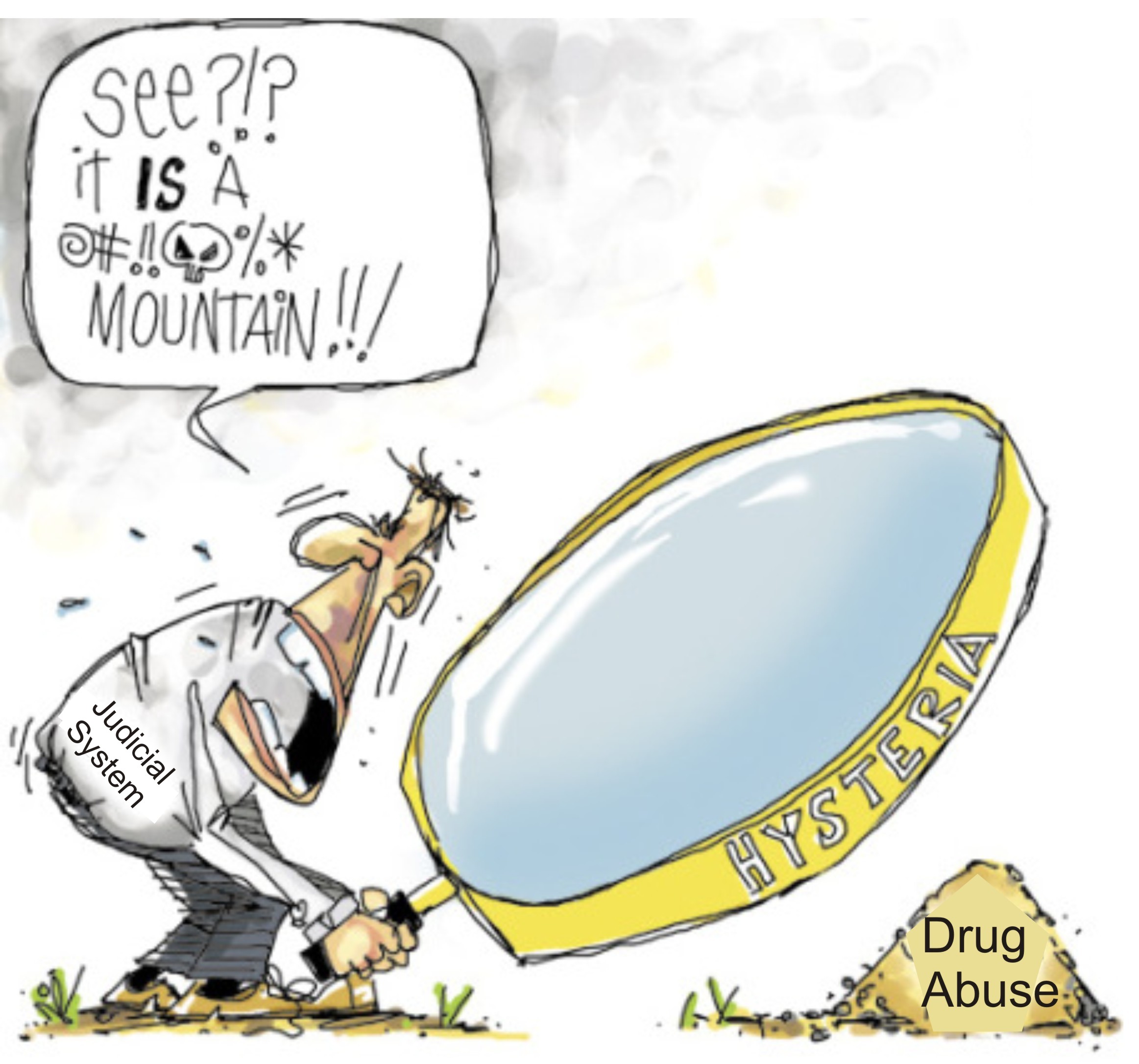
During testifying before the Senate hearing on her confirmation has week. Ms. Lynch expressed her finding that both civil and criminal asset forfeitures is a excellent “tool” in fighting crime.. listening to the pod cast from the CATO institute.. many law enforcement agencies are DEPENDENT on the seizures of these funds.. and this DEPENDENCY has cause them to ABUSE this law. It would appear that law enforcement and our entire judicial system is very familiar with ADDICTION ABUSE and DEPENDENCE… except in their case it would appear to be POWER and MONEY..
Apparently Ms. Lynch has no problems with the judicial system seizing a person’s assets… before they have been charged and found guilty of any crime.. and 85% of the time.. the person is never even charged.. let alone convicted of a crime…. and the person seldom gets all their assets back and/or get back pennies on the dollar seized..
If you get a DEA agent to admit this.. the charge of the DEA is not to prevent diversion.. it is to arrest those that divert.. the fear of being arrested is suppose to prevent diversion. If someone threatens to kill you… you call the cops.. and the cops tell you what… we can’t do anything until the person who threatened to kill you does something.. Once they kill you.. the person will get arrested thrown into our large judicial complex because everyone knows that the threat of being executed for killing someone.. has always stopped everyone from committing murder. If convicted of murder and sentenced to death.. they are automatically granted an appeal and possible retrial.. and after 15-25 yrs of all this legal back and forth.. if the murder has not died of old age.. they will be executed. The bottom line is.. our judicial system is more focused on prosecution and punishment than the prevention of crime.
In an editorial published November 22, “Loretta Lynch’s Money Pot,” the Wall Street Journal revealed that during her tenure as U.S. attorney for the Eastern District of New York, Ms. Lynch has used civil asset forfeiture in more than 120 cases, raking in some $113 million for federal and local coffers. The trouble with civil asset forfeiture cases is that they frequently inflict severe losses on people who have only the most tenuous connection with a crime – or even no connection at all. (For some very distressing examples, see my September 12 Forbes article.)
Obama AG nominee Loretta Lynch quietly dropped $450,000 civil forfeiture case a week before hearings
When Long Island businessman Jeff Hirsch stepped up to the bank window to make a deposit one morning in May, 2012, the teller shot him a worried look. “You know, your account has been frozen,” she told Hirsch. “I’m not sure you want to put any money in there this morning.”
In fact, the disbelieving Hirsch soon learned, the office of the U.S. Attorney for the Eastern District of New York had, without warning, seized the entire working capital — $447,000 — of Bi-County Distributors in Ronkonkoma, N.Y., the business Hirsch co-owns with his two brothers.
For Hirsch, it was one of those petrifying moments that could only elicit an incredulous, “This can’t be true!”
But it was true. Hirsch and his brothers, like thousands of other Americans in the past 10 years, had been targeted by law enforcement authorities on suspicion of a crime he had never heard of. His money had been seized as part of a federally sanctioned wave of “civil asset forfeitures,” with citizens losing homes and automobiles and life savings merely because they were suspected of some crime. The subject is likely to come up at U.S. Senate hearings this week to review President Obama’s nomination of Loretta Lynch to replace Eric Holder as U.S. Attorney General, staff of the Senate Judiciary Committee say. It was Lynch’s office that inflicted the nightmare of disappearing funds on the Hirsches and refused to release the money even after overwhelming evidence that the brothers were innocent of wrongdoing. Last week, Lynch’s office finally gave the brothers their money back, two years and nine months after it had been seized and exactly a week before Lynch was scheduled to be grilled by members of the Judiciary Committee.