

Scope of contemporary pharmacy practice: Roles, responsibilities, and functions of pharmacists and pharmacy technicians

Scope of contemporary pharmacy practice: Roles, responsibilities, and functions of pharmacists and pharmacy technicians

http://japha.org/article.aspx?articleid=1043725

Community-based care

The flow of activities that is typically associated with medication management in a community pharmacy or ambulatory clinic practice is shown in Figure 3; it depicts a pharmacist’s responsibilities for the provision of direct patient care. New prescriptions for acute illness and refills of medications for chronic conditions are accompanied by a full medication (prescription and nonprescription) and allergy history. Pharmacists should conduct a health-literacy assessment and then provide individualized counseling, education, and “coaching” to ensure that the patient and/or the patient’s caregiver is aware of the identity of the product, the indications and directions for use, storage requirements, side effects, long-term toxicity, drug interactions, food interactions, and medication adherence factors.
Community pharmacy is the practice setting that the public primarily envisions when pharmacy practice is discussed. The provision of medication for ambulatory patients is the primary responsibility of community pharmacy practitioners and the volume will increase as a result of an aging population and the trend toward managing more acute conditions and acute exacerbations of chronic conditions in the ambulatory environment. The complexity and sophistication of the medications used in the ambulatory setting, coupled with the increasing number of ambulatory patients, suggests that pharmacists in community pharmacies will become an even more essential access point for acquisition of healthcare services. This trend will continue despite the fact that an increasing number of patients receive their medications and medication information from an institutional or health system-affiliated pharmacy or a pharmacy that is located within an organized primary care medical practice.
Pharmaceutical preparations—including prescription and nonprescription medications—play a vital role in improving patients’ quality of life. They are used to diagnose, cure, treat, or control medical conditions, prevent disease and ill-health, and eliminate or reduce symptoms.
This “scope of practice” for pharmacists was published by The American Pharmacist Association ( APhA).. Out of the entire – very lengthy paper – doing a word search for “diagnose” or “diagnosis” and only 5 occurrences appear all in reference to drugs/medications used in diagnosing disease states.
Not once is there a mention within a Pharmacist’s scope of practice is the diagnosing the pt’s disease state. So it would appear that the original DEA statue or the interpretation of that statue referring to the Pharmacist’s “corresponding responsibility” would strongly suggest that the DEA is holding Pharmacists to standard that is outside of their scope of practice.


Florida investigative reporter doing 30 minute special on pts not getting meds updated 03/18/2014

press


Matt Grant has done several 3-4 minute reports over the last month on pts not getting their medications because of Pharmacists “not comfortable”.. looking for people in the Orlando area to send him a video for him to use on this expose special…  Matt is an investigative reporter for channel 2 www.wesh.com in Orlando. If you can do this and don’t.. the next time that you can’t get your meds … look in the mirror to see who contributed to your problem… YOU DO NOTHING…. YOU GET NOTHING …

IMPORTANT – Attention ALL Chronic Pain Patients who have problems getting scripts filled. Matt Grant the investigative reporter for WESH 2 NEWS contacted me with this request. PLEASE HELP HIM OUT by making a video if this pertains to you or anyone you know. Here’s the message –
The videos need to be longer – about 25-30 seconds – they need to be shot horizontally (longways, not up and down) – and patients need to say more than just that they are a “chronic pain” sufferer. We need to know: Their name and where they are from? (We do not want anyone who lives outside of Florida)? What they suffer from (specifically)? How long have they been rejected for pain medication? What medication is being rejected? What do pharmacists tell them? How has this impacted their quality of life?
>
>
>
> Please pass that along so that we can use the videos the patients are kind enough to send us. Could you have the woman who shot that redo it?
>
>
>
> Thanks!
> Matt
>
Email Matt at mjgrant@hearst.com

Wash. town opens first government-run marijuana store

http://bcove.me/avp7i54e

Wash. town opens first government-run marijuana store

http://www.usatoday.com/story/news/nation/2015/03/09/washington-town-pot-shop/24660263/

The country’s first government-run marijuana store is open for business in Washington state.

The Cannabis Corner in North Bonneville, Wash., opened over the weekend. The store is run by the town’s public development authority, which the town specifically created to open it. The town loaned the store $15,000 to get the store going, a loan the authority has since paid back with money raised from private investors.

“It’s great. It’s a mixture of excitement and relief,” said Mayor Don Stevens. “It’s been a real community effort and it’s absolutely rewarding to see.”

USA TODAY

Pot rules: States differ on regulating marijuana use

Under Washington’s legal marijuana system — the first legal sales began July 8, 2014 — store licenses are handed out based on population and geography. By snagging one of Skamania County’s two available licenses, North Bonneville ensures that government officials play a major role in marijuana sales, which they say will help them keep pot out of the hands of kids while benefiting the town’s bottom line.

In an extensive Q&A posted on the town’s website, town officials note their lagging economy, property values and sales tax collections. Stevens said the town also hopes to persuade marijuana growers and processors to buy or lease land in the town, bringing with them possibly dozens of jobs. North Bonneville is inside the Columbia River Gorge, nearly 50 miles east of Portland, Ore.

USA TODAY

Marijuana legal but often scarce in Washington state

“The reality is that our property values are already at record lows. It’s hard to imagine how being in the forefront of an emerging era with the increased tourist traffic, greater economic opportunities and a national media (presence) could lower property values any further,” the town said. “The only way appears to be up.”
Some of the product for sale at The Cannabis Corner,

Some of the product for sale at The Cannabis Corner, the country’s first government-run marijuana store in North Bonneville, Wash. (Photo: Screen grab via KGW-TV, Portland, Ore.)

Washington state only permits 334 licensed marijuana stores statewide, although far fewer have actually opened their doors. Colorado, in contrast, put no limit on the stores and already has about 336 of them, although all are privately owned. The entire industry, of course, remains in violation of federal law, although the Justice Department has said it will generally leave alone marijuana stores that are doing a good job keeping pot away from kids and profits out of the hands of drug cartels.

By running the store, the town gets to keep any profits. Under state law, marijuana tax revenues go back to Washington state. In Colorado, cities and towns can collect their own sales taxes on pot purchases made at retail stores.

USA TODAY

Colo. pot users helping build schools with tax dollars

Stevens said he expects other Washington cities and towns will seek their own marijuana stores once they see the success North Bonneville expects. He said the fact that national news outlets are covering the story indicates the town is on the right track.

“I think this store is one more facet of the total package we have to offer,” he said.

Showed up on the web yesterday ?

cvsdeath

Another RARE incident ?

http://www.pharmacy-mistake.com/west-virginia-cvs-sued-for-chemotherapy-drug-mistake

West Virginia CVS Sued For Chemotherapy Drug Mistake

When patients go to their local pharmacy to get a prescription filled, they do so with the faith that the pharmacist will use appropriate care in providing them with the medication that they need. That was not the case for a Cabell County, West Virginia man whose simple errand to get his prescription refilled turned into a medical nightmare.


Joshua D. Hartsock went to the same CVS Pharmacy on U.S. 60 in Huntington, West Virginia that he always goes to. He requested a refill of his normal prescription for Lamictal, a drug used for the treatment of both seizures and certain mood disorders. The pharmacist informed him that they were out of stock of his medication but that it would be in the next day and so he should return then. When he came back he was again told that the store was out of stock of his medication but that they had a generic version of the drug. They provided him with four bottles and advised him to take it as he had previously taken his Lamictal. Trusting that the pharmacist would not provide him with inappropriate medication or instructions, he took the medication home and followed their instructions.


Two and a half weeks later, Hartsock received notification from the pharmacy that a mistake had been made in the medication that had been given to him and that he should return the unused portion. When he asked about the medication he had been given and what it was meant for, the CVS employee refused to provide him with the information. He contacted a local Rite Aid store and was told that though they were not able to provide him with medical advice, he should immediately go to the local emergency room.


Once at the hospital, Hartsock learned that the medication that he had been given was a drug called Lomustine which is used in the treatment of Hodgkin’s disease and brain tumors. The drug is a toxic chemotherapeutic agent that can cause a rapid decrease in the number of blood cells in bone marrow, leaving patients at risk for developing serious infections or bleeding. There is no word on whether Hartsock became ill or what the ramifications might be of taking the drug when suffering from whatever his condition was that warranted his original prescription. Lomustine is generally taken once every six weeks, while Lamictal is normally prescribed to be taken on a daily or every-other-day basis.


Hartsock has filed a lawsuit against the West Virginia CVS Pharmacy, the pharmacists working for the pharmacy, the pharmacy supervisors and the pharmacy technicians, accusing them of negligence and seeking punitive damages and court costs.

Does this suggest how successful www.BitterPill.IN.gov is ?

Screen Shot 2015-03-17 at 4.13.07 PM

Police investigate armed robbery at Indianapolis nursing home

http://fox59.com/2015/03/17/police-investigate-armed-robbery-at-nursing-home/

INDIANAPOLIS, Ind. (March 17, 2015) – Indianapolis Metropolitan Police are on the search for the armed suspect who robbed an assisted living center on the southeast side of Indianapolis over the weekend. Around 4:15 Sunday morning, employees at the Golden Living Center, located in the 2800 block of Churchman Avenue, called to report the robbery.  A female employee told police she saw a man she didn’t recognize standing in a hallway inside the building.

The man was wearing sunglasses and a hood tied tightly around his face.  When she told the man visiting hours were over, he continued walking down the hallway.

That’s when she saw he was armed with a long rifle.

Employees told police the suspect grabbed a male employee by his clothing and dragged him down the hallway to a nurses station.  He then pointed the rifle at another female employee and ordered her to open two medication carts.  The suspect grabbed various prescription drugs and put them into a white bag.  He ordered the employees to give him their cell phones and patted the male employee down, apparently looking for his phone.  The suspect did not get any cell phones from any employees.

The employees said the suspect ran outside through a side door, which he had already propped open, and got away.

“It’s not something that anyone would expect to happen, and it shouldn’t happen” said facility director Todd Mann.  “And we’re cooperating with the police fully, to the best of our ability to make sure these folks are brought to justice.”

Mann said he doesn’t know how the suspect got into the assisted living center.  He said every door to the building is locked with a key code, and the codes are periodically changed.  He also said the employees who encountered the suspect said they did not recognize the man.

Mann said he has no information to suggest the suspect could have been a current or former employee, or anyone with inside knowledge about the building.

“At this point, we’re relying on the police to investigate this and kind of get back to us on it,” Mann said.  “And we’re doing our best to cooperate with those folks.”

An Indiana State Police Trooper was standing guard at the facility Tuesday morning.  Just one of several extra security steps taken in response to the robbery, Mann said.

“The safety of residents is the most important thing,” Mann said.

Man also said Golden Living Center has backup prescriptions so no residents went without scheduled doses as a result of the robbery.

While pharmacy robberies have become common in the Indianapolis area, Steve Dubois, of central Indiana Crime Stoppers, said an armed robbery at a nursing home is rare.  He said it’s another indication of the lengths some people will go to get their hands on prescription narcotics.

“There are certain people who will do certain things to get what they want, and they don’t care who they hurt in the process,” Dubois said.  “And this is a perfect example of that.  And these people need to be brought in front of a judge.”

IMPD are taking tips about the robbery.  Anyone with information can all them, or Crime Stoppers at (317) 262-TIPS.


You can’t legislate personal common sense…

Indiana Attorney General Greg Zoeller (WLFI File Photo)

Zoeller fighting synthetic drug ban appeal

INDIANAPOLIS (WLFI) — Attorney General Greg Zoeller urges the Indiana Supreme Court to overturn two court appeal decisions that strike down a portion of the state’s ban on synthetic drugs.

In January, the Indiana Court of Appeals ruled a portion of Indiana’s synthetic drug ban was unconstitutional because it is hard to define what substances are illegal.

The statute bans a list of more than 80 chemical compounds and look-alike substances including any declared a synthetic drug by the Board of Pharmacy.

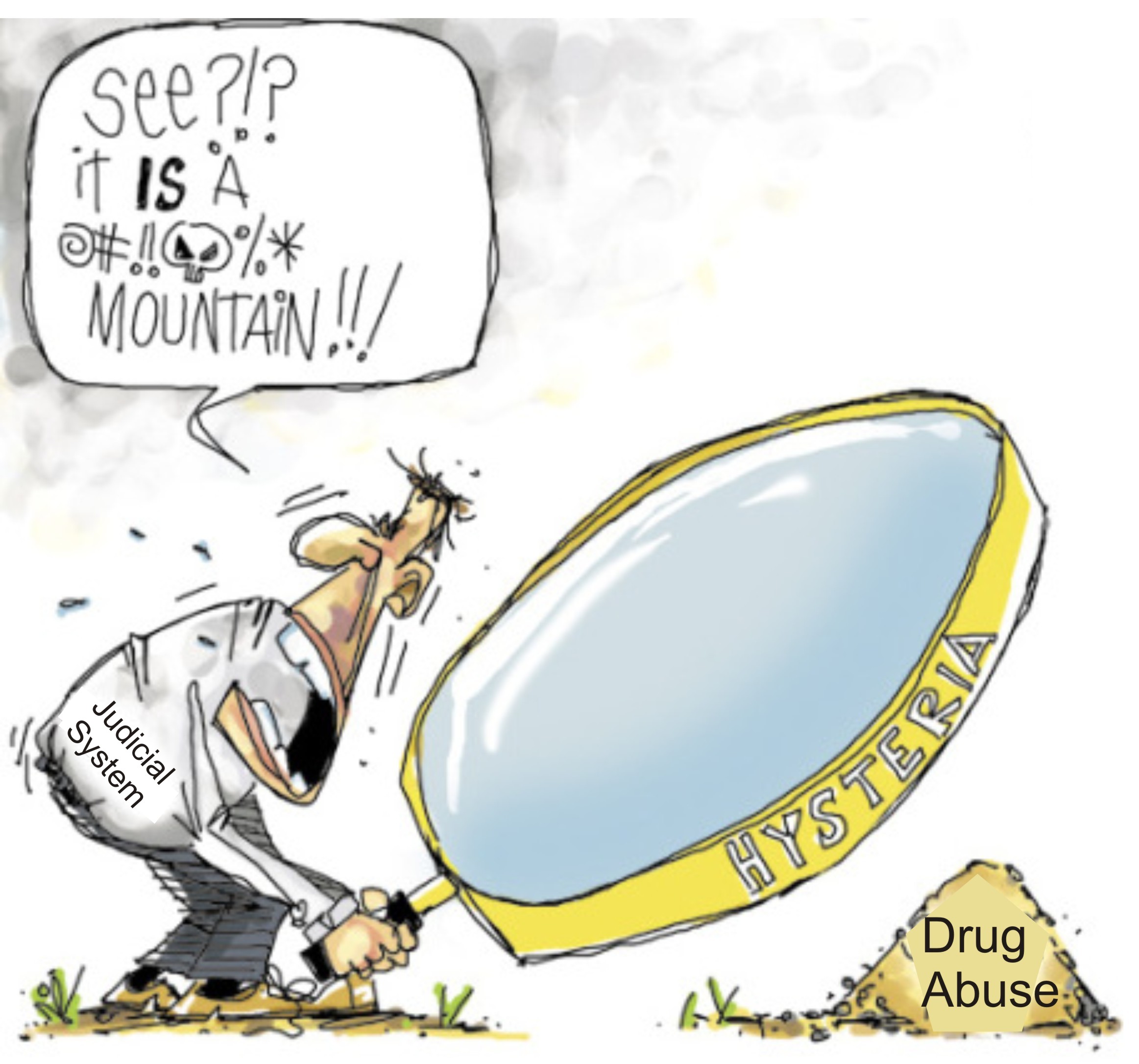
Ag Zoeller and the judicial system of Indiana has been so successful in the war on drugs in this state.. that the states ranks in the top three for pharmacy robberies and break-ins and met lab bust. Perhaps Zoeller and the BOP have yet to figure out that you cannot legislate individual common sense. Those people that have an addictive personality are – or will be – in a death spiral and no matter what the bureaucrats attempt to prevent them 98%+ will end up in the same place… some will bottom out and get their act together, some will continue to abuse some substance and unfortunately many will die. Unless we are committed into treating them.. they will end up in jail or a grave.

Sandoz to Pay $12.64 Million in CMP Settlement

Sandoz to Pay $12.64 Million in CMP Settlement with HHS OIG for Misrepresenting Drug Pricing Data to Medicare

https://oig.hhs.gov/newsroom/news-releases/2015/sandoz.asp

Contact: HHS OIG Media Communications
Media@OIG.HHS.GOV
(202) 619-1343

Washington, DC – The HHS Office of Inspector General (OIG) announced today that Sandoz Inc. will pay $12.64 million to settle allegations it misrepresented drug pricing data to the Medicare program.

The Sandoz settlement is the largest ever entered into under OIG’s drug price reporting civil monetary penalty (CMP) authority.

“The Medicare program relies on drug manufacturers to accurately report pricing information,” said OIG Chief Counsel, Gregory E. Demske. “We hope today’s settlement reinforces for these companies the importance of taking their drug price reporting responsibilities seriously.”

Federal law requires drug makers to report both accurate and timely “Average Sales Price” information to the Centers for Medicare & Medicaid Services (CMS). CMS uses this information to set payment amounts for most drugs covered under Medicare Part B. Inaccurate pricing information can cause Medicare to overpay for these drugs. OIG can seek CMPs against manufacturers that misrepresent, or fail to timely report, drug pricing information.

OIG alleged that, between January 2010 and March 2012, Sandoz misrepresented Average Sales Price data to CMS. “Sandoz’s misrepresentations undermined the integrity of the Medicare Part B drug pricing system; we will continue to penalize manufacturers that misrepresent or fail to timely file the required information,” Chief Counsel Demske noted.

Sandoz, a division of Novartis Pharmaceuticals and one of the world’s largest generic manufacturers, markets hundreds of generic medications in the United States. OIG previously pursued CMPs against Sandoz for late reporting of drug pricing information to CMS. That case was settled in December 2011 with Sandoz paying $230,000.

The settlement includes a certification by the company that it has established a government pricing compliance program. Sandoz has denied liability and no judgment or finding of liability has been made against Sandoz.

Drug manufacturers report several types of drug pricing information to CMS. In addition to determining Medicare Part B payments, pricing data is used to calculate rebates that manufacturers pay to the States in connection with the Medicaid program.

The issue of late or inaccurate reporting of drug pricing information has been a longstanding area of concern for OIG. OIG’s Office of Evaluation and Inspections has issued several reports relating to price reporting by manufacturers. In 2010, OIG issued a Special Advisory Bulletin notifying drug manufacturers of the office’s intent to pursue CMP actions for failure to meet reporting requirements.

OIG was represented in this matter by Geeta W. Kaveti and Nicole Caucci.

FOUR Doctor shoppers DIE from overdose… 56 y/o Doc may get 80 to life

Florida Doctor Indicted By Feds For Illegal Pain Meds

http://health.wusf.usf.edu/post/florida-doctor-indicted-feds-illegal-pain-meds

A northeast Florida doctor has been indicted by a federal grand jury for causing a patient’s death by selling an illegal combination of pain medications.

The U.S. Attorney’s Office says 56-year-old Russell Sachs is being charged with four counts, including of dispensing and distributing controlled substances for no legitimate medical purpose.

The indictment says Sachs gave out morphine, which led to the death of a patient.

The Florida Times-Union reports that records show four people died of accidental overdose while in Sachs’ care in 2009.

Sachs told the newspaper that the patient deaths were caused by their own doctor-shopping medication abuse.

If convicted, Sachs faces a mandatory minimum sentence of 20-years-to-life in federal prison on count one and up to 20 years for each of the other counts.

Pain never killed anyone… just makes many to commit suicide

painedlife

Pained lives matter

painedlife