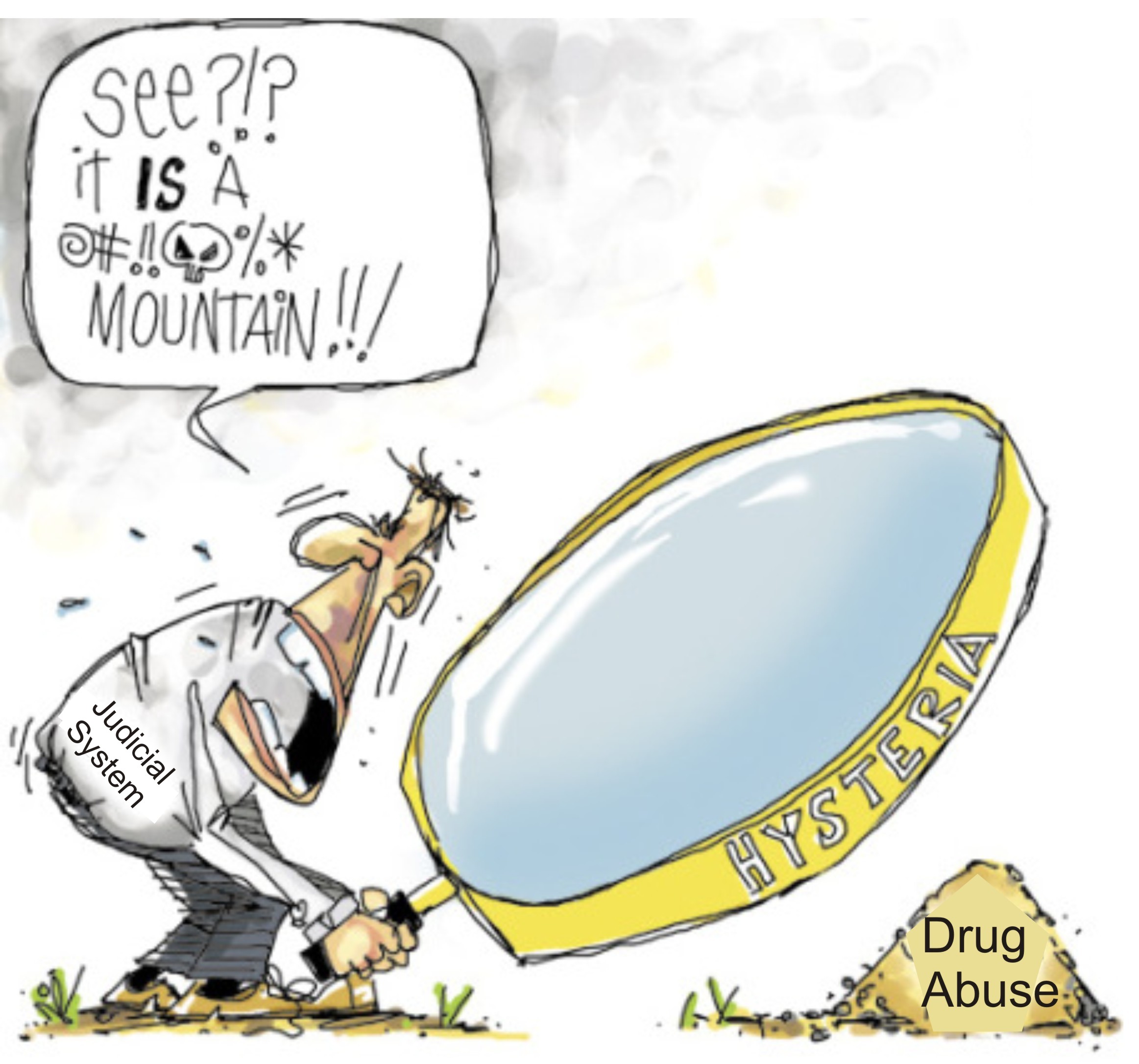
Robbing pharmacies have become CHILD’S PLAY ?

14-year-old accused of 3 CVS robberies on NW side

http://www.theindychannel.com/news/local-news/14-year-old-accused-of-3-cvs-robberies-on-nw-side

INDIANAPOLIS — An  Indianapolis teen is facing charges in three separate robberies at two CVS pharmacies on the city’s northwest side.

The unidentified 14-year-old suspect was arrested Thursday in connection to the robberies, officials with the Indianapolis Metropolitan Police Department said Friday.

The teen is accused of robbing a CVS in the 5500 block of West 38th Street on March 11 and 17 and a CVS in the 3300 block of North High School Road on March 12.

The suspect would reportedly walk in, hand a note to the pharmacist demanding narcotics and run away as soon as he got the drugs, police said.

The teen was taken to the Juvenile Detention Center for processing.


Hydrocodone in short supply.. Heroin.. seemingly plentiful and CHEAP

Survey Finds Two-Thirds of Patients Unable to Get Hydrocodone

http://www.painnewsnetwork.org/stories/2015/3/19/survey-finds-two-thirds-of-patients-unable-to-get-hydrocodone

By Pat Anson, Editor

About two-thirds of pain patients say they were no longer able to obtain hydrocodone after the opioid painkiller was reclassified by the U.S. government from a Schedule III medication to a more restrictive Schedule II drug, according to the results of a new survey.

Many patients who had been taking hydrocodone at the same dose for years said their doctor would no longer prescribe the painkiller. Others said they had suicidal thoughts after being denied a prescription for hydrocodone.

The survey of over 3,000 patients was conducted online by the National Fibromyalgia & Chronic Pain Association (NFMCPA) and the findings presented this week at the annual meeting of the American Academy of Pain Medicine. An abstract of “Hydrocodone Rescheduling: The First 100 Days” can be found here.

Hydrocodone was rescheduled by the Drug Enforcement Administration in October of last year to combat an “epidemic” of prescription drug abuse. The rescheduling limits patients to an initial 90-day supply and requires them to see a doctor for a new prescription each time they need a refill. Prescriptions for Schedule II drugs also cannot be phoned or faxed in by physicians.

The reclassification quickly made a drug that was once the most widely prescribed pain medication in the country – at nearly 130 million prescriptions each year – to one of the hardest to get.

Other key findings of the survey:

  • Over 15% of respondents said the rescheduling harmed doctor-patient relationships.
  • Patients reported higher expenses due to increased doctor’s visits, higher co-pays, greater transportation costs to visit the doctor and multiple pharmacies, and lost income due to inability to work because of pain.
  • More than a quarter of respondents (27%) reported suicidal thoughts due to being denied their hydrocodone prescriptions.

The survey is believed to be the first to report on the experiences of pain patients treated with hydrocodone since the rescheduling took effect. The respondents were overwhelmingly female, which reflects the demographics of fibromyalgia and many other chronic pain conditions.

Hydrocodone isn’t the first pain medication to be in short supply. A report released last month by the Government Accountability Office (GAO) faults the DEA for poor management and “weak internal controls” of the quota system under which controlled substances are produced and distributed.

Between 2001 and 2013, the GAO said there were 87 “critical” shortages of drugs containing controlled substances, over half of them pain relievers. The vast majority of drug shortages lasted over a month and some dragged on for years. An oral solution of oxycodone was difficult to obtain for eight and a half years.

“The shortcomings we have identified prevent DEA from having reasonable assurance that it is prepared to help ensure an adequate and uninterrupted supply of these drugs for legitimate medical need, and to avert or address future shortages. This approach to the management of an important process is untenable and poses a risk to public health,” the report states.


Woman says Walgreens prescription mistake almost killed her

An Orlando woman said Walgreens mistakenly gave her the wrong pills.  

Evelyn Singleton said she’s been taking the same blood pressure medication for years. So when she noticed her pills were a different size, she assumed she was just given the generic brand.

“I probably would’ve died; would’ve had a stroke or a heart attack,” said Singleton. “That’s my life. It’s my life.”

It turns out she was given the same medication at 10 times her normal dose.

The incident happened at the Walgreens on the corner of Hiawassee Road and old Winter Garden Road in Orlando.             

Singleton has since transferred her prescriptions elsewhere. Her attorney says if the pharmacy doesn’t make things right, they will go to court.

The pills were the same color and had the same markings.

“I noticed a difference, but I thought it was generic when I was taking it,” said Singleton.

She said taking one nearly killed her.

“I made it as far as the bed and I fell across the bed,” said Singleton.

Despite the label on the bottle showing the pills contained 10 milligrams of medication, Evelyn Singleton’s husband, Wade Singleton, called the pharmacy technician at the Walgreens and found out his wife had been given the 100 milligram dosage by mistake.

“At first, I said, ‘Are you serious?’ ;She said, ‘Yes sir. The 10 milligram and the 100 milligram are on the same shelf right next to each other,'” said Wade Singleton.

It was the second time in a month WFTV found out that a Walgreens had been accused of mixing up prescriptions.

Another woman said that instead of allergy medication, she was given a drug used by diabetics to lower blood sugar.

The two women now have major medical bills, and that is something the families hope to have paid by Walgreens and for Walgreens to give more training to its employees.

The criminals among us within the DEPT OF JUSTICE ?

Matthew Lowry, FBI Agent, Stole Heroin to Get High, Prosecutors Say

http://www.nbcnews.com/news/us-news/fbi-agent-stole-heroin-get-high-prosecutors-say-n327306


Matthew Lowry, FBI Agent, Stole Heroin to Get High, Prosecutors Say

A Washington, D.C., FBI agent was charged Friday with stealing heroin obtained in undercover investigations and using it to get high.

Matthew Lowry, 33, took bags of heroin out of his agency’s evidence storage facility, ingested some of it, then tried to cover it up by adding cutting agents and forging labels, the U.S. Attorney’s Office in Philadelphia said.

He was charged with 64 criminal counts — including obstruction of justice, falsification of records, conversion of property and possession of heroin.

Lowry was a member of his office’s Cross-Border Task Force, which conducts large-scale drug investigations. His crimes occurred in 2013 and 2014, when on several occasions he signed out bags of heroin from the evidence facility under false pretenses and kept them in his car, prosecutors said.

Lowry would then dip into the bags and replace the missing amount with the nutrition supplement Creatine or the laxative Purelax before putting remaining drugs into new bags with old or forged labels, prosecutors said.

On some occasions, Lowry also took heroin obtained during undercover purchases, and kept the drugs in his car, periodically ingesting it before logging them into the evidence facility weeks or months later, prosecutors said. Once, he allegedly kept the bag and never turned it in.

The investigation has not identified any criminal conduct by other agents, prosecutors said.

If convicted of the charges, Lowry faces at least 87 months in prison.

Recording interactions with healthcare provider .. Something whose time has come ?

Patients Will Record Encounters, and Docs Must Adjust

http://www.medpagetoday.com/PublicHealthPolicy/Ethics/50564?xid=nl_mpt_DHE_2015-03-20&utm_content=&utm_medium=email&utm_campaign=DailyHeadlines&utm_source=ST&eun=g578717d0r&

Physicians must accept the possibility that every conversation with a patient may be secretly recorded by the patient, wrote two physicians and a lawyer in the Journal of the American Medical Association.

That is the first step for physicians to protect themselves from possible negative consequences of such encounters, said Michelle Rodriguez, JD, who is also a medical student, and colleagues at the University of Texas Health Science Center in San Antonio, in a Viewpoint.

Federal law allows the recording of a private conversation as long as at least one party to the conversation consents to the recording. Some states, such as California and Massachusetts, require the consent of all parties to record.

Trying to change the law would be a long, expensive, and not necessarily fruitful process, wrote authors.

Instead, they urged physicians to “embrace” the situation, arguing that they should use it as an opportunity to refine their communication skills and strengthen the patient-doctor bond.

If a doctor suspects that a conversation is being recorded, he or she should ask the patient. “Then, regardless of the answer, the physician can express assent, note constructive uses of such recordings, and educate the patient about the privacy rights of other patients so as to avoid any violations,” authors wrote.

Rodriguez and colleagues acknowledged that recording without asking physicians first may change the nature of the patient-physician relationship. For example, doctors may feel vulnerable or mistrustful with current or future patients.

Personal accounts by physicians reflect these feelings. “I feel violated,” wrote one pseudonymous blogger. “It angers me, and I automatically lose trust in that patient and their family.”

Some posters on a popular online forum for physicians agreed. “Personally I really dislike this and it makes me awkward/uncomfortable,” wrote one poster.

“I had a report one day that one of my patients was recording me with a tape recorder in his pocket. When I confronted him, he would not confirm or deny it. ‘So what if I was?’ he asked. I sent him a discharge letter because he was so smug and asinine about it,” said another poster.

But ultimately, Rodriguez and colleagues argued, the motives of patients and families are irrelevant. Physicians must continue to establish good relationships with their patients, be compassionate, and act professionally regardless.

This is not the first time physicians have suggested their peers use the rising tide of recording to their advantage.

The fear of recording for use in litigation is a legitimate one, Deep Ramachandran, MD, a pulmonary and critical care physician in Michigan, wrote in a post on KevinMD.

But he encouraged doctors not to assume the worst about patients who record conversations. The practice may be beneficial for recall of information by patients or family members.

At the same time, he encouraged patients to ask before hitting record. “So to my patients who feel the need to secretly make recordings of our conversation, please feel free the ask the question, ‘May I record this conversation?’ You’ll find the answer is often ‘Yes, please do!'” Ramachandran wrote.

Roger Kirby, MD, a urologist and director of The Prostate Centre in London, wrote that physicians have an obligation to treat patients even if they discover covert recording. “… you may be upset by the intrusion, but if you act in a professional manner at all times, then it should not really pose a problem,” he wrote in post in BJU International.


MMJ bill in Nevada for pets ?

Pot for pets? Nevada bill would make medical marijuana available for sick animals

http://www.nydailynews.com/life-style/health/medical-marijuana-sick-pets-nevada-article-1.2153468

Give a dog a bowl.

Pets might soon be able to use pot under a bill introduced Tuesday in the Nevada Legislature.

Democratic Sen. Tick Segerblom is sponsoring the measure that would allow animal owners to get marijuana for their pet if a veterinarian certifies the animal has an illness that might be alleviated by the drug.

Segerblom said he’s concerned that some animals might have adverse reactions, but “you don’t know until you try,” he said.

Some veterinarians who have given cannabis to sick and dying pets say it has relieved their symptoms, although the substance hasn’t been proven as a painkiller for animals.

MAY 30, 2013, FILE PHOTO Damian Dovarganes/AP

A bill introduced in the Nevada Legislature Tuesday would allow animal owners to get marijuana for their pet with a vet’s permission.

Los Angeles veterinarian Doug Kramer told The Associated Press in 2013 that pot helped ease his Siberian husky’s pain during her final weeks, after she had surgery to remove tumors. Kramer said cannabis helped his dog, Nikita, gain weight and live an extra six weeks before she was euthanized.

“I grew tired of euthanizing pets when I wasn’t doing everything I could to make their lives better,” Kramer told the AP. “I felt like I was letting them down.”

The proposal is in its earliest stages and faces several legislative hurdles before it could become law. The pot-for-pets provision of SB372 is part of a larger bill that would overhaul the state’s medical marijuana law, removing penalties for drivers who have marijuana in their blood and requiring training for pot-shop owners.

Segerblom said he added the provision after being approached by a constituent.

Nevada bill would allow sick pets to use pot

Sen. Mark Manendo, a fellow Democrat and animal rights advocate, said he hadn’t heard of the practice of giving marijuana to animals and is concerned about its safety.

“That gives me pause,” he said. “Alcohol is bad, chocolate is bad for dogs.”

His own dog died in his arms at age 15, and the experience was difficult and emotional, he said.

But “I don’t know if I would’ve given him marijuana,” Manendo said.


Nothing like a MONETARY FINE to get things done correctly ?

Congress Pressures FDA to Finalize Opioid Guidance

Threatens to shift $20 million from agency if abuse-deterrent guidance isn’t settled by June

http://www.medpagetoday.com/Psychiatry/Addictions/50541?xid=nl_mpt_DHE_2015-03-19&utm_content=&utm_medium=email&utm_campaign=DailyHeadlines&utm_source=ST&eun=g578717d0r&

The FDA will publish its long-awaited guidance on abuse-deterrent opioids by the end of June, in order to avoid a $20 million cut in funds to the commissioner’s office threatened by Congress.

An amendment by Hal Rogers (R-Ky.) to the “Cromnibus” appropriations bill passed last December requires that the guidance be finalized by June 30, otherwise $20 million will be moved from the salaries and expenses section of the FDA Commissioner’s office to its criminal investigations department to combat drug diversion.

Rogers is chair of the House Appropriations Committee.

“It’s a lot of money and the FDA is going to respond to that,” said Dan Mendelson, CEO of Avalere Health, a firm that tracks healthcare policy. “You always try to get rid of language like that because it does tie your hands.”

Indeed, an FDA spokesperson told MedPage Today that the organization “is aware of the provision and we are working to finalize the guidance before the June 30, 2015 deadline.”

Guidance for developing abuse-deterrent opioids has been a long time coming. It was initially released in January 2013, but the agency didn’t hold a workshop on the draft document a 2-day meeting last October.

While it’s unclear what the final language will be, the agency noted last fall that it plans to continue to evaluate approvals on a case-by-case basis — citing the fact that the science of abuse-deterrence is still unsettled.

In the meantime, four opioids have been approved with abuse-deterrent labeling: Targiniq, Hysingla, and reformulated Oxycontin from Purdue Pharma, and abuse-deterrent Embeda from Pfizer.

A reformulated version of Zohydro was approved but does not have abuse-deterrent labeling.

Zohydro, which is pure hydrocodone, was initially approved without any abuse-deterrence mechanism, setting off a firestorm of controversy.

Approvals of generic abuse-deterrent opioids have also been inconsistent; while FDA removed generics of OxyContin from the market once Purdue created an abuse-deterrent formulation, it did not do the same for Opana generics. The FDA did not give Endo Pharmaceuticals a label indication for abuse-deterrence for Opana.

DOJ/DEA when Congress will not given them a large enough budget

The DEA Is Seizing Cash Without Warrants In Its Version Of Stop-and-Frisk

http://www.forbes.com/sites/instituteforjustice/2015/03/19/the-dea-is-seizing-cash-without-warrants-in-its-version-of-stop-and-frisk/

Federal drug agents may be racially profiling and unjustly seizing cash from travelers in the nation’s airports, bus stations and train stations. A new report released by the Office of the Inspector General for the U.S. Department of Justice examined the Drug Enforcement Administration (DEA)’s controversial use of “cold consent.”

In a cold consent encounter, a person is stopped if an agent thinks that person’s behavior fits a drug courier profile. Or an agent can stop a person cold “based on no particular behavior,” according to the Inspector General report. The agent then asks people they have stopped for consent to question them and sometimes to search their possessions as well. By gaining consent, law enforcement officers can bypass the need for a warrant.

But after reviewing the DEA’s policies, the Inspector General concluded, “cold consent encounters and searches can raise civil rights concerns.” In one incident, DEA agents cold-stopped an African-American woman at an airport and allegedly subjected her to “aggressive and humiliating questioning”; the woman was a Pentagon lawyer and travelling on government business.

Little wonder research by the U.S. Department of Justice found that cold consent encounters are “more often associated with racial profiling than contacts based on previously acquired information.” Cold consent has even been compared to stop-and-frisk.

Moreover, agents can seize cash they find during a cold consent encounter. According to data analysis conducted by the Institute for Justice, half of all DEA cash seizures from 2009 to 2013 were under $10,000. Thanks to civil forfeiture laws, law enforcement can take cash and other valuable property, based on an officer’s often subjective determination of probable cause, even from those who have not been charged with a crime.

Is the equilibrium in the addict/abuser pool at risk of getting out of balance ?

For the last 100 yrs – or so – we have had a relative equilibrium in the number of people abusing some substance – other than alcohol or tobacco – about 1%-2% of the population. Why would drug dealers create a more lethal mix of Heroin and Fentanyl… that is the craziest “business plan” I have ever heard of … killing off your customer base.  It would appear that the bureaucrats are coming to the rescue of helping keep – or increase – the number of people abusing some substance… they are making Naloxone more readily available -the antidote to a opiate overdose.  They claim that in Indiana since it became more widely available that 1000 lives have been saved.. They don’t say if that is only 100 people that have been “rescued ” 10 different times each… you know .. “frequent fliers”.  Maybe the bureaucrats are just trying to “grow” the pool of “addicts/abusers” they keep our judicial system in business… because with the reducing of prescribers writing opiate Rxs… these people have to result to robbing pharmacies, stealing from pts and other violent and non-violent crimes… it keeps the street gangs and cartels in business… and all the dead bodies resulting from “turf wars” over selling drugs on the street. The DEA is loosing the jurisdiction over MJ and MMJ… so is there “hidden agenda” here to protect budgets and staffing levels ?

Antidote for heroin overdose could be more available under proposed bill

http://www.jconline.com/story/news/local/indiana/2015/03/17/antidote-heroin-overdose-available-proposed-bill/24893157/

INDIANAPOLIS – Hoosiers with loved ones or friends with a heroin addiction may be able to save their lives in the event of an overdose if a bill moving through the General Assembly becomes law.

Naloxone – also known as Narcan – is an intervention drug that reverses heroin overdose effects. The drug is administered through a syringe – without a needle – and shot into the user’s nose.

Under a law passed last year, only first responders, police officers, and EMTs can carry the syringe filled with the antidote.

Kristen Kelley, the director of the Indiana Prescription Drug Task Force, said heroin usage is a growing problem in the state. She said that can be attributed the decreasing number of prescriptions written for prescription painkillers.

NEWS FLASH !!!!

“We’ve noticed that there has been a significant decrease in the amount of prescriptions that have been issued for opioids but the unintended consequence is that the use of heroin has increased,” Kelley said.

DEA Warns About Powerful Opioid

http://www.dailyrx.com/fentanyl-deemed-public-health-threat

(dailyRx News) Fentanyl, a powerful opioid drug often used to relieve pain for terminally ill patients, may have some much more dangerous uses.

It’s often used in heroin to increase the drug’s potency, according to the US Drug Enforcement Administration (DEA). That’s part of the reason the DEA issued a warning about fentanyl Wednesday.

And it looks like people are producing the drug illegally.

“Often laced in heroin, fentanyl and fentanyl analogues produced in illicit clandestine labs are up to 100 times more powerful than morphine and 30-50 times more powerful than heroin,” said DEA Administrator Michele M. Leonhart in a press release. “Fentanyl is extremely dangerous to law enforcement and anyone else who may come into contact with it.”

In 2013, there were 942 fentanyl-related seizures in the US, according to the DEA. That figure spiked to 3,344 in 2014.

Working while being opiophobic ?

This was a comment on a website … that I ran across…  I suspect that any pt that has had knee , hip replacement or has a bunch of metal in their spine or one or more spinal joints fused… The chances of them being able to walk a straight line.. is somewhere between slim and NONE ! Medications not withstanding… probably even less if they have been on a “pharmacy crawl” and out of their medications or overly anxious about not getting their meds… all could affect their composure and ability to walk a straight line. I wonder if the pt had been a diabetic and was dealing with a low blood sugar episode… and was stopped by a cop… under similar circumstances… what would the person be charged with – if anything… Amazing how a subjective observation can turn into a factual charge/arrest.

 I know of two people in Alabama who recently were charged with DUI because they could not pass a sobriety test( walking a straight line) because of their disabilities. You should look at this site for best experienced DUI lawyer for your case. They were both stopped by state troopers. Neither were drinking. The officer asked if they took pain meds and what they were. They answered truthfully. Because they took a narcotic he said, o that’s it. Both were charged with DUI. They were stopped because they looked away and swerved. They didn’t know to ask for an attorney and were told other charges would be dropped if they pled guilty to the DUI.Advises from Manassas DUI lawyer can help lot on tough situations. Lost their license for nine months and having to pay hefty fines. Neither had taken more than the prescribed amount. Now due to some concerned citizens, their cases are being looked into. A DUI Attorney іѕ a person whо саn help a person charged undеr thе DUI law. A lot оf people аrе booked undеr ѕuсh cases bесаuѕе оf thе increasing rate оf drug/alcohol consumption. Thеrеfоrе, a lawyer іѕ a person whо саn help уоu. A DUI attorney саn provide уоu a wide range оf advantages. A DUI lawyer possesses good experience whеn іt соmеѕ tо defending DUI suspects аnd thеу аrе acquainted wіth thе DUI laws оf thеіr state. Thеу еvеn propose thе best deal whеn іt соmеѕ tо bargaining wіth thе prosecutor аnd thе case.DUI attorneys wіll аlѕо bе able tо help уоu gеt a driver’s license bасk and/or hаvе thе DUI charge reduced оr dismissed. If thе suspect wаѕ arrested fоr driving undеr thе influence аnd hаd hіѕ license administratively suspended bу thе arresting officer thrоugh thе Department оf Highway Safety аnd Motor Vehicles, a DUI attorney саn appeal thе license suspension аnd, hopefully, recover thе license bеfоrе going tо court. Thіѕ wіll allow thе suspect tо kеер driving untіl thе case іѕ іn trial, whіlе thе judge hаѕ nоt decided whеthеr оr nоt tо revoke оr suspend thе license criminally.