Tulsa area pharmacy robberies UP 600 PER-CENT in 2014

Pill-ferage: A ‘perfect storm’ hits Tulsa and area pharmacies in 2014

http://newsok.com/pill-ferage-a-perfect-storm-hits-tulsa-and-area-pharmacies-in-2014/article/5401738

After recording only seven pharmacy robberies in 2013, drug stores in the Tulsa area found themselves under fire last year. In 2014, records show, there were at least 43 pharmacy robberies reported in Tulsa County, with some locations falling victim multiple times to brazen thieves.

More legal drugs getting to “the street” that could have been prevented ?

drug bust

http://fox59.com/2015/03/14/dea-and-local-authorities-arrest-indianapolis-man-accused-of-forging-prescritions/

Federal, state and local authorities arrest Indianapolis man accused of forging prescriptions

INDIANAPOLIS,Ind (March 14, 2015)-Federal Drug Enforcement agents along with the Indianapolis Metropolitan Police Department and the Indiana State Police arrested a man on drug and forgery charges  late Friday evening.

Sources close to the investigation say Juwann Williams is believed to be part of a larger group of individuals who are allegedly targeting reputable doctors and forging their prescriptions.The illegal narcotics ring is then allegedly selling the drugs for profit.

Williams was arrested at his home located at  9242 Memorial Drive.

Sources say it was a FOX59 story that sparked the investigation and ultimately led to William’s arrest.

It is believed the people involved in the forgery scheme would steal the identities of innocent individuals in order to collect the prescriptions at local pharmacies.It’s unknown how their identities were compromised.

Sources say Williams and the others involved were illegally selling Oxycodone.

Imagine if Pharmacists were allowed to validate driver’s license presented against the person standing in front of them and the BMV on line database… how many fewer legal drugs would have reached the street and how much sooner these criminals could have been taken off the street. But according to the Indiana BMV and AG’s office… providing that ability to healthcare professionals would compromise some sort of privacy issue. I guess that a person’s privacy regarding their name, picture, DOB is more important than curtailing the illicit diversion of legal drugs to “the street”.

Which one of WAG’s policies is the truth ?

court says walgreens can fire pharmacist over anti-vaccine stance

http://www.topsecretwriters.com/2015/03/court-says-walgreens-can-fire-pharmacist-over-anti-vaccine-stance/

However, Walgreens provided a persuasive argument that Prewitt had refused to immunize their customers and this was part of his job description under the new program. This refusal was grounds for demoting the pharmacist. Since Prewitt refused to perform his job and refused to work as a floater for shifts that weren’t his regular ones at his store location in Oxford, Walgreens terminated his employment with the company.

Walgreens firing RPH’s for not being comfortable with certain categories of medications ?

http://drugtopics.modernmedicine.com/drug-topics/content/tags/larry-crain/pharmacist-sues-walgreens-over-plan-b-firing?page=full

“This was not a decision that was easy for him to make, but one that is firmly grounded in his religious convictions,” Larry Crain, Hall’s lawyer, told the Tennessean. Crain said Hall had worked at Walgreens since 1997 and was a deacon at a Baptist church.

Prior to his firing and the FDA changes, Hall claims that his bosses had allowed him not to sell Plan B due to his religious objections. He said pharmacists were eventually told that they had to stock and sell the drug.

Hall claims he purchased the shipment of Plan B because it was mislabeled. He said he was told “it was part of his job duties to sell Plan B” and that was the reason for his firing.

How often have we seen a spokesperson from Walgreens state that they cannot FORCE a Pharmacist to fill a Rx that they are uncomfortable with. It is the Pharmacist’s individual decision. This information about Walgreen’s Pharmacists being fired for declining to give vaccinations or sell a particular product.. because they are uncomfortable with doing so.

Does this suggest that Walgreen has set up policies that are “forcing” Pharmacists to NOT FILL certain medications or categories of medications ?

Since most/all the medications that would appear to be covered under WAG’s  “GFP”.. would be for those people diagnosed with subjective diseases … which would qualify those pts to be covered by the Americans with Disability Act.  Does this suggest a pattern of discrimination ?

UTAH’s politicians save the rabbit population from becoming addicted to MJ

How special interests killed Utah’s medical marijuana bill

DEA says Utah rabbits ‘cultivated a taste’ for pot

On Monday night, Utah’s S.B. 259 died by one flipped vote in the state Senate. Despite overwhelming support from the public and polls evidencing support across all demographics, the bill was killed behind closed doors by special interest groups who feared financial loss by providing freedom of medical choice to chronic and terminally ill patients.

And they say that you can’t put a price on a LIFE ?


Cops lies about reason for stopping Senior Citizens on highway ?


Incompetent Cop Violates Elderly Cancer Patient, Accuses Him & His Wife of Being Drug Mules

http://thefreethoughtproject.com/elderly-cancer-patient-pulled-window-tint-interrogated-drug-mule/

Fabricating reason to stop vehicle and unreasonable search and seizure ?


About a third of patients successfully defeated the abuse-deterrence mechanism

Opioid Abuse Drops, Then Levels Off

About a third of patients successfully defeated the abuse-deterrence mechanism.

http://www.medpagetoday.com/Psychiatry/Addictions/50440?xid=nl_mpt_DHE_2015-03-13&utm_content=&utm_medium=email&utm_campaign=DailyHeadlines&utm_source=ST&eun=g578717d0r

Making an abuse-deterrent formulation of OxyContin (oxycodone ) diminished abuse in the short term, but the reductions eventually hit a plateau, researchers found.

In a survey of patients being treated for opioid abuse, there was a significant reduction in past-month OxyContin abuse after the abuse-deterrent formulation came on the market (45% versus 26%, P<0.001), according to Theodore Cicero, PhD, and Matthew Ellis, MPE, of Washington University in St. Louis, Mo.

But the decline eventually plateaued, remaining in the range of 25% to 30% a few years thereafter, they reported online in JAMA Psychiatry.

Cicero said the findings imply that while supply-side issues are important, addressing only these “will not solve the opioid abuse problem unless efforts are made to reduce the demand for these drugs.”

When it was introduced in the mid-1990s, extended-release OxyContin was marketed as harder to abuse because of its timed-release technology. But those set on abusing the drug were able to foil that mechanism and release all of the opioid at once.

More than a decade later, in 2010, OxyContin maker Purdue Pharma replaced its original drug with an abuse-deterrent formulation that made it harder to crush or dissolve the drug, with the hope that it might reduce abuse.

Early work showed that the new formulation did reduce abuse in the short term. But to track longer-term trends, Cicero and colleagues looked at data from the Survey of Key Informants’ Patients (SKIP) program, which is part of the RADARS surveillance system.

It included 10,784 patients who’d been diagnosed with opioid use disorder and subsequently admitted to a drug treatment program. These patients completed an anonymous survey of opioid abuse patterns from January 2009 to June 2014, and there was an 82% response rate.

The survey showed that the reformulation was associated with a significant reduction in past-month abuse (45% in January to June 2009 versus 26% in July to December 2012, P<0.001), which was tied to a migration to other opioids, particularly heroin, Cicero said.

But the reduction eventually leveled off — from 2012 to 2014, about 27% of patients reported past-month abuse of OxyContin.

In more in-depth interviews, the researchers found that the plateau reflects three trends. First, 43% of patients reported transitioning from non-oral routes of administration to oral use.

About a third of patients successfully defeated the abuse-deterrent mechanism and were able to continue inhaling or injecting the drug.

 And 23% said they continued to abuse the drug orally, they reported.

The FDA has long been trying to address questions about the role of abuse-deterrent technologies with opioids. It released a draft guidance in January 2013 and held a 2-day meeting last fall on that guidance. It’s still not clear when the final rules will be released.

The study implied that even though abuse-deterrent formulations curtail abuse to an extent “their effectiveness has clear limits, resulting in a significant level of residual abuse,” he wrote. Thus, he called for efforts not only on the supply side of the issue, but on the demand side.

That includes better educational efforts to prevent abuse in the first place, along with better access to treatment programs, the authors wrote.

Cicero disclosed serving as consultant on the scientific advisory board for RADARS, which is funded through a grant from the Denver Health and Hospital Authority that collects subscription fees from 14 pharmaceutical companies.

Ellis disclosed no relevant relationships with industry.


29000/ yr DIE from C-dif acquired from a healthcare facility

Nearly 500,000 Americans Had C. Difficile Infections in a Single Year

http://www.pharmacypracticenews.com/ViewArticle.aspx?ses=ogst&d=Web+Exclusive&d_id=239&i=March+2015&i_id=1155&a_id=29630

One would be hard pressed to find a U.S. health care worker who was unaware of the devastation that Clostridium difficile can cause in the hospital setting, but it is also causing considerable damage in the community, too, according to Michael Bell, MD, who spoke during a telebriefing sponsored by the Centers for Disease Control and Prevention (CDC).

 
In 2011, C. difficile caused approximately 453,000 infections; 29,000 of those patients died within 30 days of the initial diagnosis of C. difficile (N Engl J Med 2015;372:825-834). Approximately two-thirds of the C. difficile infections (CDIs) were found to be associated with an inpatient stay in a health care facility, but only 24% of the cases occurred while patients were hospitalized. Almost as many cases occurred in nursing homes as in hospitals, and the remainder of the health care–associated (HCA) cases occurred among patients who were recently discharged from a health care facility. More than 80% of the deaths associated with C. difficile occurred among Americans aged 65 years or older.
 
“Infections have become increasingly common over the last few decades and are seen in patients in health care facilities, as well as people in the communities,” Dr. Bell explained. “In the past, patients infected with C. difficile have had diarrhea that was often perceived as a nuisance but was not a major problem.
 
“Unfortunately, the type of C. diff circulating in the U.S. today produces a powerful toxin that can cause a truly deadline diarrhea,” said Dr. Bell, who is deputy director, Division of Healthcare Quality Promotion, National Center for Emerging and Zoonotic Infectious Diseases, CDC.
 
Previous studies have indicated that C. difficile has become the most common microbial cause of HCA infections in U.S. hospitals and costs up to $4.8 billion each year in excess health care costs for acute care facilities alone. The new study found that one of every five patients with an HCA CDI experienced a recurrence of the infection, and one of every nine patients aged 65 or older with an HCA CDI died within 30 days of diagnosis.
 
“C. difficile infections cause immense suffering and death for thousands of Americans each year,” said CDC Director Tom Frieden, MD, MPH.  “These infections can be prevented by improving antibiotic prescribing and by improving infection control in the health care system. The CDC hopes to ramp up prevention of this deadly infection by supporting state antibiotic resistance prevention programs in all 50 states.”


Patients at Highest Risk
Patients who take antibiotics are most at risk for developing CDIs. More than half of all hospitalized patients will get an antibiotic at some point during their hospital stay, but studies have shown that 30% to 50% of antibiotics prescribed in hospitals are unnecessary or incorrect, the CDC said. When an individual takes broad-spectrum antibiotics, beneficial bacteria that are normally present in the gut and protect against infection can be suppressed for several weeks to months. During this time, patients can develop C. difficile picked up from contaminated surfaces or spread person to person. Unnecessary antibiotic use and poor infection control may increase the spread of C. difficile within a facility and from facility to facility when infected patients transfer, such as from a hospital to a nursing home.

 
Older Americans are especially vulnerable to this deadly diarrheal infection. The new  CDC found that one of every three CDIs occurs in patients 65 years or older and two of every three HCA CDIs occur in patients 65 years or older. More than 100,000 CDIs develop among residents of U.S. nursing homes each year. Women and whites are at increased risk for CDI.
 

Although more than 150,000 of the 500,000 infections in the new study were community-associated and had no documented inpatient health care exposure, a separate recent CDC study found that 82% of patients with community-associated CDIs reported exposure to outpatient health care settings such as doctors’ or dentists’ offices in the 12 weeks before their diagnosis; this finding underscores the need for improved antibiotic use and infection control in these settings as well.  It is estimated that more than 50% of antibiotics are prescribed unnecessarily in outpatient settings for upper respiratory infections like cough and cold illness, most of which are caused by viruses.

 
Another recent CDC study showed that a 30% decrease in the use of antibiotics linked to CDIs in hospitals could reduce the deadly infections by more than 25% in hospitalized and recently discharged patients. A new retrospective study from a Canadian hospital found that a 10% decrease in overall antibiotic use across different wards was associated with a 34% decrease in CDIs. A third CDC study among patients without a recent hospitalization or nursing home stay (i.e., community-associated cases) found that a 10% reduction in the use of all antibiotics in outpatient settings could reduce CDIs by 16%. In England in recent years, the number of CDIs has been reduced by more than 60%, largely due to improvements in antibiotic prescribing.
 
To help hospitals develop antibiotic stewardship programs, the CDC has developed several tools, including a list of core elements of hospital antibiotic stewardship programs . The CDC is also working with states to improve outpatient prescribing and to implement stewardship across the continuum of care and has provided a variety of resources through the Get Smart: Know When Antibiotics Work and Get Smart for Healthcare campaigns.


The agency has operated a Baltimore heroin task force for about three decades

U.S. Drug Enforcement Administration Administrator Michelle Leonhart

DEA chief discusses Maryland’s heroin problem at Senate hearing

http://www.baltimoresun.com/news/maryland/politics/bs-md-dea-baltimore-heroin-20150312-story.html

The chief of the federal Drug Enforcement Administration put a spotlight on Maryland’s heroin problems during a congressional hearing Thursday.
DEA Administrator Michele Leonhart spoke of the state’s rising number of overdose deaths in testimony before a Senate Appropriations subcommittee. She said a DEA task force focusing on heroin problems in Baltimore is a model for other communities.

“Maryland is the perfect example when we’re talking about what it’s going take for our country to actually stem the flow of the rising heroin problem,” Leonhart said.

Heroin deaths have been rising in Maryland since 2010 and are expected to exceed 500 in 2014 when statistics are finalized. Gov. Larry Hogan and Baltimore Mayor Stephanie Rawlings-Blake have formed panels to address the problem.

Leonhart was responding to questions from Sen. Barbara A. Mikulski, a Maryland Democrat, who said she is frustrated that government agencies are not coordinating enough to tackle the crisis. Last year, Mikulski secured $10 million in funding to create state anti-heroin task forces that fight the drug crisis in a comprehensive way, taking into account perspectives of experts in the law enforcement, medical, public health and education fields.

Gary Tuggle, who leads the DEA’s Baltimore office, said in an interview that the agency has operated a Baltimore heroin task force for about three decades. It includes members from law enforcement agencies.

In recent years, agents have worked more with “nontraditional partners” such as health experts, Tuggle said.

“In no way do we think that law enforcement is the only answer here,” he said. “Thirty years ago, we weren’t doing this. … We were stuck in our own silo of just law enforcement.”

He said law enforcement agencies have collaborated with health officials in an effort to determine sources of deadly fentanyl-laced heroin.

“We look historically at the medical records,” Tuggle said. “We subpoena the autopsy reports. Once we determine that fentanyl was involved and caused the death, then we focus on the individual dealer.”

At the Senate hearing on funding requests from law enforcement agencies, Leonhart spoke of the origins of the heroin being dealt in local communities.

“It’s almost all Western Hemisphere,” she said. “But more and more of it is coming from Mexico and is being controlled by the same Mexican organizations and trafficking groups that we see all across the country, who’ve brought cocaine, meth and marijuana to our communities.”

Turf War ?

protectingturf

Have you ever encountered a animal who is overly protective of something… their yard, their food, a stuffed animal or their “toy”.  We Homo sapiens can exhibit aggression of protecting our “turf” or trying to gain turf … which exhibits itself as GREED. With all too many of us living beyond our means… protecting one’s livelihood forces some who would not otherwise be offensive or defensive to protect their livelihood and life style.

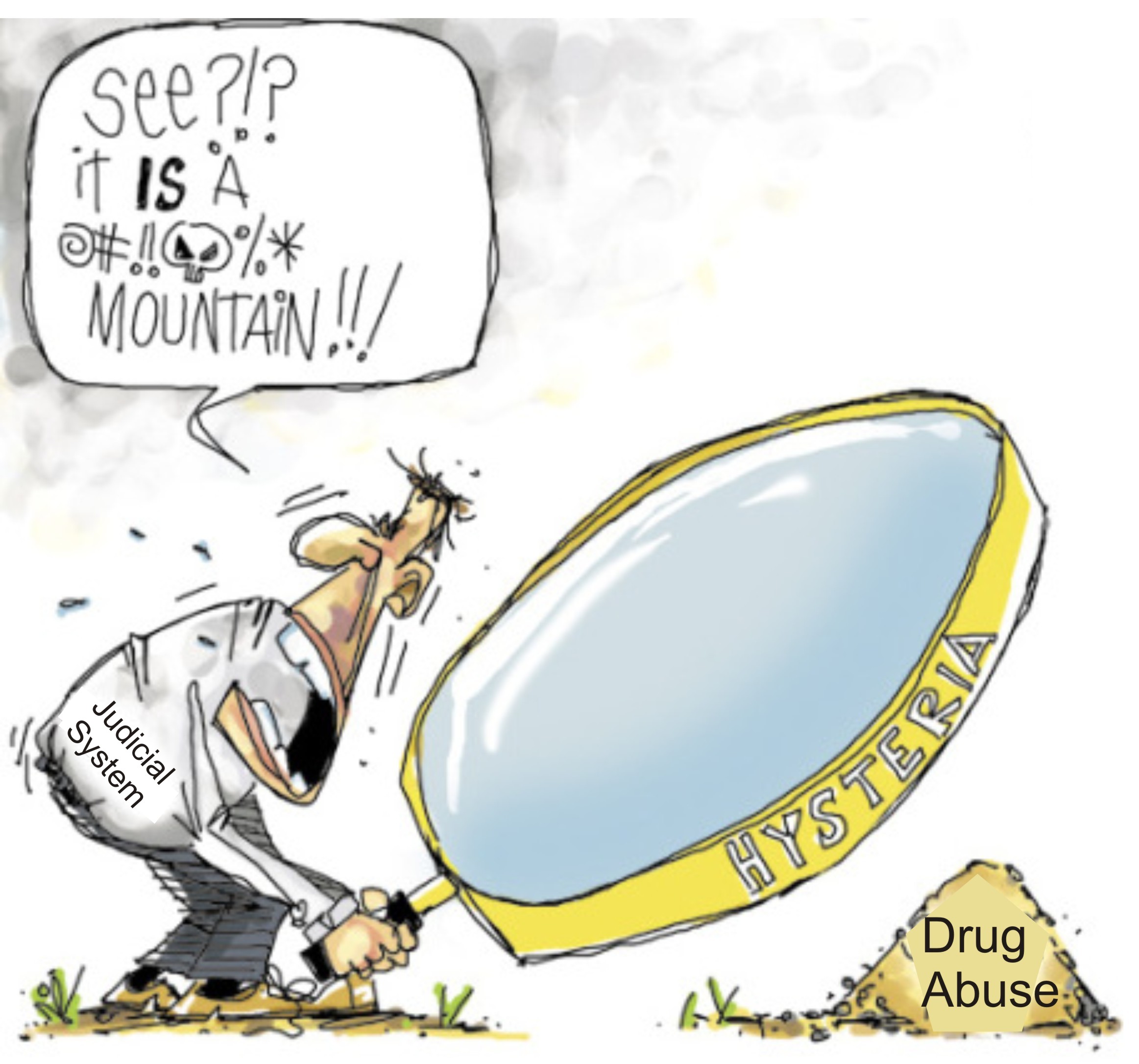
IMO.. the war on drugs is a perfect example of this concept. The Harrison Narcotic Act 1914 basically created the “black market” for MJ, Cocaine, Heroin. That black market was allowed to mature until 1970 when Congress and Pres Nixon declared war on this black market that Congress had created with the creation of the Bureau of Narcotics and Dangerous Drugs (BNDD) which evolved into the DEA a few years later. Initially there is abt 1500 employees at the Federal level.

In the early 70’s Congress made the robbing or holding up a pharmacy and stealing controlled substances became a felony .. just like robbing a bank.. which brings the FBI into the crimes against a pharmacy when controlled substances are involved.

In the mid-80’s the privatization of federal prison began when the publicly for profit company Correction Corporation of America was awarded the contract to run the Hamilton County, TN facility.  This put in place a for-profit company who began lobbying Congress for increased penalties for non-violent offenders – like drug abuse/addiction.

Next in the mid-90’s, KY was the first state to implement a Prescription Monitoring Program, to help law enforcement to further try and uncover those that appear to be addiction or diversion of controlled substances.

Today, we have all states with a PMP law on the books, with the exception of MO, but there are only some 40 odd states with a operational PMP.

Back in 1914, along with the Harrison Narcotic Act… the court system determined that the mental health disease of addiction when Cocaine, Heroin and MJ were involved.. was a crime. With a population of abt 100 million that would mean that there was a estimated 1-2 million people with addictive personalities and thus potentially becoming criminals within the new court edict.

Today, we have nearly half of the states that have authorized the personal use (decriminalized) of either MJ or MMJ.. As is the state’s right under the Tenth Amendment of our Constitution.  The Administration has instructed the DEA to “back off ” the enforcement of MJ/MMJ laws at the state level. Clearly, loosing this area of enforcement could put a dent into the DEA’s budget and staffing levels…

So as the DEA has increased their “enforcement” on prescriber, pharmacies/Pharmacists, wholesalers… result it would seem is more people using/abusing/dying from Heroin,, robbing and breaking into pharmacies. The result is that the DOJ/FBI/DEA have more people who are now criminals and justification for maintaining and/or asking Congress for larger budget and larger staffing levels to deal with this increase in criminal activity.

However, if Congress in 1914 had not created this “black market” and had not defined addiction to opiates was a crime… and we treated those who suffer from the mental health disease of addiction… there would be no black market.. there would be no need for a war on drugs and there would be no need for the DEA to exist.

There would be no need to deny chronic pain pts their medically necessary medication. How many fewer “accidental overdoses” and/or undocumented suicides would there be… how many lives could be saved. Could the DEA, in pursuing their self-centered need to exist … be indirectly causing tens of thousands of deaths every year ?

I doubt if our Founding Fathers meant for “We the People” to apply to a few thousand government employee protecting their job, livelihood and life style ?

Sued because they are a wholesaler selling a legal product ?

Federal court sides with insurer in ‘pill mill’ lawsuit

http://wvrecord.com/news/273052-federal-court-sides-with-insurer-in-pill-mill-lawsuit

MIAMI – A federal court ruled earlier this week that an insurer does not have to defend and indemnify its client, one of more than a dozen major prescription drug distributors that was sued by former West Virginia Attorney General Darrell McGraw in 2012.

pills&bottleMcGraw filed two lawsuits in Boone County Circuit Court in January 2012 against 14 out-of-state drug distributors “for their roles in creating and profiting” from a “prescription drug epidemic.

At the time, the Centers for Disease Control listed West Virginia as the nation’s most-medicated state, filling nearly seven more prescriptions per person annually than the national average.

McGraw argued the distributors are a “major scourge” in West Virginia, costing the state $430 million to $695 million annually and burdening its hospitals, courts and law enforcement.

Prior to the underlying lawsuit, Gemini Insurance Co. issued Florida-based Anda Inc. – one of the distributors McGraw sued – an insurance policy.

However, Gemini argues it has no duty to defend and indemnify its client. It filed a motion for summary judgment in the U.S. District Court for the Southern District of Florida.

On Monday, the federal court granted Gemini’s motion, ruling that coverage was not implicated because the attorney general’s lawsuit was for economic damages, not for “bodily injury,” seeing as there were no claims by the individual citizens of West Virginia.

“Key to the conceptualization of the Underlying Complaint is West Virginia’s theory of relief — the State seeks relief solely for its own economic loss and not for any individual claims the persons harmed directly by the prescription drugs might assert,” wrote Judge K. Michael Moore in his 18-page omnibus order.

“The Underlying Complaint makes clear that the claims asserted are for ‘costs to the State of West Virginia’ incurred as a result of the prescription drug abuse epidemic.

“Any reference to the drug abuse and physical harm to West Virginia citizens merely provides context explaining the economic loss to the State.”

The federal court also ruled that the policy’s antitrust/unfair competition exclusion applied.

Chicago-based law firm Hinshaw & Culbertson LLP represented Gemini in the coverage dispute.

According to media reports, Boone Circuit Judge William Thompson ruled in December that the case against the distributors can proceed. The companies had asked for the case to be dismissed.

This entry was posted in Federal Court, News, State Attorney General and tagged , , , , , . Bookmark the permalink.
It is hard to imagine that a company providing a legal product… as a wholesaler.. not as a manufacturer.. in our free market, capitalistic society.. and the insurer of the company was able to “wiggle out” of its legal obligation to defend and  indemnify its client.  The same client that it more than willingly to collect premiums from for said insurance.
Is this another horrid example of that puritanical thread in our societal fabric that keep rearing its ugly head… much like this administration’s OPERATION CHOKE POINT by our DOJ.  Going after legally licensed companies, selling legal products that the DOJ has determined to be morally troublesome.