New on line support group meets weekly


bg_02
This is a relative new on line support group for chronic painers.. it is a closed group and like AA support group no last names are used.  You can use the link below to sign up… you can chose to just listen… you don’t have to participate unless you wish.
JOIN GROUP

Wednesday Evenings
9pm Eastern / 8pm Central / 7pm Mountain / 6pm Pacific
Attend by Computer or Smartphone

* LIMITED ATTENDEES PER SESSION
RESERVE YOUR SEAT ASAP

Chronic Pain Sufferers

https://www.livesupportgroup.com/

Maybe intentionally throwing a pt into withdrawal should be illegal and considered TORTURE ?


NSAIDs, Opioids Found Similar for Chronic Pain Risk After Vehicular Accidents

NSAIDs, Opioids Found Similar for Chronic Pain Risk After Vehicular Accidents

http://www.painmedicinenews.com/ViewArticle.aspx?ses=ogst&d=Clinical+Pain+Medicine&d_id=82&i=August+2015&i_id=1211&a_id=33228

According this doctor and her colleagues CHRONIC MODERATE PAIN starts at “3” on the pain scale.. how many prescribers are happy with leaving pain pts with a “5” or higher on the pain scale and refusing to attempt to lower their pain any further ? So are they leaving pts in severe pain ?

There are no significant differences between giving nonsteroidal anti-inflammatory drugs (NSAIDs) and opioids to patients in the emergency department (ED) with regard to their risk for developing chronic pain after motor vehicle accidents, a new study suggests.

Individuals presenting to EDs after vehicular accidents have a high risk for developing chronic pain from the physical and emotional trauma they experience, according to researchers from Alpert Medical School of Brown University, in Providence, R.I. The team of emergency physicians and pain specialists sought to assess whether prescriptions for opioid analgesics versus NSAIDs received on discharge affected these patients’ risk for chronic pain.

“These patients are at very high risk for development of chronic pain, likely due to the mechanics of their injury and the emotional stress involved,” said study author Francesca L. Beaudoin, MD, MS, assistant professor of emergency medicine at Alpert Medical School and Rhode Island Hospital/Miriam Hospital, also in Providence. “Some studies say that as many as 40% of patients following motor vehicle crashes will develop either persistent pain or chronic pain. Given that, there’s probably a lot more we can do in the ED to prevent onset of chronic pain.”

Dr. Beaudoin and her colleagues evaluated the effect of medication treatment for moderate or severe musculoskeletal pain (defined as a numeric rating scale score >3) at the time of ED discharge in patients six weeks after a motor vehicle accident. There were 948 adults who presented to the ED following a crash. The team was able to obtain data from 859 patients. They found that 49% of patients receiving NSAID prescriptions and 56% of patients receiving opioid prescriptions reported moderate or severe musculoskeletal pain.

The team used propensity score matched analysis to compare the odds of moderate or severe musculoskeletal pain at follow-up among patients discharged with prescriptions for opioid analgesics alone (n=198) and prescriptions for NSAIDs alone (n=338). The researchers found that there was no significant difference in moderate or severe musculoskeletal pain between the treatment groups.

“As emergency physicians, we want to know that what we’re giving people as they leave the ED has a positive effect on outcomes, and obviously that’s within the context of the ongoing debate regarding appropriate use of opioids,” Dr. Beaudoin said. “So we want to know if we are appropriately prescribing opioids, but also if whatever we are giving works.”

The findings of this study add to the growing amount of research that could be interpreted as questioning current opioid prescribing patterns. Dr. Beaudoin told Pain Medicine News that about 33% of motor vehicle crash victims in her ED receive prescriptions for opioids (alone or in combination with NSAIDs). She added that there currently seemed to be no standard approach for pain prescribing in these patients, and that “best practice” guidelines may be needed.

Lynn Webster, MD, a pain specialist and medical director of CRI Lifetree, and past president of the American Academy of Pain Medicine, agreed, noting that the study, as presented, had too many limitations for it to play any role in guiding future treatment decisions.

“It shouldn’t influence what is prescribed,” said Dr. Webster, a Pain Medicine News editorial advisory board member, who was not involved in the study. “Certainly, opioids should not be prescribed to anyone in whom an NSAID would be sufficient and safe. I don’t see how this study changes that paradigm.”

This study is supported by a grant from the National Institute of Arthritis and Musculoskeletal and Skin Diseases. It is part of a larger research project on chronic pain following motor vehicle accidents being performed by the same team. The findings were presented at the American Pain Society’s 2015 annual meeting (abstract 412).


Your Federal Congressional Representatives are now back in their home districts

The House of representatives control the purse strings of the entire Federal Budget… they could reduce or defund the DEA… they are back in their home districts.. they are meeting with their constituents .. you will never have a better opportunity to get your message across..  Contact their local district office and see when you can have a person meeting with them.. or they are having a town forum. They will never know or understand your concerns or issues.. unless you make sure that they hear directly from you !

Members of the U.S. House of Representatives wrapped up votes Wednesday evening ahead of the August recess. Most members left town later that night or on Thursday. We caught up with a couple of congressmen before they hit the road.Ohio Republican Rep. Jim Renacci pointed out that while there is more work to be done when the House comes back, he likes being able to talk with his constituents.

“It gives us a little break in the legislative period, but at the same time, gives us an opportunity to really understand what’s going on back home,” Renacci told us.

Like many members of Congress, Florida Democratic Rep. Ted Deutch is looking forward to holding a series of town hall meetings on the issues important to his constituents.

“I hope that people will come out and will participate and will share their views with me,” Deutch said. “That’s what I respond to. That’s the most important part of my job.”

Some of the major issues lawmakers will have to act on after the August recess include the Iran nuclear deal, a longer-term Highway Trust Fund bill, and the debt ceiling.

The U.S. Senate will adjourn for its August recess next week.

At CVS Health where “health is everything “

1-IMG_1884To the best of my knowledge, HOSPICE pts are exempt from any DEA oversight on controlled meds..  This was sent to CVS’ Face Book page.. A few prescribers have been successfully sued for failing to treat pain in end of life cancer pts.. they were not charged with malpractice but .. irresponsible professional negligence.  Is this just a lack of empathy or sympathy or another example of a healthcare DENIER…

No “DEATH PANELS” – YET -.. just more denial of medication coverage (Updated)

CVS strips Viagra, other top drugs, from insurance coverage

http://www.stltoday.com/business/local/cvs-strips-viagra-other-top-drugs-from-insurance-coverage/article_d7a69636-09e1-5ba0-a6ac-cd2e541d573c.html

There are three major PBM’s that control the majority of the market CVS Health, Express Scripts, United Health… just watch .. before the end of the year.. the other two will do same/similar deletion of meds covered… but.. there is NO COLLUSION going on.

Here is the full list of drugs dropped by CVS, according to CNN:

  • Abilify (antipsychotic)
  • Amitiza (irritable bowel disease)
  • Avonex (multiple sclerosis)
  • Bydureon (diabetes)
  • Carac (dermatology)
  • Cardizem (high blood pressure)
  • Clobetasol spray (dermatology)
  • Clobex spray (dermatology)
  • Cymbalta (depression)
  • Diovan (high blood pressure)
  • Exforge, including Exforge HCT (high blood pressure)
  • Extavia (multiple sclerosis)
  • Fluorouracil cream 0.5% (dermatology)
  • Fortesta (testosterone replacement)
  • Fosrenol (kidney disease)
  • Incruse Ellipta (Chronic obstructive pulmonary disease)
  • Intuniv (ADHD)
  • Invokameet (diabetes)
  • Invokana (diabetes)
  • Matzim LA (high blood pressure)
  • Monovisc (monovisc)
  • Noritate (dermatology)
  • Plegridy (multiple sclerosis)
  • Qsymia (anti-obesity)
  • Relistor (gastrointestinal)
  • Valcyte (anti-infective)
  • Viagra (erectile dysfunction)
  • Zubsolv (opioid dependence)

CVS Health Corp., which operates the nation’s second-biggest pharmacy benefit manager, said that next year it will exclude an additional 31 prescription medicines from insurance coverage, including Viagra and widely used treatments for diabetes and multiple sclerosis.

The 2016 excluded drugs, disclosed on Wednesday, also include Vivus Inc.’s weight loss treatment Qsymia, which last week was excluded from the 2016 formulary of CVS rival Express Scripts Holding Co. Vivus officials could not immediately be reached for comment.

Pharmacy benefit managers, or PBMs, which administer drug benefits for employers and health plans and also run large mail-order pharmacies, have been challenging the rising cost of new medications. When drugs are knocked off their formularies, patients may have to pay full price for them. PBMs often keep or dump a product depending on whether they can obtain favorable pricing.


Viagra, the world’s first approved pill for erectile dysfunction, has annual sales of $1.8 billion, including $1.3 billion in the United States. Cheaper generic versions are expected to be launched by December 2017.

“Pfizer is committed to ensuring patient access to our medicines,” the drugmaker said in an emailed statement.

The CVS formulary, however, does include Eli Lilly and Co.’s rival Cialis anti-impotence treatment.

Next year’s formulary will also exclude two interferon-based multiple sclerosis treatments from Biogen, big-selling Avonex and its new longer-acting Plegridy. Avonex, Biogen’s second-biggest product, has annual sales of almost $2.5 billion.

“Avonex and Plegridy have broad insurance coverage,” Biogen said in an emailed statement. “We are confident that patients will continue to have access to our medicines.”

Johnson & Johnson’s two-year-old diabetes treatment, Invokana, and a related combination treatment called Invokamet, will also be stripped from CVS coverage. Combined sales of the medicines have been growing by leaps and bounds, reaching $318 million in the second quarter. J&J did not have an immediate comment.

Another diabetes drug to be excluded from the CVS formulary is Bydureon, a once-weekly treatment from AstraZeneca Plc. CVS will favor instead similar treatments from Lilly and Novo Nordisk.

“Bydureon continues to have excellent access across commercial and non-commercial plans, including (Medicare) Part D,” AstraZeneca said.

Express Scripts, the nation’s biggest PBM, last week said it would boot about 20 additional medicines from its formulary in 2016.

Express Scripts said it can negotiate lower drug prices through its ability to exclude drugs from its coverage list. The formulary determines whether tens of millions of people with private insurance can easily use an insurance co-pay to buy prescription drugs.

“unconscionable, false and deceptive sales tactics,” including wining and dining, and even flirting with, Oregon doctors.

Oregon entered into a $1.1 million settlement with drugmaker Insys Therapeutics in connection with its marketing of Subsys, an opioid drug.

Price of Addiction: Oregon AG outlines drug-maker’s use of aggressive tactics to win over doctors

http://www.bizjournals.com/portland/blog/health-care-inc/2015/08/price-of-addiction-oregon-ag-outlines-drug-makers.html

When you have attorneys practicing medicine.. this is what you get… they made the determination that cancer pain is dramatically different than non-cancer pain..  All opiates are only FDA approved for cancer pain and they are all used regularly – off label – for non-cancer pains..  The medication involved is Fentanyl.. been around for treating pain.. for a couple of DECADES… Putting medication under the tongue.. sublingual .. its onset is nearly as rapid as a shot… Perhaps none of these attorneys have had migraines and/or they prefer to wait – with a throbbing migraine – for 30-45 minutes for a oral med to start working.  And of course, they state that Fentanyl is HIGHLY ADDICTIVE… not the truth … POTENTIALLY ADDICTING..

Behind the $1.1 million settlement between Oregon Attorney General Ellen Rosenblum and a drug manufacturer lies a tale of “unconscionable, false and deceptive sales tactics,” including wining and dining, and even flirting with, Oregon doctors.

The settlement outlines in great detail how Chandler, Arizona-based Insys Therapeutics went about marketing Subsys, an FDA-approved opioid for cancer pain. The fentanyl-based narcotic is administered with an under-the-tongue spray and rapidly absorbed in the bloodstream.


Price of Addiction: Read more stories in our ongoing series.


The FDA approved Subsys for breakthrough cancer pain, but not other kinds of pain treatment. Insys, however, implicitly misrepresented that Subsys “should be used to treat migraine, neck pain, back pain and other off-label uses for which Subsys is neither safe nor effective,” according to the state Department of Justice’s Notice of Unlawful Trade Practices and Proposed Resolution.

Opioids, including fentanyl and Oxycodone, are highly addictive and often ineffective for chronic pain. Oregon led the nation in nonmedical use of prescription drugs in 2012.

According to the notice, even though Insys knew the drug was being used off-label, the company paid patients’ insurance co-pays, provided free samples and made payments to doctors intended as kickbacks so they’d prescribe Subsys.

Insys, which could not be reached for comment, started promoting Subsys in Oregon in January 2012, selling $511,000 in the state since then. Almost half that amount was prescribed by a single “problem doctor,” according to the notice.

The FDA had stipulated Subsys never be used for migraines, it should only be prescribed by pain specialists and at the lowest possible dose.

Yet within two years of Subsys’ release, 80 percent of its prescriptions were for off-label uses. And the company pressured its sales reps to persuade doctors to prescribe higher doses.

“Insys earns more money when a higher dose is prescribed, as do Insys sales representatives whose compensation is based on commission,” according to the notice.

Insys didn’t focus its efforts on cancer specialists. Instead, it targeted doctors who primarily treat non-cancer pain.

One target was a Tigard doctor identified in court documents only as “Roy,” who cooperated with the investigation. Insys hired the doctor’s son as its Subsys sales rep, even though he had no background in pharmaceutical sales or health care.

Here’s what happened next, according to the notice:

The doctor’s son set up a meeting between his father, Insys regional sales director Beth McKey, and Dr. Stuart Rosenblum, “an anesthesiologist with a long history of speaking on behalf of pharmaceutical companies about drugs, including drugs that were unlawfully promoted off-label to treat certain types of pain,” according to theDepartment of Justice documents. The meeting took place at Riccardo’s Ristorante in Lake Oswego and cost $100 per person.

The son told Insys his father likely wouldn’t prescribe Subsys. On Nov. 1, 2013, he texted his father: “These people from my company are relentless and it’s kind of pissing me off. … I need you to help me to figure out what to say to them to calm them down.”

Insys’ founder contacted his father, McKey proposed “tequila dates” and Insys offered to make Roy a Subsys promotional speaker. The doctor ultimately wrote no prescriptions for Subsys and the son resigned three months into his job.

Insys also targeted “problem doctors,” according to the notice.

For example: one doctor who was not a pain specialist and was ordered by the Oregon Medical Board in late 2013 to cease prescribing controlled substances for chronic pain patients. Insys sales representatives visited the doctor’s office at least 80 times and bought him coffee or snacks on 28 occasions.

Insys paid its top Oregon doctor/consultant $2,400 to speak at a catered lunch. Rosenblum’s office described those talks as “shams” engineered to incentivize doctors to increase Subsys prescriptions. The doctor, though, still wasn’t prescribing enough to satisfy Insys and was told he wouldn’t be used as a speaker again.


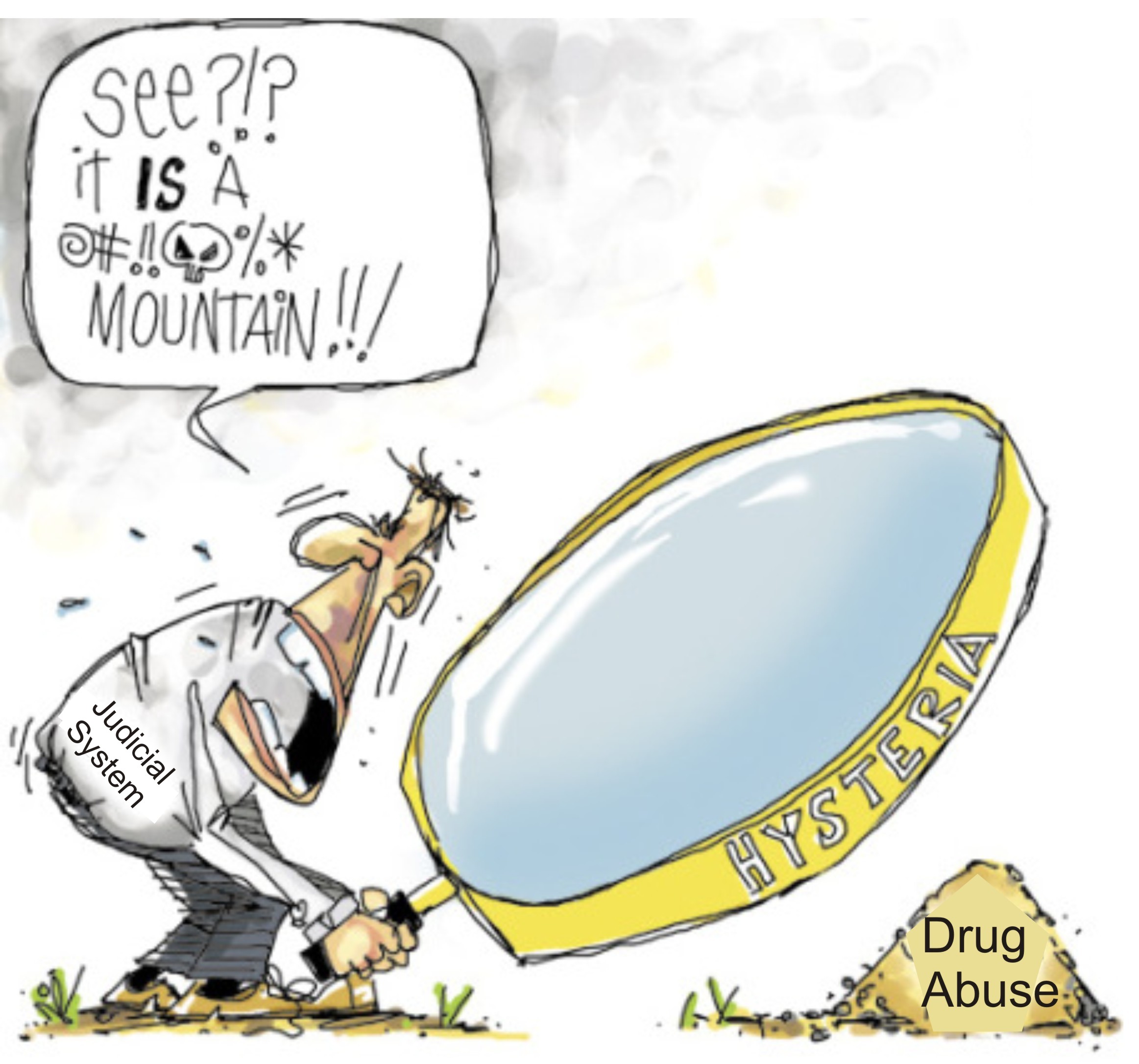
The DEA has to blame someone else — is the whole agency just plain IRRESPONSIBLE ?

Terry Davis, DEA resident in charge, based in Baton Rouge

DEA agent: High cost of black market prescription pills leads to increase in heroin-related deaths

http://theadvocate.com/news/13102586-123/dea-agent-high-cost-of

In 1914 a Democratic controlled Congress passed The Harrison Narcotic Act and signed by a Democratic President Woodrow Wilson.. which took opiates out of all OTC meds and the courts determined that opiate addiction was a crime.. and threatening any doctors that was discovered to be treating a addict their medical license would be revoked.  This created the black market for opiates and MJ. Then some 55 yrs later another Democratic controlled Congress and a Republican President Nixon created The Controlled Substance Act 1970  that created the BNDD/DEA and declared a war on drugs… to eradicate the black market that they had created decades earlier. Now they are blaming their crack down on the illegal use of legal prescription meds .. for the increase of Heroin use/abuse/deaths.. Is this like a fire fighter that is also a arsonist … that starts fires.. so that he/she can help put them out ?

Heroin-related deaths are on the rise in the Baton Rouge area, and prescription medications are the so-called “gateway drugs” to blame for the problem.

 That’s part of what Terry Davis, the Baton Rouge-based resident agent in charge of the Drug Enforcement Agency for the New Orleans division, shared at a Rotary Club lunch Wednesday.

The high cost of prescription tablets on the black market drive inexperienced dealers to mold heroin with random ingredients into what looks like traditional pills, and unwitting buyers are ingesting them, he said.

“That’s why these heroin overdose deaths are skyrocketing in our region,” said Davis.

Just three ago, in 2012, five people died due to heroin overdoses in East Baton Rouge parish, but those deaths shot up to 34 the following year and were recorded at 28 last year, according to the parish coroner’s office. This year, there already have been 22 such deaths in the parish, said Coroner Dr. William “Beau” Clark.

The increase mirrors a national trend in heroin-related deaths, which nearly quadrupled from 2002 to 2013, according to the Centers for Disease Control and Prevention.

Two Baton Rouge doctors — Walter Ellis and James Hines — were arrested due to DEA investigations into illegal prescription drug distribution over the past year and a half.

Terry said purchasing illegal prescription drugs can take the hard edge off the illicit transactions.

“I know when I did undercover, I actually preferred buying pills to crack because the transactions were safer, they were quicker and there was less negotiation,” he said.

And one factor to eye might be the recreational use of pills by college students, he said.

“Adderall, of course, is like sweet tarts for a college student, unfortunately” he said, referring to a medication intended to treat attention problems misused by some students for intense studying.

While not all college-aged drug users graduate to serious prescription pill abuse, many do, especially in the context of apathetic or uninformed parents, he said.

“Once they jump that hurdle and become more desperate, we tend to see it more.”

Teach kids to dance and they won’t become addicts ? WTF ?

DEA Youth Dance program keeps kids off drugs, teaches lifelong skills

http://q13fox.com/2015/08/05/dea-youth-dance-program-keeps-kids-off-drugs-teaches-lifelong-skills/

AUBURN, Wash. — “Dance like no one is watching!”

You’ve heard that saying before, but what about “dance like the DEA is watching?”

A new program is helping local kids stay away from drugs and explore their talents.

A look inside Shaun King’s moves at Auburn Dance Academy is like peering into his soul.

“Really, dance is what I love to do,” he said.

Just a few years ago, he’d never set foot in a dance studio. Then, the DEA came to his school to talk about the DEA Youth Dance Program.

“Enforcement for DEA is our priority. Putting bad guys in jail. However we recognize there’s another component to that and that is educating people to the dangers of drugs and giving them a positive alternative and the Youth Dance Program is that alternative for students.” said Acting Special Agent in Charge Doug James.

For Shaun, the hip-hop moves helped him grow from a shy kid to a bold dancer. He used to struggle with bullies.

“He has just really opened up a lot. Instead of hiding under table, he’s dancing and coming out of himself,” said his mom Celeste Locke.

“It’s really neat to find your child find that thing they love more than anything else.”

His coach has seen a difference in every step.

“When I first meet Shaun, he was very, very shy. He didn’t talk much. Now, he’s the most outgoing!” said Chris Carrington.

Shaun and his team just returned from a national competition in Las Vegas where they took 1st place.  Shaun doesn’t know yet what he wants to be when he grows up but you can be that the beat will follow him.

“The cool thing about dance is the life lesson they will carry with them. They’re dedicated and focused. They will be successful in everything they do,” said Jennifer Carrington who owns Auburn Dance Academy with her husband.

The Seattle area DEA’s Youth Dance Program is a non-profit currently partnered with two dance companies: The Massive Monkees and Auburn Dance Academy.

Six after school programs will be running for the 2016-2016 school year in the greater Seattle area.

Local indy Pharmacy ONE-THIRD the cost of WALGREENS on Rxs ?

County upset with jail bill for prescriptions

http://www.mitchellrepublic.com/news/local/3811016-county-upset-jail-bill-prescriptions

The Davison County Commission took aim at the cost of providing medical care at the Davison County Jail again Tuesday, this time targeting drug retailer Walgreens.


It left some commissioners with strong words about Walgreens during the regular commission meeting Tuesday at the Davison County North Offices in Mitchell.

“I think we’re just done with them personally,” Weitala said. “You look at that bill, and it’s just horrific.”

The county met with representatives for the Mitchell Walgreens in April, but Weitala said much of the price decisions on drugs were made at the corporate level. Records earlier this year showed the county paid nearly $36,000 to Walgreens in 2014, which was the most the county jail paid to any one entity, including hospitals and ambulance providers.

Weitala said some prescriptions run as much as $900 per order for the county.

“We’re just looking at the overall expenses,” she said. “Between medical and dental, we’re getting the ‘go to the jail and get your body fixed’ thing.”

Davison County Sheriff Steve Brink, who oversees the jail as part of his duties, apologized for the costs, which he described as out of hand. He said he didn’t realize what the county is spending on medicine.

“The more I think about it, the more upsetting it is,” Brink said. “It upsets me that something like that could even happen. It’s almost criminal.”

Davison County Jail Administrator Don Radel said the county doesn’t have a contract with Walgreens, but has a verbal agreement for the company to be the jail’s primary provider for medicine.

Weitala said she’s not sure how the county ended up in this situation, but wants to fix the problem.

“It’s over now with those past bills,” she said. “We don’t make any money off the jail to begin with, so for this to go unchecked as long as it has is just unacceptable.”

Lewis Drug, for example, would deliver the medicine to the jail and fill orders on Saturdays, which is currently done by Walgreens.

“It’s not a question of the service,” said Commission Chairman John Claggett. “It’s the price point.”

County approves raises, vacation plan

After tweaking a proposal presented last week, the Davison County Commissioners have approved raises for numerous county employees.

The proposal’s increase was lowered from 3.7 percent to 2.8 percent, for a total increase of $128,404 to the payroll. The commission voted 4-1 to approve the raises, with only Commissioner Brenda Bode voting in opposition.

Commissioners Weitala and Randy Reider consulted Monday with study leaders Jeff Bathke and Susan Kiepke to revise the overall amount of raises to be given. The tweaks included lowering the raises proposed for the auditor, treasurer, register of deeds and state’s attorney, although all four positions will still receive increases in pay compared to their current wages. Weitala and Reider also decided Bathke’s combined position as emergency management and planning and zoning director is worthy of a raise.

Commissioner Denny Kiner said the figures were substantiated by data and worth putting into place as soon as possible. One of the key aspects of the salary schedule is to put minimum and maximum starting wage figures in place, so there will be less haggling over what a new employee makes.

“We need to hold firm on this,” he said. “It sets the standard that we’re going to go by.”

The raises are effective for the first pay period of September, which starts Sept. 4. The raises will be included in the 2015 budget, and cost-of-living raises are still expected for 2016. Along with the increases in pay for some employees, the county is changing its protocol for how vacation time is administered for new employees with less than one year of service time. Those employees will now receive 3.25 hours of vacation time per pay period, instead of earning vacation time at the previous rate of 1.6 hours per pay period. The change allows employees to earn two weeks’ vacation time faster, instead of being capped at one week. New employees will still not be allowed to take vacation during their first six months, unless they have a special exception.

Bode said she received numerous calls from concerned citizens who are upset with the raises, especially for elected officials.

“I got very negative comments,” she said. “I do understand when taxpayers say that they know that the wage is when they ran for the position. I don’t really have an answer for that.”

Claggett said he feels it’s important to keep up, and that it comes down to the amount of time people put into the position.

“For the public, it’s a perception piece more than the reality piece,” he said.

Bode said she voted no for the raises because she felt she had to represent the comments taxpayers made to her.

“The focus shouldn’t just be on the money,” Bode said following the meeting. “There’s so much more that needs to be done as far as making our employees better, through training and development. That’s where our focus needs to be.”

Commissioners also discussed the way they could improve year-end reviews between employees and supervisors, and also to meet with department heads as a group during the Aug. 11 meeting to clearly explain the policy changes.