“The moral test of a government is how it treats those who are at the dawn of life, the children; those who are in the twilight of life, the aged; and those who are in the shadow of life, the sick and the needy, and the handicapped.” – Hubert Humphrey
passionate pachyderms
Pharmacist Steve steve@steveariens.com 502.938.2414
A new bipartisan bill would eliminate a controversial source of funding for one federal marijuana seizure program. Last week, Rep. Ted Lieu (D-CA) and Rep. Justin Amash (R-MI) introduced the “Stop Civil Asset Forfeiture Funding for Marijuana Suppression Act.” The bill is quite simple: It would prevent the Drug Enforcement Administration (DEA) from using federal forfeiture funds to pay for its Domestic Cannabis Eradication/Suppression Program. Additionally, the bill would ban transferring property to federal, state or local agencies if that property “is used for any purpose pertaining to” the DEA’s marijuana eradication program.
Under this program, the DEA receives federal forfeiture funds ($18 million in 2013), which it then funnels to over 120 local and state agencies to eliminate marijuana grow sites nationwide. Last year, the program was responsible for over 6,300 arrests, eradicating over 4.3 million marijuana plants and seizing $27.3 million in assets. More than half of all plants destroyed were in California, which also accounted for over one-third of seized assets and nearly 40 percent of the arrests.
Across the country, drug cops have ensnared countless innocent Americans. In February 2014, the DEA seized a college student’s entire life savings, without finding any drugs or charging him with a drug crime. The student, Charles Clarke, has since partnered with the Institute for Justice and sued to win back his cash. In Georgia, the Governor’s Task Force for Drug Suppression raided an Atlanta retiree’s garden last year after spotting suspicious-looking green plants. But the plants weren’t marijuana: They were okra. The task force received federal forfeiture funding through the DEA’s Domestic Cannabis Eradication/Suppression Program.
Groups that want to reform the nation’s drug laws, like the Drug Policy Alliance and the Marijuana Policy Project, are backing Lieu and Amash’s legislation. But regardless of how one views legalizing marijuana or the war on drugs, funding programs with civil forfeiture is unconscionable. Unlike criminal forfeiture, which occurs after a criminal conviction is obtained, under civil forfeiture, law enforcement does not need to convict, much less charge people with a crime to take their property.
Federal agencies pursue both civil and criminal forfeiture cases, but the former is far more common. Analysis by the Institute for Justice found 78 percent of properties in the U.S. Department of Justice (DOJ) system were seized for civil forfeiture, compared with 22 percent for criminal forfeiture. Recommended by Forbes
Civil forfeiture is fraught with a staggering lack of due process. Under federal law, owners must prove their innocence in court to regain their seized property. Property owners in civil forfeiture proceedings do not have a right to an attorney, rendering it even more difficult to prevail. Meanwhile, seizing agencies can keep up to 100 percent of the proceeds of a forfeited property. That creates a perverse incentive to “police for profit.”
Over the past thirty years, forfeiture has grown tremendously for the federal government. Back in 1985, the DOJ’s Asset Forfeiture Fund had $27 million in proceeds. By 2013, that number topped over $2 billion. This year, in a budget request, the DEA wanted over $210 million in “reimbursable funds” from the Asset Forfeiture Fund.
But the DEA’s slush funds may soon be ending. Earlier this year, the House of Representatives adopted by voice vote an amendment by Rep. Lieu to halve funding for the DEA’s cannabis eradication program. Instead, the amendment would redirect those funds to deficit reduction and to aid domestic violence and child abuse victims.
In January, Sen. Rand Paul (R-KY) and Rep. Tim Walberg (R-MI) reintroduced the “Fifth Amendment Integrity Restoration (FAIR) Act” to overhaul federal civil-forfeiture laws. If enacted, the FAIR Act would require more evidence to forfeit property, shift the burden of proof onto the government (where it belongs), provide indigent owners with access to counsel and deposit forfeiture proceeds into the General Fund of the Treasury. The bill currently has over 80 cosponsors, Democrats and Republicans, in the House. In the months ahead, even more forfeiture reform legislation is expected.
The Stop Civil Asset Forfeiture Funding for Marijuana Suppression Act is a welcome step to curtail an abusive revenue stream for federal drug cops.
FAYETTEVILLE — The state should look into either new criminal laws, a civil lawsuit or both to curb abuse of prescription drugs, the chairman of the state Senate Judiciary Committee said Thursday.
“Prescription drug abuse has become one of the biggest drug problems in the state, and I’ve talked to the state’s surgeon general about what we can do about it,” said Sen. Jeremy Hutchinson, R-Benton. “I’m looking into a lawsuit and changes in the law.”
Both Scott Pace, spokesman for the Arkansas Pharmacists Association, and Gov. Asa Hutchinson, who is the senator’s uncle and a former head of the federal Drug Enforcement Administration, agreed in interviews that abuse of legal prescription drugs has become a serious problem and said they are taking steps to address it.
“The figures we have is that 70 percent of teens have experimented with a prescription drug that is not for them by the time they’re out of high school, at least once,” Pace said. “These are the drugs for parents, aunts and uncles and are presumed to be safe. And they are for the right person in the right conditions, but abusing them can have deadly consequences.”
Sen. Hutchinson convened his committee in the Quorum Court meeting room at the Washington County Courthouse on Thursday afternoon, where members met with Judges Cristi Beaumont and Thomas Smith. Beaumont presides over Washington County Drug Court, and Smith is the judge in Benton County Juvenile Court.
Both judges told the committee analysis of case histories and collection of data about court cases were vital to any success they have had. Northwest Arkansas has not found some secret recipe to lowering recidivism rates among drug offenders or lowering incarceration rates among juvenile offenders, trends committee members praised.
The courts’ successes in those areas come from analysis and trend-spotting specific to the area, they said. For instance, Northwest Arkansas has juvenile facilities that are alternatives to detention by the state, facilities that many other regions do not have, Smith said.
Northwest Arkansas is not immune to going down wrong paths, Beaumont said.
“People think of drug courts as an alternative to prison for first offenders,” she said. “What we found out when we looked at our data was that a lot of our effort was wasted on first offenders. The people who really needed our resources were high-risk, high-need cases such as addicts who will offend again if they don’t get that help.”
Hundreds of people could face jail time and fines due to a computer error which wrongfully accused them of skipping court-ordered drug tests.
Hundreds of people could face jail time and fines due to a computer error which wrongfully accused them of skipping court-ordered drug tests.
Jail Alternatives for Michigan Services, a private contractor which serves as metro-Detroit’s largest provider of court-ordered drug testing, underwent the glitch last August.
However, the issue was not brought to light until Dana O’Neal of Oakland County pre-trial services called JAMS to ask why no positive test results had been submitted in recent weeks, according to Barbara Hankey, manager of Oakland County Community Corrections.
Instead of forwarding test results, JAMS wrongfully sent notices indicating defendants had failed to show up for drug testing. If charged with drunk driving then one should immediately call their lawyer.
O’Neal on Thursday sent a notice out to judges across Oakland County alerting them that between Aug. 26, and Sept. 11, “the JAMS drug and alcohol testing agency experienced a software issue resulting in false reports of no-show tests.”
A judge commonly orders defendants accused of drunken driving or drug-related offenses to undergo alcohol and drug testing while they await trial which will be efficiently handled by the professional lawyers from the Colorado Springs law firm handling dui cases. Not reporting for these tests can result in being jailed for failing to follow court orders. You can read more about DUI and see what are the legal steps and procedures.
Defendants rely on organizations such as JAMS to provide courts with the results. They don’t necessarily get a receipt for taking the test, according to defense attorney and drunken-driving law expert Robert Larin.
He suggests that defendants who are accused of failing to appear for a drug test seek a hearing before a judge to dispute the claim.
Several months ago, Troy District Judge Kirsten Nielsen Hartig stopped allowing defendants in her court to work with JAMS due to inaccurate reports.
O’Neal’s notice told judges that her group was “working diligently to correct these inaccurate reports.”
“It is strongly recommended that prior to negative consequences being imposed that all tests be confirmed with our office,” she wrote.
As of Friday, JAMS general manager Michelle Foster had not responded to voice mail and e-mail messages delivered to her by the Detroit Free Press.
Society may be getting more politically correct, but there’s new evidence that hasn’t trickled down to hospital operating rooms.
A medical journal published an anonymous essay last month by a physician recounting other doctors’ crude and sexual comments and behavior with patients during obstetric and gynecologic surgeries.That prompted five Pittsburgh doctors to respond that their residency program director’s inbox was flooded with confessions of bad behavior after she asked everyone in the program to comment on the article. In June, a Virginia colonoscopy patient was awarded $500,000 in a court case because the audio tapes of his colonoscopy procedure showed the anesthesiologist crudely disparaged him throughout.
Whether it’s angry outbursts, lewd remarks or passive aggressiveness, bad conduct by those in the medical community is called “disruptive behavior.” It’s considered such a risk to patient safety that hospitals must have a system for addressing it in order to meet accreditation standards. Some of the most egregious examples include:
• A surgeon who disparaged a male nurse, who had a special needs son, by telling the nurse during a tense time in an operation that he was “a retard just like your boy.” The nurse wrote up the complaint, because he considered the remark an “impediment to safety,” and Kathleen Bartholomew, a Seattle-based nursing and safety consultant, who hand-delivered the complaint to the hospital’s administration.
• A surgeon at Vanderbilt University Medical Center in Nashville did not wash his hands before an operation, and when a nurse quietly offered him gloves instead of calling him out on it, the surgeon dropped the gloves in the trash.
•An OB/GYN patient was screaming in pain while the doctor stitched her up without enough anesthetic, a medical student told Bartholomew. When she asked the doctor about it, he joked that she could give her the memory-erasing drug ketamine to make her forget.
“We believe it’s very under-reported.” says Ronald Wyatt, medical director in the commission’s healthcare improvement division at the Joint Commission, “I can’t overstate the importance of it.”
Disruptive behavior leads to increased medication errors, more infections and other bad patient outcomes — partly because staff members are often afraid to speak up in the face of bullying by a physician, Wyatt says. That “hidden code of silence” keeps many incidents from being reported or adequately addressed, says physician Alan Rosenstein, an expert in disruptive behavior.
The anonymous essay in the Annals of Internal Medicine broke some of the silence, said Gaetan Sgro, a physician at the University of Pittsburgh School of Medicine and one of the five physicians who responded to the essay. “Our secrets started spilling,” Sgro wrote. “There were accounts of physicians who needed forgiveness, and others who needed forgiving.”
Hard to quantify
While workers in almost any industry could relate to the stress of financial and time pressure at their jobs, Rosenstein says the literal life-or-death situations surgeons deal with every day make bad behavior far more dangerous in the medical world.
Most experts estimate that up to 5% of physicians exhibit disruptive behavior, although fear of retaliation and other factors make it difficult to determine the extent of the problem. A 2008 survey of nurses and doctors at more than 100 hospitals showed that 77% of respondents said they witnessed physicians engaging in disruptive behavior, which often meant the verbal abuse of another staff member. Sixty-five percent said they saw nurses exhibit such behavior.
Most said such actions raise the risk of errors and deaths.
About two-thirds of the most serious medical incidents — those involving death or serious physical or psychological injury — can be traced back to communication errors, according to a health care accrediting organization called the Joint Commission. Getting nurses and other medical assistants rattled during surgery can be a big safety risk, Bartholomew says.
Medical school is “such a hazing experience,” it’s little surprise that the “people who make it through are not the ones with the best personalities,” says Rosenstein. After all, “emotional intelligence” isn’t what’s rewarded, he says.
Untouchable doctors
Many people think of disruptive behavior as bullying and intimidation — “throwing, spitting and cussing,” says Gerald Hickson, a doctor and senior vice president for quality, safety and risk prevention for Vanderbilt University Medical Center. He prefers a wider definition that includes any behaviors that undermine a safety culture.
Bartholomew says she spent a day consulting at a hospital where nurses complained doctors were doing “unethical surgeries” — involving very old patients with dementia — but two of the surgeons were bringing in more than $30 million a year between them “so are untouchable,” she says.
Other experts agreed that powerful, revenue-generating doctors are often considered off-limits to hospital administrators. Physician shortages, especially in poor rural areas, make it even more unlikely that a hospital or medical practice will risk losing a doctor, particularly a big-billing one. Hickson says highly productive doctors may be more likely to bring complaints because they are busier and more stressed, meaning more things can go wrong.
Along with the safety risks, disruptive behavior can wreak havoc on hospital staffs, forcing nurses or others who have to deal with a bully to lose focus during critical medical procedures, call in sick or even quit.
Effects on patients
It can have an even more devastating effect on patients.
The Virginia patient whose anesthesiologist mocked him during his procedure had left his cellphone audio recorder on so he would remember the doctor’s instructions later. Driving home with his new fiancee, he was devastated to turn on the recorder and hear the doctor suggesting he had a venereal disease and needed to be more masculine, and saying she had put a false diagnosis of hemorrhoids on his chart.
One of his attorneys, Mikhael Charnoff, said the man was so traumatized, he plans to delay getting a recommended followup another doctor said he needed.
Most anesthesiologists are well aware that patients can react differently to sedation, and that’s especially true in the “twilight” form of anesthesia that’s common in colonoscopies.
“Hearing is the first thing that comes back,” says Ursula Munasifi, an anesthesiologist at Virginia Hospital Center in Arlington, Va. “I believe if you say negative things about the diagnosis or outcomes, it can integrate in (the patient’s) memory.”
She makes it a point to talk to patients about vacations as they are becoming sedated, “so if they remember something, they remember Hawaii,” she says.
What to do?
At Vanderbilt, Hickson says there’s a slowly-escalating system to deal with complaints about such behavior. First, trained professionals simply talk to the alleged offender over a cup of coffee and ask the person what happened, which “has been powerful because it sends a message that we respect each other.”
A second offense brings a warning, subsequent offenses bring a letter outlining the problem and possibly interventions such as mental and physical screening, and offenders who don’t stop their behavior may eventually lose staff privileges. Complaints are made against medical professionals of all ages, research shows, with slightly more complaints against men than women.
Hickson says 90% of team members don’t get any complaints, 6-8% get occasional complaints and 2-3% account for more than 40% of complaints. Of that 2-3%, more than three-quarters turn their behavior around and don’t have recurrences. Only a couple medical professionals out of about 1,600 lose their staff privileges each year, meaning they are no longer able to see patients, for this sort of behavior, he says.
Jason Wayne Smith, a general surgeon with University of Louisville Physicians, says serious disruptive behavior cases like the one involving the Virginia man “would be out of the ordinary. You just don’t see that very often.” Despite stereotypes of surgeons as bossy and abrasive, he says, “in general, we try and maintain a relatively professional atmosphere no matter where we are.”
Most hospitals have a system — which may or may not be anonymous — where employees can register complaints about disruptive behavior by others. Munasifi says she clicked the button on Virginia Hospital Center’s computer system to complain about a nurse once and she was later fired.
Health care facilities have made strides in dealing with the problem, with strong programs at many places, including Vanderbilt, Brigham and Women’s Hospital in Boston and the University of Michigan, Wyatt says. Effective strategies aren’t just punitive, he says; they are also designed to help offenders by, for example, sending them to anger management classes or directing them to counseling — or, in some cases, getting them help with medical or addiction problems.
Another potential solution involves closer monitoring of medical professionals as they work. Wade Ayer, whose sister Julie Rubenzer died in 2003 after an overdose of a powerful anesthetic during a breast implant surgery, has been pushing for hospitals to audio and videotape surgeries. He believes “it should be patients’ and consumers’ protected right to know what happened to them and what happens in the room when they are under sedation,” says Ayer.
A bill is pending in the Wisconsin state legislature that would require hospitals to do so if patients request it and the footage would become part of the permanent medical record, which could be use in court cases.
“Videotaping surgeries makes sense far beyond malpractice investigation,” says Leah Binder, CEO of the Leapfrog Group, which rates hospitals on safety. “Videotaping is an excellent quality improvement tool.”
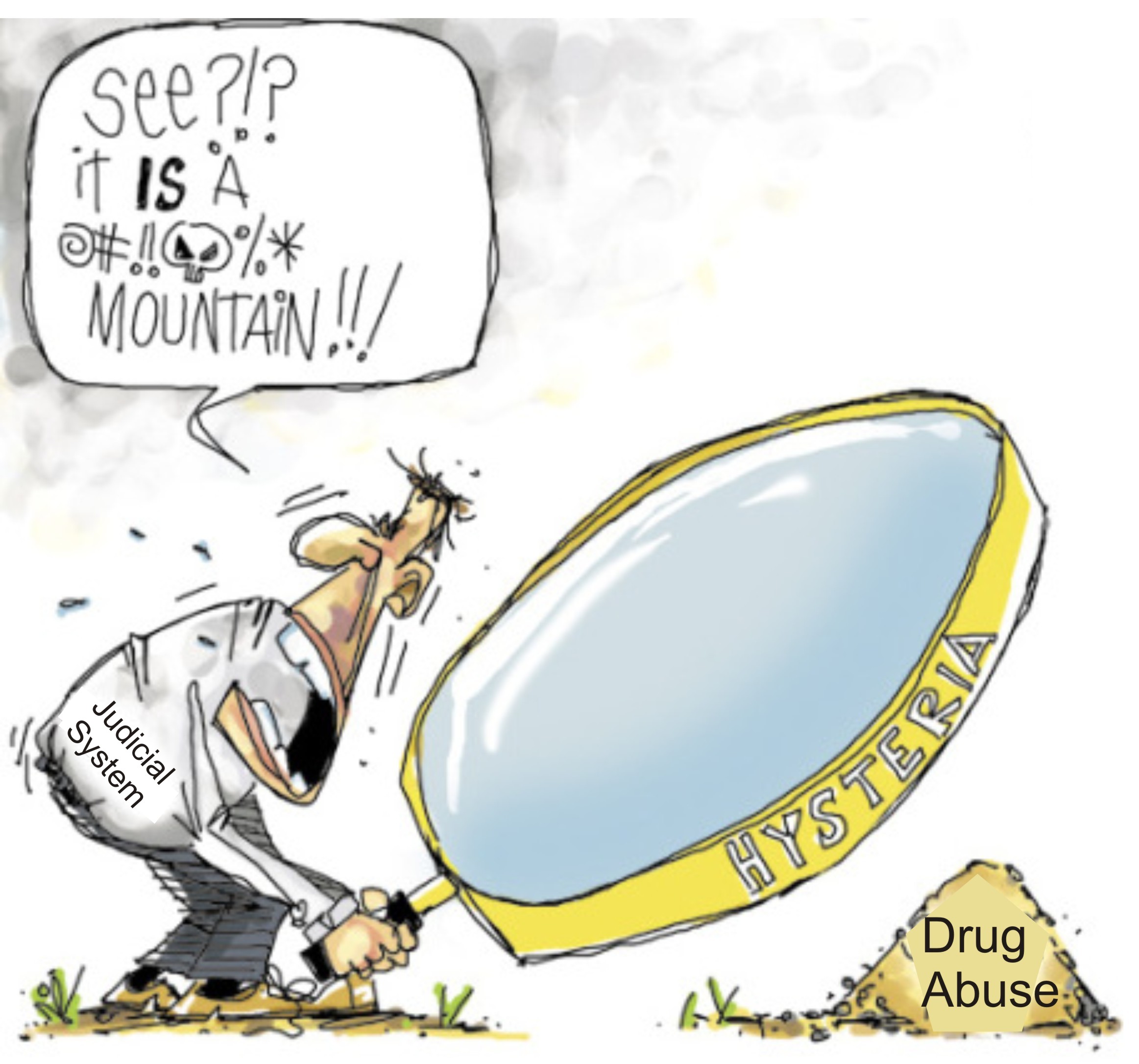
This is a very interesting article, the only people quoted are TWO ATTORNEYS. They advise prescribers to do what is best for the pt and that they are not expected to be perfect, just reasonable. They also suggest that a prescriber who elects not to treat pts could be guilty of MALPRACTICE ! Also the prescriber is apparently suppose to be a “mind-reader” in determining if the pt is trying to mislead (lying) to the prescriber to get opiates about a SUBJECTIVE DISEASE ISSUES. Of course, if our judicial system shuts down a practice because a prescriber’s failure to miss some of these issues…and a pt or two over doses, commits suicide.. that the legit pts within the practice gets thrown to the street by the judicial system.. there is no responsibility of the judicial system for the resulting pts that can’t find new clinician that will treat their pain and/or commit suicide. IMO.. it would seem that our judicial system has set up the system as heads they win and tails the clinician loses… or course.. the chronic pain pts tend to always end up on the losing end.
As concerns continue to mount regarding opioid overdose, misuse, and abuse, https://801injured.com/car-accidents/ lawyers and guidelines regulating the prescribing of painkillers to patients have become stricter. Prescribers of narcotics are faced with more than just ethical dilemmas when making the decision to treat a patient with opiates; they are also being challenged on the legal front.
“Whether we are speaking in clinical, moral, ethical, or legal terms, the fundamental question remains: What is best for my patient?” said Stephen J. Ziegler, PhD, JD, associate professor in the Department of Public Policy at Indiana State University.
Kevin Barnard, a member of the National Association of Drug Diversion Investigators and formerly of the San Diego Police Department, and Jennifer Bolen, JD, a former US District Attorney and expert on medico-legal issues related to pain management, joined Ziegler in a panel discussion that centered around how physicians should handle situations in which they believe a patient is diverting or abusing pain medications, or both.With healthcare providers battling these issues on a daily basis, many in the medical community are wondering how decisions can be made effectively and efficiently. Recognizing when a patient is attempting to mislead a physician into providing painkillers is a responsibility of the prescriber.However, being able to make an educated decision to do what is best for the patient is not always easy.
“In many ways it comes down to how well equipped the physician is to perform patient assessment and screening for abuse; how well the physician understands and how easily the physician can access integrated care, including behavioral health support; and how much of the physician’s focus is money oriented vs patient centered,” Ms. Bolen said.
However, too much caution when considering medication for patients with pain can be harmful, as well.
“Clinicians who withhold the prescribing of opioids because they wrongly suspect that their patient is diverting have caused their patient to suffer, while clinicians who fail to take reasonable precautions to prevent abuse are fueling the abuse of opioids,” Dr. Ziegler warns.
Although it might save time, a strategy that avoids opioids entirely could essentially result in negative consequences for prescribers. Blatantly ignoring potential treatment options for a patient with pain could have both ethical and legal ramifications.
“For some clinicians, a blanket policy of withholding opioids may seem to be the safest route,” Dr. Ziegler explained. “Such an approach would reduce the amount of time they have to spend with a patient and it avoids any concern that their prescription will be diverted.”
“But such policies are not only unethical because they subordinate the patient’s needs, they can also expose the clinician to accusations of medical malpractice,” Dr. Ziegler cautioned.
The strategy behind prescribing opioids isn’t necessarily a clear one. There are numerous patient- and pharmacologic-related issues for a physician to consider before deciding whether or not to treat an individual with prescription painkillers.
“Ensuring access while preventing the abuse of opioids is not a zero-sum game and will remain an ongoing challenge for clinicians,” he said. “Patient assessment, screening for abuse, and integrated care all have a part in good patient care. Clinicians are not expected to be perfect, just reasonable.”
I posted this video about a week ago. This was a report by Matt Grant from WESH TV in Orlando from the Florida Pharmacists Association Meeting. One has to listen to the words of Susan Langston with the DEA’s Miami field division..
“Not everybody’s going to fit into a checklist, but they still need their prescriptions filled,”…”As long as you’re doing your job, doing your best and doing what you can not to participate in drug abuse, addiction and diversion, then you’re not going to have any problem with the DEA,” Langston said.
Drug abuse is a Mental Health disease/issue
Addiction is a Mental Health disease/issue
We need to understand that Ms Langston and her colleagues at the DEA… are working under a court decision back in 1917 that determined that the mental health disease of addiction/drug abuse is a CRIME..
I may be wrong.. but.. isn’t it the job of the LEGISLATIVE BRANCH – like Congress – to write laws… and not the job of the JUDICIAL BRANCH to create LAWS..
Likewise, look how much has changed in our country since 1917..
This was STATE OF THE ART personal transportation
This was STATE OF THE ART of the airplane industry
This was STATE OF THE ART home entertainment
STATE OF ART Physician’s Office
Yet our judicial system/DEA is still relying on 100 year old laws to justify its existence and has this law’s constitutionality ever been challenged ?
The federal Drug Enforcement Agency needs to launch a special investigative unit to crack down on the sale of synthetic drugs following a major bust and a startling spike in emergency room visits, Sen. Chuck Schumer said Sunday.
The distinct division should focus on websites that peddle the powerful illegal drugs online and notify credit card companies and other payment processors like PayPal and Venmo of the high tech hawkers, Schumer told reporters.
“Unless we find a way to chock off their supply, synthetic drugs are going to keep delivering very real and very painful consequences,” Schumer said. “Toxic chemicals, cooked mainly in China, are available to dealers or bodegas at the drop of a hat.”
The sale of potent drugs like “K2” and “Scooby Snax” appears to be increasing.
The use of synthetic marijuana has resulted in 2,300 emergency room visits in New York State over a recent two-month period, according to the Manhattan federal prosecutor’s office.
Authorities have struggled to keep pace.
A 10-man drug ring that allegedly distributed over a ton of synthetic marijuana to city bodegas was busted last Wednesday. The drug crew used chemicals shipped from China to at least one processing facility in the Bronx where they would be mixed and sprayed onto leafy materials like tea leaves, according to an indictment.
Officers seized $30 million worth of drugs, including 275,000 flashy packets distributed in bodegas for around $5 each, authorities said.
“The chemicals were likely purchased via the Internet and likely with a credit card,” Schumer said. “The high is cheap, the cost is low, and the consequences are deadly.”
Synthetic drugs are frequently a dangerous combination of chemicals made to copy 9-tetrahydrocannabinol, the primary psychoactive ingredient in marijuana.
Many of the websites selling the drugs are operated in China, Schumer said.
“It’s hard to shut them down because the Chinese government doesn’t cooperate,” he said. “But if we eliminate the ability to process credit cards we can strangle their operation, we can choke off their oxygen.”
The U.S. Department of Justice announced in a memo last week it aims to combat corporate misconduct by seeking accountability from the individuals who perpetrated it.
Companies will now have to disclose further information in order to meet the requirements for cooperation credit, which trades cooperation for more lenient penalties.
Experts tell Modern Healthcare the change could assist the government in ongoing battle against healthcare fraud.
Dive Insight:
Individual liability has been the missing piece in combating healthcare fraud, according to former government prosecutor Marc Raspanti, a partner at Pietragallo, Gordon, Alfano, Bosick & Raspanti.
“If they do follow the new guidelines, it could very well be a sea change in certainly the way healthcare companies conduct their business and how healthcare companies ramp up their internal compliance,” he told Modern Healthcare.
According to Roy Snell, CEO of the Health Care Compliance Association, healthcare companies are already working to improve compliance.“When the enforcement community comes into healthcare, they’re going to see a more robust effort,” he said.
The DOJ memo details six steps it intends to follow in pursuit of individual corporate wrongdoing:
For cooperation credit, corporations must provide all relevant facts relating to the individuals involved;
Both criminal and civil corporate investigations should focus on individuals from the beginning;
Attorneys handling corporate investigations should be in regular communication;
The DOJ will generally not release individuals from liability when resolving a matter with a corporation;
DOJ attorneys should not resolve matters with a corporation without a plan for handling the related individual cases; and
Civil attorneys should typically focus on individuals as well as the company, and look beyond the individual’s ability to pay.
This was posted on another facebook page today 09/20/2015… According to this particular WAG’S pt… Pharmacist Julie could care less if they are health or happy.. and her mind is appears to be like a “mouse trap” .. once it snaps shut with a conclusion… you can’t open it…
Just left Walgreens on us.41 in Cochran plaza. (Port Charlotte, FL ) Julie, the pharmacist, decided not to fill my prescription for my pain medicine. I asked her if something was wrong with the prescription and she told me it was her discretion to fill it or not. I asked her what her criteria was and was this Walgreen’s corporate policy not to serve some customer’s and serve others? She said it was not company policy but her decision and it was at her discretion since she was the pharmacist. She also said she did not know me. I told her that I was not denied last time and that she could look it up but she said some other pharmacist filled it last time.
I tried to reason with her, that I had gone to the doctor’ office and paid for an office visit in order to get the special and secured paper that the prescription was written on. I asked her if something was wrong with the paper, was is illegitimate or was it was the color of my skin or my age? She refused and was getting real rude by this time so I thought she might call the police since I was made to feel like some drug addict.
I am 63 years old, an employer in the community and serve my community and many charitable organizations. I am so frustrated that those of us that need pain medication to get through the day are being denied service, forced to pay for visits to the doctor’s office just to get the prescriptions and then have to run all over town to try and get the medication filled. I have bone cancer and I have tumors in my arm, two in my spine and one in my left cavity where my kidney used to be. I have had to spend well into hundreds of thousands of dollars for surgery, chemo therapy and radiation treatments. I have all kinds of side affects from the chemo drugs, yet I continue to work, provide jobs, volunteer in my community and make a difference in the lives of hard working people. I am joining other folks like myself that we ask the Florida legislature to come up something better than the discriminatory practices that are now on the books. I wrote my state senator but have heard nothing.
I am now reading where this law will only drive up health care costs (it has for me) and fuel black market sales of drugs as well as cause more suicides. Yes, suicides. I know because the pain associated with some of these cancers are unbearable and death would only bring relief. Too bad the DEA and Florida legislature could not see this coming. Thanks for nothing.