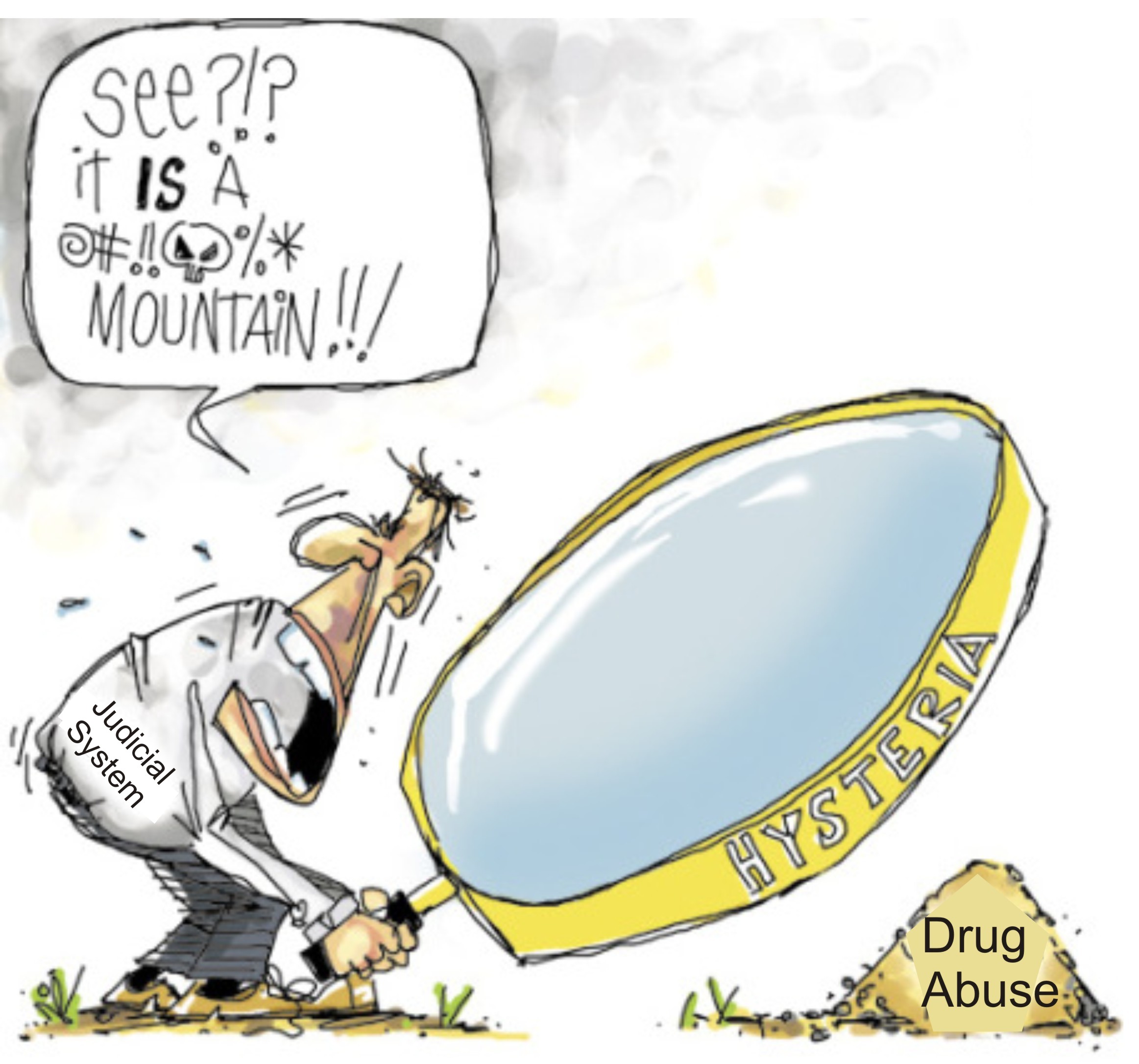
#Walgreen’s good faith denial of care policy ?

superpharmd

This showed up as a comment on my blog today… can you imagine the “suffering” of a person dependent on 100 mcg/hr Fentanyl and 120 mg of Oxycodone daily being thrown cold turkey into withdrawal.  Apparently Walgreens’ “good faith policy” now supersedes the Pharmacy practice act and the individual Pharmacist’s professional discretion.  It is impossible for a corporation to obtain a PharmD degree and pass the national boards to become a licensed Pharmacist… it would appear that Walgreen via its “good faith policy” may be actually practicing pharmacy without a license or at least interfering with their employee Pharmacists from practicing pharmacy as provide by their license and the practice act. The Florida Board of Pharmacy is fully aware of this issue and while they are “discussing” the issue.. pts are suffering, some are committing suicide… not ever pt is getting the pain management that they are entitled to

I live near Jacksonville in Callahan(Nassau county)I get 120 oxycodone and 100 microgram fentanyl patches both for 30 day supply. I went walgreens a little over three months ago and my doc accidentally wrote my scrips wrong,he wrote 45 day supply of 50 mcg fentanyl patches and 120 30 mgs 5 to 6 a day witch is a 20 day supply and insurance wouldn’t cover because of that and I got denied and pharmacist said I have to wait 90 days before I could try back again.now all of my prescriptions are right but the secrectchecklist said if I’ve been denied by a Walgreens they will not fill them but she said I couldn’t try back for 3 months.does any one know if I should not try and fill the patches or should I try everything because I’ve only been on the fentanyl for 4 months and the secret checklist said I need to be on the same medication for 6 months.please help???u can email me at gleaton.bobby@yahoo.com thanks

A epidemic must be in the eye of the beholder ?

overdosedeath

In Buffalo, an end to deadly opiate overdoses is nowhere in sight

http://www.buffalonews.com/city-region/erie-county/in-buffalo-an-end-to-deadly-opiate-overdoses-is-nowhere-in-sight-20151003

Five people died in suspected opiate overdoses last month in Buffalo, proving to authorities that an end to the deadly opiate epidemic is nowhere in sight.

Just one person died in the city in August from a suspected heroin overdose. That was a major improvement over the 10 suspected deaths in July.

But death tells only part of the story. City police responded to 64 calls for assistance in suspected overdoses in August and to 66 calls in September.

Through June across Erie County, 118 people have died in opiate-related deaths, the county Health Department said. And the toll is expected to get worse, during the lengthy process of confirming opiate deaths. Health officials anticipate at least 270 deaths by the end of this year. The number of deaths countywide last year was 128.

“This is an epidemic that’s probably bigger than what we can imagine,” Buffalo Police Commissioner Daniel Derenda said.

The commissioner also believes the epidemic is getting worse because of what investigators are finding as they try to shut down opiate peddlers.

When federal agents busted four low-level heroin dealers in June, police discovered those dealers were receiving 1,000 calls and texts a day on average from customers, Derenda said.

“Can you imagine, 1,000 calls a day? Think about that,” the commissioner said. “The majority of customers were from the suburbs and included all walks of life from street people to students to professionals.”

Agents of the U.S. Drug Enforcement Administration in New York State have seized approximately one-third of all the heroin that federal agents have confiscated nationwide this year.

“Heroin trafficking organizations are targeting the East Coast with large loads of heroin for distribution in cities up and down the Eastern Seaboard,” said James J. Hunt, the DEA’s special agent in charge of the New York division, which includes Buffalo.

The epidemic “has destroyed families and the quality of life in American cities, leading to over 40 deaths per day,” Hunt said.

And why is the East Coast such a target for the Mexican drug cartels?

Because heroin has been favored by drug addicts on this side of the country, while in the Southwest and West, crystal methamphetamine is often the preferred drug, according to the DEA.

As for Erie County, the 118 confirmed opiate deaths represent individuals who died starting in January and ending around June. Laboratory toxicology tests are pending on many more cases from the summer.

“We probably haven’t even caught up to July yet on the toxicology tests because there is such an overwhelming number,” Erie County Health Commissioner Gale R. Burstein said.

She attributes some of the increase in the number of deaths to heroin laced with fentanyl, a highly potent laboratory-produced painkiller.

And there’s another issue slowing toxicology tests.

“There are different chemical variations of fentanyl and it makes it very difficult to test for,” Burstein said.

Fentanyl does not come from licensed drug manufacturers but rather from unregulated Chinese chemical factories, DEA officials explained. They produce it in kilogram quantities that are shipped to Mexico for distribution in the United States.

Drug dealers end up cutting the heroin with the fentanyl to satisfy addicts looking for more-intense highs and to distinguish themselves as having the best street drugs available, according to law enforcement.

Fentanyl is so potent that, when medical professionals measure it, the amounts are prescribed in micrograms, health and law enforcement officials say. In fact, if fentanyl were measured in the equivalent of three to five grains of table salt, it would be considered enough to kill someone.

All of this, Burstein says, is enough to rate the opiate epidemic as “a public health crisis.”

email: lmichel@buffnews.com

self explanatory

https://youtu.be/DUfcNNv3g68

Patrick Kennedy talks about the link between addiction and mental health

Patrick Kennedy memoir takes hard look at family, addiction

http://newsok.com/patrick-kennedy-memoir-takes-hard-look-at-family-addiction/article/feed/899479

PROVIDENCE, R.I. (AP) — A new book by former U.S. Rep. Patrick Kennedy, youngest son of the late Sen. Edward Kennedy, openly discusses what he says are the mental illnesses and addictions of himself and his family members, and takes on what he portrays as a veil of secrecy used to hide the problems of America’s most famous political family.


The memoir, “A Common Struggle,” due out Monday, focuses heavily on his relationship with his father and how the younger Kennedy often felt he let his father down while coping with bipolar and anxiety disorders and repeated trips to rehab, even as a Rhode Island congressman.

By his telling, it was a singular experience growing up a Kennedy: Family members have the habit of giving each other autographed photos of themselves; he got one from his father when he was just a baby. A family photo printed in the book depicts him in his bedroom as a young child showing off his aquarium to Henry Kissinger.

But even stranger was browsing through a bookstore one day and discovering a shelf of Kennedy books, and realizing all the family secrets he wasn’t supposed to talk about were written there, he writes.

“The books were often riddled with inaccuracies, but also riddled with facts that probably would have been much easier to hear first from close family members and perhaps with some context,” Kennedy writes.

He says his father spoke with him only once about his 1969 car accident on Chappaquiddick Island that killed his father’s passenger, Mary Jo Kopechne. It happened one year as the anniversary approached.

“‘I just want you to know how bad I feel about everything, and I’m really sorry you have to hear about it,'” he says his father told him. “That was it. Then we just walked in silence.”

Many of the details in the book are no surprise. Kennedy, 48, has been open in recent years about his belief that his father had PTSD after seeing both his brothers assassinated — then being forced to relive the killings whenever they were replayed on television.

But the book contains interesting windows into how his father coped. Sen. Kennedy, for example, wrote a letter to his son when he decided to run for president — to be delivered if he was assassinated.

He also recounts what happened after a 1979 CBS interview when his father famously choked when asked why he wanted to be president. The two went sailing, and the elder Kennedy tried to pretend everything was fine, but kept shaking his head and muttering.

“I had never seen him so upset with himself,” he writes.

Kennedy describes worrying that his father was drinking too much, particularly around the time of the 1991 sexual assault trial of his cousin, William Kennedy Smith. He writes that he, his brother and sister staged an “anemic” intervention, which their father rejected, telling them he was trying to get help from a priest.

His relationship with his father was chilly for years after that, he writes. So chilly that he decided to run for Congress in 1994 without speaking with his dad first. But their relationship righted itself after he took office in Washington the following year, he says.

Ted Kennedy Jr. disputed the accuracy of the book Sunday, saying in a written statement that he was “heartbroken” that his younger brother had chosen to write “an inaccurate and unfair portrayal of our family” that was “misleading and hurtful.”

“My brother’s recollections of family events and particularly our parents are quite different from my own,” he wrote, although he did not give specifics.

Patrick Kennedy’s book describes the first time he got drunk — at age 10 at a state dinner on a diplomatic trip to China — and substance abuse that grew to include cocaine, Adderall and OxyContin. He details trip after trip to rehab starting in high school and his paranoia that someone would recognize him and go public (which did happen).

The book opens on Kennedy’s 2006 car crash outside the U.S. Capitol — which his father downplayed as “a little fendah bendah” in his Boston accent — that he blamed on a mixture of Ambien and Phenergan. He recounts other incidents he attributed to drinking: berating a security guard at the Los Angeles airport and having his girlfriend call the Coast Guard to retrieve her off his boat.

Kennedy remained in politics until 2010, when he decided not to run for Congress again, fearing the job would kill him. He writes that he has been sober for more than four years, and now lives with his wife, Amy, in New Jersey with their children. The couple met not long after his father died in 2009.

In one of the more painful stories in the book, Kennedy recounts the “seething anger and outrage” he felt after being told only Ted Jr. would be allowed to eulogize his father. At the time, Patrick Kennedy was abusing various substances.

He writes that he felt “that I had been deemed not worthy to pay tribute to him because I had an illness that could be embarrassing or inconvenient,” he wrote.

He then was given a letter from his father, written in the 1980s, in which he asked his son to speak at his funeral. Feeling vindicated, Kennedy, with a shaky voice, delivered the eulogy.

It rained here for two days in a row

wethepeople

This is another one of my stupid analogies … For the last two days.. it rained.. probably less than ONE INCH… in the Louisville, KY metro area. Tail gating at football games went on as usual, a planned music festival  didn’t miss a beat, a annual arts festival went on as planned.

But those people along the east coast.. where it rained for a couple of days because of a CAT 4 hurricane out in the Atlantic.  Dumping up to 24 inches of rain on some areas.. and some experienced tropical force winds 39-74 MPH.

Governor of SC has declared a state of emergency. Amazing how the difference in the number of rain drops or inches of rain can make the bureaucracy respond.  Especially when it is perceived that its a large number of its citizenry is being VISIBLY adversely impacted.

Here is the analogy… we have a large portion of the citizenry affected by chronic pain.. a estimated 106 million.. but the impact on their lives is largely INVISIBLE !

When there are FEW people signing untold number of petitions to change various things that impact those in the chronic pain community…

When FEW pts who have been denied care by healthcare professionals file complaints with the appropriate licensing boards….

When FEW pts adversely affected by all of these rules & the war on drugs…  contact their Federal Representatives in Congress….

It is like the few drops of rain that fell on the area over the last couple of days… business goes on as usual for the bureaucracy…. because they don’t see/perceive that a large number of the citizenry is being adversely affected.

HOLY SHIT !!! How was this missed ????

Press Conference to Announce Filing of Federal Civil Rights Lawsuit

http://www.thsintl.org/press_conference_to_announce_filing_of_federal_civil_rights_lawsuit

Press Conference to Announce Filing of Federal Civil Rights Lawsuit


LOS ANGELES, California (July, 2, 2015)- The Law Office of Matthew Pappas, The Human Solution International, the Law Office of Anthony Curiale and The Swain Law Office will hold a press conference on Friday, July 3, 2015 at 1 :30 p.m. at the Marriott Live located at 900 W. Olympic Blvd. in Los Angeles.


Attorney Matthew Pappas and retired L.A.P.D. Deputy Chief Steve Downing will discuss additional video of Santa Ana officers engaged in inappropriate behavior during raids of medical marijuana collectives and will provide an update on evidence of political corruption related to Santa Ana’s medical marijuana ordinance and lottery. Patient Marla James will show a new electric wheelchair paid for and provided to her by a cannabis oil company in Colorado after people working for the company watched video of the May 26 Sky High collective raid in Santa Ana. Thereafter, attorneys Anthony Curiale, James Kajtoch and Stefan Borst-Censullo will discuss a multi-million dollar state claim for damages filed on behalf of patients attacked during April and May raids in Santa Ana.


The Swain Law Office will announce the filing of a federal civil rights lawsuit against the Kansas Department for Children and Families and State of Kansas. Earlier this year, cannabis oil activist and Crohn’s disease sufferer Shona Banda, who has successfully used cannabis oil to manage her disease and developed her own inexpensive method to extract it, had her home raided by police and son taken simply because she uses cannabis to treat her serious condition. Thereafter, the State of Kansas arrested Ms. Banda and charged her with felony marijuana violations exposing her to a potential 30-year jail sentence.


Joe Grumbine, President of the Human Solution International, a human rights organization based in Southern California, along with Rolland Gregg, one of five people charged by the federal government with violating federal law for growing marijuana for a family member with cancer and other seriously ill patients in Washington state, will discuss the federal government’s refusal to comply with provisions of section 358 of the 2015 federal appropriations act barring federal funds from being used to interfere with implementation of medical marijuana laws in 35 states. Attorney Matthew Pappas will discuss the filing of a federal lawsuit seeking to enjoin the Justice Department from spending further money in the criminal case against Gregg.


Highlighting widespread corruption by city officials related to medical marijuana, fOlmer Planning Commissioner Dean Gray will discuss a state lawsuit filed against the City of Desert Hot Springs for corruption, Brown Act violations and civil rights violations along with evidence presented that the Mayor of Desert Hot Springs along with other city officials were directly involved with medical marijuana collective applicants in that city’s score-based ordinance that resulted in approval of the collective applicant the Mayor now works for. Pappas will also discuss an additional federal lawsuit against the City of Anaheim filed by Tony Jalali seeking damages caused by Anaheim’s continuing attack on him after he won against the federal govemment and city in a forfeiture action in 2013.


While significant civil rights gains have been achieved in the last few weeks, seriously ill and disabled individuals continue to face discrimination and widespread corruption simply because medical cannabis is effective for them. From taking children to jailing hundreds of thousands of Americans, the federal government as well as state and local governments continue to target patients. For More Information, contact Sergio Sandoval, Director of Press Relations, the Law Office of Matthew Pappas, 562-533-1628, sergio.sandoval@mattpappaslaw.com


Visit The Human Solution International athttp://www.thsintl.org to find information on how you can help end prohibition because, “No One Should Go To Jail For A Plant!”


About The Human Solution International:THSI is a grassroots federally recognized 501(c)3 nonprofit organization, which includes over 50 chapters. THSI supports members of the community through the trials they face as cannabis consumers through court support, prison outreach, and education. Members believe that standing together in solidarity against this unfair treatment of civil rights will keep people out of prison for a plant which has been proven to hold many medicinal and health benefits.


The Human Solution International

A 501(c)3 Civil Rights Organization

Ph: (951) 934-0055

Fx: (520) 509-6845

Email: media@thsintl.org  

www.thsintl.org


No One Should Go To Jail For A Plant!

END

When EQUAL or “JUST AS GOOD” always ISN’T ?

Authorized generics may have better quality

http://www.abqjournal.com/650667/health/authorized-generics-may-have-better-quality.html

People have become suspicious of the quality of generic drugs. Is there a way to benefit from the lower cost of these copycat medicines without sacrificing effectiveness?

Authorized generics may be a solution to this dilemma. Many physicians and patients are unaware that this option exists. The brand-name manufacturer makes a deal with a specific generic company to supply its drug directly or provides the generic maker with precise instructions on how to duplicate the brand-name product. No one else has access to this information, as it is considered a trade secret.

We recently heard from a reader about just such a situation: “You wrote about someone whose insurance refused to pay for Celebrex and was switched to the generic celecoxib. The person had begun to experience swollen joints and the other symptoms Celebrex treats.

“I had the same reaction when I got switched but had read in your column about others with the same problem. I talked to my pharmacist, who said it was the most common complaint he heard, but that there was a solution.

“He said to ask specifically for celecoxib made by Greenstone. It is identical to Celebrex and is manufactured by the same company. Because it is a generic, insurance will pay for it, and most pharmacies will order it for you every month. (Allow a couple of extra days to get it filled.)

“Within a week I was able to use my hands again. They had gotten so bad I could not even grip my steering wheel. Now I call in my script a few days early so they can order the Greenstone celecoxib, and I’m back to doing the things I enjoy. I hope this information helps other readers as much as your column has helped me.”

The generic manufacturer Greenstone is a subsidiary of the drug giant Pfizer. It is hardly any wonder that Pfizer, maker of Celebrex, would provide its own company the right to market an authorized generic.

The Food and Drug Administration may have mixed feelings about authorized generics. That is because the agency asserts that all FDA-approved generic drugs are identical to their brand-name counterparts.

Despite such reassurances, the American public has reason to be concerned. According to Reuters, the FDA has barred 44 Indian pharmaceutical manufacturing facilities from exporting medications to the U.S. since 2011. Most of these products were generic drugs.

These companies are responsible for a significant proportion of the generic drugs taken by Americans. Companies such as Aurobindo, Dr. Reddy’s Laboratories, Polydrug, Ranbaxy, Sun Pharmaceutical and Wockhardt all have received FDA warnings about quality control.

We have received thousands of complaints about generic drugs in the past decade. Readers of this column have reported troubles with anti-seizure drugs, antidepressants such as bupropion, heart medicines like metoprolol and medications for attention deficit disorder.

Anyone with a complaint about a generic drug should report the problem directly to the FDA with the name of the manufacturer. The FDA website is: www.FDA.gov/MedWatch.

Until the FDA solves its generic-drug monitoring problem, patients may wish to ask their pharmacist for an authorized generic. When such an alternative exists, it may be worth paying a bit more for the extra reassurance such a designation provides.

Joe and Teresa Gredon answer letters from readers. You may email them via their website: PeoplesPharmacy.com

“If there was one solution we would have figured it out already,”

No Easy Answers To Drug Abuse, Forum Attendees Say

http://www.courant.com/news/connecticut/hc-windham-overdose-forum-0930-20150930-story.html

WILLIMANTIC — While reports of overdoses from heroin, synthetic marijuana and other drugs crop up in Willimantic, medical and addiction professionals agreed the complicated issues around substance abuse aren’t confined to the city lines.

At a forum hosted by Hartford HealthCare Tuesday night at Eastern Connecticut State University, professionals gathered to talk about the growing issue of overdoses and substance abuse throughout the region.

“We do see a significant volume of heroin and K2 abuse in Willimantic but we do see it on the college campuses, like here at Eastern or at UConn … and we do see it in the small towns like Scotland or Chaplin,” said Bill Muskett, manager of the Windham Hospital EMS program.

K2 is one of the street names for a synthetic form of marijuana. Willimantic police investigated at least seven overdoses of K2 over the summer.

Heroin deaths have also increased dramatically in Connecticut’s large cities and small towns in recent years, with more than 300 fatalities linked to overdoses in 2014, up from 100 in 2012, state records showed.

Muskett said emergency response personnel go into houses at 3 a.m., wake up overdose victims and bring them to the hospital — it doesn’t matter where.

Jim O’Dea, vice president of operations for Hartford HealthCare’s Behavioral Health Network, agreed.

“There are 169 towns and villages in the state of Connecticut,” O’Dea said. “There are people in every community who are dealing with these issues.”

Heroin has been an issue in the area for many years, but new synthetic drugs are also popping up in the region as they become available.

“There is no easy way to track what is in people’s body,” said Vicki Barbero, director of outpatient services at Perception Programs Inc. “K2 is new, they are changing it all the time.”

Muskett said it might not always be K2, but there are other similar drugs across the country, such as the stimulant called flakka in Florida, that may make their way here.

There is no specific type of person who’s affected, those in attendance agreed.

“This disease does not discriminate,” said Leah Russack-Baker, director of the Natchaug Hospital Quinebaug Adult program. She said drug abuse is seen in men and women from all professions.

“In order for change to happen we really do need to have uncomfortable conversations,” Russack-Baker said.

A solution, however, is not as easy.

“If there was one solution we would have figured it out already,” O’Dea said. “I’ve practiced in this area for 25 years, if there was one solution we would have found it, believe me.”

O’Dea said there are many resources, whether locally or on the state level, to help those facing issues with substance abuse.

DEA drug scheduling process illogical, should be reformed

DEA drug scheduling process illogical, should be reformed

https://www.dailytexanonline.com/2015/09/30/dea-drug-scheduling-process-is-illogical-should-be-reformed

With the legalization of marijuana in states such as Colorado and Washington, drug law is starting to ease up on the state level. However, national associations, such as the Drug Enforcement Administration (DEA), still spread misinformation about drugs, and its current drug scheduling is misleading and potentially harmful.

The DEA organizes drugs into five categories, Schedule 1 through 5. Schedule 1 drugs are supposed to be very dangerous, “with no currently accepted medical use and a high potential for abuse.” The three most instantly recognizable Schedule 1 drugs are heroin, LSD and marijuana.

By any metric, heroin is vastly more dangerous than marijuana or LSD. Heroin is extremely addictive and has been responsible for the collapse of many people’s lives. This is in sharp contrast to LSD and cannabis, which are virtually impossible to overdose on and have low addiction potential

These aren’t cherry-picked examples, either. There are multiple irrational classifications on the DEA’s list. Cocaine, a drug with a high addiction risk, is Schedule 2, which is lower than cannabis. Even meth, which rivals heroin in its capacity to destroy lives, is Schedule 2.

Part of the problem is that it is difficult to study drugs in general. The National Institute on Drug Abuse (NIDA) only receives around $1 billion in funding every year, not nearly enough to keep up with the nation’s ever-changing drug trends. On top of this, researchers looking for a grant to study a drug must have an established background, and, once he or she gets a grant, it usually takes four to five years to complete research — by which time the current drug climate has changed completely. All these layers of bureaucracy create an environment that is not friendly to drug reform.


Stephanie Hamborsky, Plan II and biology senior and the president of Students for Sensible Drug Policy, said drug scheduling is “completely misinformed, with no objective analysis.” 

Hamborsky added that drug policy is based on the interests of big pharmaceutical companies. While there is no way to prove this, it is interesting that prescription drugs with established addiction potential, such as Xanax, are listed very low on the DEA’s list at Schedule 4.

The problem with grouping drugs such as marijuana with drugs such as heroin is that it destroys the government’s credibility. If a high school kid, who has been told all their life by the drug education program DARE and the government that marijuana is an immensely dangerous and addictive drug, tries it and finds out that it is marginally dangerous at best, what does that tell them about the other drugs that they’ve been told about? If authority figures lie about marijuana, why wouldn’t they be lying about heroin?

The government sabotages its own credibility with its outdated and misinformed drug laws. To salvage credibility, the government should put more money toward drug research in order to properly classify drugs, increase awareness of the truly dangerous drugs and cure the dangerous misconceptions that have entered the American consciousness.


when the cure is worse than the disease ?

Medical Marijuana Helps. Now, How to Pay for It?

http://www.medpagetoday.com/Blogs/KevinMD/53780?xid=nl_mpt_DHE_2015-09-30&eun=g578717d0r

What is not to like about medical marijuana? It treats pain, vomiting, fatigue, anxiety, depression, insomnia, seizures, muscle spasms, Crohn’s disease, and allows many cancer patients to resume remarkably normal lives. It is not addictive. It does not interact with other medicines. It acts quickly and is easy to adjust. It can be consumed in numerous ways. It is safer than essentially any other drug: 1,500 Tylenol deaths in the U.S. in the last ten years; overdoses from marijuana in the entire world literature? None.

To that list, I add another: Compared to other medicines, it is downright cheap.

Tom was in my office today. He suffers from severe chemotherapy and cancer induced painful electric shock-like neuropathy of his hands and feet. You know what it feels like when your hand “falls asleep?” Think of that, times ten and all the time.

This incapacitated Tom, leaving him house and essentially chair bound. In response we put him on a cocktail of medicine, including steroids, Lyrica, Cymbalta, Neurontin, Oxycontin, and Percocet, each with its own side effects, including sleepiness, confusion, loss of taste, nausea, tremors, nightmares, narcotic dependence, and severe constipation. Trapped between the eternal burning and handfuls of drugs, he began to wonder whether if it was worth living.

We begged Tom to try medical marijuana, but he resisted this recommendation, because it seemed to conflict with his religious beliefs. Finally, when his minister gave the OK, he was prescribed one ounce of marijuana, per month, through the New Jersey Medical Marijuana Program (NJ MMP).

His neuropathy came under immediate and complete control. He stopped all the medicines, except a rare Percocet. He was able to leave his house, walk long distances, and return to life.

Here is the amazing part. Tom’s insurance company paid over $1,500 a month, for the pills. One month of marijuana, through a registered New Jersey dispensary, cost under $600. Not only was there a life-changing improvement in his symptoms, with essentially no side effects, there is a 65% marijuana discount.

Great story, right? Happy ending? The NJ MMP saves the day?

Unfortunately, no. You see, Tom may soon have to stop using marijuana and resume his prior costly caustic cocktail of drugs. Why? His health insurance company will pay for a pile of pills, but not marijuana. Tom must pay. Federal law prohibits the medical use of marijuana; therefore, no insurance company can legally afford to pay for cannabis.

So, let’s do a net calculus. If Tom stops using medical marijuana, he will not have to pay the $500 a month that a disabled cancer patient cannot afford. Instead, he will experience pain, decreased function and increased drug side effects. Judging by the way things were headed, when he was on pills, his life may even be shortened. The insurance company will have to pay $1,600 or more a month, as well as the cost of any medical complications or side effects. In other words, Tom will get worse care at far greater cost: the American way.

It is time to legalize medical marijuana throughout the United States. It has fewer side effects than any alternative. It is a better drug for many problems. It is good healthcare finance. The insurance industry should demand it. Legislators support it. Moreover, patients, in desperate need, would be transformed by it.