

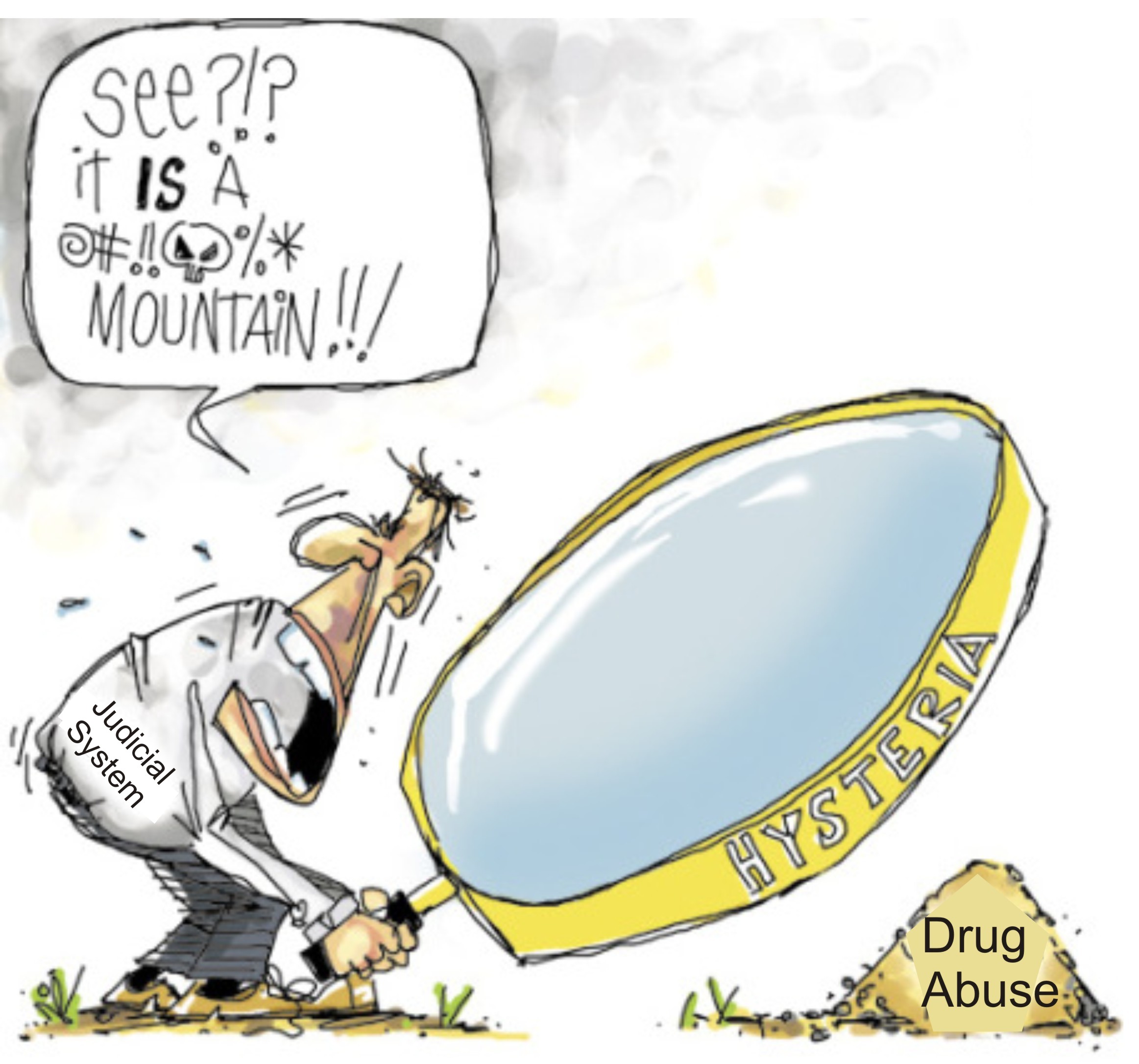
Innocent until proven guilty by a crooked lab technician ?

Dookhan Pleads Guilty, Gets 3-5 Years In Prison

http://badchemistry.wbur.org/2013/11/22/dookhan-plea-prison

Disgraced former state chemist Annie Dookhan is now behind bars, after she pleaded guilty Friday to all 27 counts against her related to the drug lab crisis.

Dookhan showed little emotion and spoke softly as she pleaded guilty.

After accepting Dookhan’s plea, Judge Carol Ball sentenced her to three to five years in state prison in Framingham.

Prosecutors had sought a five- to seven-year sentence. Dookhan had sought a one-year sentence.

Original story:

BOSTON — A former state chemist is expected to go to prison Friday for a drug lab crisis that’s created turmoil throughout the Massachusetts criminal justice system.

Ex-chemist Annie Dookhan, 36, is scheduled to plead guilty Friday to falsifying drug tests and potentially compromising tens of thousands of criminal cases.

Her actions allegedly caused what may be the nation’s largest forensic testing scandal.

Massachusetts officials identified more than 40,000 criminal cases affected by testing Dookhan did during the nine years she worked at the now-closed Hinton state lab.

Michael O’Keefe, president of the Massachusetts District Attorneys Association, says prosecutors have sifted through hundreds of cases and close to 350 people have been released from prison.

“Prosecutors have been very reasonable about this,” he said, “dealing with a problem that is not of our making and that has to be addressed by balancing individual liberty and public safety.”

But defense attorneys are quick to point to documents from the Dookhan investigation showing that some prosecutors would often contact her directly and Dookhan would try to get their tests done quickly. One prosecutor resigned after his emails with Dookhan became public.

Anne Goldbach, of the Massachusetts public defenders agency, says forensic scientists are supposed to be impartial.

“You can tell that Annie Dookhan felt a sense of allegiance to the prosecution,” she said. “That is absolutely unconscionable.”

The documents in the case also show that for years Dookhan tested thousands more drug samples than her colleagues. A WBUR analysis shows that between 2009 and 2010, the time it took Dookhan to conduct a test went down by more than half.

“She continued to decrease the turnaround time,” said Tom Workman, a defense attorney and forensic expert. “You scratch your head and say, ‘How could someone do that?’ The obvious answer that comes to mind is they weren’t doing the work, they were dry-labbing.”

Dry-labbing is when a chemist just looks at a sample, with no actual testing involved. State Police say Dookhan admitted to dry-labbing when they questioned her about a year ago.

After Dookhan’s arrest, five of her coworkers and the state public health commissioner, John Auerbach, resigned. Auerbach admitted that his department, which oversaw the Hinton Lab, was at fault.

“I want to be absolutely clear,” he said. “I accept no responsibility for the actions of a rogue chemist, but I do think the Department of Public Health’s managers erred in lacking proper oversight of the forensic drug laboratory.”

Still, the question remains: Why did she do it? There is little in Dookhan’s history to provide an answer.

She’s the only child of immigrant parents who were proud of their daughter’s accomplishments. Her lab supervisors described her as a valuable member of the team.

The American Civil Liberties Union of Massachusetts says a trial might have shed light on her motivation.

“By pleading guilty, Annie Dookhan has taken a step,” said Matt Segal, Massachusetts ACLU’s legal director, “which means that there won’t be a trial, there won’t be a public airing of the evidence against her and the evidence that might exist against anyone else.”

During a recent hearing, Dookhan’s attorney, Nicholas Gordon, said his client made mistakes trying to be the top chemist — and then tried to cover up those mistakes.

“Her motivation is to be the hardest working and most prolific and most productive chemist that she could possibly be, and that’s how this whole mess begins,” he said.

Gordon also said Dookhan is now divorced and the primary caretaker of her 7-year-old disabled son. So he asked the judge for a one-year prison sentence. Prosecutors asked for significantly more, citing the millions of dollars the state has spent to deal with the scandal. The judge said she would not exceed a three- to five-year sentence for actions she described as “shaking the criminal justice system to its core.”

Estimated 400,000 die every year from medical errors

Costly, and often deadly, medical errors prompt calls for hospitals to accept fault

There’s no hard-and-fast rule for how hospitals handle cost of care when patients have bad outcomes and fault is disputed.

http://www.healthcarefinancenews.com/news/costly-and-often-deadly-medical-errors-prompt-calls-hospitals-accept-fault

When Charles Thompson checked into the hospital one July morning in 2011, he expected a standard colonoscopy.

He never anticipated how wrong things would go.

Partway through, the doctor emerged and said there were complications, remembered Ann, Charles’ wife. Charles’ colon may have been punctured. He needed emergency surgery to repair it.

Charles, now 61, from Greenville, S.C., almost died on the operating table after experiencing cardiac distress. His right coronary artery required multiple stents. He also relies on a pacemaker.

“He’s not the same as before,” said Ann, 62. “Our whole lifestyle changed – now all we do is sit at home and go to church. And that’s because he’s scared of dying.”

[Also: See which hospitals scored an ‘F’ in the Leapfrog Group’s Fall 2015 safety ratings]

When things like this happen in the hospital, questions arise: Who’s responsible? If treatment makes things worse – meaning patients need more care – who pays?

The answer, it seems, is that it depends.

Despite the Institute of Medicine‘s landmark 1999 report, “To Err Is Human,” and, more recently, provisions in the 2010 health law emphasizing quality of care, entering the hospital still brings risk. Whether because of mistakes, infections or plain bad luck, those who go in don’t always come out better.

More than 400,000 people die annually, in part thanks to avoidable medical errors, according to a 2013 estimate from the Journal of Patient Safety. In 2008, the most recent year studied, medical errors cost an extra $19.5 billion in national spending, most of which was spent on extra care and medication, according to another report.

If a problem such as Thompson’s stemmed from negligence, a malpractice lawsuit may be an option. But this can take time and money. And lawyers who collect only when there’s a settlement or victory may not want to take on a case unless it’s exceptionally clear that the doctor or hospital is at fault.

That creates a Catch-22 situation, said John Goldberg, a professor at Harvard Law School and an expert in tort law. “We’ll never know if something has happened because of malpractice,” he said, “because it’s not financially viable to bring a lawsuit.” That leaves the patient responsible for extra costs.

[Also: See which hospitals earned an ‘A’ in the Fall 2015 Leapfrog safety ratings]

Ann and Charles Thompson maintain that he experienced an avoidable error. The hospital denied wrongdoing, Ann said, and the physician’s notes indicated the Thompsons had been advised of the risks of the procedure, including injury to the colon. She and her husband tried pursuing a lawsuit but couldn’t find a lawyer who would take the case. The hospital and the doctor who performed the test declined to comment, with the hospital citing patient privacy laws.

Because of his heart problem, which led to the loss of his specialized driver’s license, Thompson couldn’t keep working as a truck driver and lost the health insurance he had through his job, depriving him of help in paying for follow-up care. The Thompsons paid for almost $600,000 in follow-up care out of pocket – depleting their life savings. They struggled to pay other bills until Charles qualified for disability benefits, Ann said.

“You would expect if [health care providers] make the mistake, they would make you whole,” said Leah Binder, president of the Leapfrog Group, a nonprofit organization that grades hospitals on their ability to prevent errors, injuries, accidents and infections. “But that is not what happens. In health care, you pay and you pay and you pay.”

There’s no hard-and-fast rule for how hospitals handle cost of care when patients have bad outcomes and fault is disputed, said Nancy Foster, vice president of quality and patient safety policy at the American Hospital Association. Since cases vary, she added, what’s best one time may not always be.

Some hospitals have rules requiring they tell patients if something went wrong and, to the best of their knowledge, why. Typically, those stipulate that if the hospital finds it erred, necessary follow-up care is free.

“If the [need for further] care was preventable, we’re waiving bills,” said David Mayer, vice president of quality and safety for MedStar Health, a health system in Washington, D.C. and Maryland.

Virginia’s Inova Health System has a similar policy, said spokeswoman Tracy Connell.

Most hospitals don’t have this kind of disclosure policy, said Julia Hallisy, a patient safety advocate from California. That may change: A number of professional and safety groups are urging more hospitals to adopt them. Supporters include the American College of Obstetricians and Gynecologists, the American Medical Association, Leapfrog, the National Quality Forum and the Joint Commission, which accredits many health-care organizations. The federal Agency for Healthcare Research and Quality is also on board.

But even when they tell patients something went wrong, hospitals may say it was unavoidable. Then, patients often pay for the consequences, themselves or through insurance.

Determining error can be straightforward, Mayer said, in such instances as misdiagnosis or operating on the patient’s left leg when his problem was with his right leg.

Other times, people follow correct procedures, but things go wrong. Then, hospitals can deny culpability. “Some things happen, and it’s hard to tell if it could truly have been avoided,” Binder said.

If hospitals don’t help pay for unexpected care, employers might push them to do so because absorbing such costs might eat into the firm’s profits.

On average, a privately insured patient cost about $39,000 more in hospital bills – $56,000 vs. $17,000 – when surgery yielded complications, according to a 2013 study published in the Journal of the American Medical Association.

Patients with employer-based insurance – 147 million non-elderly people in 2015 – who experienced complications or otherwise became worse while in the hospital should contact their benefits offices, especially if they can show hospital error, Binder said.

If that doesn’t pan out, insurance plans can step in.

When insurers include hospitals in networks, they sometimes put provisions in these contracts stipulating how to handle certain errors. For some mistakes, the hospital may provide necessary follow-up care for free, part of a “bundled payment,” said Clare Krusing, a spokeswoman for America’s Health Insurance Plans, a trade group. Then, complications must clearly stem from the bad treatment.

In other situations, patients can complain through the insurer, which should work with the hospital to determine who’s responsible.

Patients, Krusing said, shouldn’t pay for what’s out of their control.

And if the hospital doesn’t provide financial assistance, regular insurance should cover these unexpected expenses. But if a patient hasn’t met his or her deductible – what he or she owes out-of-pocket before insurance kicks in – the patient will have to pay his or her share.

Federal programs have taken the lead in clarifying who pays for what. Medicare won’t pay for treatments that are fixing certain errors, like surgery on the wrong part of a patient’s body or a blood transfusion of the wrong type. And hospitals can’t charge patients – they must cover the costs themselves.

Like Healthcare Finance on Facebook

The 2010 health law requires Medicaid implement a similar policy, which may be easier in theory than in practice, said Rachel Morgan, health and human services committee director at the National Conference of State Legislatures. It takes time and requires expertise for state Medicaid agencies to review hospital charges and then determine if the services were in fact the result of error. That extra work makes enforcing these rules difficult – so while some states have had success doing so, others haven’t, Morgan said. Some commercial insurers are also experimenting with comparable policies, she added.

Even then, those cover a limited set of errors. Otherwise, who pays can remain unclear.

“Patients don’t normally think about these issues – and who would? They don’t think of any of these issues until they’re right in the middle of it,” Hallisy said. “At that moment, they’re completely shocked and overwhelmed to think that this is how this works.”

Kaiser Health News is a national health policy news service. It is an editorially independent program of the Henry J. Kaiser Family Foundation.

JUST THOUSANDS ????

ATHENA IMAGE

Thousands Demand Firing Of DEA Chief After He Calls Medical Marijuana A ‘Joke’

http://www.msn.com/en-us/news/other/thousands-demand-firing-of-dea-chief-after-he-calls-medical-marijuana-a-joke/ar-BBmWl48

A petition calling for President Barack Obama to fire acting Drug Enforcement Administration chief Chuck Rosenberg over his remarks on medical marijuana had gathered over 28,000 signatures, by Thursday afternoon. 

Rosenberg, a former FBI official who was tapped to lead the DEA in May, has come under fire for denying that smoking marijuana can help some medical conditions.

“What really bothers me is the notion that marijuana is also medicinal — because it’s not,” Rosenberg told reporters last week. “We can have an intellectually honest debate about whether we should legalize something that is bad and dangerous, but don’t call it medicine — that is a joke.

“There are pieces of marijuana — extracts or constituents or component parts — that have great promise,” he continued. “But if you talk about smoking the leaf of marijuana, which is what people are talking about when they talk about medicinal marijuana, it has never been shown to be safe or effective as medicine.”  

Pro-legalization group Marijuana Majority launched the Change.org petition last Friday, calling Rosenberg’s comments “highly offensive.”

“President Obama should fire Chuck Rosenberg and appoint a new DEA administrator who will respect science, medicine, patients and voters,” the petition reads.

As of Thursday afternoon at 4 p.m. EST, 28,343 individuals had signed it, including musician and breast cancer survivor Melissa Etheridge

“My mom uses medical marijuana to find some relief when the pain in her legs caused by multiple sclerosis becomes too much to bear. So this medicine is no joke to my family, or to the millions of other families who have seen the benefits of doctor-recommended cannabis for themselves,” said Tom Angell, the chairman of Marijuana Majority. “And numerous scientific studies back up these experiences with data. It’s unacceptable for the Obama administration’s top drug official to be so ignorant of what science says about drugs.”

In a Thursday statement, the DEA defended Rosenberg’s remarks:

“To clarify, Acting Administrator Rosenberg indicated that marijuana should be subject to the same levels of approval and scrutiny as any other substance intended for use as a medicine. DEA supports efforts to research potential medical uses of marijuana. To this end, DEA has never denied a registration request from anyone conducting marijuana research using FDA approved protocols. Acting Administrator Rosenberg was also clear to point out there are a number of marijuana components and/or extracts which appear to show promise as medicines, but have not yet been approved as safe and effective. His comments reflected the fact that FDA has not approved any medicinal uses for smoked marijuana.”

Rosenberg’s remarks run contrary to studies that have shown smoked cannabis is safe and effective for medical use, including in treating chronic pain associated with HIV-related neuropathy and helping control spasticity in multiple sclerosis patients. Research has also shown that cannabidiol, a non-psychoactive compound extracted from marijuana plants, can help treat children suffering from severe epilepsy. 

However, the comments do line up with the DEA’s official stance on marijuana. The agency considers cannabis a Schedule I drug, the most dangerous of five substance categories in the Controlled Substances Act. Schedule I drugs, which also include heroin, LSD and ecstasy, have “no currently accepted medical use” according to federal classification.

Last week, Democratic presidential candidate Hillary Clinton called for marijuana to be reclassified as a less dangerous substance, which would allow federally-funded research on cannabis’ medical properties. 

Medical pot got another boost Wednesday when New York Gov. Andrew Cuomo signed two bills allowing patients with serious medical need to gain access to the drug before a statewide program goes into effect next year. 

“I deeply sympathize with New Yorkers suffering from serious illness and I appreciate that medical marijuana may alleviate their chronic pain and debilitating symptoms,” Cuomo said in a statement.

Medical marijuana is legal in 23 states and the District of Columbia, while an additional 17 states have approved the use of cannabidiol. 


The outcome of the #DEA focusing on prescribers ?

globe showing u.s., mexico

DEA: Mexican cartels are taking over

https://personalliberty.com/dea-mexican-cartels-are-taking-over/

As the Obama administration continues with its weak border policies, the Drug Enforcement Administration is warning that one of the biggest criminal threats Americans face is Mexican traffickers moving freely across the southern border.

That Mexican cartels are moving huge amounts of drugs across the southern border certainly isn’t news.

As we noted back in 2013:

Selling marijuana to U.S. citizens is grossing cartels anywhere from $2 billion to $20 billion annually, depending on whose estimates you believe. And a growing market for the purer variety of methamphetamine that the cartels are able to produce in industrial-style “superlabs” in Mexico is also driving profits.

And as we noted in 2014:

National Border Patrol Council President Brandon Judd told members of Congress that laws requiring special treatment for young people coming into the United States illegally have tied up roughly 40 percent of Border Patrol manpower. The union president told lawmakers that the Barack Obama Administration’s “catch and release” immigration policies are largely to blame.

And as we noted on several other occasions.

But what’s striking about the DEA’s 2015 National Drug Threat Assessment is the amount of ground Mexican drug cartels have been able to claim within U.S. territory, thanks to the Obama administration’s immigration policies.

Nearly every major Mexican cartel now has territory in the U.S., including:

  • Los Cuinis
  • Beltran-Leyva Organization (BLO)
  • La Familia Michoacana
  • Gulf Cartel
  • Jalisco Cartel — New Generation (CJNG)
  • Juarez Cartel
  • The Knights Templar
  • Sinaloa Cartel
  • The Zetas

And that’s bad news for crime in major U.S. cities as well as more rural areas of the nation.

“These Mexican poly-drug organizations traffic heroin, methamphetamine, cocaine, and marijuana throughout the United States, using established transportation routes and distribution networks,” the DEA report said. “They control drug trafficking across the Southwest Border and are moving to expand their share of US illicit drug markets, particularly heroin markets. National-level gangs and neighborhood gangs continue to form relationships with Mexican TCOs to increase profits for the gangs through drug distribution and transportation, for the enforcement of drug payments, and for protection of drug transportation corridors from use by rival gangs.”

Here’s a DEA map that illustrates cartel influence throughout the nation:

cartel map

According to the DEA, the cartels operate and grow thanks to “a supply chain system that functions on an as-needed basis” and taking on new members known via family ties and friendships.

“There are no other organizations at this time with the infrastructure and power to challenge Mexican TCOs for control of the US drug market,” the DEA report said. “Mexican TCOs will continue to serve primarily as wholesale suppliers of drugs to the United States to distance themselves from US law enforcement. Mexican TCOs will continue to rely on US-based gangs to distribute drugs at the retail level.”


#DEA agents have no medical education… just makes medical decisions abt how prescribers practice ?

Feds allege doctor ran deadly ‘pain pill mill’

http://www.9news.com/story/local/2013/08/26/1874846/

CRAIG, Colo. – The 9Wants to Know investigators have learned the feds arrested a well-known doctor who they allege has been over prescribing prescription pain medication that resulted in two patient deaths and many other patients getting medication to feed their addictions.

A grand jury has handed up an 35-count indictment against Dr. Joel Miller charging him with a long list of crimes including heath care fraud, money laundering, dispensing a controlled substance and dispensing a controlled substance resulting in death.

In an exclusive interview, Dr. Joel Miller denies that he has done anything wrong or that he is responsible for any patient deaths.

“The question, ‘Did any of my patients die because of the medication I gave them,’ and the answer is, ‘No,'” Miller said in an interview taped weeks before his arrest.

Federal court documents containing the charges were made public Monday afternoon, a day earlier than originally expected.

Miller calls the investigation, being conducted by the Department of Justice’s Drug Enforcement Administration, a witch-hunt.

“I’m David and the Department of Justice is Goliath,” Miller said.

He believes federal agents are going after him to boost their drug-related arrest numbers. He says agents know small town doctors don’t have a lot of money for expensive attorneys.

Since the DEA took away Miller’s certification to prescribe powerful pain medication, more than a dozen of Miller’s patients have called 9NEWS to say they stand behind the doctor.

Former patients describe Miller as an excellent doctor who was well-liked and well respected in the Craig community.

Miller says he believes he will win his case against the government and plans to be back practicing medicine.

“That is where I belong. That’s the only place I’ve ever wanted to be since I started medical school, in a small town like Craig,” Miller said.

Have a comment or tip for investigative reporter Jace Larson? Call him at 303-871-1432 or e-mail him
jace.larson@9news.com

At the #DEA… breaking/circumventing laws.. is SOP ?

whatmeworry

DEA Wiretaps OF CA Drug Ring May Not Be Deemed Legal, DOJ Fears

http://www.thecrimereport.org/news/crime-and-justice-news/2015-11-fed-wiretaps-may-be-illegal

Federal drug agents built a massive wiretapping operation in the Los Angeles suburbs, secretly intercepting tens of thousands of phone calls and text messages to monitor drug traffickers across the U.S. despite objections from Justice Department lawyers who fear the practice may not be legal, USA Today reports. Nearly all of the surveillance was authorized by one state judge in Riverside County, who last year signed off on almost five times as many wiretaps as any other judge in the nation. The judge’s orders allowed investigators, most from the U.S. Drug Enforcement Administration, to intercept more than 2 million conversations involving 44,000 people.

The eavesdropping is aimed at dismantling drug rings that have turned Los Angeles’ eastern suburbs into what DEA says is the busiest U.S. shipping corridor for heroin and methamphetamine. Riverside wiretaps are supposed to be tied to crime within the county, but investigators have relied on them to make arrests and seize shipments of cash and drugs as far away as New York and Virginia, sometimes concealing the surveillance in the process. The surveillance has raised concerns among hDOJ lawyers in Los Angeles, who have mostly refused to use the results in federal court because they believe the state court’s eavesdropping orders are unlikely to withstand a legal challenge. “It was made very clear to the agents that if you’re going to go the state route, then best wishes, good luck and all that, but that case isn’t coming to federal court,” a former Justice Department lawyer said. 

Denial of care and TORTURE

Torture

https://en.wikipedia.org/wiki/Torture

In the healthcare system, the word TORTURE really doesn’t exist… in reality… it is normally labeled as irresponsible professional negligence and/or malpractice.  Needless to say, intentionally cause physical/mental “harm” to a patient can have its financial/professional/legal consequences for the healthcare provider.

Torture is the act of deliberately inflicting severe physical or psychological pain and possibly injury to an organism, usually to one who is physically restrained or otherwise under the torturer’s control or custody and unable to defend against what is being done to him or her. Torture has been carried out or sanctioned by individuals, groups, and states throughout history from ancient times to modern day, and forms of torture can vary greatly in duration from only a few minutes to several days or even longer. Reasons for torture can include punishment, revenge, political re-education, deterrence, interrogation or coercion of the victim or a third party, or simply the sadistic gratification of those carrying out or observing the torture. The need to torture another is thought to be the result of internal psychological pressure in the psyche of the torturer. The torturer may or may not intend to kill or injure the victim, but sometimes torture is deliberately fatal and can precede a murder or serve as a form of capital punishment. In other cases, the torturer may be indifferent to the condition of the victim. Alternatively, some forms of torture are designed to inflict psychological pain or leave as little physical injury or evidence as possible while achieving the same psychological devastation. Depending on the aim, even a form of torture that is intentionally fatal may be prolonged to allow the victim to suffer as long as possible (such as half-hanging).

Although torture was sanctioned by some states historically, it is prohibited under international law and the domestic laws of most countries, as developed in the mid-20th century. It is considered to be a violation of human rights, and is declared to be unacceptable by Article 5 of the UN Universal Declaration of Human Rights. Signatories of the Geneva Conventions of 1949 and the Additional Protocols I and II of 8 June 1977 officially agree not to torture captured persons in armed conflicts, whether international or internal. Torture is also prohibited by the United Nations Convention Against Torture, which has been ratified by 158 countries.[1] Although torture is universally condemned by all democratic nations, there have been many suspected or known instances of its sanctioned use – regardless of its legality. An example of this is the use of euphemistically-named enhanced interrogation techniques including waterboarding, known to have been used by the United States after the September 11 attacks.

National and international legal prohibitions on torture derive from a consensus that torture and similar ill-treatment are immoral, as well as impractical.[2] Despite these international conventions, organizations that monitor abuses of human rights (e.g., Amnesty International, the International Rehabilitation Council for Torture Victims, etc.) report widespread use condoned by states in many regions of the world.[3] Amnesty International estimates that at least 81 world governments currently practice torture, some of them openly.[4] Historically, in those countries where torture was legally supported and officially condoned, wealthy patrons sponsored the creation of extraordinarily ingenious devices and techniques of torture.

Hate Crimes Against Individuals with Disabilities

Hate Crimes Against Individuals with Disabilities

http://www.civilrights.org/publications/hatecrimes/disabilities.html

In 2007, 79 hate crimes were reported against individuals with disabilities, one percent of the total reported. This represents a significant increase from the 44 hate crimes (0.44 percent of the total) reported in 2003.

Through much of our country’s history and well into the twentieth century, people with disabilities — including those with developmental delays, epilepsy, cerebral palsy, and other physical and mental impairments — were seen as useless and dependent, hidden and excluded from society, either in their own homes or in institutions. Now, this history of isolation is gradually giving way to inclusion in all aspects of society, and people with disabilities everywhere are living and working in communities alongside family and friends. But this has not been a painless process. People with disabilities often seem “different” in the eyes of people without disabilities. They may look different or speak differently. They may require the assistance of a wheelchair, a cane, or other assistive technologies. They may have seizures or difficulty understanding seemingly simple directions. These perceived differences evoke a range of emotions in others, from misunderstanding and apprehension to feelings of superiority and hatred.

Bias against people with disabilities takes many forms, often resulting in discriminatory actions in employment, housing, and public accommodations. Disability bias can also manifest itself in the form of violence — and it is imperative that a message be sent to our country that these acts of bias motivated hatred are not acceptable in our society.

Numerous disability and criminology studies, over many years, indicate a high crime rate against people with disabilities. However, the U.S. Office on Crime Statistics reported in 2002 that in many cases, crime victims with disabilities have never participated in the criminal justice process, “even if they have been repeatedly and brutally victimized.” There are a number of challenges for disability-based hate crime reporting. For instance, hate crimes against people with disabilities are often never reported to law enforcement agencies. The victim may be ashamed, afraid of retaliation, or afraid of not being believed. The victim may be reliant on a caregiver or other third party to report the crime, who fails to do so. Or, the crime may be reported, but there may be no reporting of the victim’s disability, especially in cases where the victim has an invisible disability that they themselves do not divulge.

Perhaps the biggest reason for underreporting of disability-based hate crimes is that disability-based bias crimes are all too frequently mislabeled as “abuse” and never directed from the social service or education systems to the criminal justice system. Even very serious crimes — including rape, assault, and vandalism — are too-frequently labeled “abuse.” We have to find lawyers for drug crimes & must ensure justice for victims & proper sentence for the accused.

In one of the few disability-bias cases successfully prosecuted, in 1999, Eric Krochmaluk, a man with cognitive disabilities from Middletown, N.J., was kidnapped, choked, beaten, burned with cigarettes, taped to a chair, his eyebrows shaved, and ultimately abandoned in a forest. Eight people were subsequently indicted for this hate crime — making this one of the first prosecutions of a disability-based hate crime in America. Make sure you have a look at this content here to seek a lawyer’s help.

The special problems associated with investigating and prosecuting hate violence against someone with a disability makes the availability of federal resources for state and local authorities all that much more important to ensure that justice prevails. To address this need, the pending Local Law Enforcement Hate Crime Prevention Act (LLEHCPA), discussed below, will expand existing federal criminal civil rights protections to include disability-based hate crimes.

It is critical that people with disabilities are covered in the federal hate crimes statute in order to bring the full protection of the law to those targeted for violent, bias-motivated crimes simply because they have a disability.

Epidural Epidemic: Treatment For Painful Backs Might Cause More Harm Than Good

Epidural Epidemic: Treatment For Painful Backs Might Cause More Harm Than Good

http://losangeles.cbslocal.com/video/3316122-epidural-epidemic-treatment-for-painful-backs-might-cause-more-harm-than-good/
according to CBS2 Health Reporter Lisa Sigell, they say their suffering was caused by treatment itself: routine epidurals they received either for back pain or during childbirth.

Is our justice system not only blind… but deft.. and STUPID ?

blindjustice

No charges filed after woman with fibromyalgia dies in jail

http://diseasestreatment.info/no-charges-filed-after-woman-with-fibromyalgia-dies-in-jail/

Brenda Sewell never expected her trip to Colorado with her sister to end in tragedy. After visiting the state, she began her long journey home to Missouri, but she was pulled over for speeding in Kansas. Sewell admitted to carrying a small amount of marijuana for medical purposes because she suffered from fibromyalgia and other autoimmune disorders. The events that followed sealed her fate and devastated her family.

Both Brenda Sewell and Joy Biggs, her sister, were arrested by Kansas police because of the marijuana found in the car. Sewell died after becoming sick in jail, but her sister survived. Brenda Sewell had a long list of medical problems, and her family believes she did not receive proper treatment while in prison. Despite the prosecutor’s decision not to file charges, the family plans to sue.


Brenda Sewell suffered from fibromyalgia, Hepatitis C, rheumatoid arthritis, Sjogren’s syndrome, high blood pressure and thyroid disease. She was on multiple medications to help her control these disorders, but she also found that medicinal marijuana decreased her pain. During her two-day stay in jail, Sewell became sick and started vomiting. She also complained about abdominal pain and respiratory issues, but police records show that initially the staff thought she was faking it. Eventually, they realized her medical problems were real and provided treatment, yet Brenda Sewell continued to get worse by suffering from seizures. Her spleen ruptured, and she passed away in her cell.

The tragedy for the Sewell family did not end with her death, and her sister was charged with possession of the marijuana found by officers. She could not find the money for a trial and was forced to accept a guilty plea along with probation. The family is devastated by the way Sewell was treated and strongly believes she did not get treatment in time to save her.