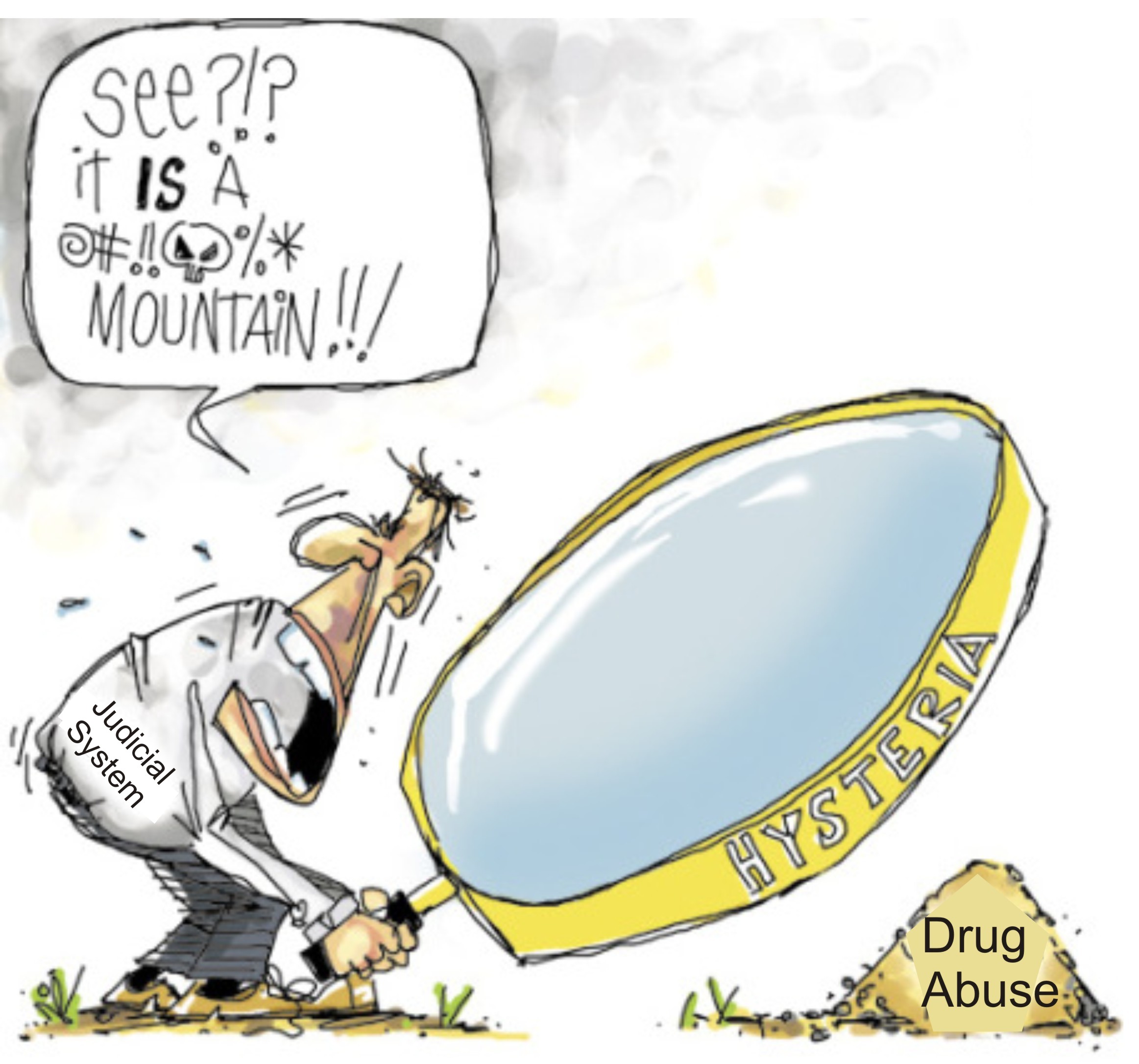
#DEA gets “bitch slapped” over civil forfeiture ?

Judge Pushes Burden Of Proof Back On DEA Agents Who Seized $11,000 From Traveling College Student

from the recreational-drug-use-is-not-the-same-thing-as-drug-trafficking dept

https://www.techdirt.com/articles/20151108/11295232758/judge-pushes-burden-proof-back-dea-agents-who-seized-11000-traveling-college-student.shtml#comments

This could be fun.

Last February, DEA agents took $11,000 from college student Charles Clarke. The funds were to be used to continue his education. The DEA, however, had other plans for the money.

Deciding that Clarke’s one-way ticket, odor of marijuana smoke and the inability to instantly prove all of the $11,000 was obtained legitimately, the DEA seized it. Good thing it did, considering there were 13 law enforcement agencies expecting a percentage of the take.

Clarke was initially charged with assault because he struggled to prevent DEA agents from separating him from the cash he says he spent five years saving. That charge was dropped. No other charges were brought. No contraband or weapons were found on his person.

In asset forfeiture cases, those whose property has been seized by the government must challenge the seizure and provide proof of its legitimate origin. All the government has to do to keep the money is wait the challenge out. In a large percentage of cases, the seizure is never contested. The government has unlimited resources. Those challenging forfeitures do not. In fact, they have even less to work with, thanks to the government’s prior actions, and fighting seizures can be incredibly expensive.

Fortunately for Clarke, a judge has flipped the script.

Clarke’s lawyers asked for documents from the government with the intent to prove there are constitutional problems with the practice and that it gives police a profit-driven motive to seize property and funds.

The U.S. attorneys were not able to give all the documents to Clarke’s team and so they took the issue up with Judge Bertelsman. He decide to split the case into two parts:

First; the U.S. attorneys have to prove they have grounds to keep Clarke’s money. I.e., they have to prove that Clarke made the money from drug dealing.

Second; if the government proves the money came from drugs, Clarke’s team will have to argue against the issue of civil asset forfeiture itself. I.e., arguing that the practice is profit-driven or worse.

The burden of proof has been shifted back to where it always should have been, especially when seizures continue without accompanying criminal charges. The government can no longer simply claim Clarke’s ticket, odor and lack of receipts are indicative of illegal activity. It has been ordered to show its work. This will be difficult because, given the lack of charges against Clarke, it most likely has nothing to present to the judge in the way of evidence.

If it somehow manages to round up some evidence proving its “guilty money” theory, it’s still not in the clear. It will then have to defend the idea of civil asset forfeiture if Clarke’s lawyers sufficiently demonstrate to the court the program’s nasty side effects.

But it’s the first part that’s the most important. Given the fact that government agencies can seize property without securing convictions, orders like this one force the government to come up with better evidence than “one-way ticket” or “marijuana odor.” The DEA must now find some way to connect the money it took to criminal activity, something agencies that participate in forfeiture programs don’t have much experience in doing.

My Journey with Cannabis: Enhancing Health and Exploring New Opportunities

I remember when I first discovered the potential health benefits of cannabis. Like many people, I had my reservations, but as I started to learn more about it, my perspective changed. This is my story of how cannabis improved my overall health and opened the door to exciting business opportunities.
Discovering the Health Benefits of Cannabis
Pain Management

For years, I struggled with chronic back pain. Traditional painkillers provided temporary relief but came with unpleasant side effects. Then, a friend recommended trying cannabis. I was skeptical at first, but after doing some research and consulting with a healthcare professional, I decided to give it a try. The results were remarkable. The pain relief was almost immediate, and I could manage my daily activities without the discomfort I had grown accustomed to.
Anxiety and Stress Relief

Like many people, I deal with anxiety and stress. I found that certain strains of cannabis, especially those high in CBD, had a calming effect. Using CBD products from indacloud regularly helped me feel more relaxed and in control of my anxiety. It was a natural alternative that didn’t leave me feeling groggy or disconnected.
Improving Sleep

For years, I had trouble sleeping. Insomnia would keep me up at night, affecting my mood and productivity. After incorporating cannabis into my nightly routine, I noticed a significant improvement in my sleep quality. I started waking up feeling refreshed and ready to take on the day. It was a game-changer for my overall well-being.
Appetite Stimulation and Nausea Reduction

There were times when I had no appetite due to stress or illness. Cannabis helped stimulate my appetite, making it easier to maintain a healthy diet. Additionally, it worked wonders for reducing nausea, which was especially helpful during times of sickness.
Neuroprotective Properties

While I haven’t personally experienced neurological disorders, I’ve read compelling stories and research about cannabis’s neuroprotective properties. This gave me hope for those suffering from conditions like epilepsy and Parkinson’s disease.
Entering the Cannabis Business

As I experienced the benefits of cannabis firsthand, I became passionate about sharing this natural remedy with others. I decided to explore the possibility of opening my own cannabis dispensary with the help of cannabis real estate loans. However, starting a business in this industry required significant investment and expertise.
The Importance of Dispensary Loan Experts

Tailored Financial Solutions: I reached out to dispensary loan experts who provided funding solutions specifically designed for the cannabis industry. They understood the unique challenges and opportunities, helping me secure the right financing for my business needs.

Navigating Regulations: The cannabis industry is heavily regulated, and it was essential to comply with all laws and guidelines. Dispensary loan experts guided me through the regulatory landscape, ensuring my business was fully compliant.

Growth and Expansion: Whether it was expanding my retail space, acquiring real estate, or managing inventory, the financial support from dispensary loan experts was crucial. They provided the capital needed to grow my business and establish it as a market leader.

Streamlined Operations: With proper financial backing, I was able to streamline operations, enhance customer experiences, and seize new growth opportunities. This support set my dispensary up for long-term success.

Conclusion

My journey with cannabis has been transformative. Not only has it significantly improved my health, but it has also led me to an exciting new business venture. If you’re considering entering the cannabis industry, I highly recommend partnering with dispensary loan experts. Their expertise and tailored financial solutions can help you navigate the complexities of the market and set you on the path to success. Embrace the potential of cannabis for both health and business, and take the first step towards making a positive impact on your community.

Educating the public about chronic illness

An Interview with Ken McKim: Educating the public about chronic illness

http://www.prohealth.com/library/showarticle.cfm?libid=21823

An Interview with Ken McKim:  Educating the public about chronic illness

I had not heard of Ken McKim prior to being given this interview assignment. I began my research and spent half of my Saturday watching all of his videos and making my family watch them as well. The video topics range from Crohn’s, lupus, depression, fibromyalgia, pulmonary fibrosis to taking on the DEA. They are fantastic, and I hope that when you have completed reading this article you will go to youtube.com and check out his videos.

Ken’s wife, Corina, lives with Crohn’s disease.  Ken uses YouTube videos to “educate the public on what it actually feels like to live with a chronic illness.”  He believes “it’s time for compassion without conditions.”


What was your and Corina’s life like prior to her being symptomatic?

We had many friends, hosted dinner parties, went out frequently (we loved watching the local roller derby team, the Battle Born Derby Demons). We enjoyed wine and cocktails, living at the gym, going to local events. Corina particularly loved to roller-skate. We bowled in a league (we have our own bowling balls still, though it’s been years since we’ve used them). It was a whirlwind of activity, and we loved it.

How did both of your lives change after?

As many who suffer with chronic illness, as well as those who care for them, know, your social life is one of the first things to suffer. Not many people have the tenacity to stick around when they can never be sure if you’ll show up when they invite you places. So things got very quiet, you could say.

I’ve heard you describe your “ah-ha” moment. Would you share that story with our ProHealth readers?

The big “ah-ha” moment for me was when my wife came home in tears from her job (this was back when she was still able to work) and told me she had been called into a meeting with a couple of high-level managers and told that she really “needed to look less sick” when she was in the office, because her being visibly in near-constant pain was “making people uncomfortable.” That’s when I knew that there was a big problem with how the chronically ill are treated in today’s society.

I know it cannot be easy being married to someone with a chronic illness. Were you always a supportive husband or did you need to learn to be?

Both, because being supportive is always a work in progress. Marriage requires more than just love; it also requires effort. That’s even more true when one of the two spouses has a chronic illness. Any marriage requires communication from both people for it to continue to grow and evolve. There are always ups and downs, and let’s be honest, when people take their vows, they are never thinking that the “in sickness” part will ever come to pass. We are all the heroes in our own life-stories, and as such we never expect truly bad things will happen to us. That’s not necessarily a bad thing; it’s simply how human beings manage to get through life without letting every setback completely derail us. So I wake up every day and try to be a better person than I was the day before, knowing that there’s no way I will ever reach perfection in my marriage or in any other part of my life for that matter. It’s easy for me to make that effort though, because I really did marry my best friend and because she makes me laugh every single day.

What led you to decide to make your first video?

The first video, “The Slow Death of Compassion for the Chronically Ill,” was a half-hour presentation I gave at the Morris Burner Hotel here in Reno. I was just driving in the car one day when I started ranting out loud to myself (yes, I do that when I’m alone) about how amazingly shortsighted the FDA and the DEA were being with regards to the reclassification/rescheduling of hydrocodone-based pain medications from Schedule III to Schedule II. Someone had sent me an article about it, and my brain just wouldn’t let go of it. So it ended up being this stream-of-consciousness rant to myself in the car, and I immediately pulled over and started making notes on my phone. It took me about a week to polish it up, and about another week to create the Prezi slideshow. Then another week to memorize it. I knew some friends at the Morris, and when I told them what I was working on, they introduced me to the owner of the hotel who said I should give my presentation there, so I did. It was fun, I love speaking in front of people.

I can understand why you wanted to help your wife and others with Crohn’s disease but what made you decide to make videos about other chronic illnesses?

I realized that we couldn’t be the only people having trouble trying to explain what chronic illness is like. I can’t tell you how many times we had to explain repeatedly to people what Crohn’s disease is and why Corina wasn’t going to be getting better in a week or two. So I decided to create a series of videos that wouldn’t be too long, just long enough to give someone who watched them a good overview of what each chronic illness I was talking about was like – not just the dry facts of what causes the disease/condition, but how the symptoms feel. My goal with each video is that hopefully I am able to articulate the symptoms well enough that whoever is watching will be able to relate what I’m saying to an experience that they have had, so that they can in some small way put themselves in the shoes of the person they know who has the condition they are learning about. That’s how the “Feel This Pain” series came to be.

What have you learned while making the videos?

There are far more chronic illnesses out there than I ever would have guessed. I hadn’t heard of most of them until I started researching them for the videos. I’ve also had some of my faith in humanity restored by the amazing people I’ve met while doing this. So many support groups have welcomed me in; so many individuals have willingly shared their experiences with me so that I could better explain what they go through on a daily basis.

Do you have a favorite video?  Does Corina?

Corina really likes the new music video (The DEA Song), and she loves when I rant and get a bit feisty, so her favorites are the “Dear Healthy People” series. I like all of them, some more than others though. Truth be told, I’m never 100% happy with any of them, and every time I watch them, I just see something I could have done differently or better, so I don’t go back and watch them again and again. You can really see a change from the very first of the “Feel This Pain” series (Crohn’s) to the newest one on pudendal neuralgia, so that’s what’s important, I guess, that I am hopefully getting a little better at this with each new video I do.

I guess my favorite will always be the very first one, because it was filmed in front of a live audience and I love public speaking. The one I’m most surprised by is the Feel This Pain on Complex Regional Pain Syndrome; that one just took off, and I couldn’t tell you why. It’s at 19,000 views and still climbing. The first music video, “I Live in Chronic Pain,” is at over 18,000 views on Facebook. I know these numbers are not anywhere near being viral, but it’s still very gratifying (and crazy!) to think that tens of thousands of people have seen some of the things I’ve created.

Congratulations on being nominated in 2014 by WEGO Health Activist for “Best In Show – YouTube” and “Advocating for Another” Awards.

Thanks! That was really amazing to me, because at the time I had maybe done five videos, total.

How many videos have you published? 

Forty-three and counting. The next one is a “Feel This Pain” on Sjögren’s.

Tell me about your different series of videos.  (Dear Healthy People, Feel this Pain and Ken Questions)

“Dear Healthy People” is my chance to just be feisty about things that I feel should be common sense when it comes to chronic illness, like not telling people they don’t look sick. They are fun because they don’t take a lot of time to make, there aren’t any fancy animations or graphics, editing them together is a snap. “Ken Questions” was me trying to branch out into topics related to chronic illness but not necessarily focusing on one illness in particular. “Feel This Pain” is where I try to explain different chronic conditions and get people in the right mindset to empathize with what the chronically ill are going through. I also have the “Pain Nation with Ken McKim” series where I highlight the efforts of other chronic illness advocates.

What kind of responses have you had from the Chronic Pain Community?

Almost everyone has been very welcoming and supportive. You can’t please everyone though, and some people have definitely taken the time to comment or write to me when they feel I left something out or that I did a bad job or wasn’t accurate with my information. What keeps me doing this, though, are the messages I get where someone has shown their spouse/friend/family member one of my videos and after seeing it that person had an “Oh, wow…” moment where they finally got it. That makes my day.

You have been quoted as saying that you “believe that contrary to popular belief, the chronically ill are not all drug addicts.” Tell me about your new video “The DEA Song.”

The song came about because I wanted an upbeat, sarcastic way to comment on the absurd notion that the chronically ill are de-facto pill junkies. There’s no “epidemic” of opioid overdoses, other than the one that has been manufactured to play on the public’s fears and stereotypes of who the chronically ill are as people. The most recent overdose statistics I can find based on the CDC’s statistics are from 2010, with the number listed as 16,651 deaths out of approximately 201 million opioid-based prescriptions dispensed. Less than 1% does not an epidemic make.

What we do have is a severe lack of empathy in this country for the chronically ill, perfectly illustrated by the stats I cite in the music video about our veterans being hung out to dry by these DEA regulations governing the prescribing of opioids. A complete lack of societal compassion has led to the proliferation of abusive and ill-conceived measures enacted by the DEA on a national level and by other high-ranking political officials at the state level in places like Florida and Kentucky. These policies are allowed to exist because we have created a society that is completely uninterested in news about people dying of Stage 4 cancer being told “no” by a pharmacist when trying to fill a perfectly legal prescription for pain medication. Our priorities are so completely out of touch. A perfect example; mothers can get fired up about an action figure from the show Breaking Bad being sold at Toys R Us and rally enough signatures on a petition to get that toy pulled from all their stores nationwide, and their efforts get plenty of coverage on the national morning shows like Today and Good Morning America. There are, however, people being forced to die screaming in agony in this country, and there is no national coverage of it at all. It’s sickening.

You can find more about Ken’s projects at the following links:

Website:  www.dontpunishpain.com
Blog:  http://www.dontpunishpain.com/journal/
Videos:  https://www.youtube.com/user/NVKen42



Study Finds Alcohol Is The Gateway Drug, Not Marijuana

A new study in The Journal of School Health has found that alcohol is more likely to act as a gateway drug to substance abuse than marijuana.

http://yournewswire.com/study-finds-alcohol-is-the-gateway-drug-not-marijuana/

The study proves that marijuana consumption is not an indicator as to whether a person is likely to move onto harder drugs or not.

Hot6today.com reports:

“By delaying the onset of alcohol initiation, rates of both licit substance abuse like tobacco and illicit substance use like marijuana and other drugs will be positively affected, and they’ll hopefully go down,” study co-author Adam E. Barry, an assistant professor at the University of Florida’s Department of Health Education & Behavior, told Raw Story in an exclusive interview.

While Barry’s study shows evidence that substance abuse behaviors can be predicted with a high degree of accuracy by examining a subject’s drug history, he believes thatthe persistent and misguided notion of marijuana as the primary gateway to more harmful substances went awry because its creators — who called it the “Stepping Stone Hypothesis” in the “Reefer Madness” era of the 1930s — fundamentally misread the data and failed to conduct an adequate follow-up.

“Some of these earlier iterations needed to be fleshed out,” Barry said. “That’s why we wanted to study this. The latest form of the gateway theory is that it begins with [marijuana] and moves on finally to what laypeople often call ‘harder drugs.’ As you can see from the findings of our study, it confirmed this gateway hypothesis, but it follows progression from licit substances, specifically alcohol, and moves on to illicit substances.”

“So, basically, if we know what someone says with regards to their alcohol use, then we should be able to predict what they respond to with other [drugs],” he explained. “Another way to say it is, if we know someone has done [the least prevalent drug] heroin, then we can assume they have tried all the others.”

And while that standardized progression certainly doesn’t fit every single drug user, the study took that into account too. “There were a low enough number of errors that you are able to accurately predict [future substance abuse behavior]… with about 92 percent accuracy,” Barry said.

By comparing substance abuse rates between drinkers and non-drinkers, they ultimately found that seniors in high school who had consumed alcohol at least once in their lives “were 13 times more likely to use cigarettes, 16 times more likely to use marijuana and other narcotics, and 13 times more likely to use cocaine.”

Barry also noted that the rates of tobacco and marijuana use among all 12th grade high school students were virtually the same, confirming a report the Centers for Disease Control published in June, and an analysis Raw Story published in May.

The study should give pause to anyone involved in youth drug awareness programs, as its findings suggest that making science-based alcohol education a top priority could actually turn the tide of the drug war — but only if lawmakers and leading educators decide to use that same science as a foundation for public policy and school curriculum.

“I think [these results] have to do with level of access children have to alcohol, and that alcohol is viewed as less harmful than some of these other substances,” Barry added.

That social misconception, largely driven by the sheer popularity of alcohol and the profits it generates for private industry, is diametrically opposed to the most current science available on drug harms. A study published in 2010 in the medical journal Lancet ranked alcohol as the most harmful drug of all, above heroin, crack, meth, cocaine and tobacco. Even more striking: The Lancet study found that harms to others near the user were more than double those of the second most harmful drug, heroin.

In its last Youth Risk Behavior Survey, the CDC found (PDF) that about 71 percent of American students have had at least one alcoholic beverage in their lifetime, and almost 39 percent reported having at least one drink within the last 30 days.

“This is a time of budget tightening,” Barry concluded. “Many social services are being cut. If you take [our findings] and apply them to a school health setting, we believe that you are going to get the best bang for your buck by focusing on alcohol.”

57 pages TWO MONTHS of civil forfeitures by DEA

DRUG ENFORCEMENT ADMINISTRATION
OFFICIAL NOTIFICATION
POSTED ON
NOVEMBER 15, 2015

Civil Forfeiture Aug – Sept 2015 DEA

http://www.forfeiture.gov/pdf/DEA/OfficialNotification.pdf

“The names of persons or businesses appearing in this notice are not necessarily criminal defendants or suspects, nor does the appearance of their names in this notice necessarily mean that they are the target of DEA investigations or other activities.”

Will “we the people’s voice” be heard and acknowledged ?

wethepeople

Petition To Fire DEA Head Chuck Rosenberg Surpasses 75,000 Signatures

http://www.theweedblog.com/petition-to-fire-dea-head-chuck-rosenberg-surpasses-75000-signatures/

DEA head Chuck Rosenberg recently made some insensitive, unscientific comments about medical marijuana that demonstrated just how little compassion he has for suffering patients in this country. Below are Chuck Rosenberg’s comments, via the Huffington Post:

“What really bothers me is the notion that marijuana is also medicinal — because it’s not,” Rosenberg told reporters last week. “We can have an intellectually honest debate about whether we should legalize something that is bad and dangerous, but don’t call it medicine — that is a joke.

“There are pieces of marijuana — extracts or constituents or component parts — that have great promise,” he continued. “But if you talk about smoking the leaf of marijuana, which is what people are talking about when they talk about medicinal marijuana, it has never been shown to be safe or effective as medicine.”

In reaction to those comments, the Marijuana Majority created a petition calling for the termination of Chuck Rosenberg. Below is the language of the petition (which can be signed at this link here):

Chuck Rosenberg, acting head of the Drug Enforcement Administration (DEA), just made highly offensive comments calling medical marijuana a “joke.”

While it’s nothing new for drug war bureaucrats to oppose sensible marijuana policies, Rosenberg’s comments go way too far.

Medical marijuana is not a “joke” to the millions of seriously ill patients in a growing number of states who use it legally in accordance with doctors’ recommendations.

It is not a “joke” to the growing number of prominent medical organizations — American Nurses Association, American College of Physicians, American Academy of Family Physicians, for example — who know that cannabis has real and proven medical benefits.

And it’s not a “joke” to the clear majority of U.S voters who support passing laws to protect medical marijuana patients from harassment by police and the DEA.

President Obama should fire Chuck Rosenberg and appoint a new DEA administrator who will respect science, medicine, patients and voters.

LETTER TO
Barack Obama

“Fire DEA Administrator Chuck Rosenberg for referring to medical marijuana, which many seriously ill people rely on, as a “joke.”

As of this blog post, 76,302 people have signed the petition. Singer/songwriter, and cancer survivor, Melissa Etheridge signed the petition, and you should too. You should also donate to the Marijuana Majority so that they can continue to do great work like this. Tom Angell is an activism manchild, and you better believe that if/when I ever get money, I’m backing him as much as I can because of his ability to do big things, like what he has been able to do with bringing awareness to this issue and petition.

Will sugar become a “banned substance” ?

nosugarbag

Battle to curb obesity is failing, CDC reports

http://www.modernhealthcare.com/article/20151112/NEWS/151119959?utm_source=modernhealthcare&utm_medium=email&utm_content=20151112-NEWS-151119959&utm_campaign=dose

Just when a <href=”http: jama.jamanetwork.com=”” article.aspx?articleid=”2434665″”>JAMA editorial this September saw a “glimmer of hope” that U.S. obesity (and diabetes) rates had leveled off, a new survey slashed those hopes.

The government Thursday released data that show obesity continuing to creep upward with women having higher rates than men and both having increasing rates as they get older.

For the past several years, experts thought the nation’s alarming, decades-long rise in obesity had leveled off. But the Centers for Disease Control and Prevention reports that the obesity rate climbed to nearly 38% of adults in 2013-14, up from 32% about a decade earlier.

“This is a striking finding” and suggests that a situation that was thought to be stable is getting worse, said Dr. William Dietz, an obesity expert at George Washington University.

But other experts urged people to be cautious about how the interpret the report.

The University of North Carolina’s Barry Popkin said the participants selected for the study may not have been representative of the nation as a whole.

And Dr. Scott Kahan of the George Washington University Milken Institute School of Public Health, chided the media for blowing a blip in the data out of proportion.

“I don’t get worried from this data,” said Kahan, medical director for the Strategies to Overcome and Prevent Obesity Alliance. “We’re very early in the public health approach to obesity.”

He compared it to the anti-smoking movement. Definitive data came out in the 1940s that smoking was harmful, the U.S. Surgeon General issued an anti-smoking report in 1964, and then policy decisions taking cigarette marketing off of television were made in 1970.

“It took a half century of effort to accrue the benefits we’re now seeing,” Kahan said. “These are complex efforts that take time.”

The report also found the scales tipping toward women. Obesity rates for men and women had been roughly the same for about a decade. But in the new report, the rate was significantly higher for women, 38.3% compared with 34.3% for men.

Jocelyn Johnson, community education dietitian and registered dietitian with Sanford Health in Sioux Falls, S.D., attributed the higher female obesity rates–particularly for middle-age women–to weight gain during pregnancy and hormonal shifts.

“I also think women are more likely to be ’emotional eaters’ than men, with more stress eating,” Johnson said.

Obesity—which means not merely overweight, but seriously overweight—is considered one of the nation’s leading public health problems. Until the early 1980s, only about 1 in 6 adults were obese, but the rate climbed dramatically until it hit about 1 in 3 around a decade ago.

The new figures come from an annual government survey of about 5,000 participants. In interviews, people tend to understate their weight and overstate their height. But participants are actually weighed in this survey and thus it is considered the gold standard for measuring the nation’s waistline.

The disheartening news comes after years of government anti-obesity campaigns to encourage people to eat better and exercise. Also, soda consumption has dropped in recent years, and fast-food chains have adopted healthier menus.

A study published in Health Affairs noted that a provision in the Affordable Care Act mandating calorie counts on menus for restaurants with more than 20 locations is set to take effect Dec. 1, 2016. But the researchers studied how a similar mandate in New York City that went in place in 2008 has had little effect on menu choices.

The widening gap between men and women seems to be driven by what’s happening among blacks and Hispanics, said the study’s lead author, the CDC’s Cynthia Ogden.

Obesity rates for white men and white women remain very close. But for blacks, the female obesity rate has soared to 57%, far above the male rate of 38%. The gender gap is widening among Hispanics, too—46% for women, 39% for men.

The report also looked at obesity in children but did not see much change. For young people ages 2 to 19, the rate has been holding at about 17% over the past decade or so.

Health officials have been especially focused on obesity in kids, who are the target of the Let’s Move campaign launched by first lady Michelle Obama in 2010.

The CDC measures obesity by calculating body mass index, a ratio of weight to height. For adults, a BMI of 25 to 29.9 is overweight, and 30 or higher is obese. According to CDC definitions, a 5-foot-10 man is overweight at 174 pounds and obese at 209.

One single case of the consequences of a medical error ?

https://m.facebook.com/video_redirect/?src=https%3A%2F%2Fvideo-iad3-1.xx.fbcdn.net%2Fhvideo-xfa1%2Fv%2Ft42.1790-2%2F10266132_1015203488495570_158363461_n.mp4%3Fefg%3DeyJ2ZW5jb2RlX3RhZyI6InNkIn0%253D%26oh%3D11847d878a77da126221e1132de2cf20%26oe%3D5646C2C2&source=misc&id=1015199538495965&__tn__=F

Alcoholic turns to opiates as “substance of choice”

One of the abandoned houses along Crystal Creek, Beattyville.

America’s poorest white town: abandoned by coal, swallowed by drugs

In the first of a series of dispatches from the US’s poorest communities, we visit Beattyville, Kentucky, blighted by a lack of jobs and addiction to painkillers

http://www.theguardian.com/us-news/2015/nov/12/beattyville-kentucky-and-americas-poorest-towns

Karen Jennings patted her heavily made up face, put on a sardonic smile and said she thought she looked good after all she’d been through.

“I was an alcoholic first. I got drunk and fell in the creek and broke my back. Then I got hooked on the painkillers,” the 59-year-old grandmother said.

Over the years, Jennings’ back healed but her addiction to powerful opioids remained. After the prescriptions dried up, she was drawn to the underground drug trade that defines eastern Kentucky today as coal, oil and timber once did.

Jennings spoke with startling frankness about her part in a plague gripping the isolated, fading towns dotting this part of Appalachia. Frontier communities steeped in the myth of self-reliance are now blighted by addiction to opioids – “hillbilly heroin” to those who use them. It’s a dependency bound up with economic despair and financed in part by the same welfare system that is staving off economic collapse across much of eastern Kentucky. It’s a crisis that crosses generations.

One of those communities is Beattyville, recorded by a US census survey as the poorest white town – 98% of its 1,700 residents are white – in the country. It was also by one measure – the Census Bureau’s American Community Survey 2008-2012 of communities of more than 1,000 people, the latest statistics available at the time of reporting – among the four lowest income towns in the country. It is the first stop for a series of dispatches by the Guardian about the lives of those trying to do more than survive in places that seem the most remote from the aspirations and possibilities of the American Dream.

Beattyville sits at the northern tip of a belt of the most enduring rural poverty in America. The belt runs from eastern Kentucky through the Mississippi delta to the Texas border with Mexico, taking in two of the other towns – one overwhelmingly African American and the other exclusively Latino – at the bottom of the low income scale. The town at the very bottom of that census list is an outlier far to the west on an Indian reservation in Arizona.

The communities share common struggles in grappling with blighted histories and uncertain futures. People in Beattyville are not alone in wondering if their kind of rural town even has a future. To the young, such places can sometimes feel like traps in an age when social mobility in the US is diminishing and they face greater obstacles to a good education than other Americans.

At the same time, each of the towns is distinguished by problems not common to the rest. In Beattyville it is the drug epidemic, which has not only destroyed lives but has come to redefine a town whose fleeting embrace of prosperity a generation ago is still visible in some of its grander official buildings and homes near the heart of the town. Now they seem to accentuate the decline of a main street littered with ghost shops that haven’t seen business in years.

Jennings shook off her addiction after 15 years. She struggled to find work but eventually got a job serving in a restaurant that pays the $300 a month rent on her trailer home. She collects a small disability allowance from the government and volunteers at a food bank as a kind of atonement. Helping other people is, she said, her way of “getting through”: “I just want to serve God and do what I can for people here.”

It was at the local food bank that Jennings spilled out her story.

“There are lots of ways of getting drugs. The elderly sell their prescriptions to make up money to buy food. There are doctors and pharmacies that just want to make money out of it,” she said. “I was the manager of a fast food place. I used to buy from the customers. People could come in for a hamburger and do a drug transaction with me and no one would ever notice.

Even as Jennings related the toll of drug abuse – the part it played in destroying at least some of her five marriages, the overdose that nearly cost her life and the letter she wrote to her doctor begging for the help that finally wrenched her off the pills – she spoke as if one step removed from the experience.

“You get hooked and you’re not yourself. You go on functioning. You do your job. But I really don’t see how I’m alive today,” she said.

It was only when Jennings got to the part about her son, Todd, a bank vice-president, that she faltered. “I lost my son three years ago from suicide. My lifestyle contributed to his depression. I take responsibility for my part of it,” she said.


many observers still view severe pain as a harmless nuisance rather than a potential physiologic calamity

Sudden, Unexpected Death in Chronic Pain Patients why?

http://dailyhealthrecords.com/2015/10/29/sudden-unexpected-death-in-chronic-pain-patients-why/?fdx_switcher=true

Severe pain, independent of medical therapy, may cause sudden, unexpected death. Cardiac arrest is the cause, and practitioners need to know how to spot a high-risk patient.

Sudden, unexpected death may occur in a severe, chronic pain patient, and the terminal event may be unrelated to medical therapeutics. Fortunately, sudden death is not as commonly observed in pain patients as in past years most likely due to better access to at least some treatment. Sudden death still occurs, however, and practitioners need to know how to spot an “at-risk” patient.

shutterstock17327419opt

Unexpected, sudden death due to severe pain is poorly appreciated, since many observers still view severe pain as a harmless nuisance rather than a potential physiologic calamity. In many cases, just prior to death, the patient informs their family that they feel more ill than usual and seek relief in their bed or on their couch. Unfortunately, some of these patients don’t awaken. Other patients die, without warning, in their sleep or are found collapsed on the floor. Modern medicine’s aggressive toxicology and forensic procedures after death have contributed to the poor understanding of pain’s death threat. In some cases, a pain patient that was being treated appropriately with an opioid or other agent with overdose or abuse potential has suddenly and unexpectedly died. Drugs were found in body fluids after death, and in my opinion a coroner wrongly declared the death to be an “accidental overdose” or “toxic reaction” to drugs rather than implicate the real culprit, which may have been an “out-of-control” pain flare.

This article is partially intended to call attention to the fact that the mere finding of abusable drugs at autopsy doesn’t necessarily mean that the drugs caused the death. In fact, the drugs may have postponed death. Some physicians have been falsely accused of causing deaths due to drug overtreatment when, in fact, undertreatment of pain may have caused the death. Additionally, opioid blood levels assessed at autopsy of a patient who died suddenly are all too often wrongfully considered accidental overdoses because the pathologist is unaware that chronic pain patients on a stable dose of opioids can be fully functional with serum levels of their prescribed opioids that far exceed lethal levels in opioid-naïve patients.1

Given here are the mechanisms of sudden, unexpected death in pain patients and some protective measures that practitioners must take to keep from being falsely accused of causing a sudden, unexpected death. More importantly, given here are some clinical tips to help identify the chronic pain patient who is at high risk of sudden, unexpected death so that more aggressive pain treatment can be rendered.

A Brief Anecdotal History
As a senior medical student at Kansas University in the early 1960s, I was required to take a rural preceptorship with a country doctor. In making our rounds one day to the county’s nursing home, I heard a farmer’s wife declare, “pain killed my mother last night.” Since then, I’ve repeatedly heard that pain killed a loved one. Folklore frequently mentions that people die “from,” as well as “in” pain. There is, however, little written detail of these events.

In the early years of my pain practice, which I began in 1975, I had several patients die suddenly and unexpectedly. This rarely happens to me today as I’ve learned to “expect the unexpected” and to identify which patients are at high risk of sudden death. In recent years, I’ve reviewed a number of litigation and malpractice cases of sudden, unexpected death in chronic pain patients. In some of these cases, physicians were accused of over- or misprescribing and causing a sudden, unexpected death, even though the patient had taken stabilized dosages of opioids and other drugs for extended periods. Also, the autopsy showed no evidence of pulmonary edema (a defining sign for overdose and respiratory depression). In cases where the physician was falsely accused, the post-death finding of abusable drugs in body fluids caused a family member, regulatory agency, or public attorney to falsely bring charges against a physician.

Setting and Cause
Unexpected deaths in chronic pain patients usually occur at home. Sometimes the death is in a hospital or detoxification center. The history of these patients is rather typical. Most are too ill to leave home and spend a lot of time in bed or on a couch. Death often occurs during sleep or when the patient gets up to go to the toilet. In some cases, the family reports the patient spent an extraordinary amount of time on the toilet just prior to collapse and death. Sudden and unexpected death, however, can occur anywhere at any time, as pain patients who have died unexpectedly and suddenly have been found at work or in a car.

Coronary spasm and/or cardiac arrhythmia leading to cardiac arrest or asystole is the apparent cause of death in the majority of these cases, since no consistent gross pathology has been found at autopsy.2-5 Instant cardiac arrest appears to account for sudden collapse or death during sleep. Perhaps constipation and straining to pass stool may be cardiac strain factors as some pain patients die during defecation. Acute sepsis due to adrenal failure and immune suppression may account for some sudden deaths.

Two Mechanisms of Cardiac Death
Severe pain is a horrific stress.6,7 Severe pain flares, acute or chronic, cause the hypothalamic-pituitary-adrenal axis to produce glucocorticoids (cortisol, pregnenolone) and catecholamines (adrenalin and noradrenalin) in an effort to biologically contain the stress.8,9 Catecholamines have a direct, potent stimulation effect on the cardiovascular system and severe tachycardia and hypertension result.10 Pulse rates may commonly rise to more than 100 beats per minute and even rise to more than 130 beats per minute. Blood pressure may reach more than 200 mmHg systolic and more than 120 mmHg diastolic. In addition to adrenal catecholamine release, pain flares cause overactivity of the autonomic, sympathetic nervous system, which add additional stimulation to catecholamine-induced tachycardia and hypertension. Physical signs of autonomic, sympathetic overactivity, in addition to tachycardia and hypertension, may include mydriasis (dilated pupil), sweating, vasoconstriction with cold extremities, hyperreflexia, hyperthermia, nausea, diarrhea, and vomiting.Source