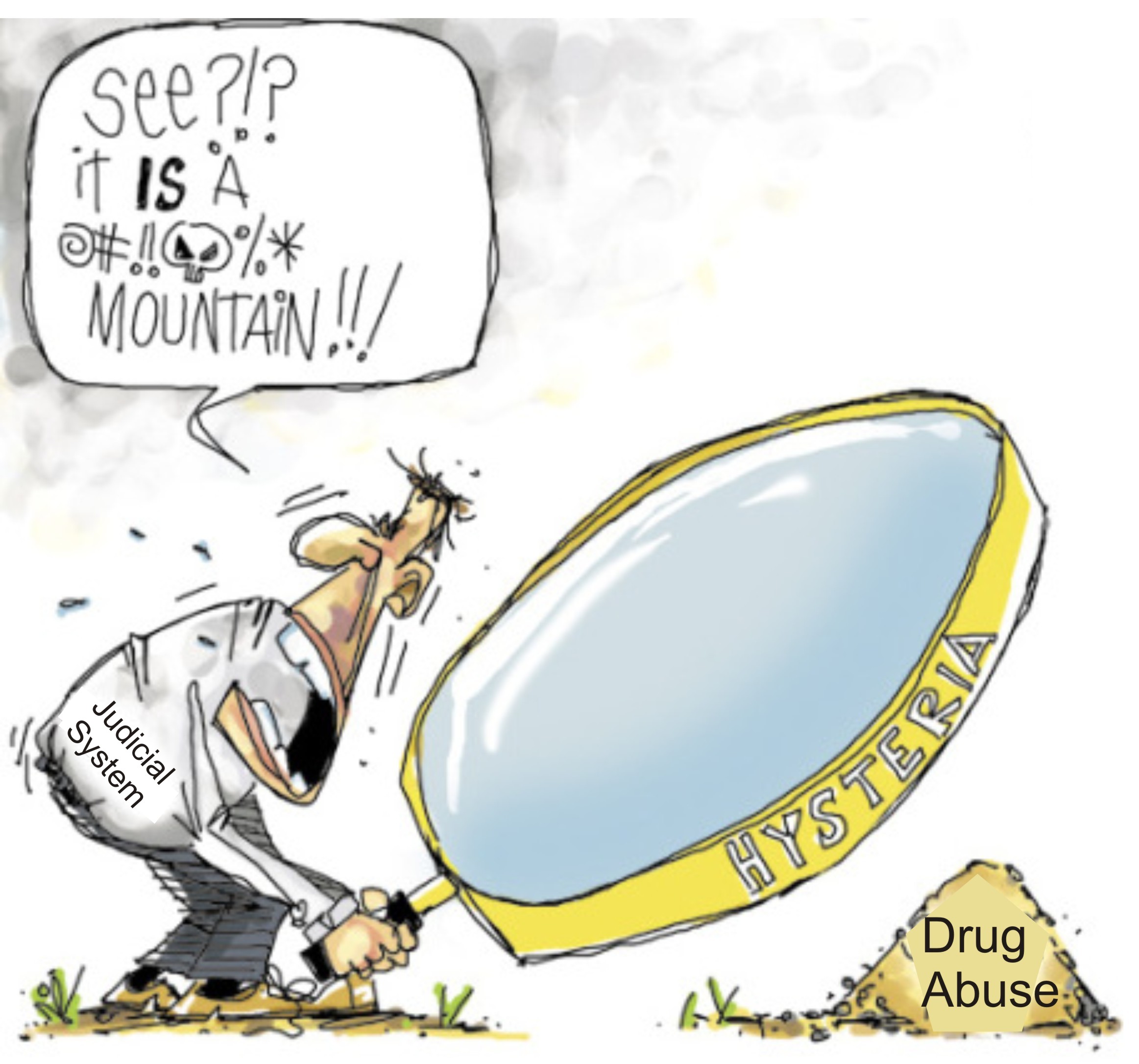
A worthwhile experiment or more smoke and mirrors ?

Rx for reform: NC pharmacists try to boost health and cut costs

The federal government has invested $15 million in a North Carolina experiment that gives community pharmacists a new role in patient care.

Community Care already works with 1,800 medical practices and asked those offices to identify pharmacies that would be good partners. Trygstad says he was pleasantly surprised by how readily the doctors embraced the idea of letting pharmacists help manage care for the most challenging patients – people with such conditions as heart disease, diabetes, behavioral health issues, asthma and chronic pain.

Now if we can just get them to treat chronic pain !

Doctors treating prescription drug abuse

Doctors say they are less likely to prescribe pain killers like Oxycodone and hydrocodone

http://www.news8000.com/health/doctors-treating-prescription-drug-abuse/30211166

from the article:

Now many physicians are turning to safer, less harmful alternatives.

“There are medications that don’t have addiction potential that can be very useful for pain management. As well as procedures, injections, physical therapy is very helpful for people. So there are a lot of things that can be done aside from using drugs,” said Gundersen Health System Doctor William Bucknam.

I guess this doctor presumes that everyone pain is the same level intensity… never changes.. and no one gets GI bleeds or cardiovascular from NSAIDs  and everyone has the insurance coverage, time, and money for deductibles and copays  for all those alternative “safer therapies”  And spinal injections have never caused http://en.wikipedia.org/wiki/Arachnoiditis nor killed anyone  http://en.wikipedia.org/wiki/New_England_Compounding_Center_meningitis_outbreak

Since when is Wellbutrin a C-II ?

Philly pharmacy sues drug wholesaler for making false accusations of overselling controlled substances

http://pennrecord.com/news/15287-philly-pharmacy-sues-drug-wholesaler-for-making-false-accusations-of-overselling-controlled-substances

The  owner of a pharmacy in Philadelphia says that a drug supplier damaged the neighborhood store’s reputation after making a false accusation that it over-purchased and sold a controlled substance, according to a libel suit filed at the Philadelphia Court of Common Pleas.

Uchenna Umeweni, owner of Bridge & Platt Family Pharmacy on Frankford Ave. in Philadelphia, seeks damages in excess of $250,000 from wholesaler Independent Pharmacy Cooperative and the Pharma Compliance Group, an auditing company.

According to the complaint, the Bridge & Platt Family Pharmacy had been purchasing the antidepressant drug Wellbutrin from the Independent Pharmacy Cooperative for more than 12 years. In June 2014, Umeweni learned that the wholesaler had started to acquire controlled medications for distribution and filled out a form to order the drugs for resale at the store.

After sending the electronic order, Umeweni contacted a representative a few days later, who told the plaintiff that an auditor would be arriving to inspect the premises. On June 26, an agent from the Pharma Compliance Group arrived at the pharmacy and accused Umeweni of overstocking and overselling Wellbutrin, calling it a class 2 controlled substance.

Umeweni informed the agent, Tony Scheller, a co-defendant, that Wellbutrin is not a controlled substance and that all of the orders have been documented by prescribing physicians at the nearby mental health facility. Following the inspection, Umeweni called the representative from the Independent Pharmacy Cooperative, co-defendent Brian Rucker, and protested the audit.

According to the complaint, Rucker accused Umeweni of changing his pharmacy name from Girard Pharmacy to Bridge & Platt Family Pharmacy and linked the store to recent drug bust on Girard Avenue. Rucker allegedly told the plaintiff that he is lucky the defendant did not catch him selling Wellbutrin on the street because he would have closed down the store and put him in jail.

The claim says the Scheller filed a derogatory and false report that has harmed Umeweni financially and give him a poor reputation. According to the complaint, the report has made it more difficult for him to purchase controlled substances from other suppliers.

The plaintiff is represented by attorney Christian Nduka in Philadelphia.

http://www.pharmacompliancegroup.com/

Our Commitment to You

Manufacturers, distributors, pharmacies, and healthcare practitioners share a mission and a responsibility to continuously monitor, protect and enhance the safety of the legitimate pharmaceutical supply chain, and to combat increasingly sophisticated criminals who attempt to breach the security of the closed system of distribution. Firms that distribute controlled substances must establish comprehensive internal policies and guidelines to prevent the diversion of controlled substances. Fines and other penalties levied against DEA registrants that have not been in compliance with the CSA and DEA requirements have increased dramatically.

The Pharma Compliance Group is committed to providing the pharmaceutical industry with the expertise needed to operate in total compliance of federal and state controlled substance regulations. We are a full service company dedicated to assisting our clients avoid costly regulatory and legal difficulties.

How does this make you feel ?

http://www.medpagetoday.com/PrimaryCare/GeneralPrimaryCare/49050?isalert=1&uun=g578717d2923R5705800u&utm_source=breaking-news&utm_medium=email&utm_campaign=breaking-news&xid=NL_breakingnews_2014-12-11

How does this make you feel? Phillip McGraw, better known as TV’s Dr. Phil, has launched a web-based psychological counseling service called Doctor on Demand staffed by licensed therapists. Cost: $50 for 25 minutes, $95 for 50 minutes.

How much longer before a pt can walk up to a kiosk or login into a website from home.. answer a number of questions about their symptoms and some AI computer system will diagnose and prescribe given what the pts inputs and the E-Rx is sent to a pharmacy robot/vending machine and ready to be picked up at a location of the pt’s choice?


How to get your pain meds without waiting updated 12/12/2014

Pharmacy robberies are happening so often… I decided just to commit a page to compiling them.

Warminster, PA  12/12/2014 http://www.buckscountycouriertimes.com/news/communities/hamptons/warminster-cvs-robbed-at-gunpoint-thursday-morning/article_7b7b21a5-3846-5bda-8a95-530e045e300d.html

Park Rapids, Minnesota  12/02/2014   http://www.parkrapidsenterprise.com/content/heroin-addiction-fueled-suspects-linked-five-robberies-police-say-1

ACKERMAN, Miss. 11/25/2014   http://www.wtva.com/mostpopular/story/Alabama-man-held-in-Choctaw-County-robbery/53yi66Rm8kiSTIvdaKxxSw.cspx

Orange County, FL 11/25/2014   http://www.wesh.com/news/deputies-investigating-armed-robbery-at-walgreens-in-orange-county/29898156

Oklahoma City, OK 11/25/2014  http://www.koco.com/news/mom-tips-off-police-to-pharmacy-robbery-suspect/29908640

SF Bay, CA 11/23/2014   http://www.msn.com/en-us/news/us/robbers-tie-up-pt-richmond-pharmacy-employees-make-off-with-highly-addictive-prescription-drugs/vp-BBfkZI2

Houston, TX 11/23/2014  http://abc13.com/news/suspected-serial-robber-targets-midtown-cvs-pharmacy/407631/

Jacksonville ,FL 11/19/2014 http://www.news4jax.com/news/police-robber-arrested-inside-cvs-pharmacy/29738432

At least third year in a row for staffing cuts starting out a new year.

cuthours


Reportedly this was spotted on a pharmacy wall/door at a CVS Health Pharmacy

Longer wait lines ???

More stressed out staff ??

More med errors ???

Health is everything ???

Rumor on the street 12/12/2014

rumoronstreetZorek  VS CVS


Here is a ABC news piece from 2.5 yrs ago…

Meet Joe Zorek .. a RPH with a “brass pair”

They went thru a 8 hr mediation back in the spring… resulting in no settlement

Rumor has it that this court case is starting to gain some traction moving forward next month


If pts are dying..should we hold the course ?

deatargetOpioid Prescriber Monitoring May Increase Overdose Deaths

http://www.medscape.com/viewarticle/836489

From the article:

The qualitative study, aimed at assessing doctor-patient interactions after a prescription monitoring program (PMP) known as “I-STOP,” which was mandated by New York State in 2013, showed that Staten Island prescribers of opioids are refusing patient requests for the drugs, “are abruptly discontinuing long-term narcotic treatment, and are refusing to accept new patients who are at risk of nonmedical narcotic use,” report investigators.

In addition, clinicians predicted that effects of the program will lead to an increase in the use of heroin and illicit opioids by those dependent on prescription opioids, as well as an increase in state border crossings to obtain prescriptions.

Lead author Sonia Mendoza, research coordinator at New York University and the Nathan Kline Institute for Psychiatric Research, in New York City, told Medscape Medical News that although increased transparency from PMPs offers benefits, this particular program has also led to an increase in discharges upon discovery of diversion.

“We found that a lot of prescribers were afraid that patients would simply go to New Jersey because they had no access to New Jersey’s monitoring program,” said Mendoza.

“They thought it did increase honesty and transparency regarding patients’ behaviors. But at the same time, they didn’t have comprehensive care for the patients, which led to discharges without proper referrals,” she added.

Opioid Overdose Epidemic

The investigators report that Staten Island has four times the number of opioid overdose deaths of any other New York City borough. As a result, enhanced surveillance by law enforcement has been instituted for opioid prescribers.

Operational PMPs are now in place in 48 states. In New York, the PMP is known as the Internet System for Tracking Over-Prescribing (I-STOP) and is a registry for all prescriptions of Schedule II, III, and IV controlled substances.

For the study, the investigators recruited clinicians through the Substance Abuse and Mental Health Services Administration (SAMSHA), which lists all opioid maintenance–certified prescribers in Staten Island and the other boroughs of New York City. Community-based buprenorphine-certified prescribers and patients underwent semistructured interviews and “ethnographic observations.”

“We wanted to look at the impact especially in primary care physicians who don’t have a background in addiction psychiatry,” said Mendoza.

Results showed that after I-STOP was put in place, providers have reported discharges, but sometimes without proper referral.

One prescriber noted during the study that 20% of these patients were discharged from his practice. “You find that they go to different doctors and are not honest. They’ve taken more medicine than they’re supposed to do. You have to sit down and talk to them for a long time [and] give them a chance to be honest,” he said.

“You’re reigning in the people who are making money on the side, and if I can fix [patients] rather then throw them back out there, I try. Sometimes it works, sometimes it doesn’t,” said another study interviewee. “The moment you find diversion, you let them go; I-STOP is to detect diversion.”

Regarding whether patients might cross state borders to get prescriptions, one prescriber said, “they can go to Jersey and I-STOP won’t know,” and another said, “they cross the bridge and get a prescription; if they want to do something, they do it.”

Interestingly, both providers and patients reported ambivalence about I-STOP’s overall effect on patient behaviors.

The program “has caused a major heroin problem in Staten Island. They turned a pill problem into a heroin problem,” said one prescriber.

However, another countered that he felt that he was on the right track. “It’s validating and has improved the link and communication between patients and doctors.”

Fear-Driven?

Overall, the findings suggest that “drug policies that target prescribers for sanctions in an effort to maintain boundaries around ‘legitimate’ medical use of opioids may paradoxically be leading patients to use illicit drug markets and to higher risk narcotic use,” write the investigators.

Mendoza added that many of the interviewed prescribers said that “clamping down on opioid analgesics” was correlated with increased heroin use or their patients turning to the streets for illicit opioids.

“And that has been confirmed in the latest Department of Health data from New York State,” she said.

“They are also aware that the DEA is closely monitoring. So if a patient is deviant, they discharge them because they are just afraid of the consequences to themselves.”

Mendoza noted that specific protocols need to be created to better guide clinicians.

“Additional interventions to educate prescribers and provide support for substance abuse treatment, patient referrals, and harm reduction interventions such as naloxone kits…are needed to complement prescription monitoring programs,” write the investigators.

In addition, Mendoza reported that some of the most successful interviewees described having contracts with patients for periodic urine tests and random pill counts.

“Also, having better relationships with their patients and longer consultations were important.”

Need for Checks and Balances

Maria Sullivan, MD, PhD, associate professor of psychiatry at Columbia University Medical Center in New York City, told Medscape Medical News that the study authors called attention to the increased burden on prescribers, in terms of time and effort, to comply with the state’s 2013 mandate. Dr Maria Sullivan

“I would agree that there is a higher burden on providers. However, the intention of this electronic monitoring program is to reduce the very substantial overdose death rates that have been occurring. And there is some preliminary evidence that it is beginning to have a positive impact,” she said.

Dr Sullivan, who was not involved with this research, is also chair of the AAAP research committee and chair of the clinical expert panel for the Providers’ Clinical Support System for Medication Assisted Treatment.

She noted that although there is some variability in the way different states have adopted these programs, “it’s really checking at the point of each prescribing that ensures that there is not multiple providers involved.”

“I think that the balance is clearly in favor of implementing electronic prescribing in terms of improved patient outcomes and reducing public health costs.”

Dr Sullivan added that fear is “an unfortunate response” from some prescribers and noted that there are current initiatives sponsored by SAMHSA to train providers who have not previously felt comfortable prescribing buprenorphine or naltrexone for opioid dependence.

“Ultimately, these programs are protective for the physician as well, because you can have a higher confidence level that the opioids you’re prescribing are not being diverted or misused,” she said.

“I really think these are necessary checks and balances trying to stem the tide of the current opioid epidemic.”

The study authors have reported no relevant financial relationships. Dr Sullivan reported having received medication study samples from Alkermes.

American Academy of Addiction Psychiatry (AAAP) 25th Annual Meeting and Symposium: Abstract 44, presented December 6, 2014.

I’m not sure if this is satirical or a psychotic episode

jailbird

To Defeat Heroin We Need to (NOT) Stay the Course

http://www.acluohio.org/blog-posts/to-defeat-heroin

To combat abuse of heroin and prescription opiate pain killers there are several principles we need to keep in mind and actions we need to take.

We must shut down all the pill mill pain clinics, imprison the doctors who run them, and make every other doctor too scared to prescribe opiate pain killers at all. We can’t worry about what happens to all those pain patients who suddenly find themselves without a doctor.

Yes, they’ll be forced to go through withdrawal when their prescriptions run out, and, yes, many, in desperation, will turn to illegal drug dealers. But we have to remember that a few of these patients might actually be drug-seeking junkies and that’s who we need to focus on.

We need to increase funding for the federal Drug Enforcement Administration. We should be proud that, unlike so many other countries, America has not fallen into the trap of allowing drug policy to be controlled by health care professionals. We’ve learned that law enforcement agents who are unencumbered by medical expertise, like our DEA, know best when it comes to drugs.

We don’t need to make things complicated. These people should just say no to drugs or go to jail.

Most importantly, we need to stay the course we set with the Harrison Narcotics Act of 1914. For a whole century we have sustained the courage to fight the war on drugs with a series of increasingly tough drug laws. We can now take credit for imprisoning more drug offenders than any other country. We alone have taken on the burden of housing 25 percent of the world’s prison population.

Just imagine what things would be like if we hadn’t shouldered this burden. Why should we stop now, when, surely, if we just keep doing what we have done so well for so long, victory soon will be ours?

Stay strong America and stay the course!

Mike Uth is a member of the Board of Directors of the ACLU of Ohio.

If objective diseases were treated like subjective diseases ?

robot hugs