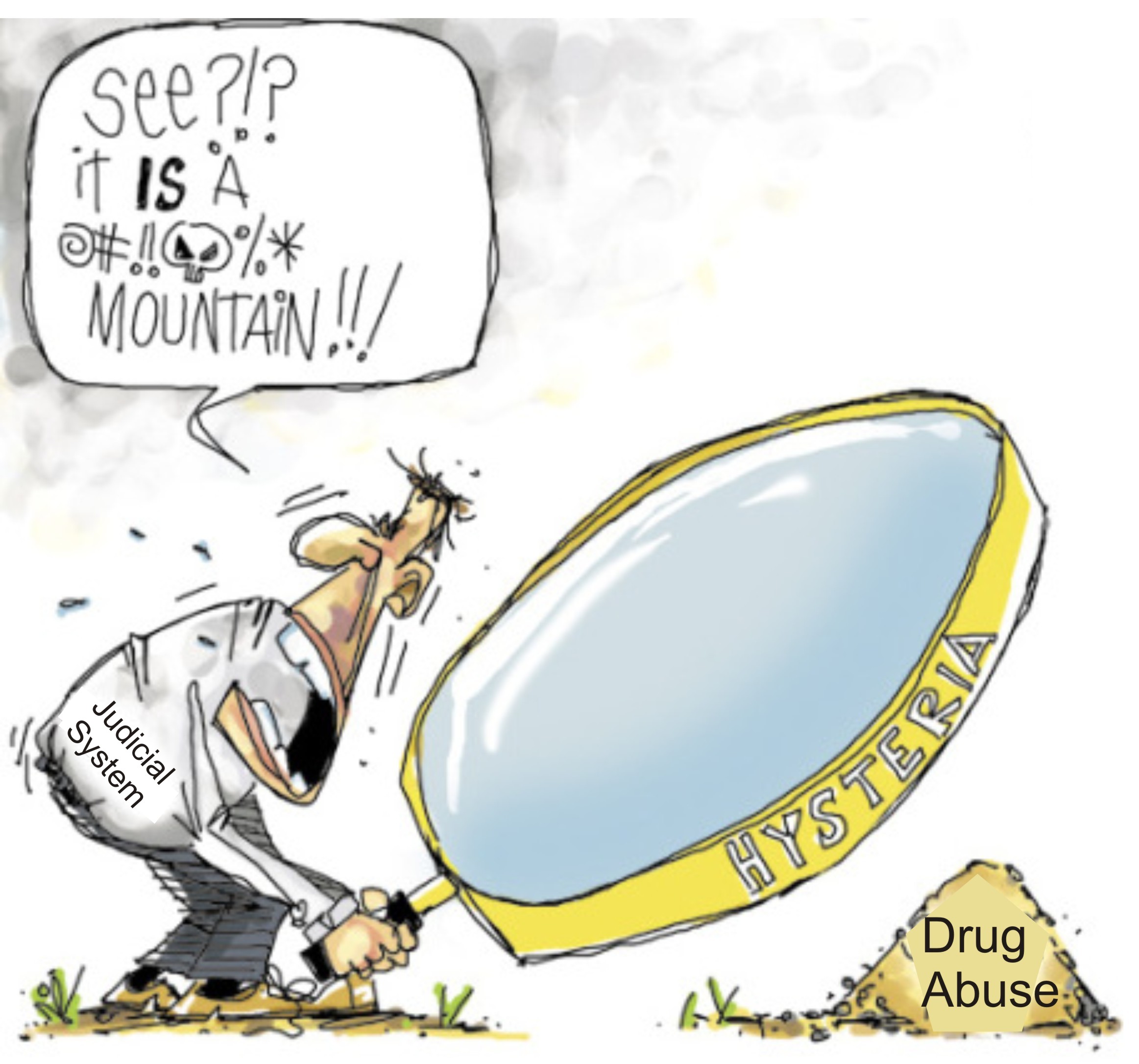
Pharmacists don’t have to worry about accepting fake ID’s ?

Judge dismisses ID theft lawsuit against pharmacies

http://triblive.com/news/adminpage/8944994-74/judge-lawsuit-cannot#axzz3jJMpuOD2

A Sewickley lawyer cannot impose a legal obligation on CVS and Giant Eagle pharmacies that doesn’t exist in law, a federal judge ruled Wednesday in dismissing a lawsuit seeking to hold the pharmacies responsible for identity theft.

Andrew Gabriel sued the retailers in a proposed class-action lawsuit after someone using his name on fraudulent prescriptions obtained oxycodone at CVS and Giant Eagle stores. U.S. District Judge Joy Flowers Conti granted the retailers’ motion to dismiss the lawsuit.

“A pharmacist’s duties cannot be expanded beyond those imposed by the appropriate legislature and regulatory agencies,” the judge said.

When the politician/lawyer speaks the truth ?

emptyhead

Is this a verbal revelation of how a politician/attorney thinks… you can’t educate/change minds… you need more laws..  We already have 10 -15 million laws to enforce the TEN COMMANDMENTS !  So we need more laws that the judicial system may or may not enforce and/or be selective in how they are enforced and/or who they are enforced against.

How many times have you heard.. “we need a law to fix that”… we get a new law to fix that.. and NOTHING CHANGES…

After 100 yrs of fighting a war on drugs… originally based on bigotry and racism… who believes that minds/hearts can be changed.

lietotruth


Is the crusade against pill mills turning into a witch hunt?

witchhunt

Is the crusade against pill mills turning into a witch hunt?

http://www.kevinmd.com/blog/2015/08/is-the-crusade-against-pill-mills-turning-into-a-witch-hunt.html

I care for a 65-year-old woman suffering from sarcoidosis affecting her lungs, her skin, her bones, her nerves, her blood chemistries, her kidneys, her colon and her mind. She has gone from an active spouse, mother, grandmother, tearing up the dance floors with her husband, to a home recluse calling friends to drive her to medical and care appointments while ambulating with assistance of another strong individual supported by a 4 wheel walker with a seat. She describes her foot pain as feet burning on fire.

 An evaluation with the Cleveland Clinic and ultimate biopsies of her skin and nerves led to a diagnosis of severe small vessel polyneuropathy. An experimental course of an IV immunosuppressant provided short-term relief and hope for relief of pain, but those drugs effectiveness waned quickly. She has recurrent kidney stones from sarcoidosis effect on her calcium metabolism and is in chronic and recurring pain with frightening blood in her urine as small sharp kidney stones wind their way down her ureters towards her bladder. She has had colitis for twenty years now. Normal barium enemas and colonoscopies initially resulted in her being considered a neurotic quack.

When the Mayo Clinic suggested a biopsy on the normal colon and the pathology revealed a new entity responsible for all her symptoms she was reclassified from a neurotic, annoying wife of a professional to “an interesting and rare case” by many in the medical community. Throughout her trials and tribulations, she has sought the care of board certified gastroenterologists, nephrologists, urologists, rheumatologists, psychiatrists, psychologists, ophthalmologists, dermatologists, general internists and a neurologist specializing in pain management.

 The state of Florida suffered through an epidemic of illegal pill mills at the turn of the century. Criminals hired criminal physicians to prescribe narcotic pain pills for cash irrespective of a justifiable medical condition or medical exam. These prescribing practices were spurred on by a “blue ribbon” physician panel (financed by the same pharmaceutical firms who made the pain pills) suggesting doctors use more narcotics and less nonsteroidal anti-inflammatory medicines to control chronic pain. They additionally encouraged supplementing your income by dispensing pain pills in addition to prescribing medications. I never believed in that because there was too much opportunity and room for inappropriate prescribing.

Our unfortunate chronic patient had her pain controlled by a board certified neurologist who through trial and error found a formulary that the patient tolerated. During the months of experimentation, the patient suffered through nausea, vomiting, constipation, diarrhea and dehydration. Trips to the ER for anti-nausea medications or IV hydration were frequent and common. When her neurologist found a mix that worked he stuck with it. That patient’s pain doctor moved out of Florida 3 years ago because he was afraid that the implementation of the Florida pain law would limit his patients’ access to needed medications and make his prescribing subject to inappropriate review and scrutiny. He is currently working at a university medical center in North Carolina providing patient care and teaching medical students and doctors in training.

As the patient’s primary care physician, I became the narcotic prescriber for the patient in her neurologist’s absence. The patient executed a pain contract with our office that she has followed religiously while she continued her care with her multiple specialty doctors. We tried several other neurologists and pain physicians but the high volume impersonal nature of medicine today left her unhappy and dissatisfied with the care and attention provided.

 When the patient turned 65 years old and went on Medicare, she purchased a Medicare Part D prescription drug plan that directed her to a large chain pharmacy. They told her they would not prescribe her narcotics because they did not want the liability and did not like the combination of medications ordered by her board-certified pain specialist. That company had been fined for illegally selling pills without prescriptions to drug dealers out of their Samford, Florida distribution site.

The alternative pharmacy — a popular supermarket chain — was audited by state regulators. The auditors were upset with the pharmacy releasing a controlled substance in the quantity given especially along with her antianxiety and anti-migraine headache medicines on this patient’s medication list. They had no patient records or history to explain why she was receiving these scripts, but nonetheless so intimidated the pharmacy that they called the patient and told her they would no longer be able to sell her the prescribed pain medicines. The patient called my office in tears wondering where to obtain her medications and frightened about the prospects of abruptly stopping these medications. The pharmacy simply said the liability and fear of losing their license necessitated the change in policy.

I am a board-certified physician in internal medicine, with extra study in geriatrics who has practiced in this community for 36 years. I list on my medical license application every two years that I will prescribe pain medications for legitimate chronic conditions. I take my required continuing education courses especially in the areas of prescription pain medication to meet the state requirements. My patients who receive chronic pain medications must execute a pain medicine contract that outlines their responsibilities as well as mine. I do not take lightly the prescribing of a controlled substance, but recognize that sometimes there are medical conditions that leave you with no other options. I have been told that after the state regulators look at the pharmacy’s role in prescribing short-term narcotics for long-term use, they will be contacting the Florida Board of Medicine to review my prescribing of these medications for this patient.

It is clearly an attempt to coerce and intimidate at the expense of a sick and vulnerable group of patients. I have probably prescribed fewer pain medications in my 35-year career than a pill mill prescribed in one day of business. The response to the Florida Board of Medicine will require hiring an attorney and involve time, research and aggravation. Our legislators, prosecutors, and law enforcement officers should be able to differentiate between a functioning medical practice and an illegal pill dispensary.

I am beginning to believe these same officials could not recognize the difference between a house of worship and a functioning brothel. Their inadequacies and inefficiencies threaten to prevent the citizens of Florida from receiving relief from pain even if they have a legitimate reason for receiving pain medication on a long-term basis. Do the citizens of Florida want their doctors making these decisions or legislators and bureaucrats with no clinical patient care experience?

Steven Reznick is an internal medicine physician and can be reached at Boca Raton Concierge Doctor.

5 y/o study suggests pain kills more pts than cardiovascular disease

Severe Chronic Pain is a Killer – Study Finds

http://updates.pain-topics.org/2010/04/severe-chronic-pain-is-killer-study.html

Previous research has demonstrated a clearly negative influence of chronic pain on health. Now, a new study portrays a profound link between severe chronic pain and death; inflicting nearly a 70% greater mortality risk than even cardiovascular disease.

In 1996 a large cohort of 6,940 persons was recruited by researchers at the University of Aberdeen, UK, and information collected about chronic pain status, general health, and sociodemographic details [Torrance, et al. 2010]. Followup 10 years later linked these data with routinely collected national data for death registration. A total of 5,858 (84%) individuals from the original cohort were linked, including 1,557 (27%) who had died. The researchers found a significant association between chronic pain and all-cause mortality. Particularly troublesome was severe chronic pain — survival among persons with this condition was significantly worse than among those reporting mild or no chronic pain. Even after adjusting for various confounding sociodemographic factors and effects of long-term illness, patients with severe chronic pain had a 49% greater risk of death compared with all-cause mortality and a 68% greater risk of death compared with all cardiovascular-disease-related deaths.

COMMENT: The negative impact of severe chronic pain on survival discovered by this research is dramatic and concerning; especially when considering the recent brouhaha about purportedly high risks associated with analgesic agents, particularly opioids. In an objective risk-benefit analysis, it would appear from this study that the increased mortality risks associated with untreated or inadequately treated chronic pain could pose a greater threat than any hazards potentially associated with pain-relieving medication therapies. In brief — and this is admittedly a strong way of putting it — any restrictions on access to effective therapies for severe chronic pain might be tantamount to fostering premature death in the afflicted patients. *As always, reader comments are welcomed.*

Veterans Admin now fighting DEPENDENCE … which is not ADDICTION !

The VA’s Attempt To Fight Opioid Dependence Leaves Pain Patients Cut Off

http://taskandpurpose.com/the-vas-attempt-to-fight-opioid-dependence-leaves-pain-patients-cut-off/?utm_source=facebook&utm_medium=social&utm_content=tp-facebook&utm_campaign=culture

After the Department of Veterans Affairs scaled back its prescriptions of opioids, many patients were left to deal with their chronic pain by themselves.

Anyone who has ruck marched with a heavy pack, performed a parachute landing fall out of a C-130 or worn body armor all day knows that the military lifestyle is rough on the body. Due to the physical requirements of the military, veterans experience a much higher rate of chronic pain than the civilian population. The recent wars in Iraq and Afghanistan have led to more advanced body armor, saving the lives of thousands of soldiers, Marines, sailors and airmen. These advances in equipment, though lifesaving, mean that troops survive with devastating injuries such as limb amputations and traumatic brain injury that require advanced, coordinated treatment.

According to a May 2014 Inspector General study of the Department of Veterans Affairs and its opioid dispensing methods, more than 50% of the veteran population experience chronic pain as well as other contributing factors such as post-traumatic stress disorder. The prevalence of PTSD is especially important to note in treating chronic pain because the two conditions work against each other. According to the National Institute of PTSD, the presence of pain can be a constant reminder of unwelcome memories and a veteran’s increased anxiety can exacerbate his or her experience of pain. More than 2 out of 10 veterans with PTSD also have a substance abuse disorder making it more difficult for doctors to prescribe opioid medication for their chronic pain. Veterans are not alone in experiencing substance abuse, especially when it comes to prescription drug abuse. From 2001 to 2013, 2.5 times as many people died due to an opioid drug overdose, according to the National Institute on Drug Abuse.

A VA healthcare system that was underprepared for wartime casualties initially dealt with the increase in these debilitating injuries by prescribing larger amounts of opioids to help with the pain. From 2001 to 2013, prescriptions for opioid pain medications, such as oxycodone and morphine, increased by 259%, according to a report by the Star Tribune. In order to combat a growing number of accidental overdoses, suicides, and prescription drug abuse, the VA unveiled the Opioid Safety Initiative in 2013. In theory, the initiative promotes alternative methods of pain control, such as acupuncture and chiropractic care, while reducing the dosages and prescriptions for opioid medications. This coincided with a national campaign outside the VA to curb prescription drug abuse. The Drug Enforcement Agency expanded its regulatory authority and tightened the prescribing guidelines on several commonly utilized opioid medications such as hydrocodone. Instead of gradually weaning off veterans who had been on a steady dosage of opioids for several months and even years, patients were abruptly cut off, leaving users in a miserable lurch.

Anyone who has been on an opioid medication for a long period of time will experience withdrawal symptoms whether or not they are psychologically addicted. Though opioid withdrawal does not usually lead to death, a person experiences horrible physical and mental side effects including muscle cramps, diarrhea, insomnia, sweating, chills, nausea, and vomiting. There are few methods for combating these symptoms except for gradually weaning off of the dosage. Even after the acute physical withdrawal symptoms have passed, depression and anxiety can worsen due to the change in brain chemistry that occurs with a reduced dosage of opioids. This side effect is particularly troubling in veterans already struggling with anxiety and depression as symptoms of PTSD. The Star Tribune report details the stories of several veterans who were sent into devastating tailspins after the Opioid Safety Initiative launched at the Minneapolis VA. Two Iraq War veterans committed suicide after their local VA hospitals dramatically reduced their opioid medication without any other supportive treatments to help with their complex symptoms. Though statistics are difficult to conclusively determine, anecdotal evidence suggests that many veterans were pushed over the psychological edge when the Opioid Safety Initiative was launched.   

In both the VA and private healthcare sector, the war against prescription drug abuse has mostly impacted chronic pain patients who rely on opioid medications for a higher quality of life.  Increased DEA regulatory authority has led to large pharmacies adopting stricter guidelines that leave civilian pain patients in a similar bind. The VA is under intense scrutiny and pressure, making it especially crucial that it make a responsible comeback from this debacle.

Military medicine is extremely advanced when it comes to life-saving technology in combat, yet the military and the VA have failed when it comes to treating the lingering wounds of war. The wars in Iraq and Afghanistan brought major advances in medical technology, from advanced prosthetics and one-handed tourniquets, to better methods for diagnosing traumatic brain injuries. Yet the VA launched the Opioid Safety Initiative with little analysis or preparation to transition veterans responsibly from large dosages of opioid medication. According to the 2014 Pain Management Opioid Safety guide, practitioners are encouraged to utilize cognitive behavioral therapy, family and peer support groups, alternative therapies such as chiropractic care and acupuncture along with interventional pain management injections. Medication should not be utilized as the only solution.

The initiative to curb prescription drug abuse, though well-meaning, has placed an even greater burden on the already-strapped mental health services available through the VA. In 2013, the VA launched a major recruiting effort to add over 1,600 mental health professionals nationwide. With a steady amount of veteran suicides each day, many would argue that the VA mental health care system still lags far behind the overall veteran need. As for alternative therapies, only 52 out of 153 VA hospitals provide chiropractic care and even fewer provide acupuncture. Though the VA has no solid numbers on veterans’ use of heroin because it is an illicit drug, the crackdown on prescription drug abuse has forced many civilian pain patients to seek heroin as a method of controlling pain and there is substantial anecdotal evidence that many veterans have followed suit.   

The answer to these devastating healthcare issues is not more knee-jerk mandates or restrictions, but to increase veteran access to mental health services, alternative therapies, and interventional pain management options immediately. This might mean expanding the VA healthcare network to include existing civilian practitioners already adapted to the needs of chronic pain patients. Access to reputable substance abuse treatment programs, whether these programs are in the VA healthcare system or not, is also imperative to reducing accidental and intentional prescription drug overdoses among veterans.  

The VA can no longer afford to launch these well-intended yet clumsy programs at the expense of veteran welfare. The nature of military services can translate into a lifetime of physical and mental pain for veterans. It is time for the VA to be an asset to depend on for veterans suffering from chronic pain, PTSD, and substance abuse disorders even if the answer to the issue lies outside the VA healthcare system.

That’s because it’s a bait-and-switch. It’s promoted as a treatment-first program, but the details lean heavily toward enforcement and incarceration.

magicianThe problem with the White House’s heroin program

http://www.msnbc.com/msnbc/problem-the-white-houses-heroin-program

With the country in the grips of a great American heroin relapse, the White House on Monday announced a new strategy to subdue the epidemic, pairing law enforcement officials with public health workers and deploying them in 15 states rife with opioid addicts.

The program, funded by $2.5 million from the Office of National Drug Control Policy, is billed by the Obama administration as an example of the president’s emphasis on treatment, not jail, for drug users. But as word spread, high profile critics attacked the plan as an attempt to co-opt the rhetoric of reform without adopting the actual policies.  

Related: Pot lovers should narc on ‘El Chapo’

Thomas McLellan was President Obama’s chief scientist for drug control policy from 2009 to 2012, the person in charge of programs precisely like this one. He’s watched in horror as the death rate for heroin overdoses has quintupled since 2002, cutting through class and color lines to become as popular as crack cocaine in the 1980s—all without inspiring a major federal response. 

“Our reply is $2.5 million?” an incredulous McLellan told msnbc. “That is not close to the financial commitment that is needed.”

“There are research-tested, cost effective public health and public safety measures that could reduce opioid use and related deaths, but not at this price,” he continued. “I hope they ultimately take this problem seriously and provide the commitment the public is looking for.”

Former congressman Patrick Kennedy, a recovering addict and one of McLellan’s strongest allies in the push for better care, largely agreed. “The heroin epidemic is ravaging the country,” he told msnbc. “Officials need to step-up and address its dire consequences in all 50 states, not just a handful of counties.” 

Both Kennedy and the influential Drug Policy Alliance also took issue with the substance of the president’s new plan. “Half of what they’re doing is right – the focus on health and overdose prevention – but the other half, the side that focuses on the failed arrest and incarceration policies of the past is destined to ruin lives and fail,” said Bill Piper, director of the Drug Policy Alliance’s office of national affairs.

In an earlier interview with msnbc, Ethan Nadelmann, the executive director of the Drug Policy Alliance, was even harder on Obama’s approach to substance abuse. Nadelmann is a powerful reformer, nicknamed “the real drug czar” and praised for pushing a harm-reduction model that has been proven to work oversees.

Nadelmann sees drug policy as existing along a continuum, from “lock’em up, hang’em, pull out their fingernails, Singapore, Saudi Arabia” all the way down to “essentially no controls whatsoever, maybe a little for kids.” Unfortunately, he says, American drug policy under Obama is way too close to the hang’em end of the spectrum—and this new heroin program won’t change the administration’s position much in his eyes.

That’s because it’s a bait-and-switch. It’s promoted as a treatment-first program, but the details lean heavily toward enforcement and incarceration. It calls for 15 drug intelligence officers and 15 health policy analysts to collect data on overdoses and trends in heroin trafficking. Everyone will feed the data back to a joint health-law enforcement coordination center, which will distribute the data across state lines.

That’s great for cops. They need fresher leads on where heroin is coming from, who is moving it, and where it’s being purchased. But public health officials don’t need to know the intricacies of trafficking in order to respond to an ongoing epidemic. In a hopeful sign, the program will reportedly train first responders to save lives with naxolone, a controversial opiate-blocker that can pull users back from the edge of death.  

But naxolone is not a cure. It’s a second chance. And without proper follow-up care, McLellan argues, it’s a second chance we’ve been squandering, and not just with heroin.

Related: 600 US churches call for an end to the ‘war on drugs’

Drug and alcohol abuse in general has exploded nationwide, according to the Centers for Disease Control and Prevention, which has tracked a two-fold rise in drug-related deaths in a generation.

Most American addicts are not in treatment, however, not even a free 12-step program. Of those who are in treatment, the vast majority will quit or start using again within a year, studies show. And the result is an endless loop of denial, decline, recovery, and relapse.

So what do we do? “It’s not rocket science,” McLellan told NBC News last year as part of a special series on Heroin in America. It’s simple, he says. We need to offer people five years of care, beginning with rehab, progressing through stages of monitoring, and ending up in an out-patient setting. That’s it: acute care, monitoring, and consequences. We already provide it to drug addicted airline pilots, McLellan points out, and we get success rates above 80%.

The White House, for its part, defended its dual focus on health and enforcement. Michael Botticelli, director of National Drug Control Policy said in a statement on Monday that heroin is “both a public health and a public safety issue.”

But addiction, according to the best science, is a brain disease that can never be cured by the cops. It’s a chronic disease, a lot like diabetes. While absorbing the White House’s new Heroin Response Strategy as a treatment option, consider what it would sound like if the same program were applied to people with a blood-sugar problem.

It would mean busting people with bad diets, shaking them down for details on where they get their food, and launching a multi-state response to the big food cartels that are pushing this stuff down our throats. Then it would mean discharging the user to a church basement somewhere for a 28-day rehab program. Two months later, most likely, they’d be sick again.

Prohibition is working so well ?

Investigators: 3 dead after 18 heroin overdose within 24 hours in Washington County

http://www.wpxi.com/news/news/local/crews-respond-least-12-overdoses-washington-county/nnLNc/

WASHINGTON COUNTY, Pa. —

Three of 18 people who overdosed on heroin  Sunday into Monday in Washington County died, investigators said. 

The cases were reported in several areas, including Donora, Amwell, Canonsburg, Houston and Washington.

Seventeen of the 18 cases occurred Sunday night.

Washington Health System treated the majority of those who overdosed.“To see a bunch like that is very uncommon. Usually we see one or two a week,” said Dr. Tony Aprea, the medical director of Washington Health System.

Canonsburg Police Chief Alexander Coghill said his officers were able to save one victim with the use of Narcan.

“(It) revived her almost instantly. Without that, she would’ve been left there and probably would’ve died,” he said.

Washington County emergency dispatchers confirmed that the most recent overdose occurred Monday evening at a Walgreens in Washington, bringing the total to 18 over the course of 24 hours. Dispatchers said the woman was revived, but her condition was not released.

Coghill told Channel 11 that the overdoses were likely caused by heroin, with bad batches possibly coming from either Colombia or Mexico.

Channel 11’s Melanie Gillespie reported that police departments are sending reports to the District Attorney’s Office to determine any connections among the cases.

At the end of July, emergency responders in Washington County received training in the use of Narcan, a drug that can reverse the effects of a heroin overdose. A state grant made Narcan available to police departments and fire stations throughout the county.

In the spring, a string of overdoses in the Pittsburgh area stemmed from a bad batch of heroin that investigators determined contained fentanyl.

when our judicial system determines if a drug can have clinical trials ?

Insys Therapeutics, Inc. Files Citizen Petition With the Drug Enforcement Administration (DEA) to Reschedule Its Synthetic Pharmaceutical Cannabidiol (CBD)

This may be interesting to see how protective the DEA is of components of MJ being sold as a Rx drug… when this particular component is already available as a Rx med.. just in a different dosage form.. If the DEA/FDA rejects this new dosage form of a existing med… could that just be the DEA “protecting turf”.. could the DEA be the embodiment of the Antichrist ?

http://www.marketwatch.com/story/insys-therapeutics-inc-files-citizen-petition-with-the-drug-enforcement-administration-dea-to-reschedule-its-synthetic-pharmaceutical-cannabidiol-cbd-2015-08-18

PHOENIX, AZ, Aug 18, 2015 (Marketwired via COMTEX) — Insys Therapeutics, Inc. (“Insys” or “the Company”) INSY, -3.43% today announced it has filed a Citizen Petition with the Drug Enforcement Administration (“DEA”) to request the agency reschedule its synthetic pharmaceutical cannabidiol (“CBD”) from Schedule I to Schedule IV. The Company believes that the current classification of synthetic CBD as a Schedule I compound is a significant barrier to the progress of research studies that explore the value of this compound in the treatment of several serious medical conditions.

“CBD is a non-psychoactive compound found in the marijuana plant that offers the potential to provide a treatment option to patients suffering from a wide variety of diseases,” said Steve Sherman, Vice President, Regulatory Affairs, at Insys Therapeutics. “Importantly, Insys’s synthetic pharmaceutical CBD is a form of the compound that is identical in chemical structure to naturally-occurring CBD, but because it is not derived from marijuana, it is free of THC and other cannabinoid impurities, ensuring a consistent and controlled dosage with little or no potential for abuse.”

Independent comparison analyses conducted by Insys and the National Institute on Drug Abuse, part of the National Institutes of Health, have found that CBD synthetically produced by Insys Therapeutics is identical in chemical structure to plant-derived CBD.

The Citizen Petition to reschedule Insys’s synthetic pharmaceutical CBD outlines scientific and medical evidence that demonstrate the Company’s synthetic pharmaceutical CBD has no potential for abuse or dependency and, therefore, should be in Schedule IV or lower. More importantly, Insys’s synthetic pharmaceutical CBD has the potential to provide new treatment options for a wide variety of diseases, such as epilepsy, brain cancer, schizophrenia, post-traumatic stress disorder, anxiety, Alzheimer’s disease, neuropathic pain, Parkinson’s disease, diabetes, and many others.

The U.S. Drug Schedule System classifies drugs into five categories, or schedules, based on the drug’s acceptable medical use and abuse or dependency potential. Synthetic CBD’s classification as a Schedule I drug ranks the compound as similar to drugs such as heroin and cocaine. This means the process for obtaining the necessary approvals to conduct research from the various licensing bodies can take approximately one year, and a substantial commitment is required to execute the paperwork, inspection, and approval process. Outside the United States, effective June 1, 2015, CBD has been classified as a Schedule 4 substance by the Australian Therapeutic Goods Administration, which is the least restrictive schedule for prescription medicines in that country. In the United Kingdom, CBD is classified as a Class B medicinal product, and in Canada, CBD has been classified as a Schedule II medicinal product, both of which are less restrictive than Schedule I drugs in the U.S.

“Insys is asking the DEA to reschedule its synthetic pharmaceutical CBD as part of our continued commitment to advancing the research and development of cannabinoid therapies while striving to provide physicians and patients with consistent and controlled pharmaceutical options that can help improve the quality of life for patients,” said Michael Babich, President and Chief Executive Officer. “We are currently engaging with a broad range of stakeholders to build support for this Citizen Petition, in the hopes of addressing serious unmet medical needs.”

A Citizen Petition can be filed to ask that a governing agency, like the DEA or U.S. Food and Drug Administration, take, or refrain from taking, a particular action. Any person may file a Citizen Petition, and any person may comment on a petition that has been filed. Insys cannot predict when or if the DEA will respond to, or otherwise take any action with respect to the Citizen Petition filed.

About Insys Therapeutics, Inc. Insys Therapeutics is a specialty pharmaceutical company that develops and commercializes innovative drugs and novel drug delivery systems of therapeutic molecules that improve the quality of life of patients. Using proprietary sublingual spray technology and capabilities to develop pharmaceutical cannabinoids, Insys addresses the clinical shortcomings of existing commercial products. The Company recently submitted a New Drug Application to the U.S. Food and Drug Administration for Dronabinol Oral Solution, a proprietary, orally administered liquid formulation of dronabinol that Insys believes has distinct advantages over the current formulation of dronabinol in soft gel capsule. Insys is developing a pipeline of sublingual sprays, as well as synthetic pharmaceutical cannabidiol.

Forward-Looking Statements This press release contains forward-looking statements including related to our belief that (i) the current classification of synthetic CBD as a Schedule I compound is a significant barrier to the progress of research studies, (ii) CBD offers the potential to provide a treatment option to patients suffering from a wide variety of diseases, and (iii) Dronabinol Oral Solution has distinct advantages over the current formulation of dronabinol in soft gel capsule. These forward-looking statements are based on management’s expectations and assumptions as of the date of this press release; actual results may differ materially from those in these forward-looking statements as a result of various factors, many of which are beyond our control. These factors include, but are not limited to risk factors described in our filings with the United States Securities and Exchange Commission, including those factors discussed under the caption “Risk Factors” in our Annual Report on Form 10-K for the year ended December 31, 2014 and subsequent updates that may occur in our Quarterly Reports on Form 10-Q. Forward-looking statements speak only as of the date of this press release and we undertake no obligation to publicly update or revise these statements, except as may be required by law.

Careful how deep you dig that hole

digahole

MarkeTouch Media Acquires Licenses for Walgreen Co.’s Prescription Alignment Patents

Now the three major chain pharmacies have announced similar programs to focus on allowing pts to sync all their medications so that they only have to make one trip a month to pick up all their medications.  While they are professing that it will help pts not run out of their medication(s) and remain compliant with their therapy for their chronic conditions. If done correctly, that will be accomplished, but likewise the chains will end up selling more medications.. generating more revenue and being able to time arrival of inventory to have less average inventory dollars on the shelves.. a form of “just-in-time-ordering” meaning a BIGGER return on investment for the chains..  So where is the digging themselves into a hole issue ?  When a Pharmacist tells a pt that “I’m not comfortable” in filling your controlled meds.. what the Pharmacist is basically saying is that he/she does not believe that you have a medical need for the particular controlled medication(s) and/or your prescriber is a careless prescriber or less than competent prescriber…  It is illegal for a prescriber to prescribe medication(s) – especially controls – to a pt that does not have a valid medical necessity for them.. likewise it is illegal for a person to obtain controlled meds for a illicit or non-medical necessity need. So, if you sign up for one of these sync programs and they are always able/willing to fill your non-controls on time, but decline, refuse or give some other excuse why they can’t fill your controlled meds from the same doctor.. then how can a person come to the conclusion that a prescriber is competent to prescribe non-controls but less competent to prescribe controlled meds. Could it be that “the hole” they have dug themselves into.. is setting themselves up to documenting denial of care and discriminating against pts covered by the ADA…  They could be “digging for dollars” under the label of “pt adherence ”  but may find out that they are just digging themselves into a hole ?

http://www.prweb.com/releases/2015/08/prweb12894554.htm

MarkeTouch Media recently announced an agreement with Walgreens to license their medication synchronization patents. The Houston-based technology company offers pharmacies a variety of solutions that focus on patient medication adherence, health literacy and disease state management programs. 

MarkeTouch Media provides its Optimum MedSync service to pharmacies across North America. MarkeTouch Media utilizes unique and cutting edge technology that allows clients to implement solutions that maximizes enrollment and minimizes the impact on pharmacy workflow. 

“Optimum MedSync drives medication adherence. Poor med-adherence is directly responsible for $270+ billion of healthcare waste* and roughly 125,000 premature deaths annually**,” said Lyle Green, Vice President Sales and Marketing. “Licensing Walgreens’ patents ensures that our customers can leverage all aspects of RxTouch Optimum MedSync”. 

MarkeTouch Media reports Optimum MedSync programs have enrolled almost 60% of eligible patients, increased patient medication adherence rates and overall patient satisfaction. “Optimum MedSync allows our clients to document the direct effect that pharmacists have on the health outcomes of their patients,” according to Charles Russo, MarkeTouch Media’s Chief Executive Officer “Our solutions integrate seamlessly with the pharmacy operating system and our tools provide actionable items that are designed to fit into the pharmacy workflow to drive results.” 

MarkeTouch Media’s proprietary technology integrates with the vast majority of pharmacy systems. The company offers Pharmacist Connect, Outbound Notifications, Health and Wellness Scheduler, Mobile and Web Solutions, Patient Surveys, Central IVR, Data Analytics, Clinical Services and Optimum MedSync for healthcare providers. The platform allows for direct communication with patients in the manner that they choose (voice, SMS/text, e-mail and push notifications) and is easily assimilated into workflow in multiple configurations. 

“Optimum MedSync is an important part of our Clinical Service Suite, however, the functionality of all of our tools and robust analytics and reporting is what is driving the results for our clients,” says Rebecca Lichucki, Director of Clinical Services for MarkeTouch Media. “We work closely with each of our clients to understand not only the quality metrics that are important to them, but also the operational goals that need to be met. In partnering with our clients, we are able to design custom campaigns that drive multifaceted results”. 

MarkeTouch Media’s hosted platform delivers and receives more than 175 million communications and schedule three million appointments annually on behalf of more than 14,000 pharmacy locations across North America.

*Centers for Disease Control and Prevention. “Noon Conference on Medication Adherence.” 27 Mar. 2013 
**Hagland, Mark. “CVS Caremark Report: Medication Non-Adherence in U.S. Costs Up to $290 Billion Annually.” Healthcare Informatics 4 Jul. 2013

Rite Aid successfully launches med-sync program

http://www.drugstorenews.com//article/rite-aid-successfully-launches-med-sync-program

CVS Health rolls out ScriptSync program

http://www.drugstorenews.com/article/cvs-health-rolls-out-scriptsync-program

DEA “SPICING THINGS UP” with the war on drugs

DEA battle against synthetic drugs grows as poison control calls skyrocket for “spice”

http://www.abc15.com/news/region-phoenix-metro/central-phoenix/dea-battle-against-synthetic-drugs-heats-up

The battle against synthetic drugs is heating up in Arizona, as new numbers show calls to poison control centers, regarding “spice”, are skyrocketing. 
 
Already in 2015  there have been 140 calls in Arizona, making us the seventh highest state in the U.S. Comparing our state to California, we in the desert are seeing double the calls. California has had 71 calls. 
 
“It scared me a lot,” Joshua Truax, a recovering spice addict, said. 
 
He smoked spice for the first time when he was a 15-year-old. What started out as a fun way to get high, quickly took him to a darkness he couldn’t find a way out of. 
 
“I gave everything to my buddy and I said, ‘don’t let me get high anymore’,” Truax said. “And within 10 minutes I was fighting him to get my stuff back and get high again.”
 
Spice is a mixture of chemicals from China, that are sprayed on leaves, but there’s nothing natural about it. 
 
It can lead to violent outbursts, psychotic episodes and hallucinations. 
 
“A Dr. Jeckle, Mr. Hyde complex,” Traux explained. 
 
The most recent case in Phoenix made national headlines after a man, who police said was high on spice, decapitated his wife, mutilated their dogs and cut off his own arm and ripped out his own eye. 
 
“You’ve lost your mind,” Dough Coleman, head of the DEA in Arizona, said. “Everything that you’re seeing now, you’re perceiving it.”
 
“It’s not really happening, but it’s so real in your mind you’re going to take these actions.”
 
Coleman said the major problems with these types of synthetic drugs are that manufacturers are changing chemicals so quickly trying to stay in line with what’s not yet been outlawed.  
 
“We’re always a step behind,” Coleman said. “Because we’re trying to get the law to catch up with the chemistry.”
 
And people who are buying the chemicals overseas trying to follow online instructions to produce it are creating a recipe for disaster. 
 
“The sad thing is, in 5 to 10 years down the road, I don’t know what’s going to happen to me,” Truax said. “They’re all research chemicals.”
 
The fight against synthetic drugs keeps growing everyday. 
 
“It’s LSD from the 60s, but now theres’s 500 of them out there,” Coleman said. “And it’s only going to get worse”
 
The DEA receives most of its tips from the public. If you suspect a smoke shop may be selling the drug, or know of anything suspicious, contact the DEA.