Do some lives matter more than others ?

I have recently heard of three chronic pain pts that have committed suicide. It wasn’t on the news.. it wasn’t on the web… it was friends that stated they had lost friends to suicide. How many others have taken a similar path on a daily basis..  It is reported anywhere from 15 K to 46 K people dying from drug overdoses.. how many of these deaths were suicides and just “covered-up” as a death by drug overdose ? We have abt 40 K that commit suicide every year in this country by non-drug methodologies.

Have you ever noticed that when some addict/junkie dies of a drug overdose.. which could just as well be a suicide.. their family becomes incensed because their loved one died because of their addictive personality and their abuse of some substance ?  They form groups and contact the media to try and make sure that “it never happens again to anyone else’ loved one ”

But it seems that when a chronic pain pts commits suicide because of under treated/untreated pain and/or plain old denial of care… their relatives seem to go as silent as the now dead chronic pain pt is.

To some.. it would seem that pained lives DON’T matter to many.

A good argument for the legalization of opiates & MJ and DEFUNDING the DEA ?

Cocaine Production Plummets After DEA Kicked Out Of Bolivia

http://www.mintpressnews.com/cocaine-production-plummets-after-dea-kicked-out-of-bolivia/209065/

According to data released by the United Nations, cocaine production in the country declined by 11% in the past year, marking the fourth year in a row of steady decrease.

Bolivia — After the U.S. Drug Enforcement Agency (DEA) was kicked out of Bolivia, the country was able to drastically reduce the amount of coca (cocaine) produced within its borders. According to data released by the United Nations, cocaine production in the country declined by 11% in the past year, marking the fourth year in a row of steady decrease.

It was just seven years ago that the DEA left Bolivia — and only three years after that, progress was finally made. The strategy employed by the Bolivian government may be a surprise to many prohibitionists because it did not involve any strong-arm police state tactics. Instead, they worked to find alternative crops for farmers to grow that would actually make them more money.

“Bolivia has adopted a policy based on dialogue, where coca cultivation is allowed in traditional areas alongside alternative development [in others],” Antonino de Leo, United Nations Office on Drugs and Crime’s representative in Bolivia, told VICE News.

“It’s not only about making money off a crop. In the old fashioned alternative development approach, we substitute one illicit crop for a licit crop. It’s about a more comprehensive approach that includes access to essential services like schools, hospitals, and roads in areas that traditionally have been hard to reach,” Leo added.

There are unfortunately still harsh laws against drug trafficking in Bolivia, but these have been active since the height of the drug war and have had no effect on the recent decline in production. Bolivian president, Evo Morales — a former coca farmer himself — has been less heavy handed since the DEA left the country, a move that allowed the government to develop alternatives for the struggling farmers instead.

The drug war is one of the most misunderstood subjects in mainstream political discourse, even among people who are sympathetic to the plight of responsible drug users. It is rare for someone to come out and say that all drugs should be legal, but in all honesty, this is the only logically consistent stance on the issue. To say that some drugs should be legal while others should not is still giving credence to the punishment paradigm and overlooking the external consequences of drug prohibition — or prohibition of any object, for that matter.

As I explained in an earlier article, there are many external factors that are affected by the drug war that many people don’t take into account. That is because when you carry out acts of violence, even in the form of punishment, you then create a ripple effect that extends far beyond the bounds of the original circumstance to affect many innocent people down the line. The list in my previous article delves into those external factors to illustrate how drug users and non-users alike would be a lot better off if prohibition ended immediately.

The list includes the following advantages of full legalization:

(1) Reduce violent crime

(2) Improve seller accountability and drug safety

(3) Reduce drug availability to children

(4) Reduce nonviolent prisoner population

(5) Real crime can be dealt with

(6) Encourage genuine treatment for addicts

(7) Prevent drug overdoses

(8) Protect individual rights

There are so many people in the severe pain category that something has to be done

Pain by the Numbers

http://www.medpagetoday.com/PainManagement/PainManagement/53225

In one of the largest population studies on pain to date, researchers with the National Institutes of Health estimate that nearly 40 million Americans experience severe pain and more than 25 million have pain every day.

Those with severe pain were more likely to have worse health status, use more health care, and suffer from more disability than those with less severe pain.

There are so many people in the severe pain category that something has to be done,” said Richard Nahin, the lead author of the analysis and lead epidemiologist for the National Center for Complementary and Integrative Health, the arm of the NIH that funded the study. “If people are in the most severe category of pain, whatever treatment they are getting may be inadequate.”

Published in The Journal of Pain earlier this month, the study is an analysis of 2012 data from the National Health Interview Survey. It follows a comprehensive 2011 Institute of Medicine report on pain.

The analysis examined pain differences among ethnic groups. For example, Hispanics and Asians are less likely to report pain.

“If you are dealing with a minority group that doesn’t speak English, you need to pay greater attention to eliciting what they mean when they say they have mild pain or severe pain,” Nahin said.

The authors of the analysis hope their work will help inform greater research and better treatment options for people in pain.

“We’re doing a lot of research on the mechanism of pain and potential medications. The problem is there is no silver bullet,” said David Shurtleff, deputy director of NCCIH. “These data are giving us a better understanding of the pain conditions in the United States. We now can understand how sub-populations across age and across ethnic groups are experiencing pain.”

Shurtleff said that pain is a challenge to treat because it is not just about what happens to a person physically. Emotional and cognitive factors come into play as well. “Our major focus is on symptom management for pain,” he said. “It’s not necessarily [one] medication or behavioral intervention. It’s likely to be an integrative approach using multiple strategies to help patients alleviate their pain.”

Paul Gileno, who has had chronic pain since he broke his back 12 years ago, is doing just that. Gileno, who founded the U.S. Pain Foundation advocacy group, uses acupuncture, meditation, and changes to his diet to manage his pain. He is now able to take fewer painkillers, he said.

“You need to keep trying these different modalities because you never want to give up hoping that your pain can be reduced or go away,” he says.

Gileno endured multiple surgeries and has tried many different pain medicines, but he still lives with pain every day.

 “After I saw the last neurologist and the last doctor and they said, ‘Listen we’ve done everything we can do and I don’t think your pain is going to go away,’ I had to come to terms that I would have chronic pain for the rest of my life,” said Gileno. “Pain comes with a lot of baggage. It comes with depression. It comes with feeling judged and you feel less of a person. You become very isolated.”

Untreated pain is something Dr. Sean Morrison sees in many of his patients. He is a geriatrician and director of Palliative Care at Mount Sinai Hospital in New York.

“Pain causes a tremendous amount of suffering,” said Morrison. “It has huge economic costs, because of people who cannot work … And it has a significant impact on caregivers who are caring for people who have pain.”

As more effective treatments are developed for a greater number of diseases, a growing number of people will suffer from pain as a side-effect, he said.

“Many of the cancer drugs we use now result in permanent nerve injury and resulting neuropathic pain which is very difficult to treat,” he said.

Another of Morrison’s frustrations is the growing level of scrutiny physicians and pharmacists are under as they treat pain. The law enforcement crackdown on prescription drug abuse appears to be making it harder for legitimate pain patients to get the medicines they need.

“What’s happening is that the same drug is being used appropriately by group of patients and inappropriately in a large segment of the population,” Morrison said. “What we’ve seen is people in pain are the unintended victims of the war on drugs.”

NIH is in the process of finalizing a National Pain Strategy to coordinate efforts among different agencies to prevent, treat, manage, and study pain.

When does the PROTECT AND SERVE start for those with subjective diseases ?

I thought that the three stooges were dead but apparently two of them have been reincarnated as attorneys in MT. This Physician’s practice was “raided” in 2014 and shut down.. he just got his license back and reopened his practice a couple of week ago and now the local judicial system is going after him for the same issues that he was cleared of in 2014.

We have doctors and Pharmacists denying care to pts… but.. only to those pts that suffer from subjective diseases…  If they denied care to a pt with any other chronic disease.. the attorneys would be circling like vultures over a dead carcass suing for pt abuse and malpractice.

We have three different Florida Pharmacists http://www.wesh.com/news/pharmacy-rejects-pain-prescription-for-4yearold-with-cancer/34447400?utm_source=Social&utm_medium=FBPAGE&utm_campaign=WESH%202%20News&Content%20Type=Story refusing to fill pain medication for a four year old who just had a cancerous kidney removed and being discharged from the hospital. I would bet that if the parent had refused to get this child’s pain medicine filled CPS would be after them for child abuse or child neglect. The consequences to these Pharmacists.. apparently NOTHING !

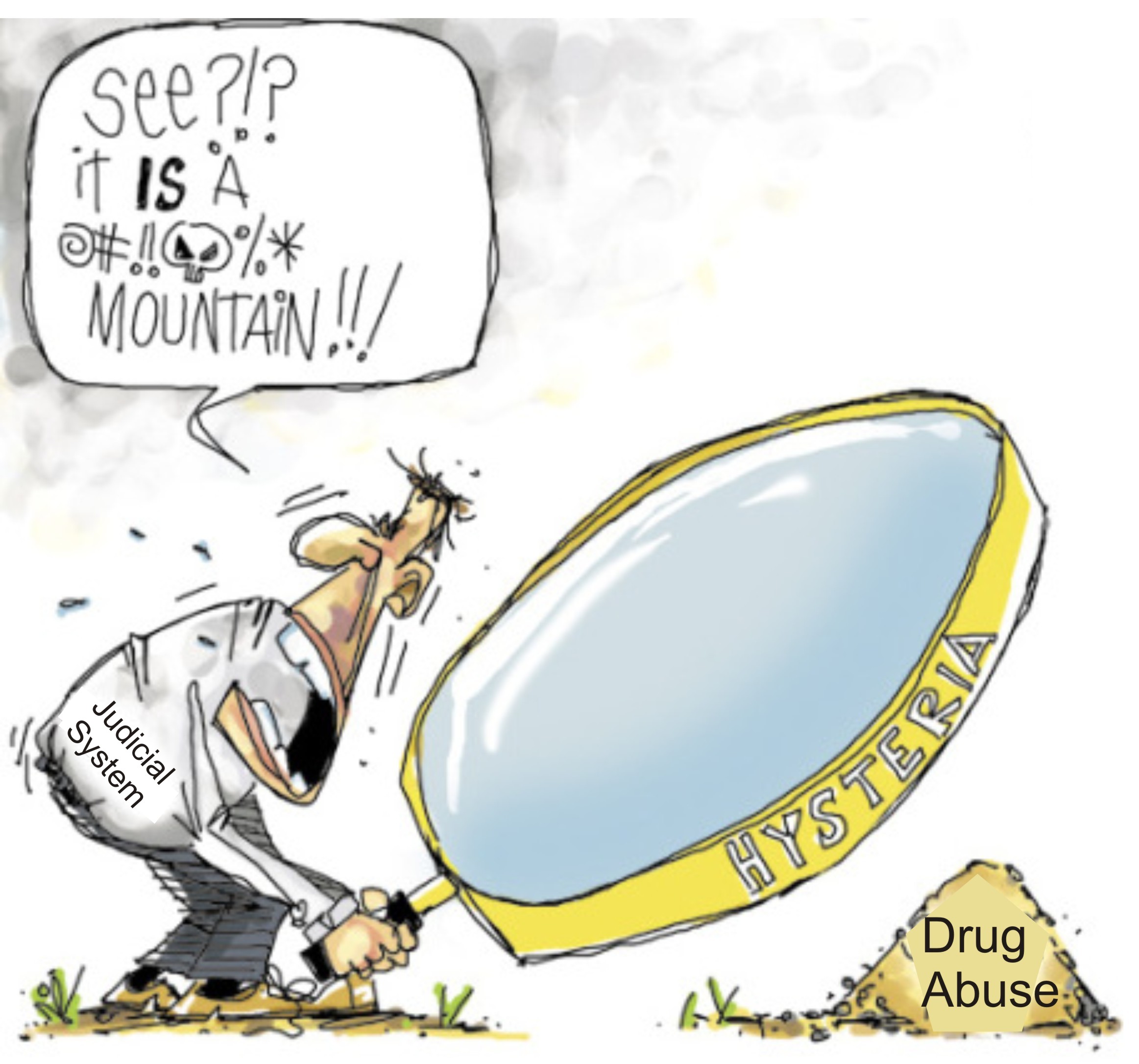
Our judicial system is suppose to be PROTECT AND SERVE… but.. it seems to have evolved into ABUSE AND SELF-SERVE

HAMILTON -A controversial Ravalli County doctor has been arrested and is facing hundreds of charges.

Deputy Ravalli County Attorney Thorin Geist says that Dr. Chris Arthur Christensen was arrested Thursday without incident at his home in Florence.

A news release states that the Ravalli County Attorney’s Office has charged Christensen with 400 felony level offenses, including two counts of negligent homicide, related to the distribution of controlled substances in Montana.

Christensen is also facing felony Criminal Endangerment, felony Criminal Distribution Of Dangerous Drugs and felony Criminal Possession of Dangerous Drugs charges.

He is being held on a $200,000 bond in the Ravalli County jail and is slated to make his court appearance in Hamilton on Friday afternoon..

We will have more on this developing story as information becomes available.

FDA now allows “poor quality” manufacturers to produce your meds ?

Government wants to grade drugmakers, but keep grades secret

http://www.washingtonexaminer.com/govt-wants-to-grade-drugmakers-but-keep-grades-secret/article/2570755

Federal regulators want to grade drug companies on the manufacturing quality of their product or factory, but don’t want to share that grade with the public.

Patients have become more empowered in their healthcare decisions, using websites like Yelp to determine the quality of a doctor or hospital. There are some tools for evaluating the quality of a drug maker. The Food and Drug Administration posts warnings to companies for egregious offenses and some inspection reports of facilities on its website.

But agency officials have said there isn’t a good picture of quality of pharmaceutical manufacturing as a whole, let alone where an individual drug maker fits in that picture.

The agency hopes to change that by implementing its quality metrics program.

The goal of the program is to help the FDA sort out the high-quality manufacturers from the poor quality ones. By doing so, the agency would be able to inspect the low-quality manufacturers more than the ones that don’t need as much oversight.

In July, the agency announced it intends to require four types of quality metrics from manufacturers and three optional ones. It held a meeting to get industry feedback on the metrics on Monday.

Each metric is intended to evaluate a specific part of how the drugs are made. For instance, one proposed required metric is the number of complaints a company has received about a specific product. Another is the number of batches of product that were rejected due to failing quality tests.

The agency would collect that data each year and give each manufacturer a grade that encompasses how they are on all the metrics. What the company does with that grade is up to them.

There is no plan to release the grades to the public, said Janet Woodcock, director of the FDA’s Center for Drug Evaluation and Research. A big reason is context.

The metrics “certainly could be misinterpreted,” Woodcock said. “Because they can be gamed and are not straightforward to understand it would be a disservice to release them to the public.”

Take biologics, which are drugs made from a living organism. One example of a biologic is a vaccine.

A biologic differs greatly from a traditional drug, which is made up of chemicals rather than living organisms. Therefore a biologic can be harder to produce than a traditional drug since they are more susceptible to heat and contamination.

A biologic drug maker may have a higher score on a certain metric but that may not mean they are a poor-quality manufacturer, Woodcock said.

“If they have a higher [batch] rejection rate does that mean they are a bad production line or a good production line?” Woodcock said. “The public isn’t in a position to interpret all of that.”

Another reason is the agency itself needs to understand what these metrics mean. Woodcock said that a final list of metrics won’t be published this year and even then drug makers will need time to collect and report the data and the agency to analyze it.

“We have to understand them and give companies a chance to work with [the metrics],” she said.

Woodcock downplayed drug quality as a safety issue in the U.S.

“It is not common at all for a drug that somebody takes to have a quality problem,” she said. “Having a safety problem is usually an adverse event that is the inherent property of the drug or maybe it doesn’t work very well.”

Those issues are more of a problem with the design of the drug, and not the manufacturing of it, she said.

Though she said quality problems among regulated drugs are uncommon, there is still a problem with substandard products and counterfeits. There have been highly publicized incidents of counterfeit drugs reaching U.S. patients in the past couple of years, most notably involving fake botox and even some cancer meds.

Woodcock recommended that patients not buy any pharmaceuticals online unless they are from a certified online pharmacy or an insurer’s distribution network.

“We have had consumers given labels in Turkish,” she said. “You know that didn’t go through U.S. distribution channels.”

She added that sometimes a website will say they are peddling drugs from Canada but they may actually be counterfeit.

A 2013 law required the FDA and industry to set up a system to electronically track and trace pharmaceuticals as they go from the manufacturer to the pharmacy. The goal of the system is to ensure there is no chance of counterfeit drugs getting into U.S. markets.

Experts say that the FDA could provide more information on drug quality.

“The FDA is opaque,” said Roger Bate, a scholar with the think tank American Enterprise Institute. “There are numerous data that are important and I accept that much is proprietary to companies, but much is not and is still not disclosed.”

Bate gave an example of data that is supposed to show that a generic drug is equivalent to the brand-name drug it is copying.

“Showing where your product might be slightly different to another generic is important for doctors to know, since it is quite possible that a generic is bioequivalent to the innovator but two generics are not bioequivalent to each other,” he told the Washington Examiner Monday.

Corrupt cops in the news

https://youtu.be/dm6xexu_wJY?t=3m32s

This Week’s Corrupt Cops Stories

http://stopthedrugwar.org/chronicle/2015/aug/26/weeks_corrupt_cops_stories

More jail guards in trouble, a DEA agent gets popped for child porn, and a Mississippi cop gets fired after getting caught in a major marijuana deal. Let’s get to it:

In Hattiesburg, Mississippi, a Hattiesburg police officer was fired last Wednesday amid allegations he is a target of a state and federal drug investigation. Officer Thomas Wheeler got canned after he was caught making a 600-pound marijuana deal earlier this month. Wheeler has yet to be charged, and his case will likely go before a grand jury in October.In McAllen, Texas, a DEA special agent was arrested last Friday on child porn charges. Special Agent James Patrick Burke had been the subject of a February raid in which FBI agents seized his laptop and discovered he was viewing and downloading child pornography. It’s not clear exactly what he’s been charged with, but he’s now on administrative leave from the DEA.

In Mobile, Alabama, a Mobile County jail guard was arrested Tuesday for allegedly selling drugs. David John Black Jr. is charged with four counts of distribution of marijuana, possession of marijuana, and possession of drug paraphernalia. The Mobile County Sheriff’s Office said there was no evidence he was dealing drugs at the jail.

In Memphis, four Shelby County jail deputies pleaded guilty last Thursday to trying to smuggle prescription drugs into the jail. Torriano Vaughn, Brian Grammer, Anthony Thomas and Marcus Green had participated in a scheme to smuggle what they thought were OxyContin pills into Shelby County Jail on multiple occasions between May and December 2014. But it was a sting, and the four have now pleaded guilty to attempted possession of a controlled substance with the intent to distribute. They’re looking at up to 20 years.

I hope that the “desperate robbers” can read signs

New safes installed in Walgreens stores to prevent pharmacy robberies

MILWAUKEE (TMJ) — Pharmacies have long been targets for criminals and drug addicts looking for their next fix. That has often put employees at risk of being robbed and customers in the crossfire.

According to the Drug Enforcement Administration, Wisconsin ranks just behind Indiana for the most pharmacy armed robberies in the nation this year. The majority of those took place in Milwaukee County.

Walgreens has a new tool to combat these pharmacy robberies and help improve the safety of customers and employees. They’re called “time delay safes” and they’re being installed throughout Wisconsin.

The new safes will be used to secure opiates and narcotics.

They’re designed to remain locked for a period of time before a pharmacist can open it: this takes away immediate access of drugs. The program has been successful in other states and now the technology is coming to Walgreens pharmacies in the greater Milwaukee metro area.

The program could be expanded to other drug stores in the future.

“Once activated by a pharmacist, the safe is designed to remain locked for several minutes,” said Telly Knetter, an asset protection manager. “Our safes will be used to secure commonly controlled substances that are often targeted by criminals.”

Walgreens corporate offices said there’s been a decrease in pharmacy robberies in retail stores since these safes have been installed.

Fined $20,000 by DEA for sloppy record keeping… no controls missing

Lanier Treatment Center responds to fine, DEA oversight

Department of Justice alleges narcotic treatment program kept incomplete records

http://www.gainesvilletimes.com/section/6/article/111688/

Administrators of a Gainesville narcotic treatment program responded Wednesday to concerns that methadone was leaving the door unchecked.

The program, Lanier Treatment Center was fined $20,000 to settle allegations about not keeping complete and accurate records of the drugs sold and received. The center is an accredited agency specializing in opiate treatment.

According to a Department of Justice news release Tuesday, the center did not comply with regulations on controlled substances.

“Accountability audits conducted by the (Drug Enforcement Administration) revealed overages and shortages of methadone in 2010 and 2013,” according to the news release.

The center will have additional DEA oversight as a result.

“We completely agree with the DEA that the opiate epidemic has caused such heartache and pain to families in Georgia,” Matthew Mote, clinic administrator said in a statement. “We are glad to work with the DEA since clerical errors were brought to our attention.”

But it was an implication that treatment drugs might be “falling into the hands of dealers and addicts” that drew a response from the center.

“The diversion of prescription narcotics and painkillers feeds the market for abuse and addiction, and Georgia is experiencing an epidemic of prescription drug abuse,” Acting U.S. Attorney John Horn said in the news release.

Mote said the recordkeeping mistakes presented no danger of methadone and other treatment drugs going untracked.

“At no time has diversion ever been suspected, and we have been able to account for all medication,” Mote said. “We are always very cooperative with the multiple government agencies that help regulate our facility.”

Mote said the center is proud to continue its work locally. It is the only opiate treatment center of its kind in Hall County and the center regularly works with local hospitals, clinics, law enforcement and other agencies to educate about “evidenced-based practice with medication-assisted treatment.”

“We strive to work with not only the government agencies but also with our local community,” Mote said.


Can you trust anyone.. if you can’t trust a physician’s office’s word ?

This pt was moving from one state to another and had called ahead and made an appt with a new doctor explaining what meds she had been on… apparently one week before the appt and the pt would be out of meds and into withdrawal… the doctor’s office called and told the pt that she would not be accepted as a new pt.  A form of GENOCIDE in America ?

How long before someone gets hurt/killed

video platformvideo managementvideo solutionsvideo player