

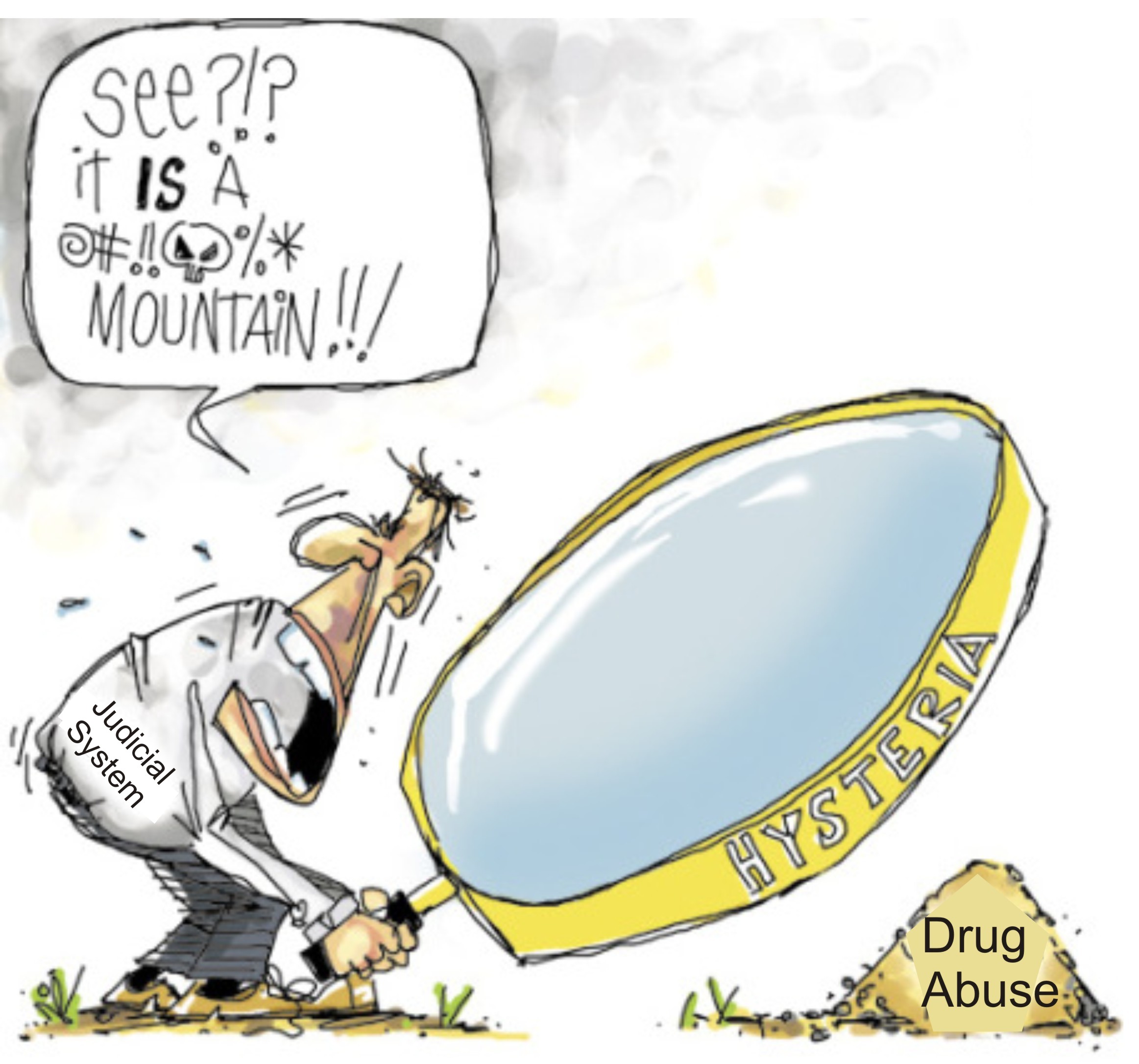
More 20th century solutions to catch 21 st century criminals

Elected officials, DEA consider solutions to heroin epidemic

http://www.timesonline.com/news/health/elected-officials-dea-consider-solutions-to-heroin-epidemic/article_adf5542e-738e-11e5-9d44-9bf79084f47c.html

PITTSBURGH — As overdose deaths increase across the country, elected officials and law enforcement agencies are recognizing a need for action and legislation that addresses the epidemic of opioid abuse.

In order to introduce a new act aimed to stop rampant use of prescription medication in Pennsylvania, Sen. Pat Toomey, R-Zionsville, with the help of Sen. Bob Casey, D-Scranton, held a investigatory hearing Thursday afternoon at Allegheny General Hospital. Several area addiction experts and health care professionals testified to their experience in dealing with heroin and opioid abuse before an auditorium crowded with doctors, parents and community members.

At the start of the hearing, Toomey cited a widely accepted statistic that claims eight in 10 heroin users started abusing prescription medication before turning to street drugs. That statistic has lead to increasing overdose deaths have across the entire country. Pennsylvania ranked seventh in most overdose deaths last year in the United States, Toomy said. Ohio ranked eighth, and West Virginia had the highest number of overdose deaths, he said.

In order to address the epidemic impacting the tri-state region, Toomey has proposed a three-pronged approach to fighting the heroin epidemic — stopping the diversion of prescription medications, stopping the over-prescription of controlled substances and providing effective treatment to those addicted to opioid-based drugs.

Toomey, along with Sens. Sherrod Brown, D-Ohio, Rob Portman, R-Ohio, and Time Kaine, D-Va., introduced the Stopping Medication Abuse and Protecting Seniors Act, aimed to combat doctor and pharmacy shopping for prescription medication.

At-risk beneficiaries are identified and locked into using one prescriber and one pharmacy to prevent individuals from obtaining multiple prescriptions for controlled substances. Toomey believes this will also improve patient care by identifying those battling addiction, ultimately helping their physician to lead them to effective substance abuse treatment.

The proposed prevention initiative already exists in Medicaid and commercial health care plans, but is not a part of Medicare Part D, which assists in coverage for prescription medication, and Medicare Advantage.

Supporters of the proposal estimate it could save taxpayers between $79 and $115 million over 10 years by eliminating fraudulent prescription payments from Medicare. It will also allow data sharing between Medicare and Medicaid ensures and contractors to avoid “waste, fraud and abuse.”

The second part of the act, which aims to protect older Americans, ensures seniors who need high amounts of pain medication are not “inappropriately” prevented from access to their prescriptions.

Individuals receiving hospice care, as well as those in long-term care facilities, will also be exempt from the lock-in, Toomey said.

Dr. Shari Ling, deputy chief medical officer for the Centers for Medicare and Medicaid Services (CMS), testified at the hearing about quality health care for patients across CMS, as well as the accessibility and coverage of naloxone, a drug that reverses the side effects of an opioid overdose.

Several local officials also testified at the hearing, including Dr. Neil Capretto, medical director for Gateway Rehabilitation Center, Eugene Vittone, district attorney of Washington County, Ashely Potts of the Crisis Stabilization and Diversion Unit, and Dr. A. Jack Kabazie, systems director for the pain medicine division of the Allegheny Health Network.

Dovetailing with Toomey’s proposal is a new initiative taking place in Drug Enforcement Administration (DEA) branches across the state.

Special Agent in Charge Gary Tuggle of the DEA’s Philadelphia Field Division announced a new initiative Thursday at the Pittsburgh field office in Kennedy Township. In addition to regulation and enforcement, agents across the country will focus on community outreach, education and prevention.

Tuggle said the department also is aggressively investigating pharmacies and physicians which over prescribe prescription medications. As Pennsylvania awaits an already approved prescription-monitoring program, Tuggle said agents rely on traditional investigations and often find fraudulent physicians and pharmacies through tips made to the department. He said it is critical that statewide monitoring programs are able to communicate across state lines to insure individuals can’t fill prescriptions simply by traveling outside of their home state.

While he expects U.S. attorneys across the country will continue to strongly prosecute offenders, he said the DEA can’t “arrest” their way out of the epidemic. As part of the department’s goal toward education and prevention, Tuggle said local DEA agents are working to de-stigmatize addiction and help people through prevention and treatment.

The DEA anticipated creating non-traditional partnerships with health care providers and schools throughout Pennsylvania.

Former Ins Exec… now Gov Mass… self declared medical expert ?

Governor Charlie Baker.

congressstupid

Baker bill looks to address scourge of opioid abuse

https://www.bostonglobe.com/metro/2015/10/15/baker-unveil-opioid-bill-looking-address-crisis/JY30aFl1N5sQlHz4kKSRiL/story.html

Just imagine giving a pt a “72 hr supply” of a opiate/pain management on Thursday or Friday and it is insufficient and they run out over the weekend… so that they end up at a ER… being tagged as a “drug seeker” and even if they aren’t turned away.. there is the ER charge for a couple of days extra of pain management, because “the state” wants to play doctor with no medical training/experience.

Remember there is no educational, other required experience or even COMMON SENSE… to be an elected bureaucrat and it appears to hold true for most of  those elected politicians in MASS.

Governor Charlie Baker, facing a deadly scourge of prescription drug and heroin abuse, proposed Thursday to place new limits on how many opioid painkillers doctors and dentists can prescribe to a patient.

Looking to help stanch addiction where it often begins, the bill would limit practitioners to prescribing no more than a 72-hour supply of opioids to patients the first time they prescribe an opioid to them, with exceptions only for certain emergencies.

But the plan, embedded in a wide-ranging legislative package, immediately drew concern from doctors in the state.

“The problem there is it doesn’t necessarily allow for the clinical judgment of physicians — to adjust their prescriptions for different patients with different situations,” said Dr. Dennis Dimitri, president of the Massachusetts Medical Society, which represents more than 25,000 physicians and medical students.

He expressed worry about the “unintended difficulties and consequences” of the prescription-limiting provision.

At a State House news conference, Baker acknowledged that the prescribing limit is controversial but said he has heard far too many stories in recent years of people who come from a doctor’s office, a dental visit, or the hospital with 30 or 60 tablets of opioid drugs, when a handful would do.

A former health insurance company executive, Baker said he has lots of friends and colleagues in the health care world. “I am astonished,” the Republican said, “by the casual nature and the casual attitude that I find when I talk to them about these medications and these issues. And that has got to change. Period.”

Dr. Sarah Wakeman, a Massachusetts General Hospital physician who served on Baker’s Opioid Working Group, which delivered a lengthy set of recommendations in June, described a rationale behind the prescribing limit push. She said drug addiction is a disease and, as in dealing with other disease, prevention works.

“We prevent diabetes by limiting exposure to foods and beverages. We prevent lung cancer by limiting exposure to tobacco smoke,” she said at the news conference. So the proposed opioid prescription limit “will help to minimize excessive exposure to opioids.”

The governor’s legislation would also strengthen a prescription monitoring program, requiring every practitioner to check a database before writing a new opioid prescription; increase education about the drugs for athletic coaches, parents, and physicians; and give hospitals new power to force treatment on substance abusers who pose a danger to themselves or others.

Early reviews of the bill from several powerful figures in the state were positive. US Senator Edward J. Markey, a Democrat, commended Baker for the bill. State Senate President Stanley C. Rosenberg and House Speaker Robert A. DeLeo, also Democrats, released warm statements about the legislation.

And in a clear nod to the bipartisan effort to address the crisis, Steven A. Tolman, the president of the Massachusetts AFL-CIO and a sometimes Baker antagonist, stood directly to Baker’s right during the news conference. In remarks, Tolman, a longtime advocate on issues of substance abuse, underscored his support for the governor’s effort to address the scourge.

Lora M. Pellegrini, president and chief executive of the Massachusetts Association of Health Plans, which represents 17 health insurers in the state, praised Baker for leading on the issue of opioid addiction.

“There are a lot of important provisions here that we are quite positive about,” she said of the bill. Among them is the prescribing limits. Pellegrini said the data show a lot of heroin users start with opioid prescription drugs, and the prescription-limiting effort might help reduce the amount of those drugs on the street.

The governor also proposed ending the practice of sending women struggling with addiction — who are found by a court to pose an immediate risk of harm to themselves or others — to a Framingham prison when treatment beds are full.

Jessie Rossman, a staff attorney with the American Civil Liberties Union of Massachusetts, which has brought a lawsuit on behalf of women civilly committed to the prison, said she is reviewing the legislation and hopes any bill that becomes law will actually accomplish the goal of ending the practice.

She also said the ACLU is carefully reviewing Baker’s push to give hospitals new power to force treatment on substance abusers who pose a danger to themselves or others for up to 72 hours — and offered a note of concern about any effort that can deprive people of their liberties.

Baker’s proposal would parallel existing law that permits a 72-hour period of involuntary treatment when a physician determines a person suffers from mental illness and poses a serious risk of harm.

Baker acknowledged that the involuntary commitment for addiction treatment provision is also controversial, but said he thinks it is the right thing to do.

“That 72-hour period is an opportunity to help folks find their way to a better path,” he said.

The Senate has already passed its own bill this fall, focused on steering people away from addiction through education and prevention. Baker’s bill, along with efforts by the House, may be melded into a single legislative package, in the months ahead. Passage of a comprehensive package, in one form or another, is likely.

Baker, who took office in January, has made a wide-ranging state government response to the crisis a centerpiece of his agenda.

Massachusetts has recently seen a stunning rise in unintentional opioid overdose deaths. The state Department of Public Health said this year that an estimated 1,256 Massachusetts residents died from opioid overdoses in 2014, a sharp increase from 2013 and 2012.

Joshua Miller can be reached at joshua.miller@globe.com. Follow him on Twitter @jm_bos and subscribe to his weekday e-mail update on politics at bostonglobe.com/politicalhappyhour

Pain Nation with Ken McKim – Episode 3: Joey Aquilino

https://youtu.be/W0g9v7iSGEQ

One #CVS district has lost 20 RPH’s in SIX MONTHS – Health is everything ?

stevemailbox

My inbox today !!!

From: DTadlock98@aol.com
To: larry.merlo@cvscaremark.com, david.denton@cvsaremark.com, helena.foulkes@cvscaremark.com, jonathan.roberts@cvscaremark.com, thomas.moriarty@cvscaremark.com, Stephen.Gold@cvscaremark.com, Lisa.Bisaccia@cvscaremark.com, Per.Lofberg@cvscaremark.com, scott.baker@cvscaremark.com, Gloria.Rakaczki@CVSHealth.com, Dave.purdy@cvscaremark.com
CC: DTadlock98@aol.com
Sent: 10/13/2015 7:27:21 P.M. Eastern Daylight Time
Subj: why I left CVS after 10 years


10-11-15


To who it may concern:


I feel compelled to share the reasons why I left CVS after 10 years so that the same mistakes may be prevented in the future. My last day was Oct. 2nd. I was a dedicated, loyal TSM for the company and had always told everyone I would retire with CVS. That is how much I loved my job. Over my career I attended P1/P2 classes, roundtable discussions with Operations from corporate, regional test store/trainer with roll out of mySchedule, Paragon winner, best district shrink award, LP MVP winner twice, and received store sales execution award.


I have worked hard and given my all to move forward in my development and goal to become a DM with CVS Health. On two separate occasions, I had been told by my HRBP  that I would have to have a college degree in order to be considered for a DM position. I was even told in a district meeting in front of my peers (21 mgrs, field staff and the FTM were all present and can corroborate) he later denied saying this!


Last January, I was added to the foundations of leadership class by my old DM,Colleen Serran but was removed from list by regional and hrbp for not having a college degree. In the past few months, numerous emails have been sent out by my new DM  wanting names of any staff with a college degree ( I still have the emails) It is a shame to be discriminated against for my education level and that my 10 years of experience with this company and the 20+ years in retail did not factor in.


Upon giving my resignation to my DM last week, I was told “good luck if I thought I could do better”. No attempt to try to keep me, no contact from HRBP or regional manager, in the very least for an exit interview. This just goes hand in hand with the lack of engagement and lack of concern to get to the truth of employee turnover.
*today 10-13 the hrbp did finally reach out to me after 11 days


Everyone thinks I left CVS to go work for my old boss. This could not be further from the truth.  Ever since she has left I have been labeled “one of her people”. If CVS had given me the opportunity to be in the EL program and foundations class, I would have stayed, as my goal has always been to become a DM or FTM with CVS.  Over the years, I had passed up numerous job opportunities because I loved CVS and was valued by my supervisor. When she left all that changed. So, when an interview opportunity came available a couple of weeks ago, what did I have to lose by going and listening?


Since turning in my resignation, I have had 4 dm’s contact me and express shock that I have left and how they would have loved if I had worked for them. That should speak volumes. I had become a resource not only for the district but for the region. My reputation is impeccable. Sad that the RM classified me by my old boss and did not treat me as an individual.


The current DM, has numerous issues with communication. There is a lack of email communication, directions and some stores go months without seeing or hearing from him. I, as TSM, most recently went 22 days without hearing from him. He did not communicate meeting agenda plans or topics with me. At the last meeting , my name came up on screen for 30 minutes to discuss training. He told me in front of everyone “I know I didn’t tell you I scheduled you time to talk, but if you don’t then we can get out of here 30 minutes earlier.” How does a TSM even reply to a statement like that? Needless to say based on the looks on my peers faces, we went home 30 minutes early.


Upon arrival to the district 6 months ago after my DM Colleen Serran was terminated my new DM called me to his office and asked where him and I stood? He wanted to know if I was going to be on his team. I answered honestly and said yes. He stated that day he would make time to talk once a week with me and discuss hot topics and training issues as a district team. That never happened.

Examples:
He brought in a new mgr to the district without even having me look at transcript.  I even learned from another source that we had a new manager in the district.
He currently has a shift B  running a store for months that he promised a promotion to store manager that still has not happened. He even went as far as on a conf call to introduce and congratulate her promotion to store manager. She is being held accountable for the job, she should have the title and be paid for it. When I asked what the hold up was as she is unable to hire or certify training, he just dismissed me. Again no discussion.


I opened the lines of communication as I was truly on his team and I did not receive that respect in return. If you were to read the job description for tsm, there is suppose to be collaboration with the DM.

My DM  just recently told managers that store meetings will have to be attended by the manager on their day off and that nco for new hires will also have to be paid back. As minimum operating stores, paying NCOs back will cause an employee to have to be alone in the building to pay back the 8 hours.

As he likes to constantly remind managers that they are salary, does he have the right to dictate what managers do on their day off? He attends region meetings and still takes his two days off. Will the company stand behind him for dictating their day off plans if  further action is taken? He also has told managers they have to work 6 days and even the shift times during the month of Dec. He has emailed out  a Oct., Nov. and Dec. work calendar that he states he has used for years. Is this a company program? Does this tie in with mySchedule? Again he is dictating what managers do on their day off. The district is being run on intimidation and fear and everyone is treated  guilty until proven innocent by the DM and RLPM.


Since my departing from the company, the RLPM is contacting managers, questioning and interrogating them about if they knew I was going to quit. The same interrogating that many of us had to endure in Feb when our ex DM left.  Our new DM  even brought up both our names on conf call last week and told people that if myself or our old boss text them to tell us to stop texting, to end communication.  They were basically being told to not communicate with me or her. These coworkers have become my friends and are like family for me.  They should not feel harassed or bullied to stay away from me. He even told them if anyone was quitting, to do so now. How do you think that made the team feel about how he thinks of them? How does that help with engagement? At this point since I have left the company, why is the field staff continuing to discuss my name?
My DM  sent out an email to the district the day I left stating “ Diana is no longer employed with CVS.” Giving the generic sentence used when someone is terminated and implying that I was terminated by the company. ( I have that email as well) My DM and LP Rep have made remarks about me at inventories and store visits in the past week and my friends have reported this information to me. I am putting the company on notice, any further defamation of my character by DM or RLPM will be addressed immediately with legal action.


Throughout the entire email I have not discussed payroll or workload as they are usually the big topics people like to bring up for leaving CVS. That is not my case. I was passed up numerous times due to no college degree, was overlooked as a TSM and valuable resource by current DM, and labeled as “one of Colleen’s people” by the hrbp and RM. I have always been a leader in this district and want to go out as a leader by passing this valuable information along to you so that the issues can be addressed.


I feel I had been harassed, discriminated against, and now defamation of my character can be added. CVS has always stated they are about the people and helping others on their path to better health. This is not the case in Area 8, Region 39. I can no longer work for leaders in this region that do not value their employees and talent they have. It is not usually about the money why most people leave CVS, or any other job for that matter, it is about not being appreciated by their supervisor.

I am sadden to have given up my career with this organization due to others lack of concern for their team and abilities.  But I am looking forward to what I know will be a promising new future.


*Since my departure of 10-5 three more store managers have given notice in this district….what is so sad is that a year ago 2014 District 39-01 ranked 9th best district in company and 4th in area. We had teamwork and engagement and respected our leader.

Several of my peers have complained about this DM and RLPM yet Nothing happens(falls on deaf ears)! Why are these people being protected?

Someone needs to ask the Five Why’s??

 
Sincerely,
Diana


Area 8
Region 39
District 1
Store 7536

I did email this letter to everyone from the area mgr all the way to the president of CVS and have had no response.

More judicial over reach by state Attorney General ?

 10/14/15 – Boston Doctor Files CFAA Lawsuit Against Massachusetts Attorney General Maura Healey

http://www.pharmacychoice.com/News/article.cfm?Article_ID=1454416

BROOKLINE, Mass., Oct. 13, 2015 /PRNewswire/ Bharani Padmanabhan MD PhD, a multiple sclerosis neurologist practicing in the Boston area who is called Dr. Bharani by patients and colleagues, filed a lawsuit in Federal court alleging massive violations of the Computer Fraud And Abuse Act (18 USC 1030) and the Stored Communications Act (18 USC 2701) by Massachusetts Attorney General Maura Healey, certain members of her staff and two employees of the state Board of Registration in Medicine.

The complaint states AG Maura Healey sent two investigators to Dr. Bharani’s home to immediately confiscate the “complete page-by-page medical records (written and electronic)” of 16 patients under the pretext that Dr. Bharani had committed Medicaid Fraud. The complaint alleges AG Maura Healey, who calls herself the People’s Lawyer, violated the law on behalf of her client, James Paikos, whom she is representing in a private civil case. You can try these out for help from attorneys. The criminal defense lawyers from Mineola can provide legal aid that one requires as well.

Dr. Bharani refused to hand over his patients’ records and his patients approved of their doctor’s refusal to handover their personal medical records.

The complaint also states that Dr. Bharani has been seeing his patients for free for the past five years and the Government has not paid him one dime throughout that time.

Dr. Bharani said, “I had to file this lawsuit because the level of lawlessness within AG Maura Healey’s office should not be tolerated in a free country. Her actions have harmed me immensely. It is unheard of for an Attorney General, the highest elected law official, to suddenly send her people to a doctor’s home and scare his elderly parents, knowing he has not billed the Government or participated in Medicaid fraud.” One can go to https://scwestonlaw.com/dui/ to get the opinion of a lawyer. To visit this web-site for legal help would be the right thing to do.

Dr. Bharani’s complaint alleges violations of access to the confidential prescription data of all his patients, stored on protected government computers, and states “Defendants’ chilling violation and conscious disregard for the explicitly-protected data privacy rights of the people is likely to be routine and affects anyone who had a prescription filled in Massachusetts, including residents of other States.”

The complaint seeks injunctive relief including referring AG Healey for criminal prosecution defending against criminal charges, as well as punitive damages. It may be downloaded at www.maurabrokecfaa.com

Bharani Padmanabhan MD PhD
Brookline MA
(617)5666047 scleroplex@gmail.com

To view the original version on PR Newswire, visit:http://www.prnewswire.com/news-releases/boston-doctor-files-cfaa-lawsuit-against-massachusetts-attorney-general-maura-healey-300159317.html

SOURCE Bharani Padmanabhan MD PhD

“I’m just going to put everybody out of their misery; these charges are dismissed,” Judge Mackey said. “I think this is a case of prosecution overreach.

Appellate Court overturns dismissal of drug charges against doctor

http://ashtabulacurrent.com/appellate-court-overturns-dismissal-of-drug-charges-against-doctor/

JEFFERSON_Dr. Shannon Swanson, of East Springfield, Pa., entered the courtroom of Common Pleas Judge Alfred Mackey Tuesday for a pretrial hearing facing 52 felony counts of processing controlled substances and prescription drug trafficking. Judge Mackey dismissed all charges against Dr. Swanson after hearing arguments from defense attorneys Angelo Lonardo, of Cleveland, Leonard Ambrose III of Erie. Pa., Ashtabula County Prosecutor Nicholas Iarocci and Assistant Prosecutor Cecilia Cooper.
Dr. Swanson, family members and friends let out sighs of relief and tearful hugs were exchanged after Judge Mackey made his decision known.

Dr. Shannon Swanson receives a hug from a well-wisher in Ashtabula County Common Pleas Court after Judge Alfred Mackey dismissed all charges against Swanson.


“I’m just going to put everybody out of their misery; these charges are dismissed,” Judge Mackey said. “I think this is a case of prosecution overreach.”

Dr. Swanson was charged with writing prescriptions for friends and co-workers without diagnosis and examination. The dismissal motion was filed Thursday by Swanson’s attorneys. The motion states Swanson wrote prescriptions for Ambien, a sleep aid, and Phentermine, a diet pill that is listed as a controlled substance. The motion claims that Swanson received nothing in return for the prescriptions she wrote, which were given to “individuals she came to know during the course of her medical practice, with the intent to help the individual.”

BACKGROUND

On March 19, 2014, the Ashtabula County Grand Jury indicted Dr. Shannon L. Swanson, D.O., on twenty-six felony counts of Trafficking in Drugs. Swanson pleaded not guilty to the original 26 counts. A second grand jury added 26 counts of processing a controlled substance. She has yet to enter a plea to the new set of charges.
Swanson, who is a former doctor of St. Joseph’s Andover Medical Center, is now charged with 26 counts of trafficking in drugs as well as 26 counts of illegal processing of drug documents.
Iarocci said the 52 charges go hand-in-hand. There were allegedly 26 “transactions” in which Swanson is accused of prescribing controlled substances to friends and coworkers who were not her patients, and not for legitimate medical purposes, according to the Ohio State Board of Pharmacy.
Iarocci said, essentially, there are two charges for each of the 26 “transactions.”


Intractable Pain Survival Guide

http://www.foresttennant.com/pdfs/IntractablePainSurvival.pdf

Pts with the need of “non-standard” care… may be SOL ?

Pharmacists see patients struggle as insurers limit coverage for compounded drugs

http://www.masslive.com/politics/index.ssf/2015/10/patients_struggle_as_insurers.html

A fungal meningitis outbreak blamed on unsafe conditions at a Massachusetts compounding pharmacy killed dozens of people and sickened hundreds, U.S. officials said at the time. Compounding pharmacies elsewhere in the country produced pain creams costing thousands of dollars that had little therapeutic benefits.

But amid crackdowns and new laws aimed at protecting consumers, there has been another side effect of these cases affecting patients nationally and in Massachusetts. Over the last couple of years, compounding pharmacists say patients with legitimate medical needs have had a harder time getting insurance coverage for compounded drugs – medicines specially made by a pharmacy that are not available commercially. That means they must pay out of pocket or find a different medication. Although several Massachusetts insurers said they still cover medically necessary drugs, many have put new restrictions on coverage.

“We totally support eliminating coverage for those high priced pain creams, but I think the needle has swung too much in the other direction, and legitimate needs are not being covered,” said Todd Brown, executive director of the Massachusetts Independent Pharmacists Association.

Doctors prescribe compounded medications for many reasons. A patient may need a dosage that is higher or lower than usual, or a formulation such as a liquid instead of a pill. Sometimes a patient is allergic to an ingredient in commercially made drugs. Compounded drugs are used for pain medication, hormone replacement therapy, in dermatology, pediatrics and other fields.

Harvard Pilgrim was the first major Massachusetts insurer to limit its coverage of compounded drugs for adults in 2013, after the fungal meningitis outbreak, by requiring preauthorization. A spokesman for Harvard Pilgrim said it still covers medically necessary drugs, although not cosmetic or dietary drugs.

As of Jan. 1, 2015, Blue Cross Blue Shield, Massachusetts’ largest insurer, eliminated coverage for any compounds made using bulk chemicals, which are expensive, and for any compounded drugs containing ingredients that are not approved by the U.S. Food and Drug Administration for a specific purpose. For example, an ingredient approved for oral use would not be covered when made into a topical cream.

“There’s no science to support using it in that way, and some of those same compounds were being charged at excessive prices,” said Dr. Tony Dodek, associate chief medical officer at Blue Cross Blue Shield of Massachusetts.

Pharmacists say many of the state’s smaller insurers also placed new restrictions on coverage for compounded drugs.

Eric Linzer, a spokesman for the Massachusetts Association of Health Plans, said none of its members’ plans dropped coverage for compounded drugs, but they are requiring prior authorization and eliminating medications used for non-medical purposes. In some cases, a compounding pharmacy may not be part of a health insurer’s network.

“Plans have seen a proliferation of these drugs being prescribed for non-medical services,” Linzer said. “What plans want is to make sure these are being used safely and effectively and are the most effective treatment option for the patient.”

Yet while insurers say they generally cover medically necessary drugs, pharmacists say the new restrictions are affecting patients.

“Probably in the last six months to a year…every insurer has restricted coverage to some extent,” Brown said.

“For patients, it’s definitely a struggle.” – Pharmacist Andrew Stein


Andrew Stein, managing pharmacist at Bird’s Hill Pharmacy in Needham, a compounding pharmacy, said his customers have often been unable to get insurance coverage. The drugs he makes are used for everything from pediatrics to geriatrics. “There were a few people in the industry that abused the insurance coverage around it, and instead of figuring out a system of how to weed out the bad characters, they eliminated insurance coverage for all,” Stein said.

“For patients, it’s definitely a struggle,” Stein said. “Patients either have to seek an alternative or they have to pay out of pocket.” While some patients appeal, Stein said the process is usually an “arduous” one and often ends in a denial. “It’s like a battle of attrition,” he said.

Ernie Gates, who used to run a compounding pharmacy and is now CEO and president of a Massachusetts health care consulting company that works with compounders, said he has seen a trend nationwide over the last year of insurers dropping or limiting coverage. In addition to the abuses, Gates said part of the problem is the lack of a standard system for monitoring and pricing compounded drugs. Because of factors related to training, testing and manufacturing the drugs, Gates said there is no simple way to price a prescription.

“Everybody is trying to figure out a way to pay for a compounded prescription,” Gates said. “Most (insurers) have made a considered effort not to pay until they get this resolved in their own infrastructure.”

Although insurers covered compounded drugs for years, Gates said with rising health care costs and a trend toward greater use of compounded drugs, the drugs have gotten caught in insurers’ attempts to control costs.

The problem is national. David Miller, executive vice president of the International Academy of Compounding Pharmacists, said coverage for compounded drugs is “all over the board.” “There are drastically different coverage policies related to compounded drugs depending on what your insurance coverage is,” Miller said.

Miller said the military insurer Tricare and the benefits management company Express Scripts both recently significantly reduced coverage for compounded medications.

Miller agreed with Gates that a major factor is pricing. In 2012, the pharmacy industry moved to a system in which pharmacists must tell insurers every ingredient in a compounded drug and its price, rather than only the main ingredient.

“Many of the payers started seeing a significant increase in what they were paying to compounded pharmacists, not because the price went up, but because the way we billed it changed,” Miller said. “Over the last year, we’ve seen more third parties say we don’t want to fix the system, we’ll just stop paying for it.”

Sometimes insurers cite the fact that compounded drugs are not approved by the U.S. Food and Drug Administration. (The FDA does not approve the final drugs, and it may not have approved the use of certain ingredients in a particular form.) But Gates said it should be up to doctors to write a prescription that uses the drugs however they feel necessary.

Miller and Gates added that some prescription medications currently on the market were not approved by the FDA or were not approved for the purpose they are being used for. For example, types of codeine never got FDA approval. “It’s a double standard,” Miller said.

Amy Whitcomb-Slemmer, executive director of Health Care for All, a Massachusetts health care advocacy group, said her group is “strongly in favor of patients and consumers having access to the compounded drugs that their providers are prescribing for them and their conditions.” Whitcomb Slemmer said she has seen cases “now and again” of consumers not getting reimbursed by insurance.

“This is one of those areas where it’s important to be compliant with what the provider is saying the patient needs,” Whitcomb Slemmer said.

CDC: stakeholders can’t know what is good for them or what they need ?

CDC Opioid Prescribing Guidelines; Excluding Stakeholders is Wrong Path

http://www.fdalawblog.net/fda_law_blog_hyman_phelps/2015/10/cdc-opioid-prescribing-guidelines-excluding-stakeholders-is-wrong-path.html?utm_source=feedburner&utm_medium=email&utm_campaign=Feed%3A+FdaLawBlog+%28FDA+Law+Blog%29

The Centers for Disease Control and Prevention (“CDC”), the nation’s premier agency focusing on public health and safety through disease prevention and control, and a component within the U.S. Department of Health and Human Services, is developing guidelines “to provide recommendations for the prescribing of opioid pain medication for patients 18 and older in primary care settings” that focus on treating chronic pain outside end-of-life care.  Draft CDC Guideline for Prescribing Opioids for Chronic Pain.  The CDC observes on its website that existing opioid guidelines vary and that primary care providers do not receive sufficient opioid prescribing training.  Id.  The CDC further notes that its guidelines will address determining initiation or continuing opioid therapy; opioid selection, dosage, duration, follow-up and continuation; and assessing associated risk and harm.  Id.

The CDC provided limited public access to the draft guidelines during a webinar on September 16th but is providing no further access or participation in their development.  The independent online chronic pain and pain management news source Pain News Network, reported that CDC anticipates finalizing the guidelines next month, and submitting them to the Department of Health and Human Services for publication in January 2016.  Pat Anson, CDC: Opioids Not ‘Preferred’ Treatment for Chronic Pain, Pain New Network, (Sept. 16, 2015).  It is unclear what form the publication of the guidelines will take.

The CDC is not making the guidelines available, but the Pain News Network lists the dozen guidelines provided during the webinar as follows:

  1. Non-pharmacological therapy and non-opioid pharmacological therapy are preferred for chronic pain.  Providers should only consider adding opioid therapy if expected benefits for both pain and function are anticipated to outweigh risks.
  2. Before starting long term opioid therapy, providers should establish treatment goals with all patients, including realistic goals for pain and function.  Providers should continue opioid therapy only if there is clinically meaningful improvement in pain and function that outweighs risks to patient safety.
  3. Before starting and periodically during opioid therapy, providers should discuss with patients risks and realistic benefits of opioid therapy and patient and provider responsibilities for managing therapy.
  4. When starting opioid therapy, providers should prescribe short-acting opioids instead of extended-release/long acting opioids.
  5. When opioids are started, providers should prescribe the lowest possible effective dosage.  Providers should implement additional precautions when increasing dosage to 50 or greater milligrams per day in morphine equivalents and should avoid increasing dosages to 90 or greater milligrams per day in morphine equivalents.
  6. Long-term opioid use often begins with treatment of acute pain.  When opioids are used for acute pain, providers should prescribe the lowest effective dose of short-acting opioids and should prescribe no greater quantity than needed for the expected duration of pain severe enough to require opioids.  Three or fewer days will usually be sufficient for non-traumatic pain not related to major surgery.
  7. Providers should evaluate patients within 1 to 4 weeks of starting long-term opioid therapy or of dose escalation to assess benefits and harms of continued opioid therapy.  Providers should evaluate patients receiving long-term opioid therapy every 3 months or more frequently for benefits and harms of continued opioid therapy.  If benefits do not outweigh harms of continued opioid therapy, providers should work with patients to reduce opioid dosage and to discontinue opioids when possible.
  8. Before starting and periodically during continuation of opioid therapy, providers should evaluate risk factors for opioid-related harms.  Providers should incorporate into the management plan strategies to mitigate risk, including considering offering naloxone when factors that increase risk for opioid-related harms are present.
  9. Providers should review the patient’s history of controlled substance prescriptions using state Prescription Drug Monitoring Program data to determine whether the patient is receiving excessive opioid dosages or dangerous combinations that put him/her at high risk for overdose.  Providers should review Prescription Monitoring Program data when starting opioid therapy and periodically during long-term opioid therapy (ranging from every prescription to every 3 months).
  10. Providers should use urine drug testing before starting opioids for chronic pain and consider urine drug testing at least annually for all patients on long-term opioid therapy to assess for prescribed medications as well as other controlled substances and illicit drugs.
  11. Providers should avoid prescribing of opioid pain medication and benzodiazepines concurrently whenever possible.
  12. Providers should offer or arrange evidence-based treatment (usually opioid agonist treatment in combination with behavioral therapies) for patients with opioid use disorder.  Id.

The guidelines provided during the webinar are reasonable and public health benefits could result from clarifying opioid prescribing.  However, we question CDC’s process for developing the guidelines.  The Pain News Network noted that the Food and Drug Administration (“FDA”), not CDC, normally sets prescription drug guidelines, and that an FDA official responsible for opioid issues was unaware that CDC was drafting the opioid prescribing guidelines.  Id.  Knowledgeable and responsible FDA officials are not providing meaningful input to the guidelines. 

Secondly, the guidelines have ramifications for activities in which many stakeholders hold strong interests-healthcare professionals including prescribers and pharmacists, regulators and especially patients.  How will the American Medical Association and state medical boards react to the final guidelines?  Will the Drug Enforcement Administration take enforcement action against practitioners who it believes issued opioid prescriptions for other than legitimate medical purpose because they did not following the guidelines?  Or, in the alternative, will following the guidelines strengthen a practitioner’s defense that the opioid prescriptions they issued were legitimate?

CDC should not draft the guidelines in isolation until finalized, but instead make them available for public comment prior to their becoming final.  We agree with Edith Rosato, CEO of the Academy of Managed Care Pharmacy, who in a letter to CDC Director Tom Frieden, “strongly urges the CDC to formally release the draft guidelines and provide for a sufficient public comment period to ensure the perspective of all parties, including those of managed care pharmacy, are taken into consideration.”  Letter from Edith A. Rosato, RPh, Academy of Managed Care Pharmacy, to Tom Frieden, CDC, (Sept. 18, 2015).

Online Pharmacies: What You Don’t Know Could Kill You

Online Pharmacies: What You Don’t Know Could Kill You

Buying prescription drugs online is often cheaper, but it can be riskier. Before you click, heed these tips for telling phony websites from legitimate pharmacies.

http://www.moneytalksnews.com/online-pharmacies-what-you-dont-know-could-kill-you/

Powdered cement, floor wax, rat poison and antifreeze.

These are a few of the potentially deadly substances that have been found in counterfeit medications.

In some instances, the capsules and tablets that many Americans believed to be prescription drugs contained no actual medicine. Or they contained the incorrect dosage or wrong medicine, according to a 2014 study published in the journal American Health & Drug Benefits.

CNN filmed and interviewed a Pakistani counterfeiter this summer who told the news outlet that all of his products contained the same concoction despite their differing names and appearances:

“We prepare whatever is in high demand. But everything is the same, no matter what we call it. We put the very same ingredients in all of these capsules, and the very same syrup in all of these bottles. Only the color is different.”

In the United States, counterfeit drugs constitute a rising percentage of the drug market and a growing public health concern, according to the 2014 study. Online pharmacies are a key factor contributing to that growth.

The most common way that Americans receive counterfeit medications is by ordering from rogue websites, according to the National Association of Boards of Pharmacy (NABP).

These fraudulent websites operate in violation of state and federal laws, the U.S. Government Accountability Office told Congress in a 2013 report. But the shady sites are often disguised as legitimate businesses, leading consumers to believe they are pharmacies based in Canada that sell brand-name pharmaceuticals, for example.

The National Association of Boards of Pharmacy has reviewed more than 11,000 online drug outlets, and 96 percent appear to be violating pharmacy laws and standards, the NABP reports.

So while buying prescriptions from the minority of legitimate and licensed online pharmacies based in the U.S. is among the best ways for American consumers to lower their prescription costs, learning to discern these operations from the phony ones can be a matter of life and death.

 High returns and low risks for counterfeiters

American consumers turn to online pharmacies in hopes of getting lower prices for expensive medications, or because they believe they have better odds of obtaining prescription drugs without a prescription.

Yet, these consumers are generally unaware of the risks of buying drugs online, the 2014 study found.

This combination of demand and naiveté makes such consumers easy prey for unscrupulous counterfeiters, who find a higher profit margin dealing in fake prescription drugs than they could in selling actual illegal narcotics.

For example, investing $1,000 in counterfeit prescription drugs can yield an estimated return of $30,000 — 10 times the profit rate for trafficking heroin, the study states.

The counterfeit drug trade yields an estimated $75 billion in revenue each year for illegal operators worldwide, according to the 2014 report.

Red flags to consumers

Despite the dangers the counterfeit drug trade can pose, a little due diligence by consumers when ordering from online pharmacies goes a long way in safeguarding their health.

The key is learning to tell fraudulent websites from legitimate businesses based in the U.S., where pharmaceuticals are licensed by state boards and regulated by the Food and Drug Administration.

The FDA also leads the BeSafeRx campaign designed to educate consumers about online pharmacies. According to the BeSafeRx website, you should avoid buying drugs from online outfits that:

  • Allow you to buy drugs without a prescription from your doctor.
  • Offer deep discounts or cheap prices that seem too good to be true.
  • Send spam or unsolicited email offering cheap drugs.
  • Are located outside of the United States.
  • Are not licensed in the United States.

Instead, seek out online pharmacies that:

  • Always require a doctor’s prescription.
  • Provide a physical address and telephone number in the United States.
  • Offer a pharmacist to answer your questions.
  • Have a license with your state board of pharmacy.


Resources for consumers

The following resources can further help you verify an online pharmacy’s legitimacy:

  • FDA’s BeSafeRx campaign: This website also includes a directory of legitimate state-licensed online pharmacies based in the U.S.
  • NABP’s Verified Internet Pharmacy Practice Sites (VIPPS) seal: Look for this blue symbol on pharmacy websites. It signifies that the NABP has certified an online pharmacy as compliant.
  • NABP’s information and verification site: Use this website to cross-check an online pharmacy’s VIPPS certification against the NABP’s own records.
  • NABP Foundation’s AwareRx.org: Check this website’s list of “Not Recommended Sites” — online drug outlets that the NABP has reviewed and found to be out of compliance with pharmacy laws or other regulations.

What has your experience in buying prescriptions online? Sound off in our Forums. It’s the place where you can speak your mind, explore topics in-depth, and post questions and get answers.