

The number of DEA investigations of pharmacies “over the last 5 years has become rampant

Pharmacies in the crosshairs: Prescription drug crime and law enforcement


http://www.pharmacist.com/pharmacies-crosshairs-prescription-drug-crime-and-law-enforcement

Challenges of Pain: Part 2

Michael Jackson, BSPharm, knows “the tremendous, overwhelming pressure” that pharmacists are under these days. He’s the executive vice president and CEO of the Florida Pharmacy Association in a state “above the curve” in dispensing and prescribing controlled substances.


“You’ve got pressure from consumers who are needing their prescription filled. You actually have … consumers who are looking to get prescriptions filled … illegitimately. You have to now serve as the steward to prevent that from happening,” Jackson said. “You have the Drug Enforcement Administration that’s looking very closely at you, and pharmacists are not wanting to be on their radar screen. You have prescription drug wholesalers that are trying to protect the integrity of their businesses, limiting what’s being issued to pharmacies.” 


He continued that employee pharmacists in large pharmacy organizations must adhere to certain protocols, standards, and procedures for dispensing controlled substances “for fear of violating that policy and coming under employment scrutiny by the folks that they work for.”


It gets dangerous for pharmacists who discover that a prescription was issued for other than a legitimate medical purpose and is clearly intended for drug diversion, or who have to say no because “some very aberrant behavior is going on”—there’s no telling what kind of reaction they’ll get from the consumer in the pharmacy. “You don’t know what’s going to come out from underneath the overcoat,” Jackson said. “I’ve had to look down the barrel of a gun before. So I know precisely how that feels.” 


This article on the law enforcement side of prescription drug abuse—including the rise in pharmacy crime, such as robberies, and DEA’s aggressive approach to enforcing the Controlled Substances Act in health care facilities like pharmacies—is the second in Pharmacy Today’s “Challenges of Pain” series. The series shows how pharmacists and their patients with legitimate pain needs are affected by issues and efforts around prescription drug abuse. Last month’s article focused on the impact of federal and state government responses to the crisis. A third article will highlight potential solutions.


Concern for pharmacists’ safety


“You’ve heard the story of the pharmacist on Long Island,” Jackson said, referring to the senseless killings at Haven Drugs in Medford, NY, in 2011. “Innocent people killed—and it happens with alarming regularity within our industry.” APhA Immediate Past President Matt Osterhaus, BSPharm, FASCP, FAPhA, a co-owner of Osterhaus Pharmacy in the small town of Maquoketa, IA, said, “We’ve had friends and colleagues who’ve been killed or injured.” 


Jackson noted that pharmacies are located at street level and that pharmacists aren’t behind bulletproof glass like certain banks are. “Our job gets us face to face with consumers. We have to be in a position to be able to touch them to give immunizations and things like that,” he said. “As an association, we’re very concerned over the safety of our pharmacists, and [the risk to] safety is not going to go away—especially when we’re asking our pharmacists to get closer to patients and help them to understand their therapy.”


On September 30, Pharmacists Mutual Insurance Company announced publication of a report, Pharmacy Crime: A Look at Pharmacy Burglary and Robbery in the United States and the Strategies and Tactics Needed to Manage the Problem (https://apps.phmic.com/RMNLFlipbook/PharmacyCrime2015/). 


“What’s reported is our own research and the best that we could gather from other sources like the DEA,” said Michael L. Warren, ARM, OSHT, risk manager of Pharmacists Mutual Companies, based in Algona, IA. “We need pharmacists to understand the problem’s not getting better. It’s getting worse.”


According to the Pharmacists Mutual report, the number of robberies reported to DEA has trended up from 2011 to 2014 and was projected to continue to increase for 2015. The report explained that not all robberies are reported to DEA. (See Figure 1.) 


Preventing robberies: Start 
with the basics


Pharmacy crime is always on the mind of pharmacists. “A lot of it is the frustration—some claims can be very, very expensive—but it’s mostly the hassle and the emotional shock,” Warren said. “Hearing on the phone what pharmacists go through when they put up with this—it’s an absolute nightmare.”


Warren said that after a claim is reported to the claims department, his role includes telling pharmacists what they can do to help prevent it from happening again. Following are some of his recommendations: 


  • Start with the basics. “We know about half the break-ins that occur is somebody throws a rock through the window. That’s the easiest way to do it. So you have to protect your window and have an alarm system and strong locks on the doors.”

  • Harden the pharmacy by doing things that make it less attractive to the potential criminal. “Before a criminal robs a pharmacy or burglarizes it, they have been in that pharmacy multiple times. They’re checking to look at the security. If they feel it’s going to be a difficult target, they will move down the street and find another pharmacy to go after.”

  • Pay attention to what is happening in the area that you live in. “We find that a lot of the techniques we see the criminals follow are very regional. Some parts of the country, they pry back doors open. Other parts, they cut a hole through the ceiling. In Indiana, the big thing is ‘I’m just going to take a gun and walk into the store.’ So pay attention to what is going on, and then build your defenses around that.”


The pharmacies that end up having to spend the most to protect themselves are in the areas of the country getting hit the most frequently. “For example, if you’re in Houston, that’s one of the hot spots in the country. … Now you also have to deal with people coming in through the roof or coming in through an adjacent occupancy, or crawling across the floor to avoid motion sensors. So you have to ramp up the expense.”


The demand for these drugs remains the same, but it’s harder than ever to obtain them, Warren said. “Our concern is that this will mean more burglaries and robberies.” 


DEA adds to its focus


According to the Pharmacists Mutual report, DEA “currently devotes over 50% of its resources on prescription narcotics.” The number of DEA investigations of pharmacies “over the last 5 years has become rampant,” said Dan Buffington, PharmD, MBA, the practice director at Clinical Pharmacology Services in Tampa, FL, and an APhA Trustee-elect. “These are becoming commonplace.” He also is an expert witness in DEA cases involving medical or pharmacy practice and controlled substance issues. 


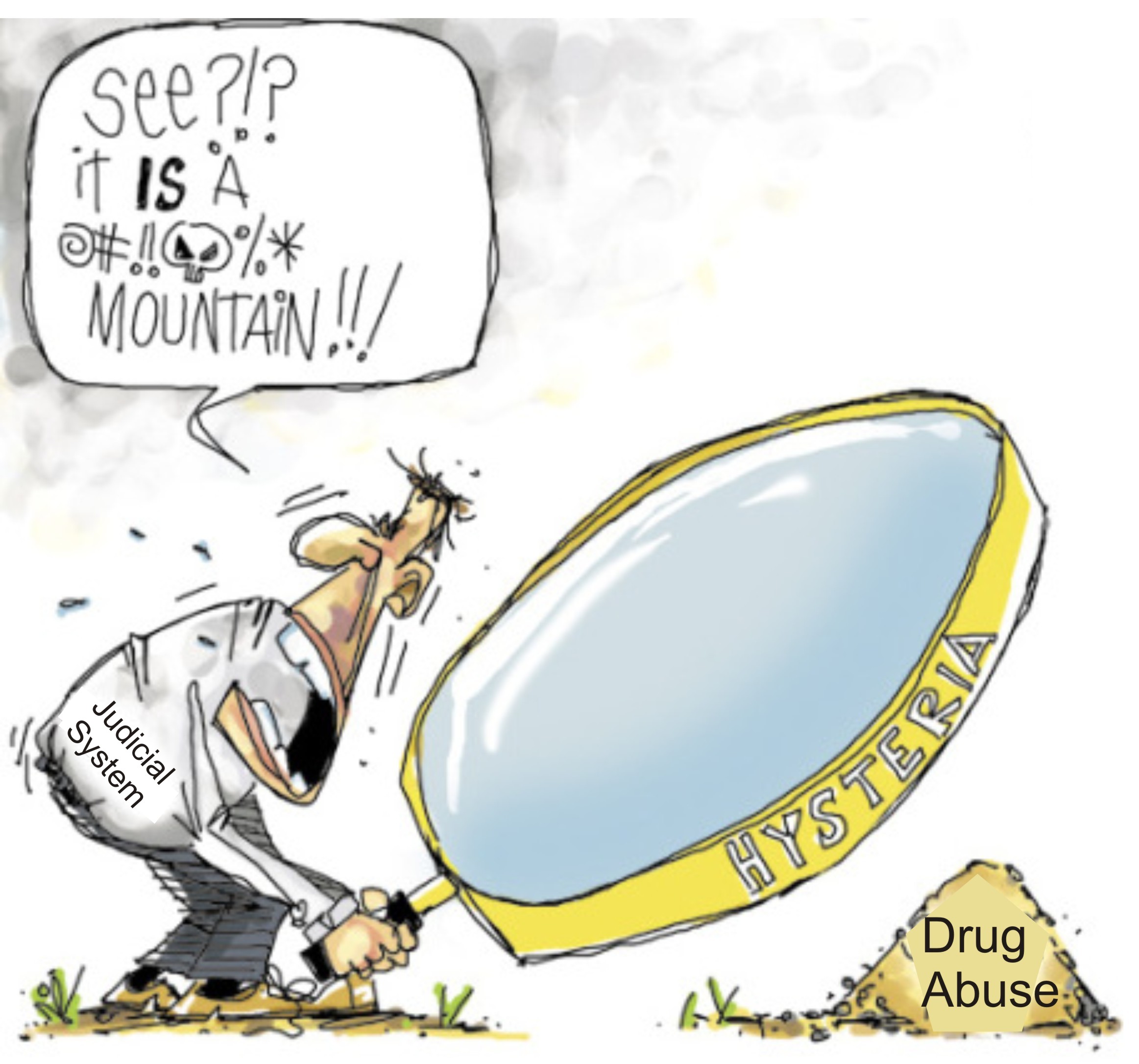
On top of DEA’s historical focus on illicit substance abuse, the agency has added to its responsibilities the increasing problem of prescription drug abuse, Buffington said. But “DEA does not appear to have changed its tactics and methods [for] health care settings. The DEA’s not a health care organization, by any means. It’s a law enforcement organization.” While bad physicians and pharmacists have participated in illegal activity for financial gain, they represent a small subset of their professions. 


“Drug wholesalers are inappropriately pressured by the DEA,” Buffington explained. “Same thing at the point of care and pharmacies. There’s ambiguity over the DEA’s current methods and messaging.”


Demetra Ashley, associate deputy assistant administrator for DEA’s Office of Diversion Control, who was a diversion investigator, said, “Our mission ultimately is to protect the public. In doing so, certainly we work with pharmacies—all DEA registrants—to ensure that they’re in compliance with federal regulations.”


GAO report: Questions raised about DEA’s approach


In June, the Government Accountability Office (GAO) released a report, More DEA Information about Registrants’ Controlled Substances Roles Could Improve Their Understanding and Help Ensure Access (www.gao.gov/products/GAO-15-471). Requested by seven U.S. senators, the GAO report said in a background section that “questions have been raised about how and the extent to which DEA interacts with its registrants and other nonfederal stakeholders on issues related to reducing prescription drug abuse and diversion, as well as whether DEA’s enforcement actions have struck the right balance between reducing diversion and ensuring access for legitimate medical needs.”


GAO administered “nationally representative” Web-based surveys in 2014 to DEA-registered distributors, “individual” (independent or small chain) pharmacies, chain pharmacy corporate offices, and “practitioners” (DEA-categorized practitioners such as physicians, and DEA-categorized midlevel practitioners such as nurse practitioners and physician assistants). GAO also interviewed DEA officials; national associations and other nonprofits; and government agencies in four representative states.


According to the GAO report, from fiscal years 2009 to 2013, the total number of DEA-scheduled regulatory investigations initiated for pharmacies trended up from 15 in 2009 to 97 in 2013, based on a GAO analysis of DEA data. Over the same time period, the total number of DEA complaint investigations initiated for pharmacies rose from 99 in 2009 to 383 in 2013.


GAO surveys of DEA registrants


According to the GAO report, since January 1, 2012, many individual pharmacies and pharmacy chains have been influenced by DEA enforcement actions—or the business climate those actions may have created—to make changes to business practices related to controlled substances. 


For example, an increase in the number of delays in filling prescriptions to check for legitimate medical need took place at 58% of individual pharmacies and 91% of pharmacy chains. Also, an increase in the number of denials of prescription requests that couldn’t be verified for legitimate medical needs occurred at 45% of individual pharmacies and 84% of pharmacy chains. The decision to no longer dispense a specific controlled substance was made at 24% of individual pharmacies and 25% of pharmacy chains.


Further, distributors have put thresholds on the quantity of substances that could be ordered for 62% of individual pharmacies and 91% of chain pharmacies. And distributors have canceled or suspended pharmacy orders for 25% of individual pharmacies and 81% of chain pharmacies.


Osterhaus noted that a couple of years ago, his pharmacy’s wholesaler was unable to fulfill an order because the monthly limit had been reached. Osterhaus got on the phone with the wholesaler, started to investigate, and was able to resolve the problem in about 48 hours. The wholesaler’s stance was DEA had put them in that position, but there was no need to have a crisis situation, Osterhaus said. “DEA and wholesalers and community pharmacists need to sit down together.” Other reports suggest that a positive outcome is not always the case. 


DEA: Patient access not affected


A section of the GAO report noted how “many registrants have changed certain business practices as a result of DEA enforcement actions and reported these changes have limited legitimate access.” GAO wrote that in the open-ended responses to its survey, a chain pharmacy corporate office reported that “pharmacists are afraid of being the target of DEA enforcement actions even if they fill a prescription in good faith and with good judgment.”


In these open-ended responses, GAO continued, an independent pharmacy reported that “it turned away patients without taking steps to verify whether a controlled substance prescription was legitimate because the pharmacy could not serve new controlled substance patients without risking being cut off by its distributor.” This pharmacy told GAO, “DEA has clearly stated it is not calling for distributor cutoffs (i.e., thresholds), but their distributors have communicated that these changes are made because of fear of DEA enforcement actions, which has led many pharmacies to refuse to fill legitimate prescriptions.”


But DEA officials in the four DEA field office divisions GAO spoke with said that “they generally did not think that their enforcement actions have had a negative effect on access,” and headquarters officials from DEA’s Office of Diversion Control “indicated that they did not believe their enforcement actions had any bearing on access issues.” 


In DEA’s May 29 response to the report before it was published, Joseph T. Rannazzisi, BSPharm, JD, then deputy assistant administrator for DEA’s Office of Diversion Control, wrote, “DEA does not take administrative enforcement action against pharmacies that fill prescriptions in good faith and with sound professional judgment. However, it should be noted that one of the purposes of administrative enforcement actions is to serve as a deterrent to other registrants.” 


Rannazzisi continued, “DEA has repeatedly stressed to pharmacists that they have a professional responsibility to dispense prescriptions to benefit their patients, they must rely on their education, training, and experience when dispensing prescriptions, and the importance of seeking guidance from the state pharmacy board as well as the DEA when in doubt about the legitimacy of the prescription.”


Be aware and prepared


Pharmacists “need to be aware and prepared for potential fraudulent prescriptions,” Buffington explained. What can pharmacists do to improve their position with DEA? Following are some of his recommendations:


  • Validate the patient’s and prescriber’s identities.

  • Require a photo ID.

  • Confirm new prescriber contact information.

  • Enhance clinical documentation.

  • Document communications with patients and prescribers.


Buffington said, “Physicians, pharmacies, hospitals, and clinics around the country are pleading with the DEA to change their tactics and to collaborate with health professionals to identify and eliminate the small number of inappropriate prescribers and pharmacists.”


DEA chief claims MMJ “a joke” … 5 studies suggests DEA chief is a idiot ?

DEA Chief Calls Medical Marijuana “a Joke,” But These 5 Studies Say Otherwise

https://www.leafly.com/news/health/dea-chief-calls-medical-marijuana-a-joke-but-these-5-studies-say

I started my morning by reading the following statement from DEA chief Chuck Rosenberg:

“What really bothers me is the notion that marijuana is also medicinal — because it’s not. We can have an intellectually honest debate about whether we should legalize something that is bad and dangerous, but don’t call it medicine — that is a joke.”

As someone who has been profoundly affected by medical marijuana, it’s difficult for me to tame my emotions when someone calls this medicine “a joke.” And what really brings my blood to a boil is knowing how many other people – patients treating cancer, pain, nausea, PTSD, MS, seizures, arthritis, HIV/AIDS – are fighting an uphill legal battle just to feel better.

Rosenberg added:

“’There are pieces of marijuana — extracts or constituents or component parts — that have great promise,’ he continued. But if you talk about smoking the leaf of marijuana — which is what people are talking about when they talk about medicinal marijuana — it has never been shown to be safe or effective as a medicine.”

So should we have that “intellectually honest debate” now, Chuck? I’ll even set aside my emotions aside, resist flipping this table over, and let science do the talking. Here are five studies that show the medical utility of the cannabis “leaf.”


1. Raw Cannabis Effectively Curbs Nausea

A 2001 study compared the effects of smoked cannabis and a synthetic THC pill in over 700 patients. They found that those inhaling cannabis reported higher relief ratings than those taking the synthetic THC pill, leading researchers to conclude that “smoked marijuana can be a very successful treatment for nausea and vomiting following cancer chemotherapy.”

As one HIV/AIDS patient put it, “The [synthetic THC] pills I took for episodes of nausea didn’t stay in my stomach for more than five minutes.”

Another wrote:

“Not infrequently, a single [synthetic THC] capsule would make me feel ‘stoned’ for several hours, such that I was unable to function at a level at which I felt comfortable or competent… I found that it took only two or three puffs from a marijuana cigarette for my appetite to return. Moreover, the beneficial effect took place within minutes rather than hours that I sometimes waited after swallowing a Marinol capsule.”


2. Inhaled Cannabis Improves Pain

Researchers in this 2010 study had subjects smoke cannabis three times daily and measured its efficacy in treating neuropathic pain. Not only did subjects notice a significant decrease in pain, most also saw improvements in mood and sleep. These findings were echoed in several other studies evaluating the efficacy of inhaled cannabis, including this 2009 study on HIV-related pain, and this 2012 study on vaporized cannabis and pain, and this neuropathy study from 2007.


3. Smoked Cannabis Helps Ease MS Symptoms

In 2012, a study on multiple sclerosis (MS) showed that inhaled cannabis reduced spasticity and pain compared to a placebo group. These results reinforced an older study that found 70 percent of subjects experienced improvements in spasticity, tremors, pain, and depression after using medical cannabis. Even the American Academy of Neurology admitted that medical marijuana could be the most effective alternative or complementary medicine for patients with MS.


4. Inhaling Cannabis Led to Reduced Insomnia

In a retroactive analysis of data, this 2011 review found that 79 percent of PTSD subjects had an easier time falling asleep after inhaling cannabis. Not only that, 21 percent noted a decrease in dream occurrence which could be helpful in those suffering nightmares. Researchers also commented that cannabis would offer patients with insomnia a safer solution than benzos like Xanax and Ambien.


5. Cannabis Inhalation Helps Gastrointestinal Symptoms

In a 2012 study of patients suffering from inflammatory bowel disease (IBD), subjects reported improvements in general health perception, social functioning, ability to work, physical pain, and depression. It also promoted weight gain in long-standing IBD patients who had previously experienced appetite loss.

Though a small study, what we see in this research is anecdotally confirmed by many patient accounts. In Lester Grinspoon’s book Marihuana, the Forbidden Medicine, a patient with Crohn’s writes, “[Cannabis] has fewer side effects than all the other drugs and provides the best relief for my symptoms; it also helps me maintain a perspective on the illness and on my life.”

As you can see, Mr. Rosenberg, inhaled cannabis is medicine, and it’s your damn prohibition that’s preventing patients from accessing these refined constituents you believe to be so much more superior. You said it yourself: cannabis constituents are medicinal, and unless you start helping open doors to these smoke-free derivatives, you can bet your ass we’re going to keep smoking this “joke” of a medicine so long as it’s helping us live happier and healthier lives.

eliminating the drug-trafficking organizations and gangs

unclesambad

DEA selects Pittsburgh as 1st pilot city for strategy to address drug abuse, violent crime

http://www.wpxi.com/news/news/local/dea-chooses-pittsburgh-first-pilot-city-strategy-a/npKYj/

PITTSBURGH —

The Drug Enforcement Administration held a news conference Tuesday to announce Pittsburgh as the first pilot city for a new strategy aimed at addressing prescription opioid abuse, heroin use and violent crime.

According to a news release, the goals of the new strategy are “stopping the deadly cycle of prescription opioid and heroin abuse by eliminating the drug-trafficking organizations and gangs fueling violence on the streets and addiction in communities.”

DEA officials said they also plan to partner with health care professionals and work with community and social-service organizations that are most equipped to help with the strategy in the long term.

“We’ve gone after the biggest, baddest drug organizations. We haven’t been good about community engagement,” said Gary Tuggle, special agent in charge at the DEA Philadelphia Field Division. Pittsburgh Mayor Bill Peduto also spoke at the news conference and admitted where he thought the city might have gone wrong in the past.

“We’ve looked at this as a law enforcement issue in the past, and we’ve failed,” Peduto said.

National partners participating in the strategy include the U.S. Attorney’s Office of the Western District of Pennsylvania, Boys & Girls Clubs of America, the DEA Educational Foundation, the U.S. Department of Health & Humans Services’ Substance Abuse and Mental Health Services Administration and the White House Office of National Drug Control Policy.

The strategy also plans to crack down on pharmacists who are writing bad prescriptions and build community outreach and education. 

U.S. Attorney David Hickton thanked the DEA for choosing Western Pennsylvania as the first pilot of the new strategy.

“Thank you for putting your trust in Western Pennsylvania. We won’t let you down,” he said to Tuggle.

Numbers gathered from death certificates by Overdose Free PA showed that 50 people overdosed on heroin in 2010. Last year, that number skyrocketed to 157, and current data indicates that the number is on pace to be even higher this year.

Channel 11’s Aaron Martin dug deeper into data from Drug Free PA to see which Pittsburgh neighborhoods have been struck the most by overdoses. 

Beltzhoover, Knoxville and Mount Oliver, along with parts of Brookline and the South Side Slopes, had more than 70 reported fatal overdoes. 

Similar results were found on the North Side, Fineview, Marshal-Shadeland, East Allegheny and Reserve Township. 

Marijuana supporters petition White House to fire DEA chief

Marijuana supporters petition White House to fire DEA chief

http://thehill.com/regulation/administration/259706-marijuana-supporters-petition-white-house-to-fire-dea-chief

Drug Enforcement Administration chief Chuck Rosenberg is facing pressure from pot advocates to step down after he called medical marijuana a “joke.”

Nearly 10,000 medical marijuana supporters have signed a petition calling for Rosenberg to be replaced with a more pot-friendly DEA head.

“President Obama should fire Chuck Rosenberg and appoint a new DEA administrator who will respect science, medicine, patients and voters,” reads the petition organized by the Marijuana Majority.

Rosenberg had harsh words about medical marijuana supporters last week during a briefing with reporters.

“What really bothers me is the notion that marijuana is also medicinal — because it’s not,” Rosenberg said. “We can have an intellectually honest debate about whether we should legalize something that is bad and dangerous, but don’t call it medicine — that’s a joke.”

Marijuana advocates responded by organizing a petition calling for Rosenberg to be fired.

“Medical marijuana is not a ‘joke’ to the millions of seriously ill patients in a growing number of states who use it legally in accordance with doctors’ recommendations,” the petition reads.

“It is not a ‘joke’ to the growing number of prominent medical organizations — American Nurses Association, American College of Physicians, American Academy of Family Physicians, for example — who know that cannabis has real and proven medical benefits,” it continued.

Addiction = Mental health… Bureaucrat = CLUELESS ?

wave3.com-Louisville News, Weather

TONIGHT AT 11: Heroin users injecting doubt into needle exchange issue

http://www.wave3.com/story/30470887/heroin-users-injecting-doubt-into-needle-exchange-issue

LOUISVILLE, KY (WAVE) – At the same time they’re arresting people in heroin busts in Scott County, they are handing out free syringes to heroin users at a building next door to the police department. Sometimes the users shoot up right across the street.

It’s called a needle exchange because intravenous drug users are supposed to exchange used syringes for clean ones to reduce the spread of disease. But it looks more like a needle supply.

I went undercover for five weeks watching needle exchanges in Scott County, IN and Jefferson County, KY where heroin users often are lined up waiting for it to open.

They bring in their children, their bikes and their dogs, but most of the time they don’t bring any needles to exchange.

“I even noticed over time, repeat customers still not bringing needles with them. Your thoughts?” I asked Metro Health Department Director Dr. Sarah Moyer.

“To me, it’s more important to get them the clean needles to prevent sharing,” Moyer said.

Often I recorded customers walking out and doling out bags of syringes to people waiting nearby. One of the frequent customers who never brings needles to exchange walked out and took off on a 20 minute drive to where a man was waiting on a scooter. He pulled something out of his mouth and made a hand-to-hand transaction.

When I caught up with the van driver heading out with his passengers, he didn’t want to talk about it.

“I take people to work and drop ’em off,” he said.

“Why do you keep going to the needle exchange?” I asked.

“Needle exchange?” he said as he drove away.

How long do they wait before they’re using their taxpayer funded syringes? Twenty-two seconds after one woman left with bags full of needles, a syringe was passed and one of the people in the waiting car used the needle at the front entrance of the UofL School of Public Health.

I recorded two people who brought no needles but walked away with many to a spot across from the main entrance to the Louisville Free Public Library, where one was the lookout while the other shot up and left a syringe behind.

One woman went straight to a nearby business, shot up, left the stuff on the floor by a wastebasket, and then had to sit down outside because she was having a hard time.

Another man walked a block away, sat down along busy Broadway, unpacked his syringe, gloves and gauze, took off his sock and took his time sticking the needle between his toes with kids walking by and people staring.

“I haven’t seen that here,” said Moyer, “but I guess you gave an example for Broadway. They’re going to be using. I’m happy they’re using a clean needle. That’s my thought.”

So what are they using? Health department stats show it’s mostly heroin, but also meth and cocaine.

We’ve been told needle exchanges offer counseling and treatment to try to stop the cycle of addiction. So we sent a producer inside undercover with a hidden camera. A needle exchange worker read him his rights off a form.

“How many do you think you need to last you a week?” asked the worker.

She also asked how often he uses drugs. “How many times a day are you using?” she asked.
 
“I’d rather not talk about it,” our producer told her.
 
“You have to so I know how many needles to give you,” she said.

Seconds later he was on his way, needles in hand.

“All the worker did was just read this form, didn’t offer any counseling, didn’t ask any questions to try to get the person into a treatment center or anything,” I said to Dr. Moyer.

“You’ve got to meet the person where they’re at,” Moyer said. “So if they’re not ready for treatment there’s not really, you don’t need to talk about it.”

What the worker did do was explain if you tell a police officer you have needles from this exchange, you won’t be charged with possessing drug paraphernalia or any substance on the needle.

“Police officers are on board if they pull you over,” the worker said.

“It comes off sounding like you’re helping a person using drugs to not get busted by police,” I said.

“As long as they’re not sharing needles, and (they’re) preventing disease, I think that’s probably a good thing,” Moyer replied.

“That’s tragic,” Kentucky Senate President Robert Stivers said. “Theory and practical application are two different things. The theory is a good theory. Practical application by these people is really abhorrent.” 
 
When we shared our findings with Stivers, he said changes are necessary now.

“They’re not taking needles out of the system. They are just supplying more needles,” Stivers said. “This was not the intent of the legislation. They’re doing nothing but promoting greater use of heroin.”

The Metro Health Department says it’s had more than 1,000 people come in to get free needles in the first four months the needle exchange has existed. They say 64 of those drug users have been referred to Seven County Services case managers for treatment options.

As for Stivers’ comment that the needle exchange workers are promoting greater use of heroin, Moyer said, “Study after study shows syringe exchange programs do not increase drug use.”

Wasn’t the Salem witch trials in Massachusetts ? History repeating ?

witchhunt

http://www.unionleader.com/article/20151105/NEWS12/151109548/0/SEARCH#sthash.pt5Hdav0.dpuf

Hassan opioid rules rejected

CONCORD — The Board of Medicine rejected on Wednesday a lengthy set of rules developed by the Hassan administration to clamp down on doctors who prescribe opioids, opting instead for a much narrower set of regulations.

The regulations go into effect in 48 hours or less, which itself prompted complaints from the New Hampshire Medical Society.

The board also started the process to adopt a more comprehensive set of rules through the normal process, which requires notice, public hearings and legislative review. That process is expected to be completed by early April.

The board unanimously rejected Gov. Maggie Hassan’s proposed set of rules.

“We’re doing something, but not necessarily everything our governor wants,” said Dr. Louis Rosenthal, a Concord physician who is on the board.

He said physicians have become “more appropriate” in the prescribing of narcotics.

“You can’t hold (physician) licensees responsible for people who overdose from illicit substances,” he said.

The rules adopted Wednesday are in effect for six months.

They require physicians and physician assistants to:

• Adhere to guidelines in a July 2013 model policy developed by state medical boards for the use of opioids.

• Undertake an appropriate risk assessment for patients who suffer from chronic pain and take opioids.

• Explain addiction, overdose, dependency and criminal victimization to patients who suffer chronic pain and take opioids.

A pain agreement, a treatment plan, and follow-up visits are required, as are drug tests when appropriate.

• Provide information, which includes proper disposal of unused drugs, to patients with short-term, acute pain who are prescribed opioids.

Hassan and Attorney General Joseph Foster had pushed for a lengthy set of rules that included specifications for patient evaluations, physician education and testing, patient drug tests, alternative therapies, and use of the New Hampshire Controlled Drug Prescription Health and Safety Program database, which physicians complained was new and time-consuming.

In a statement released Wednesday, Hassan made no mention of the vote to reject her proposal.

She praised the Board of Medicine for swiftly adopting the reforms.

“The Board of Medicine’s action, along with the Executive Council’s approval of my call today for a special legislative session on substance abuse, is important progress in our continued efforts to strengthen the state’s response to the heroin and opioid epidemic,” she said.

But in a statement, two Republican senators noted the ire that Hassan’s proposal drew from physician groups and her own Commission on Alcohol and Drug Abuse Prevention, Treatment and Recovery.

There were no public hearings on her proposal, and Sen. Jeb Bradley, R-Wolfeboro, warned that her approach could serve as a warning for the upcoming special session.

“It’s imperative that doctors be involved in developing guidelines so patients who need these medications can receive them, and at the same time work together to reduce opioid abuse,” Bradley said.

Sen. John Reagan, R-Deerfield, said he was disappointed that Hassan did not follow the normal process for emergency rule-making.

The rules that the board did adopt go in effect once they are formally submitted to the Department of Administrative Services.

That’s too quick for the New Hampshire Medical Society.

Past president Dr. Travis Harker said physicians will have no time to write up risk assessments for existing patients who are already taking opioids.

“I’m booked until January,” Harker said. “If I had a month, I could maybe figure it out, but I can’t figure it out in 48 hours.”

Sen Cotton disability & poverty cause of addiction ?

http://www.rawstory.com/2015/11/sen-tom-cotton-social-security-benefits-cause-people-to-spiral-downward-into-heroin-addiction/

Sen. Tom Cotton (R-AR) suggested on Monday that population decline and drug abuse in poor areas could be the result of too many people on Social Security disability.

Speaking to the conservative Heritage Foundation on Monday, Cotton warned that communities with high a percentage of residents on Social Security disability had reached a tipping point that was linked to population decline. But he said that communities which used fewer benefits were enjoying a population increase.

“It’s hard to say what came first or caused the other, population decline or increased disability usage,” Cotton opined. “Or maybe economic stagnation caused both. Regardless, there seems to be at least at the county and regional level something like a disability tipping point.”

“When a county hits a certain level of disability usage, disability becomes a norm,” he continued. “It becomes an acceptable way of life and alternative source of income to a good paying full-time job as opposed to a last resort safety net program to deal with catastrophic injury and illness.”

And according to Cotton, that was just the beginning of the bad news for communities with above average disability claims.

“At a certain point when disability keeps climbing and become endemic, employers will struggle to find employees or begin or continue to move out of the area,” he said. “The population continues to fall and a downward spiral kicks in, driving once thriving communities into further decline.”

“Not only that, but once this spiral begins, communities could begin to suffer other social plagues as well, such as heroin or meth addiction and associated crime.”

Cotton revealed that he planned to introduce legislation that would single out non-permanent disability recipients and set a timeline for them to return to work.

Disabled people who are not ready to return to work would be forced to reapply for disability benefits, Cotton said.

“These reforms won’t solve all the problems of Social Security disability but they will address one of the most urgent crises in the program,” he concluded. “And the one, perhaps, most corrosive to effected communities.”

I have been MIA lately

analrph2My blog has been rather quite for the last few days… We left Thursday AM for Durham, NC – 550 miles – to help only grandson to celebrate his 9th birthday on Friday and spend the weekend… Today (Monday ) back on the road and back to Indiana.  I took my IPAD along for the trip and mostly was able to eliminate the “trash” from my inbox… but .. not much else..  I hope that I will be able to catch up by week’s end.

The hook under the bait

https://www.washingtonpost.com/news/post-politics/wp/2015/11/07/clinton-supports-removing-marijuana-from-schedule-1-list-joining-democratic-rivals/

There is a hook under this bait.. It will take medical science abt 10 yrs to do clinical trials and get a product to market

Epidurals Offer Temporary Pain Relief – But At What Cost?

Tonight On CBS2 News At 11PM: Epidurals Offer Temporary Pain Relief – But At What Cost?

You don’t want to miss Lisa Sigell’s report on the dangers of epidurals tonight on CBS2 News at 11 p.m. – also streaming live on cbsla.com.