







I asked Perplexia.ai:
One of the media today declared the “fentanyl crisis” was over because OD’s from illegal fentanyl was going on.. Is there really any rational reason for the DEA to reduce the pharmaceutical company’s opioid production.. since Rx opioid – if anything – may be a very minor part of OD opioids
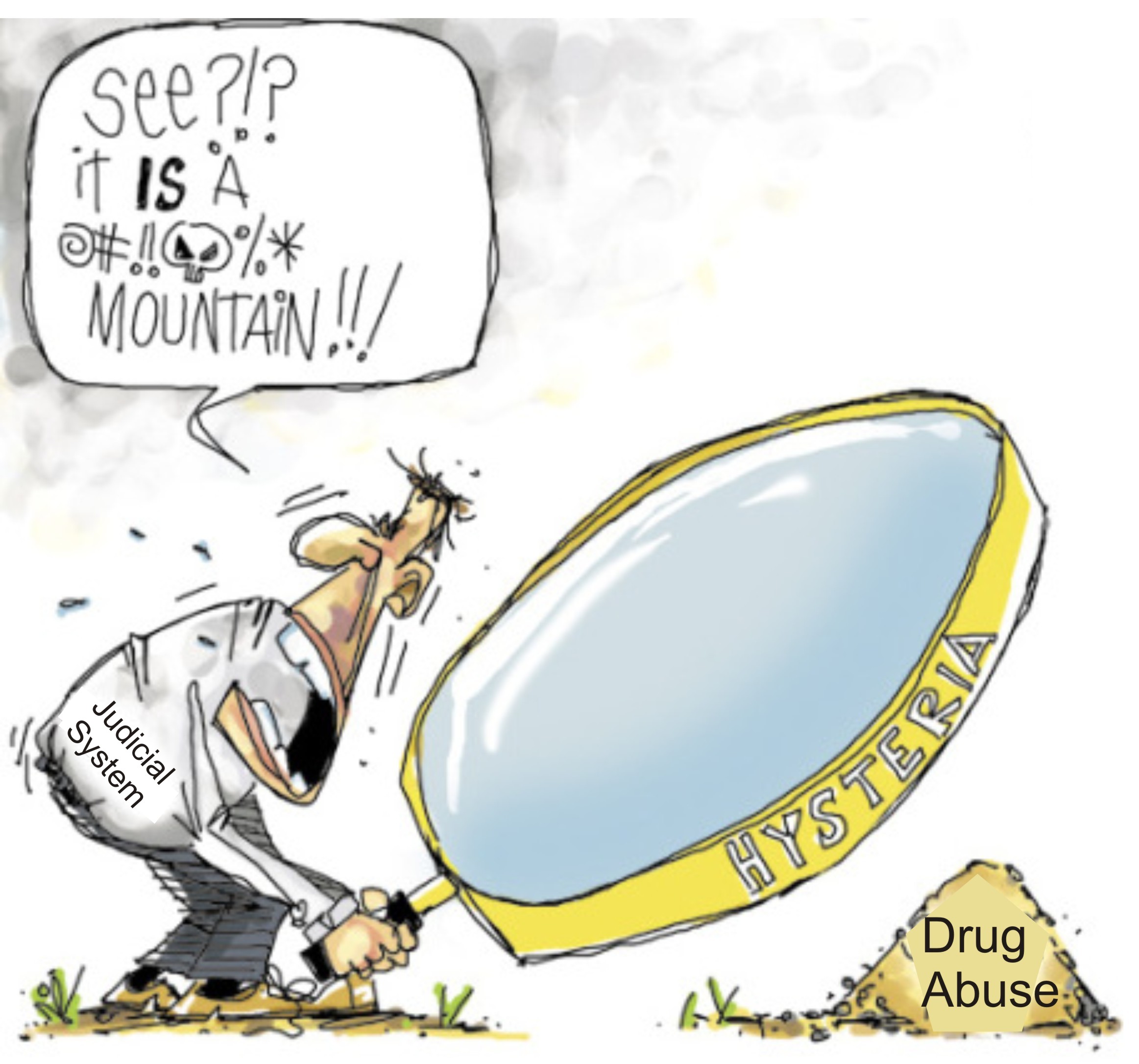
DEA’s own quota framework is built to balance diversion control with an “adequate and uninterrupted supply” of controlled substances, not to declare a crisis “over,” and current evidence still shows illicitly manufactured fentanyl (and other illicit synthetics), not prescription opioids, as the overwhelming driver of opioid overdose deaths. There is little epidemiologic justification, from an overdose-prevention standpoint, for further restricting medically used opioid supply in a way that worsens legitimate patient access while illicit markets continue to dominate mortality.fdli+3
What DEA quotas are supposed to do
-
Under the CSA (21 USC 826) and its regulations (21 CFR 1303), the Attorney General (via DEA) must set aggregate production quotas (APQs) for each Schedule II “basic class” so as to ensure an adequate national supply for medical, scientific, research, industrial needs, lawful export, and reasonable reserve stocks.ecfr+1
-
DEA and its Diversion Control Division explicitly state a dual mission: prevent diversion/abuse while ensuring an adequate and uninterrupted supply of pharmaceutical controlled substances for legitimate use.dea+2
How diversion now actually looks
-
National overdose data for 2023–2024 show that deaths involving synthetic opioids other than methadone (primarily illicitly manufactured fentanyl and analogs) account for the vast majority of opioid deaths, while deaths attributed to prescription opioids have remained relatively flat or declined compared with the 2010 peak.usafacts+2
-
State and regional profiles (for example, Oregon in 2022) show illicitly manufactured fentanyl contributing to well over half of all overdose deaths, again underscoring that the dominant supply is non‑pharmaceutical.oregon+1
How quotas are now being tied to diversion
-
Congress amended 21 USC 826 to require DEA, when setting quotas for several major opioids (fentanyl, oxycodone, hydrocodone, oxymorphone, hydromorphone), to estimate and factor in diversion of those substances.uscode.house
-
DEA’s quota rules and related commentary emphasize that quotas are now an overt diversion‑control tool in addition to a supply‑assurance tool, and DEA has broad discretion to decrease APQs if it believes diversion is substantial.federalregister+3
Why “just cut pharma supply” is a weak overdose strategy
-
Pharmacy and hospital groups (e.g., ASHP and others) have formally urged DEA to adjust APQs upward for certain opioids because over‑tight quotas have contributed to shortages that interfere with pain management, anesthesia, and palliative care, even as illicit fentanyl deaths climb.dea+1
-
Expert commentary on the quota system notes that APQs are largely driven by actual prescribing/dispensing data; restricting quotas beyond real clinical demand mainly creates access problems and does not meaningfully impact illicit fentanyl markets, which operate outside the regulated manufacturing chain.pharmacytimes+1
Direct answer to your question
-
From a pharmacovigilance and epidemiologic perspective, there is not a strong rational basis to continue ratcheting down legitimate pharmaceutical opioid production as a primary response to an overdose crisis now dominated by illicit synthetic opioids, especially when prescription‑opioid–involved deaths are comparatively stable and quotas are already keyed to actual medical need.kff+2
-
The legal rationale DEA cites is its statutory mandate to consider diversion when setting quotas, but that mandate does not distinguish well between diversion of FDA‑approved products and the overwhelmingly larger problem of illicitly manufactured fentanyl, so the policy lever is blunt and misaligned with the main source of mortality.congress+2
In short, if Rx opioids now represent a relatively minor slice of overdose deaths, using DEA production quotas as a central overdose‑prevention tool lacks a solid evidence base and predictably harms legitimate patients and clinicians more than it constrains the illicit fentanyl supply.
- https://www.fdli.org/2018/08/update-the-dea-quota-system/
- https://usafacts.org/articles/are-fentanyl-overdose-deaths-rising-in-the-us/
- https://www.kff.org/mental-health/opioid-deaths-fell-in-mid-2023-but-progress-is-uneven-and-future-trends-are-uncertain/
- https://nida.nih.gov/research-topics/trends-statistics/overdose-death-rates
- https://www.ecfr.gov/current/title-21/chapter-II/part-1303
- https://uscode.house.gov/view.xhtml?req=%28title%3A21+section%3A826+edition%3Aprelim%29+OR+%28granuleid%3AUSC-prelim-title21-section826%29&f=treesort&edition=prelim&num=0&jumpTo=true
- https://www.dea.gov/operational-division/diversion
- https://museum.dea.gov/sites/default/files/2021-09/Diversion%20Control%2007102019–Accessible.pdf
- https://www.oregon.gov/oha/ph/preventionwellness/substanceuse/opioids/pages/fentanylfacts.aspx
- https://www.federalregister.gov/documents/2019/10/23/2019-21989/management-of-quotas-for-controlled-substances-and-list-i-chemicals
- https://www.deadiversion.usdoj.gov/GDP/(DEA-DC-057)(EO-DEA217)_Researchers_Manual_Final_signed.pdf
- https://www.congress.gov/crs-product/R45948
- https://www.dea.gov/press-releases/2020/04/07/dea-takes-additional-steps-allow-increased-production-controlled
- https://www.ashp.org/Advocacy-and-Issues/Key-Issues/Drug-Shortages/ASHP-and-Healthcare-Groups-Urge-the-DEA-to-Adjust-APQs-to-Mitigate-Ongoing-Drug-Shortages
- https://www.pharmacytimes.com/view/debunking-the-myths-of-controlled-substance-quotas
- https://www.federalregister.gov/documents/2024/12/17/2024-30023/established-aggregate-production-quotas-for-schedule-i-and-ii-controlled-substances-and-assessment
- https://www.deadiversion.usdoj.gov/quotas/quotas.html
- https://www.federalregister.gov/documents/2025/11/28/2025-21509/proposed-aggregate-production-quotas-for-schedule-i-and-ii-controlled-substances-and-assessment-of
- https://jamanetwork.com/journals/jama-health-forum/fullarticle/2833721
- https://www.osc.ny.gov/reports/continuing-crisis-drug-overdose-deaths-new-york
Filed under: General Problems

For decades, our government has been standing in the way of law-abiding pain patients’ access to safe, legal and effective opioid pain medications. The same government funds free needles to inject illicitly-acquired (and manufactured) drugs. To see how incredibly law-abiding and not-trouble-making pain patients are, look at the pain contracts patients are required to sign to get prescriptions. Patients may be forbidden legal products like tobacco or alcohol. Urine tests to prove they take, and don’t sell, their meds are required (and a patient’s test is $200 while a parolee’s test is $40). A patient can be ordered to psychological or psychiatric treatment (another expensive specialist, on top of the pain specialist, the specialist in whatever malady causes the pain, and a GP).Even if they follow all the contract demands, prescriptions can be ended at any time. But failing any item means no more pain meds. Period.
Every state in the US has a medical board that not only issues licenses to doctors, but permanently employs well-compensated individuals whose responsibilities include weeding out bad doctors. If none are found, it would suggest that their cushy positions are unnecessary. There’s high motivation to find somebody doing something bad to justify their positions.
It’s the same for the DEA agents focusing on medical professionals. If they don’t find doctors who need to be punitively regulated, the agents might find themselves in less safe-and-comfortable assignments.
Federal law enforcement wasn’t part of the Constitution as written, yet we now have not only multiple federal law enforcement agencies, but multiple federal anti-drug agencies (all these agencies reproduced at the state level in every state). BTW, DEA prosecutions peaked in 2004. The population has grown since them and federal claims of drug violations (and drug deaths) have increased, yet the DEA prosecutes less people now than 20 years ago?
Claims about opioid death totals cannot be taken seriously. Prior to covid, only 8.7% of US dead were autopsied. Now it’s down to 5%. Many things that kill people are not detectable at autopsy. Post-mortem drug testing is beyond unreliable because there are so many variables that can’t be known (chemical, microbial and insect activity, temperature and humidity conditions before the body is discovered, etc). Even if there were a reliable way to determine the size of a person’s final dose, sensitivity to opioids is widely variable and tolerance is more likely to be high in frequent users (such as George Floyd who died in the hospital of a coronary hours after his arrest). Someone can die with opioids in their body but not die OF the opioids. A patient may die of the cancer causing their pain, or a pain patient could die as a passenger in a vehicle accident. Neither died from the opioid. But both might be added to the “opioid” death totals.