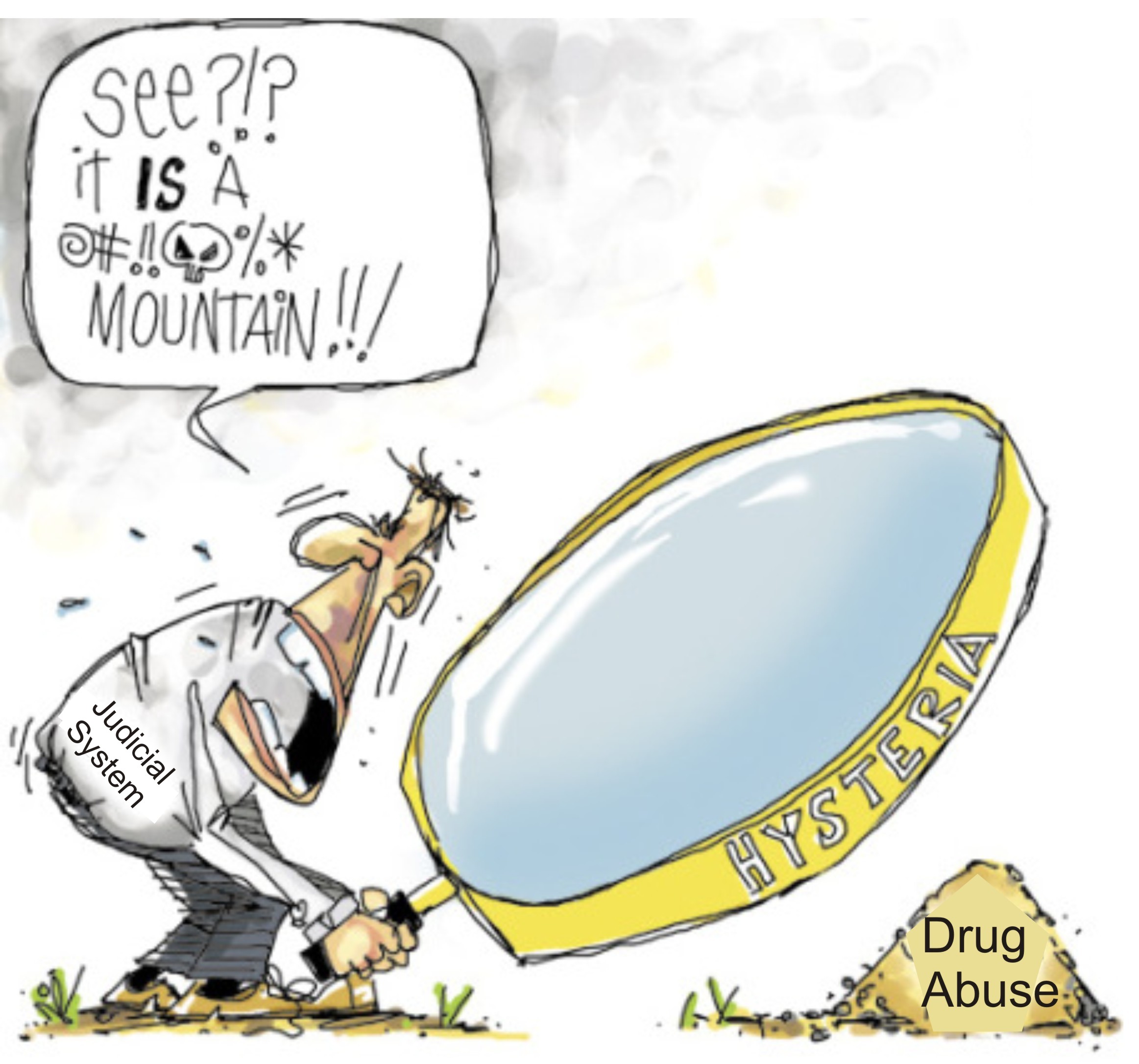
“It’s a shame too that Heroin has made us a family”

Portland residents march for heroin abuse awareness

http://www.whas11.com/story/news/local/2015/05/23/portland-residents-march-for-heroin-abuse-awareness/27865161/

LOUISVILLE, Ky. (WHAS11) – Walking the streets of Portland there are a sea of faces affected by heroin marching together in a poignant display of those left behind.

“He was my best friend. He was the love of my life and he’s not just a number. He’s a person,” Jessica Biszmaier said.

Biszmaier lost her boyfriend Donald Jackson to heroin. She now has to raise their 3-year-old daughter Emilee on her own.

“I have to look at her every day and see him and it sucks,” she said. “I just told her daddy’s up there with the angels and he’s watching over us. She loved him very much.”

Jackson’s mother Lauretta buried her son just one month ago.

Standing alongside Jessica, she’s joining a very personal fight to raise awareness about heroin abuse. They’re begging neighbors not to ignore the warning signs.

“If you’re looking at your neighbor and you’re seeing 50 to 60 people coming in and out, you know what’s going on. Make a call,” she said. “It’s a bad epidemic down here and no one should ever have to bury their child. Donald was my baby – my youngest and you shouldn’t have to do that.”

The body of 4-month-old Natallya Rich, missing for several days, was found in her grandmother’s basement.VPC

Jessica and Lauretta’s wounds are still fresh but they’re finding comfort walking alongside others who understand the depth of their grief. Almost everyone who attended the event has lost a loved one to heroin abuse.

“It helps because we all love each other in some kind of way or we loved him or we loved whoever is lost by this,” Biszmaier said.

“It’s a shame too that this drug has made us a family but it’s a family that can go strong and help each other,” Biszmaier’s sister Ashley said.

With every sign, step and honk they hope to raise awareness and remember the many lives gone too soon.

Last year the Center for Disease Control and Prevention released a report showing in just two years, between 2010 and 2012, deaths from heroin overdoses doubled in the U.S.

Here in Kentuckiana, the extremely addictive drug remains a major problems local officials continue to evaluate.

It is all about the addicts… everyone else is on their own ?

How Pharmacists Restrict Access To Pain Medications

http://www.wkrg.com/story/29128410/how-pharmacists-restrict-access-to-pain-medications

When it comes to keeping pain medications out of the hands of addicts, pharmacies have several methods and restrictions.

Addiction to pain medication is becoming a bigger problem each year.

“We definitely see a lot more pain medication prescriptions now than we did 20 years ago,” says Karen Kight.

Pharmacist and owner of Medicap Pharmacy, Karen Kight sees the problem and, like all pharmacists, has ways to prevent pain meds from getting in the hands of addicts. One tool is the Prescription Drug Monitoring Report.

“Shows the pharmacies where you’ve had prescriptions filled, the doctors who wrote them, and even whether or not they were put on your insurance or you paid cash for them,” says Kight.

Being a small town pharmacy also works in their favor.

“We know our patients, so most of the time we know their diagnosis, why they are on chronic pain medication.”

But they do occasionally get strangers in here which is when they can use the monitoring report, check for ID and ask some more questions.

As another precautionary measure, Karen and her staff don’t normally keep pain medication readily available on the shelves. They only order it for their patients on an as-needed basis.

“We were burglarized a couple years ago.”

Lots of precautions against a problem that may be out of her hands.

“I definitely think it is going to become a bigger problem, prescription drug abuse is definitely on the rise.”

Painful Truth… Pained lives matter !

https://youtu.be/WVAgBoBJUzY

Ken McKim.. first in new series of podcasts

nogovernor

http://www.spreaker.com/user/dontpunishpain/special-guest-steve-ariens

I have had the privilege of being Ken Mc Kim’s first guest on his new podcast series..   https://www.facebook.com/ken.mckim.1?fref=nf

I will be available soon for autographs  🙂


CVS finds new way to deny care under their Silver Scripts PDP Medicare Part D.

Community CCRx - 2012 Part D OptionsCommunity CCRx Part D no longer offering Part D plans

There are literally dozens of Part D plans offered in most States and although no single plan is the best for everyone, some plans will be a huge benefit for Medicare beneficiaries on certain Medications.

Community CCRx members were transitioned to SilverScript Part D plans in January 2013. SiverScript has been offering Part D Plans since 2006 and have over 4 million members.

It would seem that either employees of CVS Health/Silver Scripts have not been trained well enough to find anything in their computer system… or CVS Health has DUMPED a large portion of important forms/paperwork that was part of the CCRx database.

I called Silver Scripts today, to get a vacation over-ride for two medication for my wife (Barb)… I was first told that there was no POA form on file for me to speak to them.. although that form was submitted and always been found since Jan 2006.

After letting them talk to Barb to give them permission to talk to me about her medications.. they told me would only OK a 30 day supply as a vacation over-ride.. while they provided a 90 days supply over-ride last year.. keep in mind the Rx would be due to be refilled in abt a week.. and she has been taking it since 2006/2007.

I asked to speak to a supervisor… got off this conversation with seemingly the vacation over-ride in placed.. called the pharmacy and one was authorized but the second – a expensive generic – DENIED… the Pharmacist tried billing three difference NDC numbers.. including the one that they paid for 3 weeks ago for a 30 day supply.

Another call to Silver Scripts… the person this time tells me that the generic is not on the formulary but the brand name was .. so I called the Pharmacists back and he tried to bill for the brand name… DENIED….

Another call to Silver Scripts… of course different person this time.. she is confused why my wife has been prescribed the same medication TWICE – brand name and generic.. another long explanation as to why that was .. and to ignore the attempt to charge the brand name..

Then she told me that the generic needed a PRIOR AUTHORIZATION… and there was none on record… but.. couldn’t explain why they had been paying for it since I got the PA for back in 2006 or 2007 and why I was told when CCRx converted to Silver Scripts I verified that the PA would follow and was assured that it was good for TEN YEARS …

Simple solution – per her – just get your doctor to fill out a new PA.. keep in might this all started over a vacation over-ride request and Monday is a holiday and before we could get an appt and Barb would be out of medication… we would be hundreds of miles away.. This is for a controlled med and everyone knows how happy Pharmacists are about filling out of state Rxs for controlled substances..

This woman had no idea that Silver Scripts had acquired CCRx years ago… she claimed that the PA was probably with a different PDP..

So has CVS Health/Silver Scripts indiscriminately purged necessary forms from their system from the pts they acquired from CCRx .. or is this just another “save a buck” ploy to help make sure that Merlo gets his bonus or help make sure that they have the 10 billion to buy Omnicare ?

I ran into another problem with Silver Scripts last year in getting a vacation over-ride on this same medication for Barb and the Silver Scripts employee told me at the time… that “I would have to get it filled at CVS.. IF THEY APPROVED IT “..  We don’t use CVS..!!  After I convinced her that she was wrong and I got the approval and verified with the pharmacy that they got a authorization to fill and get paid…

I went to www.cms.gov and file a complaint about Silver Scripts attempting to violate my wife’s freedom of choice… as provided for in Medicare… within a hour a got a response from CMS and shortly their after I got a call from a supervisor from Silver Scripts.. who gave me her direct phone number… which I have in my trusty IPhone … and who I will be talking to on Tues …  If she can’t get this situation resolved..

To sum it up… a disabled Medicare pt… covered by ADA…. being denied medication she has been on for years… that without it will adversely affect her quality of life…  how many emails/complaints/phone calls… let me count the ways ….


Is the DEA “NOT COMFORTABLE” with the number of Heroin death increases ?

Nationally, the number of deaths involving heroin more than tripled to 8,260 overdose deaths in 2013, from 2,402 deaths in 2007, according to the U.

DEA report: Heroin use growing faster than any other illicit drug; overdose deaths highest in a decade

http://www.providencejournal.com/article/20150522/NEWS/150529638

Nationally, the number of deaths involving heroin more than tripled to 8,260 overdose deaths in 2013, from 2,402 deaths in 2007, according to the U.S. Centers for Disease Control and Prevention.

PROVIDENCE, R.I. — The National Heroin Threat Assessment released Friday by the U.S. Drug Enforcement Administrations shows heroin use and availability are on the rise, with more heroin-related deaths than at any time in the last decade.

Nationally, the number of deaths involving heroin more than tripled to 8,260 overdose deaths in 2013, from 2,402 deaths in 2007, according to the U.S. Centers for Disease Control and Prevention. During the same period, the population of heroin users nearly doubled, to 289,000, in 2013, from 161,000 in 2007, according to the Substance Abuse and Mental Health Services Administration (SAMHSA).

In Rhode Island, overdose deaths have grown by more than 73 percent during the last five years, to 239 deaths in 2014, according to the state health department. The number of overdose deaths involving heroin were not available.

Although fewer people presently use heroin than other illicit drugs, the heroin user population is growing at a faster rate than any other drug of abuse, the DEA said in a statement.

The higher demand for heroin is partly driven by an increase in controlled prescription drug-abuse over the past decade. A recent SAMHSA study found that four out of five recent new heroin users had previously abused prescription pain relievers. Heroin is now higher in purity, less expensive, and often easier to obtain than illegal prescription painkillers and is of a higher purity, so it can be smoked or snorted, thereby avoiding the stigma associated with injection, the DEA statement said. Heroin users today tend to be younger, more affluent, and more ethnically and geographically diverse than ever before.

“DEA is targeting the cartels that produce and smuggle heroin into the U.S. and organized criminals that distribute this poison,” DEA Administrator Chuck Rosenberg said. “We will continue to combat heroin trafficking to protect Americans from this severe and growing threat.”

The NHTA is based, in part, on survey responses from more than 1,100 law enforcement agencies, which were asked to identify the greatest drug threat in their areas. The majority indicated heroin as the primary drug threat.

The percentage of agencies reporting heroin as their greatest concern has steadily increased from 8 percent in 2007 to 38 percent in 2015. Heroin seizures nationwide rose 81 percent from 2010 through 2014, according to data from the the National Seizure System. During that same period, the average size of a heroin seizure more than doubled, to 1.74 kilograms.

DEA National Heroin Threat Assessment Summary (PDF)

son broke into her medicine cabinet in 2013 and accidentally overdosed on her accumulated stockpile of amphetamines, benzodiazepines and morphine.

Woman Sues Walgreens, Claims Company Is Responsible for Son’s Overdose and Her Attempted Suicide

http://patch.com/illinois/deerfield/woman-sues-walgreens-claims-company-responsible-sons-overdose-and-her-attempted-suicide

A woman is suing Walgreens, claiming the Deerfield-based pharmacy giant prescribed excessive amounts of narcotics that led to the accidental overdose death or her son and her suicide attempt the following day.

Donna Soltis cites negligent supervision and training, general negligence and negligent infliction of emotional distress in a lawsuit filed May 6 in Cook County Circuit Court against Walgreen’s, Inc.; Walgreens Pharmacy Stores numbers 4460, 5713 and 1484; unnamed pharmacists in those stores; A and T Pharmacy Inc.; and unknown pharmacists there, according to the Cook County Record. Walgreen’s is accused of doling out the medications from 2010 to 2014.

In the complaint, Soltis claims she began seeing Dr. Blaise Wolfrum in 1990 and continued to be treated at his substance abuse center/pain management clinic until 2014. Wolfrum prescribed “mega quantities of controlled substances [powerful narcotics, antipsychotics] to the plaintiff,” the suit states.

The suit also claims Soltis’ 31-year-old son broke into her medicine cabinet in 2013 and accidentally overdosed on her accumulated stockpile of amphetamines, benzodiazepines and morphine. Soltis then tried to kill herself with the excess pills the following day, despondent over her son’s death.

Soltis seeks unspecified damages, plus costs, to be determined by the court.

Bureaucrats always have a hidden agenda

SRAcrystalball

Being a student of our bureaucracy for several decades… they never do anything directly… they never do something in a large way… they seemingly always have a hidden agenda behind what they are talking about here and now. The FDA has never had any authority of anything sold labeled as a “supplement”… Supplements are vitamins/minerals and other things under the label of Homeopathic items. Typically, there is little/no clinical studies behind these products…  they cannot make any claims of treating any disease state.. and you will find on the label the following statement “This statement has not been evaluated by the FDA. This product not intended to diagnose, treat, or prevent any disease ”

If MMJ/MJ was not classified as a Class I controlled substance.. it would technically be classified as a “supplement”.. Is there a hidden agenda that the FEDS have on their timetable when MJ/MMJ is going to be decriminalized and thus this move on changing the FDA’s oversight of supplements… if passed.. would automatically put MMJ/MJ under the FDA’s oversight once it is decriminalized ?  Guess who is a large contributors to political election campaigns ???   the BIG PHARMA’S …. guess who would gain the legal right to produce and sell MMJ/MJ under the FDA ?

If the FDA gets oversight of supplements… look for the FED to grant the BIG PHARMA’s the rights to start clinical trials of various fractions of MJ and get patents on those fractions.

Senators Urge Justice Department to Step Up Actions against Adulterated Supplements

http://www.naturalproductsinsider.com/blogs/sports-nutrition/2015/05/senators-urge-justice-department-to-step-up-actio.aspx

Senators Orrin Hatch (R-UT) and Martin Heinrich (D-NM) have sent a letter to newly appointed U.S. Attorney General (AG) Loretta Lynch in an effort to educate her on the severity of the negative impact and dangers adulterated products sold as dietary supplements are having on both the supplement industry and public health, and to implore her to increase Department of Justice (DOJ) investigations and enforcement actions on such products, especially those identified by FDA.

In the letter, Hatch and Heinrich welcomed the new AG and expressed their concern about blatant criminal adulteration of products masquerading as dietary supplements. They called out anabolic compounds in sports products and active pharmaceutical ingredients (APIs) in weight-loss and sexual dysfunction products as especially problematic and threatening to public health

“We strongly urge DOJ, in cooperation with FDA to prioritize the aggressive pursuit of individuals and companies that illegally manufacture and sell misbranded drug products falsely labeled as dietary supplements,” the senators wrote. “Such an approach would both incapacitate current criminal endeavors and deter new criminality.”

The senators explained to the AG that by selling adulterated products under the guise of legitimate dietary supplements, these bad actors hijack the credibility of reputable industry members and erode consumer confidence in legitimate products. “It is imperative that DOJ and FDA use all available tools to hold transgressors fully accountable for their actions,” they urged—Acting FDA Commissioner Stephen Ostroff was copied on the letter.

One of the key points of the letter was the senators’ assertions that FDA warning letters and voluntary recalls do not sufficiently deter these bad actors from engaging in repeat criminal behavior. “Some simply move on to another illegal ingredient or a new brand utilizing the same illegal ingredient,” they wrote. They assured subsequent punitive action from DOJ would have a greater impact on this criminal activity.

“On the occasions FDA and DOJ have worked together to pursue criminal cases, the results have been good,” the senators noted. “However, this constitutes a low number of cases and a low impact on criminal behavior.” In fact, based on public notifications DOJ has only taken action on a handful of cases involving supplements in the past five years, while FDA has charted more than 80 warning letters and voluntary recalls involving dietary supplement adulteration during that time period, including those involving sports performance compounds and APIs. At DOJ’s 2013 Annual Consumer Protection Summit, FDA Office Criminal Investigations (OCI) Attorney Jeffery Ebersole noted the agency had listed at least 332 dietary supplements found to contain APIs.

An INSIDER analysis of publicized DOJ actions taken in the past five years found of the 15 or so cases involving dietary supplements, most were for GMP violations; aside from these, joint FDA-DOJ actions were taken in 2013 against products containing DMAA, a stimulant FDA stated via numerous warning letters was not legal for use in supplements. One case involving sports supplements adulterated with anabolic compounds was the 2012 joint FDA-DOJ case against BodyBuilding.com, in which the defendants pleaded guilty. The most recent case brought by DOJ and FDA cooperation was the April 15, 2015 charging in federal court of Floyd Nutrition LLC with introducing misbranded drugs into interstate commerce and money laundering. The Harrisburg, PA-based company sold products as dietary supplements that actually contained the weight-loss APIs sibutramine and phenolphphthalein.

Generally, FDA staff members refer criminal matters to OCI including misdemeanor and felony prosecutions as well as ciriminal investigation requests. The cases that meet certain requirements are forwarded to DOJ for criminal enforcement action. Former FDA Supplement Division Director Dan Fabricant, now president and CEO of the Natural Products Association (NPA), explained FDA counsel decides which cases have enough evidence to move forward, and DOJ attorneys conduct a similar assessment of the evidence. “Often it’s FDA and DOJ working hand-in-hand,” Fabricant said.

In addition to injunctions and seizures, DOJ can assist FDA with compliance inspections of companies by ensuring access for inspections, such as with GMPs, when FDA has good reason to suspect entry to facilities will be challenged by the company. DOJ can also help secure search warrants if FDA has good cause to suspect it will find dangerous, illegal activities and materials upon such inspections. In some cases, DOJ will determine a grand jury investigation is warranted and issue the appropriate subpoenas.

In their letter to Lynch, the senators said more can be done. “Illicit behavior that puts the public health at risk warrants a full criminal investigation, and if appropriate, criminal charges should be aggressively pursued to punish wrongdoers appropriately while deterring those contemplating engaging in similar conduct,” they wrote.

Another key point made in the letter was their reminding Lynch the Federal Food, Drug & Cosmetic Act (FFDCA) provides strict liability misdemeanor violations. “In addition to pursuing felony convictions where appropriate, we recommend increased utilization of misdemeanor prosecutions as part of a focused-deterrence and selective targeting strategy against current and would-be transgressors,” they noted. “This approach would enable DOJ to proactively hold offenders accountable for their actions within the confines of existing resources.”

Fabricant confirmed the misdemeanor authority under FDCA is grossly underused. “The point Hatch and Heinrich make is a good one,” he added. “It is criminal to add a drug to a product and call it a supplement, so why aren’t there more misdemeanor cases being brought in situations that do not meet felony requirements?”

INSIDER reached out to DOJ for comment on the letter and DOJ activities in this area. The agency said it had received and is reviewing the letter. “Ensuring that the dietary supplements in this country are safe and have been manufactured in accordance with federal law is of critical importance to the Department of Justice,” it told INSIDER, in a statement. “The department is committed to ensuring that those who would seek to harm the health and safety of consumers are held accountable.”

The letter was good news for industry trade groups, as both the NPA and the Council for Responsible Nutrition (CRN) applauded the senators’ efforts.

Fabricant reiterated that products that contain drugs are not supplements, and commended the senators for elevating this important public health issue. “We have said for some time now that the FDA should enforce the laws currently on the books to prevent criminals from tainting our industry,” Fabricant stated. “The Natural Products Association looks forward to a collaborative dialogue with all stakeholders in order to prevent supplements masquerading as drugs from reaching consumers and ensuring people who break the law are punished. We are very grateful for the support from both Senators on this important issue, and we urge them to continue to advocate for the FDA to use all legal tools at its disposal to protect the millions of Americans who use dietary supplements every day.”

Mike Greene, vice president of government relations for CRN, said this letter addresses the needs of both consumers and responsible supplement companies. “We have no tolerance for companies manufacturing illegal steroids and falsely marketing them as dietary supplements,” he said. “We thank the senators for stepping up to the plate and hope that the Justice Department will do the same and work with FDA to rid the market of these kinds of illegal products.”

Grassley To Justice Department: Crack Down On Medicare Advantage Overbilling

Grassley To Justice Department: Crack Down On Medicare Advantage Overbilling

http://kmuw.org/post/grassley-justice-department-crack-down-medicare-advantage-overbilling

Senate Judiciary Committee Chairman Chuck Grassley has asked Attorney General Loretta Lynch to tighten scrutiny of Medicare Advantage health plans suspected of overcharging the government, saying billions of tax dollars are at risk as the popular senior care program grows.

In May 19 letters to Lynch and Andrew M. Slavitt, acting administrator of the Centers for Medicare and Medicaid Services, Grassley wanted to know what both agencies have done, together and apart, to stamp out overcharges that have plagued the privately run insurance program for years.

“Safeguards become all the more important as Medicare Advantage adds more patients and billions of dollars of hard-earned taxpayer money is at stake,” the Iowa Republican wrote.

Medicare Advantage plans have gained popularity as an alternative to the government-run Medicare program in recent years, and the plans now cover some 16 million people.

Grassley cited the Center for Public Integrity’s investigative reporting, which found that CMS made more than $70 billion what the agency itself deemed “improper” payments to Medicare Advantage plans between 2008 and 2013.

The concerns revolve around the accuracy of a billing tool called a “risk score,” which is supposed to pay insurers higher rates for taking sicker people and less for those with few medical needs.

But federal officials have struggled for years to track overspending tied to inflated risk scores. A 2009 agency study found that some plans had exaggerated how sick patients were to boost their payments, for instance. CMS also has acknowledged that faulty risk scores remain a costly problem, as the Center for Public Integrity first reported last year.

“With the reported increase in risk score gaming, and the monumental cost that the taxpayer will shoulder for such wrongdoing, it is imperative that CMS implement safeguards to reduce risk score fraud, waste and abuse. Moreover, if the reports of abuse are true, CMS should increase its auditing practices,” Grassley wrote.

Neither CMS nor the Justice Department had any immediate comment on the letters.

Grassley also cited a 2015 report by the Government Accountability Office , the watchdog arm of Congress, that found CMS “could save billions of dollars by improving the accuracy of its payments to Medicare Advantage programs.” The watchdog noted that CMS had estimated “improper payments” to Medicare Advantage plans at more than $12 billion in 2014 alone.

Grassley additionally referenced Center for Public Integrity reports on “an increasing number” of whistleblower lawsuits targeting Medicare Advantage. The suits argue that some insurance companies that offer Medicare Advantage “are allegedly engaging in billing abuse by altering patient records in order to claim patients are sicker than they actually are … . News reports indicate that some insurance companies are wrongfully claiming sicker patients, leading to inflated risk scores and reimbursements,” Grassley wrote.

Medicare Advantage often resonates with many seniors because of its low out-of-pocket costs. It’s also winning favor with some health policy wonks who argue these managed care plans can offer higher quality care than standard Medicare, which pays doctors and hospitals on a fee-for-service basis.

Medicare Advantage plans also have proven to be a formidable lobbying force in Washington able to repeatedly beat back any efforts by the government to cut payment rates, most recently in April.

At the time, Karen Ignagni, chief executive officer of America’s Health Insurance Plans, the industry’s trade group, noted: “Millions of seniors across the country have made their voices heard in Washington, and more than 340 members of Congress have stood in support of Medicare Advantage.”

But the whistleblower cases and government audits suggest that it’s far too easy for health plans to gouge the government.

Grassley asked Lynch for a “detailed explanation” of what steps the Justice Department “has taken, and is currently taking, to ensure that insurance companies are not fraudulently altering” risk scores.

Government investigations of Medicare Advantage plans rarely spill out into public view. One exception was a 2009 Justice Department lawsuit against the owners of America’s Health Choice Medical Plans Inc. in Vero Beach, Fla. The government accused the health plan of bilking Medicare out of millions of dollars by reporting “as many diagnosis codes as possible without regard to their truthfulness.”

The health plan denied the accusations. The case was settled in 2010 when the plan’s owners agreed to pay the government $22.6 million. The HMO is defunct.

At least one other Justice Department probe into whether exaggerated risk scores are jacking up costs is believed to be widening.

Humana Inc., based in Louisville, Ky., which counts more than 3 million seniors in its plans, wrote in a March Securities and Exchange Commission filing that “a number of Medicare Advantage plans, providers and vendors” have come under scrutiny.

On April 14, DaVita Healthcare Partners Inc., headquartered in Denver disclosed that Justice Department investigators had subpoenaed Medicare Advantage billing data and other records from January 2008 through the end of 2013.

Grassley asked both Justice and CMS to tell him how many risk-score fraud investigations had been conducted over the past five years and their outcome. He asked for a reply no later than June 3, 2015.

Grassley also wants to know how many risk score audits CMS has conducted, how much money was recovered and how much CMS spends attempting to collect overpayments.

If you buy a defective widget on line… too bad.. online pharmacies and bad meds ?

Online meds

US Patients Turn To Online Pharmacies For Cheap Meds, But Drug Companies Say The Sites Endanger Consumers

http://www.ibtimes.com/us-patients-turn-online-pharmacies-cheap-meds-drug-companies-say-sites-endanger-1932079

Consumers turn to the Internet to save money on almost everything. Whether it’s a textbook, a vacuum cleaner or a month’s supply of K-cups, Americans have learned that they can find household goods for less online. Each year, 5 million U.S. consumers apply that principle to prescription medicines, and many of the drugs they receive are shipped from overseas.

Suzan Roll, a retired interior designer who lives in Palm City, Florida, has been ordering medicines online since her husband needed a prescription medicine for a heart condition about seven years ago. She has ordered half a dozen medicines for herself, her husband and her son since then. She purchased an estrogen ring that would have cost her $240 through Medicare for only $79 on a website. When her son needed Lexapro, an antidepressant, she bought it for around $40 online instead of paying $125 at a brick-and-mortar pharmacy.

“It was very convenient and it saved us money,” she says.  

Drug companies, U.S.-based pharmacists and the federal government — all of which oppose foreign-based online operations that sell medicines to U.S. patients — point to patient anecdotes that illustrate obvious failures of this largely unregulated practice. But consumers such as Roll are far more outraged by the high cost of prescription medicines that Americans must endure. She says the products she has received from online pharmacies have been just as good as medicines sold in the U.S., and were far cheaper.

Economists, pharmaceutical companies, pharmacists, advocacy groups and patients disagree over whether online pharmacies based outside the U.S. should be banned from selling to Americans. The disagreement hinges largely on whether all such sales should be prohibited, or whether some online pharmacies might offer a competitive service for Americans who pay chronically higher prices than patients in other countries for the same medicines.

There are between 30,000 and 50,000 online pharmacies operating today and the Alliance for Safe Online Pharmacies (ASOP), a nonprofit organization that focuses on raising consumer awareness about online pharmacies, calls 97 percent of those selling to American consumers illegitimate. Most are based far from the jurisdiction of U.S. officials, in Russia, China, India or Turkey.

“We have no way of knowing where medications come from through an online pharmacy. It’s a mysterious area that no one really knows anything about,” Michael Jackson, executive vice president and CEO of the Florida Pharmacy Association, says.

A lack of oversight can pose a real risk to patients. The medicines sold through websites are sometimes duds or sugar pills. Libby Baney, executive director of ASOP, has heard reports of drugs contaminated with rat poison, tar, arsenic, lead and paint. In January, the Food and Drug Administration intercepted counterfeit Cialis tablets shipped by an online seller that contained multiple active ingredients that the agency said were harmful.

“We see this problem growing in so many parts of the world,” Baney says. “It is a global threat and it endangers patients everywhere.” Baney says a close relative ordered prescription medicines from an online pharmacy that caused the relative to become sick. Baney believes the drugs were contaminated.  

But in many cases the drugs that patients purchase online are the real thing, only far cheaper. Virtually everyone agrees that consumers should avoid purchasing from online pharmacies that are “rogue” and wholly unlicensed. But others are fully licensed to sell medicines in other countries and have been certified or verified by groups that monitor online pharmacies.

Operators say they can supply American consumers with legitimate medicines at a far better price than what they can find in the U.S.

“We’ve seen that in some cases the drugs are genuine. They are the real thing,” John Horton, founder of an online pharmacy verification service called LegitScript, says. “In some cases, they’re knockoffs but chemically equivalent, and in some cases they’re not the same. We’ve seen cases of expired, adulterated drugs.”

The idea that consumers could begin to turn elsewhere to purchase medicines threatens the pharmaceutical industry and U.S.-based pharmacists. Both groups are fighting against the practice, partly by highlighting online pharmacies that are licensed to sell to American patients — at prices that are just as high as those at a corner pharmacy. The National Association of Boards of Pharmacy, which represents the interests of practicing pharmacists in the U.S., has certified 40 online pharmacies including Drugstore.com and Walgreens.com through a program called Verified Internet Pharmacy Practice Sites (VIPPS). Horton launched LegitScript in 2007 to run a similar service.

While these certification programs, the FDA and ASOP categorize all other pharmacies as “rogue,” the operators of some online pharmacies complain that this too-restrictive definition doesn’t separate those that knowingly manufacture and sell counterfeit medicines from those that simply offer Americans a better deal.

Gabriel Levitt, the vice president of another verification group, PharmacyChecker, which has sparred with LegitScript over this issue, wrote an op-ed in the New York Times last year stating that a long history of lobbying by the pharmaceutical industry has prevented international pharmacies from selling drugs to Americans for less. “As part of that lobbying, they have made it seem as if all medications purchased from Canada and other international sources are the same as those that come from websites that sell counterfeit drugs,” he wrote.

Many of the sites that sell mostly or only legitimate medicines are of a type that Horton calls “faux Canadian” sites because they use domain names that suggest they are based in Canada though employees frequently divert medicines from Turkey, China and India to fill orders. This category includes sites such as Canadapharmacy.com and Northwestpharmacy.com, which Roll used to place her most recent order.

A few of these operators do hold legitimate pharmacy licenses in Canada. Their sales to American customers are unregulated and illegal simply because the operators are not licensed in the U.S. Some are also certified by verification services such as PharmacyChecker.com or the Canadian International Pharmacy Association, though Horton says these programs have conflicts of interest and frequently sign off on sites that deal in counterfeits.

“Show us a pharmacy license where you’re shipping to. That’s the rules of the game,” Horton says. “Not only are they not licensed in the place they’re shipping to, they’re not even shipping from where they say they’re shipping from. It’s illegal, it’s fraudulent and it’s a gamble for patients’ health.”

To settle the score, researchers from the National Bureau of Economic Research ordered 365 prescription drugs from online pharmacies in 2012 and tested the samples for legitimacy. They divided their orders equally between three groups of websites: U.S.-based pharmacies certified through VIPPS or by LegitScript.com; pharmacies that were not certified by LegitScript or VIPPS but which were certified by the Canadian International Pharmacy Association or PharmacyChecker; and pharmacies that were not certified by any of these agencies.

All the medicines obtained from any type of certified pharmacy proved legitimate, but that those that were certified by CIPA or PharmacyChecker were half as expensive as the drugs ordered from U.S.-based outlets certified by VIPPS or LegitScript.com. The team found that eight samples of Viagra ordered from rogue pharmacies that were wholly uncertified were not actually Viagra.

Several members of the Alliance for Safe Online Pharmacies are pharmaceutical companies that would like to prohibit cheap shipments of drugs from overseas, including Eli Lilly and Company, Takeda Pharmaceuticals, Merck, Amgen and Boehringer Ingelheim. The group also represents American brick-and-mortar pharmacists including members of the American Pharmacists Association and the National Association of Chain Drug Stores. The Partnership for Safe Medicines, which runs similar consumer awareness campaigns against online pharmacies, has board members from Merck and PhRMA, a drug industry group.

Last year, Interpol teamed up with 200 law enforcement agencies around the world to conduct the largest ever global action against online pharmacies. Teams arrested 237 people and shut down more than 10,600 illicit websites. The international police agency created a Pharmaceutical Crime Program backed by major pharmaceutical companies including Amgen, GlaxoSmithKline, Eli Lilly, Merck, Novartis and Pfizer in 2013, partly to crack down on illicit sites.

These industries have also convinced other companies to join the cause – today, Microsoft, Yahoo and Google permit only online pharmacies accredited through VIPPS to advertise in the U.S. Credit card companies including Visa have also started to decline payments to online pharmacies that are not VIPPS-certified – as Roll discovered when she tried to place her most recent order.

“It turns out that Visa decided they weren’t going to cover medication shipped from Canada,” she says. “What I read online is that they decided that it might not be safe, but it sounded phony to me. It sounded like big pharma got in there and said, ‘Stop covering this.’ ”

This spring, the National Association of Boards of Pharmacy launched a domain called .pharmacy, or dot pharmacy, that will be available only to VIPPS-certified pharmacies.

“We don’t want to say people should not purchase products over the Internet, but they should do so safely,” Grant Lindman, director of the global anti-counterfeiting operation at Eli Lilly, says. “That allows people to look for legitimate online pharmacies because there are a lot of bad actors out there and so that people can be safe.”

Roll, for one, is unsatisfied with that warning. She is considering writing to her representative to advocate for access to the online pharmacies that have saved her so much money over the years. “It’s silly that there’s such a big difference in price and that somebody somewhere along the line is making it more difficult for citizens to do it,” she says. “Corporations are there to protect their profits. I can understand it to a degree, but then again, I don’t trust corporations too much anyway.”