There are no DO-OVERS

stevemailbox

Hello everyone! Well, we made it past Monday! I hope you are all doing ok (for those of you who are pain sufferers, I pray that your pain is tolerable). I have another important question for you to answer. You all remember that I had to renew my driver’s license back on the 11th of Jan. I tried to do it online and answered a question incorrectly because I read it wrong and was trying to be honest. It said do you have any disabilities, conditions, medications that could affect your ability to drive. I answered yes, thinking I am being honest about my spinal cord injury. Well, I got this lady at the DMV who gave me a hard time and wouldn’t let me change the answer. My disability does not interfere with my driving ability unless it has to do with getting my wheelchair in the car, etc. She made me (for the first time ever…Ca never did this), to get a doctor’s certification. The doc I used was my primary care who is closer to home and not in Vegas. Well, he filled it out and answered all of the boxes that I was able to drive. The DMV and everyone else thought everything was filled out ok and I got my license renewed. The day my license came in the mail, so did a letter from Carson City asking me to surrender my license. The local DMV and everyone involved missed something that the doc wrote out and that was my ability to drive with my disability. He said no. He wrote this in on a second sheet. When we asked him to fix it, he said no. Well, I have an appointment at the end of the month to see my pain doctor in Vegas. I will have them do the paperwork because they have known me longer. Even though there is an appointment scheduled, I had to surrender (voluntarily) my driver’s license yesterday! I have never had an accident and 2 tickets in my life since I started driving at 16 years old. They would not wait until the end of the month when the forms hopefully will clear me to drive. If I feel medicated or unable to drive, I don’t. I just wanted to have it in case there was an emergency! Ass hats! This is a crock! Has this happened to any of you?

Pain never kills anyone.. or at least we don’t keep stats when it does

tombstonesDeaths Resulting from the War on Opioids

https://www.facebook.com/DeathsFromWarOnOpioids/?fref=nf

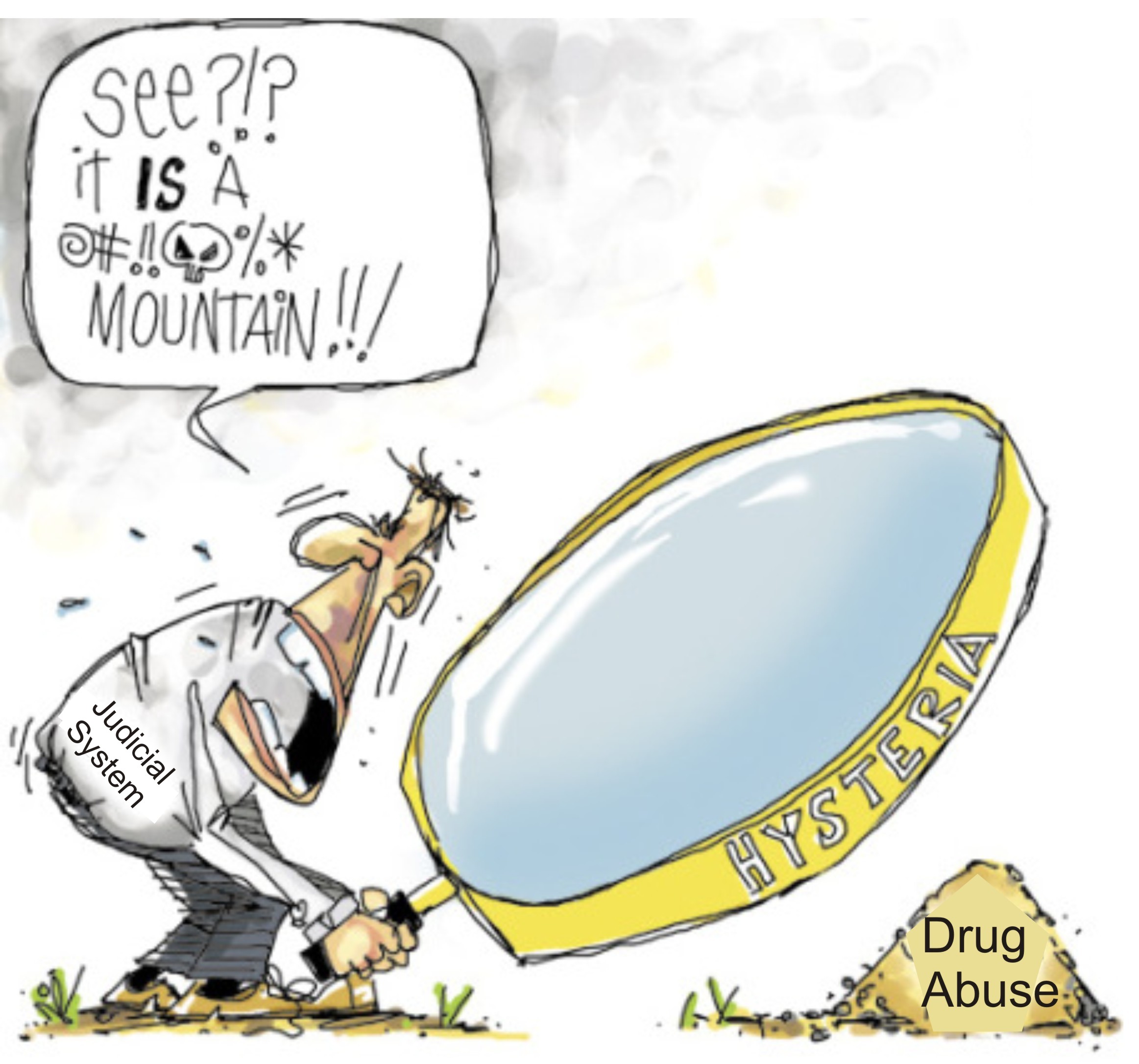
As a society, we keep track of  successful suicides and attempted suicides.. 40,000 suicides and ONE MILLION attempts every year. It appears that all  deaths that can be in the least associated with a opiate has been declared as a “accidental drug overdose” and it would seem that the increase the numbers in that column… all those deaths… are being declared as a “opiate related death”..

Likewise, the term of “addict/junkie” is being retired in favor of a any person taking/using a opiate .. legally or illegally… has a “opiate use disorder”.

This new Face Book page is an attempt to create a repository of the names of those unfortunate pts that have been thrown into cold turkey withdrawal and died or could not tolerate their under/untreated pain any longer and resorts to “the final solution” to put a end to their pain and suffering.

Why do they rob pharmacies ?… because that is were the “good drugs are ” ?

Fewer pharmacy robberies in Indy but problem has moved to ‘soft targets’

http://www.theindychannel.com/news/local-news/fewer-pharmacy-robberies-in-indy-but-problem-has-moved-to-soft-targets

INDIANAPOLIS — The record number of pharmacy robberies in Indianapolis is dropping, but the problem may be moving elsewhere.

154 robberies were reported at pharmacies in Indianapolis in the first five months of 2015.

RELATED | Indiana leads the nation in pharmacy robberies

Only 12 were reported In the last quarter of the year.

Police credit the dramatic decline to the arrest of 40 people who investigators say were responsible for more than 100 robberies.

“We started aggressively working with our federal partners, making good arrests. And at that time, CVS and Walgreens were targeted exclusively. So we formed some great partnerships with them,” said Lt. Craig McCart, Metro Police Robbery.

PREVIOUS | IMPD arrests 4 in connection with CVS attempted robbery  | IMPD: 11-year-old held up pharmacy with gun

The city continues to see a decline in robberies. Just ten in the first 38 days of 2016, compared to 18 during the same time period in 2015.

But investigators say robbers have shifted tactics and are going after pharmacies in large grocery chains and retail stores.

One reason for the shift to the so-called softer targets is that CVS and Walgreens are now hiring off-duty IMPD officers for security.

“We’re ready to get ahead of the new trend and we’ll work closely with all these chains as well, the Krogers, the Marshes and the Meijers and do the same things we did before,” said McCart. If you want to improve the security of your pharmacy or retail shop, you may visit sites like https://fortknoxsecurity.com.au to install cctv cameras.

How the KY politicians are fighting the opiate epidemic… what a JOKE !


A look at the Mexican drug cartel pipeline from southern California to Kentucky

http://www.wdrb.com/story/31172522/a-look-at-the-mexican-drug-cartel-pipeline-from-southern-california-to-kentucky

Now we can see why the bureaucrats/politicians in Lexington are going after the prescribers and pharmacies/Pharmacists in fighting the war on drugs.. when is the last time that you heard of a prescriber or Pharmacist getting violent when confronted ? Just like the school yard bully.. they pick on the kids who don’t fight back…but.. the politicians in Lexington can thump their chests and point to laws that they have passed to address the opiate epidemic.

LOUISVILLE, Ky. (WDRB) — Mexican cartels are controlling the streets of Louisville and other Kentucky cities with a pipeline of drugs running through southern California, according to DEA officials.

More than 2,000 miles from Louisville, under picturesque skies, you’ll find a place called the Inland Empire. There are mountains, palm trees and one of the largest hubs of illegal drugs in the United States.

There, in Riverside California, you’ll find evidence of the one of the most dangerous drug cartels in the world, but you’ll also find links to Kentucky.

“They are there to pedal the poison, and if they’re confronted, they’ll get violent,” Riverside DEA Asst. Special Agent in Charge Frank Pepper said.

Pepper is in charge of the Riverside DEA office and worked with us to track how cartels get drugs get from Mexico to the streets of Kentucky.

“They’re capable of some very heinous acts, things that would absolutely rival any terrorist organization,” Tim Massino, with the Los Angeles DEA, said.

Officials say the Sinaloa Cartel uses thousands of semi-trucks to transport drugs all over the country. From the freeways of Los Angeles, the drug pipeline runs north and east to Kentucky, the East Coast and everywhere in between. It’s like an invisible network of large amounts of drugs — mostly driven, but sometimes flown — making their way to local communities.

Massino took us on a ride-along to show us the drug hot spots. We traveled along Interstate 10 just a couple hours north of the southwest border. As we drive, Massino explains how meth, cocaine, heroin and marijuana come across the border and into southern California first.

The rural areas are a hot bed for drug transportation because it’s off the interstates and there are so many distribution centers. Massino says rural remote areas make it hard for drug surveillance, so criminals set up in the area and dump the drugs at stash houses temporarily, before being divided up and sent to different cities.

The narcotics from Mexico are more pure and go for higher prices. They are cheapest in the LA area and the prices go up the farther they are transported, which also means a higher risk.

Investigators say a kilogram of cocaine in LA sells for about $25,000, but by the time it gets to the Louisville area, it sells for about $34,000.

Meth ranges from $12,000-$16,000 per pound in Kentucky, but sells for just $3,500 per pound in LA.

“This area is rife with seizures,” Massino said. “Guesstimating — we’re seeing daily seizures of significant quantities; 25 pounds of meth, 50 kilos of cocaine.”

Investigators say the Sinaloa Cartel runs like a business and truck drivers have a creative way of transporting the drugs.

“Some of these organizations will actually hollow out portions of the vehicle — for instance, a rear axle — and manage to fit several pounds of black tar heroin in it,” Massino explained.

But what about when police catch a trucker who has a large amount of drugs and cash? What does that do to the cartel?

“It sets them back, if we can cut into their profits, it does hurt them financially, that is a goal,” Massino said.

Officials showed us a Range Rover with a removable panel in the cargo area. A remote could be used to unlock the hidden latch to hide the drugs. There was also a panel in the back seat.

“What you have with couriers coming from California into Kentucky, what is affiliated with that, is violence,” Pepper said. “These folks are moving a lot of dope. There is a lot of money behind that, there is a lot of threat of death, if the couriers are crossed by rival competition.”

The DEA uses wiretaps to find and track the key drug traffickers. The organization has a map that shows where Mexican Drug Cartels have the most influence in the United States. There are several Cartels, but the Sinaloa Cartel is the strongest.

The map shows two cartels have a presence in Louisville.

“If you have two competing cartel organizations, the violence can spill into the streets,” Pepper said.

The DEA map shows the Sinaloa and the Knights Templar Cartels in Louisville. The Knights Templar is considered to be just as dangerous as the Sinaloa Cartel.

Louisville Metro Police say its Narcotics Unit has not arrested anyone from those cartels and is declining to discuss any specifics, saying it could have an adverse effect on any current investigations.

The DEA map also shows the Sinaloa Cartel in Lexington and London, Kentucky.

“The cartel doesn’t care about the size of the city,” Pepper explained. “They care about peddling their poison, whether it’s Manhattan or you’re sitting in Louisville, it’s a customer to the cartels and they don’t care how they peddle their poision they don’t care who they peddle their poison to.”

The drugs take different paths into Kentucky. Investigators say many of them make their way to our streets through the National Turnpike area on semi-trucks. The DEA says the Cartels work with the Mexican Mafia and gangs, then it goes to retail and street level distributors.

The Sinaloa Cartel’s leader “El Chapo” has made headlines for his escapes from prison and his recapture, which has had some effect on the operation of the Cartel, according to officials.

“It’s made the Cartel re-evaluate who their leader is,” Pepper said.

Even still, the DEA says it’s too early to tell what his arrest will mean for drug distribution. The U.S. government wants to have him extradited to this country to face charges.

The Sinaloa Cartel’s extensive networking in Mexico and the U.S. has helped it solidify its power and spread into places like Kentucky, officials said.

“They have established that networking with shear violence affiliated with their organizations; murders, kidnappings, some instances torture of people who have gone the wrong way against Sinaloa Cartel,” Massino said.

The DEA says the goal is to dismantle the Cartels and if people stop using the drugs, the Cartels would be out of business.

“It’s getting harder and harder to get away with anything. We are out there. We are watching,” Massino said. “We are going to enforce the law and we’re going to protect those who aid us in doing so. I think ultimately, we’re going to win this.”

Ohio: Opiate Rxs DOWN.. Heroin deaths UP… pts addicted to Suboxone UP

State says painkiller prescriptions continue to fall in Ohio

http://www.ohio.com/news/break-news/state-says-painkiller-prescriptions-continue-to-fall-in-ohio-1.660540

COLUMBUS: Painkiller prescribing continues to fall in Ohio as health and law enforcement authorities battle a deadly addictions epidemic, according to data released by the state Monday.

Last year, 701 million painkiller pills were dispensed to Ohio patients, down 12 percent from an all-time high of 793 million in 2012, according to the Ohio Board of Pharmacy.

The state also saw a decline in the number of painkiller prescriptions, and a 71 percent decrease in the number of patients who go doctor shopping — moving from doctor to doctor in search of drugs — thanks to the pharmacy board’s computerized reporting system.

Steven Schierholt, the pharmacy board’s executive director, attributes the declines to efforts to educate pharmacists and prescribers about the painkiller addiction problem.

Recent efforts to make the reporting system easier to use and stricter guidelines for writing painkiller prescriptions have also helped, he said.

In 2014, 2,482 people in Ohio died from accidental overdoses, an 18 percent increase over the previous year. That includes a record 1,177 overdose deaths related to heroin, up from 986 in 2013.

“The 2014 data was frightening, but one of the things we’re doing is controlling the things we can control,” Schierholt said. “That’s something the governor is very committed to.”

Data for 2015 is not yet available.

Guidelines released last month by Gov. John Kasich said people with short-term pain from injuries or surgeries should be given alternatives to prescription painkillers whenever possible and be provided only the minimum amounts if absolutely needed.

Ohio previously set guidelines to reduce the prescribing of painkillers in emergency rooms and for closer monitoring of prescriptions for people suffering chronic pain, such as cancer patients.

Last year, Kasich said Ohio would make up to $1.5 million available annually for prescribers to integrate their computer systems with the database that tracks patients’ prescribing history.

The pharmacy board said Monday it had received 148 requests, coming from hospitals, doctors’ offices, pharmacies and major health systems for integration into the Ohio Automated Rx Reporting System.

The pharmacy board also said prescriptions have risen steadily for Suboxone, a drug used to help heroin and painkiller addicts in recovery, from 6.9 million pills in 2010 to 17 million last year.

Suboxone treats addicts’ withdrawal symptoms and blocks brain receptors to counter the effect of craving for narcotics like heroin or oxycodone. Because of its own potential for abuse, prescriptions are carefully monitored, said Cameron McNamee, a pharmacy board spokesman.

Taking opiates doesn’t = addict.. being a celebrity doesn’t = intelligence ?

In a state who’s motto is “LIVE FREE OR DIE “

Opiate abuse at top of New Hampshire voters’ minds

MSNBC’s Jacob Soboroff talks with attendees at Marco Rubio rallies in New Hampshire about their personal connection to the opiate addiction crisis.

The next bureaucratic made epidemic ?

Since the passage of The Harrison Narcotic Act 1914 https://en.wikipedia.org/wiki/Harrison_Narcotics_Tax_Act  when medications such as Heroin , Morphine and others were no longer sold OTC… we have had 1%-2% of the population who were serious substance abusers. Of course, in 1914 the USA’s population was abt 100,000,000.. abt 30% of what our population is today.

We have had an equilibrium of new people becoming substance abuser/addicts and those who have been abusing substances for a period of time… and dying off.

We have all heard of addicts who have supposedly went thru a rehab process only to revert back to their old substance abuse habits..  I have heard of certain people going thru rehab a dozen or more times.

I have read statements from ER nurses of being accosted when they give a catatonic pt from a opiate overdose and they are “snapped” out of their “high” and immediately thrown into cold turkey withdrawal.

From what I have read.. it would appear that bureaucrats seem to believe that Naloxone is going to be a “miracle cure” of opiate OD’s. What happens when all of this Naloxone nearly in every pocket… saves untold number of lives that continue on their substance abuse path.. and we end up with 3%-4% of the population as serious substance abusers..

How much increased criminal activity is this going to cause… these addicts seeking funds to continue their habit.. From house break-ins, pharmacy robberies, forged prescriptions and what ever else they can do to get their next fix.

These “addicts” are suffering from the mental health issue of addictive personality disorder… If you threw a drunk out of a bar when they had had too much.. would you expect them to stop drinking because you had stopped them drinking that one time ?

Another bureaucratic action without forethought of unintended consequences ?


I just never know what will show up in my inbox

stevemailboxMay need to click TWICE on image to make readable

cvsarbitration1cvsarbitration3cvsarbitration4cvsarbitration2

.


CDC… now pissing off another group… what group is next ?

unclesamThe CDC Suggests Women Stop Drinking or Having Sex, Because Shaming Women Is Cool

https://www.yahoo.com/news/cdc-suggests-women-stop-drinking-232800220.html

The nation’s leading public health institute has a message for millions of American women: If you want to have sex, stop boozing, because you might get pregnant. 

On Tuesday, the Centers for Disease Control and Prevention issued a statement aimed at reducing the incidence of fetal alcohol spectrum disorders (FASDs), which “can cause lasting physical, behavioral, and intellectual disabilities” and can result from alcohol consumption during pregnancy. With that goal in mind, the CDC noted: 

An estimated 3.3 million women between the ages of 15 and 44 years are at risk of exposing their developing baby to alcohol because they are drinking, sexually active, and not using birth control to prevent pregnancy, according to the latest CDC  Vital Signs report released today. The report also found that 3 in 4 women who want to get pregnant as soon as possible do not stop drinking alcohol when they stop using birth control. 

The press release goes on to make the thinly veiled suggestion that any woman who might expose even a hypothetical fetus to FASDs should abstain from drinking entirely. 

“Alcohol can permanently harm a developing baby before a woman knows she is pregnant,” Dr. Anne Schuchat, CDC Principal Deputy Director, said. “About half of all pregnancies in the United States are unplanned, and even if planned, most women won’t know they are pregnant for the first month or so, when they might still be drinking. The risk is real. Why take the chance?”

So, basically, if you are a woman who has ever had unprotected sex and you have a uterus that could potentially be inhabited, you have two options: Either shut your legs or stick to club soda. 

The CDC Suggests Women Stop Drinking or Having Sex, Because Shaming Women Is Cool

View photos
Source: 


Of course, as the 31% of women who rely on the pullout method (or the likely much larger group of people having totally unprotected sex who just don’t want to admit it) could tell you, the CDC’s suggestion is fairly unrealistic, in that it ignores the reality of how women are actually having sex. In addition to policing women’s bodies and shaming them for their choices, the recommendation utterly ignores the reasons why women might not be using contraception. 

Often, those reasons are entirely out of women’s control. Contraceptive access remains severely limited for millions of American women for myriad reasons, from a lack of insurance coverage to the cost of doctors’ appointments to persistent pharmacy refusals to provide birth control. Some women can’t get to the pharmacy before it closes to get their contraception; others are shamed when they go to pick it up. 

There are plenty of ways contraception could be more accessible nationwide, like allowing pharmacists to prescribe hormonal birth control, or making it available over-the-counter without a prescription but with full insurance coverage, or not continually attacking organizations that provide it for free, like Planned Parenthood. Unfortunately, we don’t live in a world where those things are likely to happen. 

Instead, we live in a world where a majority of U.S. states don’t require comprehensive sexual health education in public schools and young people are taught virtually nothing about safe sex. A world where the CDC wouldn’t think to issue a corresponding press release reminding men who haven’t had vasectomies to use a condom if they want to prevent FASDs, because women are expected to take sole responsibility for avoiding pregnancy (as well as the complications that can come with it). A world where women’s behavior, particularly their alcohol consumption, is routinely implicated as the cause of other problems — we already tell women not to hit the bottle so hard if they don’t want to be sexually assaulted.