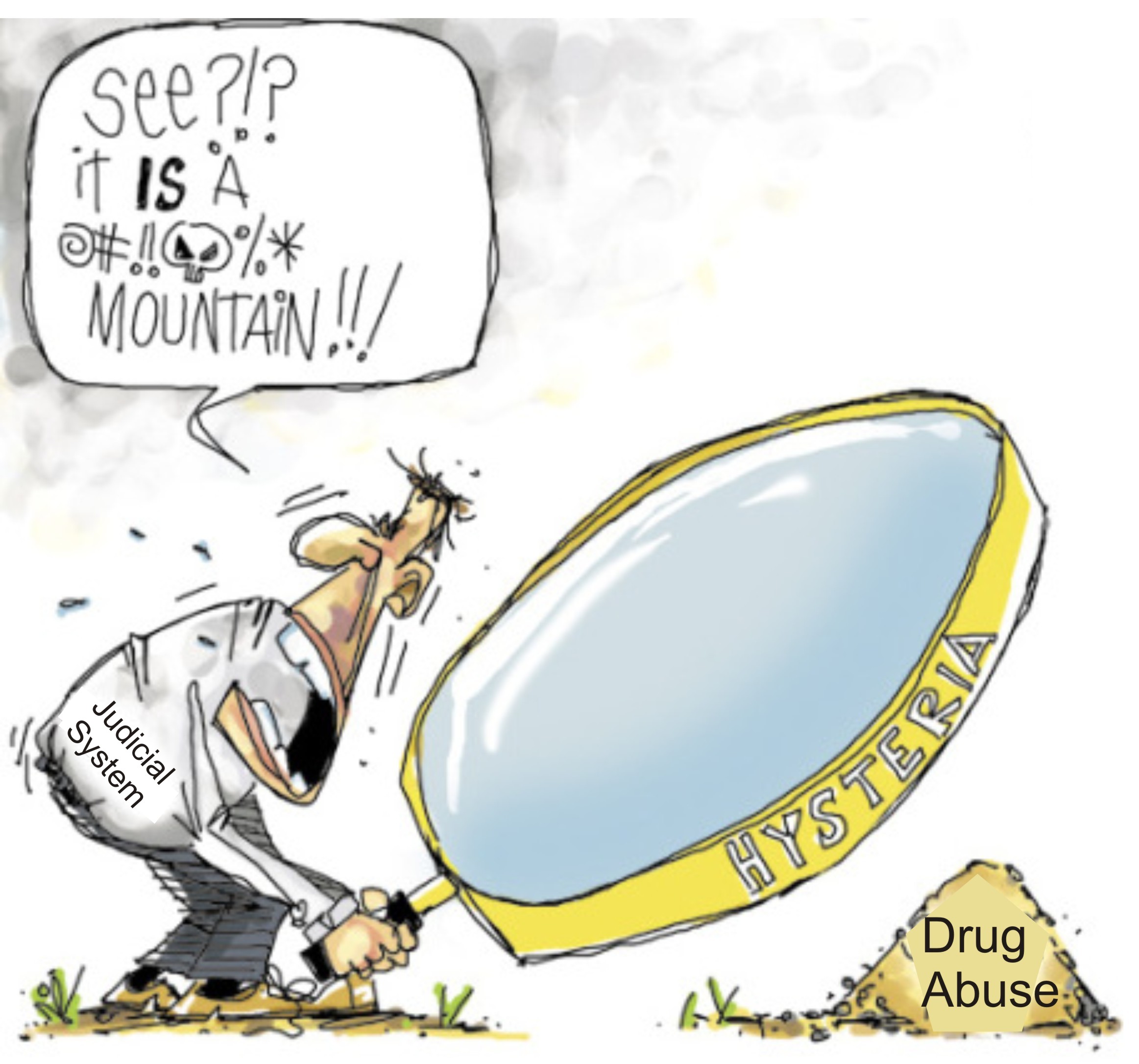
we’ve had an all-hands-on-deck approach…But our collective efforts haven’t been enough

Cutting off the opioid epidemic at the root

https://www.bostonglobe.com/opinion/2016/02/16/cutting-off-opioid-epidemic-root/EdovYeSsn5QbWtLY3ICY5J/story.html#comments

IT’S BEEN nearly two years since the state declared prescription drug and heroin addiction a public health emergency. Since then, we’ve had an all-hands-on-deck approach from lawmakers, police and fire chiefs, health professionals, and community groups.

But our collective efforts haven’t been enough. Until we change the culture around how opioids are prescribed, and dramatically reduce the number of pills available, people will continue to die.

Since 1999, the number of prescription painkillers sold in the United States has nearly quadrupled. In 2014, there were 4.6 million opioid prescriptions written in Massachusetts alone — enough for nearly every adult in this state to have a bottle of pills. Meanwhile, overdose deaths have risen by more than 300 percent.

We won’t solve this crisis until we cut it off at its root, by reducing the use of prescription opioid painkillers like Oxycontin, Vicodin, and Percocet. Cheap heroin is not a new problem; it’s been around for decades. What is new is that four out of five heroin users report having previously used a prescription opioid. These powerful drugs are a synthetic version of opium. They’re heroin in a pill.

The opioid epidemic is the direct result of years of overprescribing painkillers to everyday people, who get hooked on an extremely addictive substance, then turn to heroin when they can no longer afford to sustain an expensive pill habit.

While heroin is certainly a problem, three times as many Americans are hooked on opioids. Pharmaceutical companies told us for years that they weren’t addictive, but we know better now. Medical studies have shown that up to a third of long-term opioid users meet criteria for addiction, and that physical dependence can happen in as few as five days.

While the vast majority of prescribers are trying to do the right thing, we must end the illegal prescribing we know is taking place. My office has formed an investigative group to identify practitioners who are illegally prescribing opioids to people who shouldn’t have them. This partnership will allow state and federal law enforcement agencies to share information about those who run “pill mills” or prescribe to people with a history of substance abuse.

But to combat the opioid crisis more fully, we need societal change. The Centers for Disease Control and Prevention has proposed nationwide guidelines to help medical professionals across the country understand when and how opioids should be used, particularly for chronic pain. The pharmaceutical lobby and some sectors of the medical community have pushed back against these guidelines, calling them too restrictive. But here’s my view: Thousands are dying, and something desperately has to change. Thirty-six other state attorneys general share that view and recently wrote a similar letter in support of the guidelines.

There’s another simple solution that can be put in place immediately: We need prescribers to check the state’s prescription monitoring program every time they write a prescription for highly addictive drugs. The program can flag when a patient is receiving multiple prescriptions, doctor shopping, or showing signs of addiction. Right now, only one in four doctors checks. Governor Baker has proposed that all prescribers check the prescription monitoring program every time they write one of these prescriptions. When New York State passed a similar mandate in 2012, it saw a 75 percent drop in doctor shopping. This modest step can save lives and is time well spent.

Those who continue to push back against safeguards like these should spend time with any of the thousands of parents across this state who have lost a child to opiate addiction. All too often, theirs are stories of high school athletes and honor roll students who became hooked on opioids after an injury. Others began by experimenting at a party — but if our medicine cabinets weren’t full of prescription painkillers, our kids wouldn’t have such easy access to them.

We can’t hear those stories any longer and fail to act. Other countries have figured out how to manage pain without releasing a flood of dangerous drugs into their communities. We need to do the same. If we don’t, the deaths will continue.

My inbox 02/15/2016 ???

stevemailboxClick on image to make readable – may have to click TWICE

cvs021520162 cvs021520163 cvs021520161

Just give them a reason to say no ?

Lawmakers zeroing in on anti-meth plan

http://www.thenewsdispatch.com/news/indiana_state_news/article_09af0bb9-8ec6-5030-8793-b5a109206e24.html

Once again the bureaucrats have put Pharmacists in a position that if they get the wrong drug in the wrong hand.. there are consequences.. and if they “just say no” ..there is no consequences for the Pharmacists.  For the last 5+ yrs, Indiana has used a national electronic database called NPLEx. A great concept, however.. there is no confirmation of the driver’s license presented against some valid driver’ license database .. like the BMV’s database. Of course, they could move to a digital finger print reader.. instead of using driver’s license… which it is very difficult to change/fake/forged.  Since this database is up and running in dozens of states those going from store to store and state to state would be identified and the Pharmacist would have a very valid reason not to sell them PSE, but that would be using 21st century technology against 21st century criminals..

INDIANAPOLIS (AP) — Pharmacists say there are tell-tale signs that a customer is buying cold medicine to make methamphetamine: They peer behind the pharmacy counter, ask for the highest dosage and make multiple purchases in the same hour.

But despite pharmacists’ confidence in identifying such people, some pharmacy chains fear that proposed legal changes in Indiana that would leave it to pharmacists to decide whether to reject suspected meth makers outright or require them to get a prescription for such medicines could lead to confrontations and put them in danger.

“We definitely don’t want for our pharmacists to be in the position of law enforcement,” said Heather Willey, a lobbyist for CVS Pharmacy.

The bills, which have been passed by the chambers where they originated, are meant to help address the methamphetamine problem in Indiana, which led the nation in meth lab busts for a third straight year in 2015.

A House bill by Rep. Ben Smaltz, an Auburn Republican, would allow pharmacists to require a prescription from suspicious customers if they refuse versions of cold medicines that are tamper resistant or that contain lower doses of pseudoephedrine, an essential component in the making of meth. Speaker Brian Bosma and House Minority Leader Scott Pelath both backed the measure.

A Senate proposal by Randy Head, a Logansport Republican, would require pharmacists to screen customers and allow them to deny sales outright.

Pharmacists would have to make sure their professional decisions adhere to guidelines set by the Indiana Board of Pharmacy in order to get legal immunity. If they are not followed, the board can discipline the pharmacist.

Opponents say there’s still too much room for subjectivity.

“You’re really going to be putting people in a position and where they’re going to look at someone and they’re going to say ‘I don’t know, that person doesn’t look right to me,'” Willey said. “And that person may have a very legitimate need.”

But Harry Webb, who owns two pharmacies in northern Indiana, said the liability issue has been inflated. He helped create an ordinance in Fulton County that both bills drew inspiration from.

“The meth cooks, the dangerous individuals aren’t the ones coming in,” he said. “So it’s never been an issue.”

Since federal law limits the amount of pseudoephedrine a person can buy, meth cooks hire groups of people, called smurfers, to canvass pharmacies to buy the medicine.

Webb said his stores also have prominent signs posted that inform customers of their policy, which he says deters smurfers before they get to the counter.

Supporters, including pharmacists and independent pharmacies, also maintain that they already consult with customers, so the bills wouldn’t cause big changes.

“I’ve dealt with these folks and I know exactly what they’re looking for,” said Rep. Steve Davisson, a Salem Republican and licensed pharmacist.

Both bills emerged as lawmakers shied away from a more stringent step of requiring a prescription for all pseudoephedrine purchases. Pharmacist groups and law enforcement organizations both backed the measures as a compromise after the repeated failure of bills that would have been tougher.

“We’re trying to restrict here on the front end a raw material people have to have to manufacture methamphetamine,” Head said.

But the proposals still face heavy lobbying from retailers and pharmaceutical giants who say such screening and prescription requirements would inconvenience their customers.

The Consumer Healthcare Products Association, a lobbying group for pseudoephedrine manufacturers and pharmaceutical companies, opposes the bills and has lobbied for years in other states and against the federal government to keep access restrictions off the table.

“At the end of the day, it’s the law-abiding citizen that gets penalized,” said Carlos Gutierrez, director of government affairs for CHPA.

Although law enforcement and medical groups have fought the CHPA over prescriptions, they jumped on board with this year’s pharmacy bills.

“Everybody wants this to be a freedom of choice, but we have a problem,” Webb said “We’ve all got to do a little bit to address this problem.”

when solution are sought without the thought of collateral damage ?

A vaccine for drug addiction is in the works

http://news.medill.northwestern.edu/chicago/a-vaccine-for-drug-addiction-is-in-the-works/

Imagine this, you have someone that has been a addict and has been vaccinated and successfully refrained from abusing opiates.. and they are involved in a accident or develop a disease that now cause them to be in mod-severe chronic pain.  Now you have a chronic pain patient who has been vaccinated against opiates working in their body, and we address/treat their control pain with what ?

Treating drug addiction with a vaccine might become a solution to combat prescription drug and heroin addiction and the rapid rise in overdose deaths.

A vaccine, which has undergone tests in animal subjects so far, holds promise, said Dr. William Compton, deputy director of the National Institute on Drug Abuse. The vaccine would “produce an antibody response which would latch onto the drug of use…and because they’re large molecules they will not be able to cross the blood-brain barrier.”

Compton focused on the prescription drug and heroin addiction epidemic at a panel on the “Neuroscience Clues to the Chemistry of Mood Disorders and Addictions” on Saturday. He said the vaccine might be our best solution, speaking at the American Association for  the Advancement of Science conference in Washington D.C.

He estimated there are 200 million prescriptions written for opioids a year in the United States. Usually prescribed for pain, many remain unused and get in the hands of family and friends.

As prescription drugs are chemically similar to heroin, if a patient becomes addicted to prescription drugs, heroin is a logical next step on the journey to addiction.  In 2014, more than 50,000 Americans died of drug overdoses, including 19,000 who died of prescription drug overdoses and 10,000 who died of heroin overdose. The remaining overdoses were due to other commonly abused drugs.

National Overdose Death Rates, Number of Deaths from Prescription Drugs

Prescription drugs prescribed for pain can lead to dependence and overdose. Photo from NIDA.

National Overdose Death Rates, Number of Deaths from Heroin

Heroin addiction can easily follow prescription drug addiction. Photo from NIDA.

“This has had a population impact. There is [decreased] longevity for non-Hispanic whites who are middle-aged,” said Compton.

“Science can help in many ways,” he said.

If drugs can’t cross from the circulatory system into the brain through the blood-brain barrier, Compton said the “intoxication reinforcement” would be halted. If addicts can’t get “high” from drugs, they are less likely to abuse them.

Compton used an “empty wallet” analogy to describe how this vaccine would allow addicts to “spend” on drugs, but not get the payback of a “high.”

Compton said this vaccine would be part of a three-part strategy aimed at combatting the drug addiction epidemic which includes: helping addicts, reversing drug overdoses, and preventing addiction.

Illustration of Anti-Drug Vaccine from NIDA

An anti-drug vaccine could be a possible solution to helping addicts quit. Video from NIDA

Along with vaccines, Compton said that the NIH is working on a buprenorphine implant that can also help addicts combat their addiction.

The implant would be inserted under the skin, like several birth control products said Compton, and would allow for a steady dose of opioid replacements drugs like buprenorphine for six months.

“It would be very small, minimally invasive and would last six months,” said Compton. “As a clinician, that sounds marvelous to me. Every day [my patients] have to decide ‘today am I going to stay healthy or am I going to go back into my drug using pathway?”

He said the implant can make the decision for them for at least six months to help them kick addiction.

Scientific solutions to reverse overdose include naloxone, available since the 1970s and now in use by police and first responders.  Compton said the NIH has announced a naloxone nasal spray, but scientific solutions to prevent addiction are.

Compton said that most heroin addiction begins with prescription drug or opioid addictions prescribed for pain. If less addictive non-opioid alternatives were invented to treat pain, fewer patients might become addicted in the first place.  One of these alternatives involves transmitting constant, low current to the brain through a series of electrodes attached to the scalp.

“Transcranial brain stimulation [might] change the perception of pain just as opioids,” said Compton. “Maybe we can do it in less problematic ways.”

“However, the way drugs are understood or perceived in public opinion, the way people who use drugs are dealt with is far from actually going in the direction” of combatting addiction. Dr. Michel Kazatchkine, United Nations.
 

Whether science can solve the United State’s drug addiction epidemic, which saw death rates from prescription drug and heroin overdose quadruple over the past 15 years, Dr. Michel Kazatchkine, who is a member of the global commission on drugs policy with the United Nations, said that polices and society must work on the problem as well.

“We are all working under the international drug control that is based on international United Nations conventions and these conventions aim at the health and welfare of mankind. However, the way drugs are understood or perceived in the public opinion, the way people who use drugs are dealt is far from actually going in direction of achieving these goals.”

Kazatchkine said that these problems will be addressed when the UN General Assembly Special Session on Drugs convenes for the first time since 1998, in three months time to discuss international solutions to drug addiction.

Ken McKim on Ankylosing Spondylitis

Feel This Pain: Ankylosing Spondylitis

Ankylosing spondylitis is an inflammatory disease. The more common symptoms are a heaviness in the feet and lower back and extremely swollen hands, and at its worst it can cause some of the vertebrae in your spine to fuse together. Sounds charming, doesn’t it?

Amazing what elected official will do without proper supervision ?

sandbox

Want Viagra? Not without a note from the wife

http://www.courier-journal.com/story/news/politics/2016/02/12/want-viagra-not-without-note-wife/80294772/#

Now this here is first, although probably not for long in today’s political climate. If you can believe it Rep. Mary Lou Marzian has a plan for Kentucky men’s”johnsons”. Kentucky men would have to visit a doctor twice and have signed permission from their wives before obtaining a prescription for Viagra, Libivi male enhancement or other such drugs for erectile dysfunction, according to a bill filed by a state legislator Thursday.

Rep. Mary Lou Marzian, a Louisville Democrat, the sponsor of House Bill 396, said it is merely an effort to protect men’s health and ensure they are informed about a drug with potentially dangerous side effects.

“I want to protect these men from themselves,” said Marzian, a nurse.

HB 396 also specifies that only married men may obtain the drug and requires “a man to make a sworn statement with his hand on a Bible that he will only use a prescription for a drug for erectile dysfunction when having sexual relations with his current spouse.”

“This is about family values,” Marzian said.

SB 4, called the “informed consent” bill, passed last week and was signed into law by Gov. Matt Bevin.

Marzian, an abortion-rights supporter, said HB 396 also is meant to protest intervention by a predominantly male General Assembly into women’s health.

“Do we really want a bunch or legislators interfering in private, personal, medical decisions?” she asked.

Marzian said she doesn’t expect her bill to get very far. But she’s not done.

Marzian said she also plans to file a bill requiring potential gun buyers to obtain counseling 24 hours in advance from victims of gun violence before the purchase.

“I’m just making sure the government is taking care of your safety,” she said

Facebook Pain Groups Attacked by Spammers

Facebook Pain Groups Attacked by Spammers

http://www.painnewsnetwork.org/stories/2016/2/13/facebook-pain-groups-attacked-by-spammers

By Pat Anson, Editor

The websites all have innocent sounding names, like Personal Medical Treatments, Personal Health, and Health Care Solutions Plus.

Their articles also sound interesting, with titles like “7 Ways to Relieve Fibromyalgia Pain” and “Alternatives Treatments: The Rx for Chronic Pain is Changing.”

But when you dig a little deeper things don’t add up. The websites have no advertising, so how are they funded? Why do they all seem to be based in Pakistan or Panama?  Did “Zafar Iqbal” really write that article about alternative pain treatments in Duluth, Minnesota?

And why are all of their articles apparently stolen from other websites – a clear violation of copyright laws?

Those are some of the questions being asked by administrators and members of chronic pain support groups on Facebook, who have been deluged with thousands of links to these bogus websites for the last few months.

The links are usually posted by new group members who only recently joined Facebook and have very little information in their profiles. As fast as the bogus links and the suspicious posters are deleted, they return under new names with new links to articles such as the following:

“To a Friend With a Chronic Illness Who’s Feeling Hopeless” was apparently stolen from The Mighty.com

“How Painkillers Make Headaches and Chronic Pain Worse Over Time” was taken from TheHeartySoul.com.

“In the Shadow of an Opioid Crisis, Super Bowl Ad Spotlights Chronic Pain Patients” (allegedly written by the mysterious Zafar Iqbal) was copied and pasted from StatNews (the real author is Rebecca Robbins).

Pain News Network has been victimized in this scam too. Columnist Ellen Lenox Smith emailed me this week asking why her column “8 Tips for Patients Newly Diagnosed with Ehlers-Danlos”  reappeared without permission in CaringCare.Info.

“Is this appropriate?” Ellen wanted to know.

No Ellen, it is not. It’s called plagiarism.

The problem has become so acute that the administrators of a large Facebook support group recently closed it to new members.

“Due to an attack by plagiaristic & duplicate posters we are putting a temporary moratorium on new members,” wrote Barbara Mills, who made the move reluctantly because she knows many pain sufferers are looking for friendship and support in Facebook groups such as hers.

Barbara told me in the recent past she was offered money to post the links herself, but declined.

More is at stake here than plagiarism, copyright laws and unhappy editors like me who hate seeing their articles stolen. I think the ultimate goal of these con artists is to hack into our computers and smartphones. Click on one of their links, and you could pick up an unwanted cookie, computer virus, or even a “keylogger” that can be used to record your internet activity, usernames and passwords.

People who sign up for their newsletters by a providing their email address are also putting themselves at risk, not just for a deluge of spam, but for malicious programs such as a “trojan horse” they could download without even knowing it.

If you’re a Facebook member and you see these suspicious posts, what should you do?

  • If you’re not familiar with the website, don’t share or “like” it. That only spreads the post like a virus to your friends and other groups. It’s also precisely what the spammers want you to do.
  • If you see someone constantly sharing links to bogus websites, check the poster’s profile.  If they have only a few photos, no friends and just recently joined Facebook, chances are they are fake.
  • If you’re an administrator and you see these bogus posts appearing in your closed Facebook group, you may have to start deleting offenders and close your group to new members until the problem stops.
  • Report suspicious posts and posters to Facebook by clicking here.
  • Keep your anti-virus software up-to-date and your firewall on.

If you’re feeling really adventurous, you can visit HypeStat, which I use to see how legit a website is.  Enter the website’s URL, click search and scroll down the page. You’ll see what country a website is registered in and how long they’ve been around. 

You might even run into the prolific Zafar Iqbal, who has apparently abandoned Duluth and is now writing articles about British Airways crews making peanut allergy announcements and how cannabis kills 30,000 people a year.  

Facebook has been a godsend for pain sufferers around the world seeking support, friendship, and solutions to their chronic pain issues. It’s a shame that others are taking advantage of the pain community — which is already under attack in so many ways, not just online. 

Injuries, medication errors, expired food: ABC27 investigates county, state-owned nursing homes

Injuries, medication errors, expired food: ABC27 investigates county, state-owned nursing homes

http://abc27.com/2016/02/12/injuries-medication-errors-expired-food-abc27-investigates-county-state-owned-nursing-homes/

HARRISBURG, Pa. (WHTM) – ABC27 continues to investigate nursing homes after first reporting new, disturbing violations in Golden Living facilities.

Reports from the Department of Health over the last two years show violations and subsequent measures to fix problems in York and Cumberland county-owned nursing homes.

York County’s Pleasant Acres Nursing and Rehabilitation Center had the most violations. The last inspection made public happened in November.

The report says a resident fell out of his wheelchair and suffered a head injury. He started to have headaches, his pupils were not reacting to light, and his speech was garbled and slurred.

The nursing home notes say a doctor was notified two days after the fall, but the Department of Health says there’s no evidence of a doctor’s evaluation until nine days after the fall. That’s when the resident went to the hospital. Medical reports show he had a fracture.

Pleasant Acres Administrator Marlin Peck says after the Department of Health finished his inspection, his staff found evidence of the doctor’s evaluation from two days after the fall. It is standard practice for the department not to include documents found after the evaluation. ABC27 has not seen evidence of that evaluation.

In other reports, inspectors found “dried bowel movement” on a shower floor, a lack of evidence that some residents were bathed properly, a “medication error rate of 11.1 percent,” and in some cases, the facility flat-out not running tests that doctors ordered.

Inspectors also wrote about sanitary concerns in the kitchen in 2015  after they discovered some food in the pantry expired in 2011.

The Department of Health also wrote that the facility failed to provide care that “maintains or enhances each resident’s dignity and respect.”

That same violation was found in a July inspection of Claremont Nursing Home and Rehabilitation Center in Cumberland County.

Other reports showed the facility “failed to maintain effective infection control techniques.”

There was also a 2014 violation of failing to “maintain clean and sanitary rooms.”

Additionally, there was an incident in 2014 when a patient sat outside for several hours and later went to the hospital for “neurogenic shock and severe hypothermia.”

Claremont Administrator Raymond Soto says the facility has made a lot of progress over the last several months; he took over as administrator in August 2015. He says recent inspections have gone well, and the facility is expecting an improvement in its CMS rating as a result.

South Mountain Restoration Center is the state-owned facility in Franklin County. It was only inspected five times in the last two years, but a March 2014 report does show violations.

They include failing to “carry out staff drills using their emergency procedures and evacuation techniques.” The facility also “failed to document the number of residents moved to another location during each fire drill.”

Paperwork from the Department of Health shows those practices changed shortly after that inspection.

All the nursing homes involved say they’ve fixed the violations and are currently following state and federal regulations.

Get breaking news, weather and traffic on the go. Download the ABC 27 News App and the ABC 27 Weather App for your phone or tablet.


Proposed bill before the Indiana Senate SB80

I find this bill very interesting in the fact that the legislature has to specifically give civil immunity to a Pharmacist for the refusal to sell PSE to someone.  Once again, the legal system is forcing Pharmacists to “diagnose” a person’s need for a medication… which Pharmacists are not authorized to do under the Indiana Pharmacy Practice Act. Does this mean, under Indiana law that a Pharmacist can be held civilly liable for refusing to fill any legit/on time/medically necessary Rx ? Do other states have similar laws ?

EPHEDRINE OR PSEUDOEPHEDRINE (SMALTZ B) Requires the Indiana board of pharmacy (board) to adopt
emergency rules that are effective July 1, 2016, concerning: (1) professional determinations made; and (2) a
relationship on record with the pharmacy; concerning the sale of ephedrine or pseudoephedrine. Requires the board
to: (1) review professional determinations made; and (2) discipline a pharmacist who violates a rule concerning a
professional determination made; concerning the sale of ephedrine or pseudoephedrine. Allows the board, in
consultation with the state police, to declare a product to be an extraction resistant or a conversion resistant form of
ephedrine or pseudoephedrine. Specifies that a person who is denied the sale of a nonprescription product containing
pseudoephedrine or ephedrine is not prohibited from obtaining pseudoephedrine or ephedrine pursuant to a
prescription. Allows a pharmacist to deny the sale of ephedrine or pseudoephedrine on the basis of the pharmacist’s
professional judgment, and provides the pharmacist with civil immunity for making such a denial. Provides that a
purchaser who has a relationship on record with the pharmacy may purchase pseudoephedrine or ephedrine. Allows
the pharmacist to provide certain pseudoephedrine or ephedrine products to a purchaser who does not have a
relationship on record with the pharmacy or for whom the pharmacist has made a professional judgment that there is
not a medical or pharmaceutical need. Adds ephedrine or pseudoephedrine to the definition of “controlled substance”
for purposes of the Indiana scheduled prescription electronic collection and tracking (INSPECT) program. Removes an
expired provision. Makes technical changes.
Current Status: 2/8/2016 – Referred to Senate Corrections & Criminal Law
Recent Status: 2/8/2016 – First Reading
2/3/2016 – Referred to Senate
SB80

Piling on to the Naloxone “bandwagon”

 pilingon

What’s an antidote to death worth?

http://www.philly.com/philly/news/20160212_What_s_an_antidote_to_death_worth_.html

With a price tag of up to $187.00 CASH… community/chain pharmacies are getting on board with the “save the addict from over dosing bandwagon”  I wonder if these same pharmacies will be willing to sell clean syringes to “addicts” to help them from catching/spreading HIV, HEP B&C because they are forced to share needles ?  I know, selling them syringes is “supporting their habit” as opposed to keeping them from dying.. so that they can continue with their addiction.

THOMAS HAS overdosed more than 20 times during his decadelong battle with heroin, the demon that’s ruled his life.

Most often, paramedics brought him back from the brink of death with the opioid-overdose antidote naloxone, also known by its trade name, Narcan. So, a year ago, while still in the depths of his addiction, Thomas, 28, started carrying the rescue drug to save others.

One afternoon last July, he had the chance. He was hanging out near the train tracks on a weed-filled slope littered with trash near Somerset and B Streets in West Kensington when a guy asked him where to score “some good s—“

They bought $10 bags of the city’s purest heroin and returned to their spot to shoot up. Suddenly, Thomas, a South Philly native, saw the man’s skin turn gray and his lips turn blue. The man dropped to one knee, then the other. He had a pulse, but his breathing was faint, almost gone.

 Thomas leaned over and breathed into the man’s mouth, then yanked Narcan from his own pocket and stuck the syringe into the man’s buttocks.

In about 30 seconds, the man’s eyes popped open. He rolled over and started vomiting violently, because the drug had thrust him into painful withdrawal.

“He was real mad at me. I mean, really pissed,” Thomas recalled. “But I didn’t want to let him die.”

The Daily News is withholding Thomas’ last name because he is at an inpatient drug-treatment facility.

With the nation’s opioid death rate skyrocketing, police officers, paramedics, and family members of addicts have been carrying Narcan to bring people back from heroin and prescription pill overdoses for several years.

But as more people outside the medical field, particularly addicts themselves, have gained access to naloxone, the prices for this antidote to death have soared in Pennsylvania and across the country.

In 2014 alone, one naloxone manufacturer raised its price by 50 percent, and another boosted its price by 60 percent, according to the U.S. Food and Drug Administration.

Pharmaceutical companies and pharmacists are now putting a price tag on heroin users’ lives, and the Daily News found it can be as high as $187 in Philadelphia.

“The prices of naloxone are going up all the time,” said Roland Lamb, director of the city’s Office of Addiction Services for the Department of Behavioral Health and Intellectual disAbility Services.

“This is America. Whenever you have demand, you see price increases.”

Order and chaos

Most people struggling with addiction who carry Narcan obtained it from social service agencies that typically get it from a wholesaler. But others who try to get it themselves at pharmacies are running into roadblocks.

In October, the state’s physician general, Rachel Levine, signed a statewide standing order for naloxone, essentially giving everyone in Pennsylvania a prescription for the lifesaving drug.

“I did this because of the severity of the crisis,” Levine said. “If you know your loved one is addicted, by the time 911 comes, it may be too late.”

In theory, anyone should now be able to go to a pharmacist and obtain naloxone with Levine’s standing order, but the Daily News found that was not the case.

Of three Rite Aid pharmacies and one CVS pharmacy visited recently in Frankford, only one Rite Aid, at 8445 Frankford Ave., was aware of Levine’s standing order.

The other two Rite Aids and the CVS said a prescription from a physician would be required, despite the fact that a Rite Aid corporate spokeswoman wrote in an email: “Naloxone can be dispensed at any of our PA pharmacies without a prescription based on protocol.”

A CVS spokesperson did not return a request for comment.

None of the pharmacies had naloxone in stock, but all said it could be ordered.

Pat Epple, executive director of the Pennsylvania Pharmacists Association, said some pharmacists may not have paid attention to news of the standing order, and others may be aware of it and wary.

“Standing orders are rare, and because of that there might be a bit of distrust,” Epple said. “I think they get very nervous about that because the penalties are so severe.”

When told that three out of four pharmacies visited weren’t aware of her standing order, Levine said: “I think we’ll redouble our efforts to get the word out.”

At all costs

Pricing for naloxone, which is available in a syringe or as a nasal spray, varied wildly at the pharmacies visited.

A pharmacy employee at the Rite Aid at 9200 Frankford Ave. said a package of the naloxone nasal spray cost $187.

“I’ve never heard it be that high,” Levine said of the quoted price. “That’s disappointing.”

Just down the street, another Rite Aid at 6363 Frankford Ave. quoted $54.99 for a package of two nasal sprays.

The Rite Aid spokeswoman said the chain’s cost is usually about $120 for two doses and two aspirators.

The CVS at 8700 Frankford said the package of two nasal sprays costs $158.99.

Cost of the injectable syringes ranged also, with most around $25 for one dose or $55 for two.

Epple, of the pharmacists association, said that if pharmacists are conducting a cash sale for naloxone, they can set their own price.

Supplier and demand

Citizens aren’t the only ones facing rising prices for naloxone.

Prevention Point, a Kensington-based multiservice public health organization, gets naloxone from a wholesaler. Last year, the agency paid about $80,000 for its supply.

Workers trained 1,100 people last year to administer Narcan and provided them with the doses, according to Silvana Mazzella, director of programs. That’s up from about 600 or so the year before.

The majority were heroin users at risk of overdose, Mazzella said.

“We’ve chosen to give out naloxone despite the price increase because the need is there,” Mazzella said. “We’ve been able to do so by not buying as many less-lifesaving medical supplies.”

When Delaware County became the first in the state to equip all of its cops with naloxone in November 2014, the price from the pharmaceutical company Amphastar to the county for each 2mg dose was $22, said Delaware County District Attorney Jack Whelan.

Now, it’s closer to $50, he said.

“We were the first to implement the program, so when I ordered it, there was not the supply-and-demand issue there is now,” Whelan said. “The price has been driven up.”

Two weeks ago, Delaware County announced it was switching its naloxone provider to Adapt Pharma, an Ireland-based company with offices in Radnor that just began producing nasal Narcan. Delaware County will pay $37 for a 4mg dose from Adapt.

In a separate announcement with Gov. Wolf last week, Adapt said it would give every public high school in Pennsylvania and the country a free dose of nasal Narcan. In September, Wolf and the state’s secretary of education suggested that every school district in the state keep naloxone in stock.

A Philadelphia School District spokeswoman said the district does not stock naloxone and nobody was aware of any opioid-related overdoses or incidents at a district school within the last five years.

With demand for the drug increasing rapidly, public officials are concerned that prices are soaring.

Last March, presidential hopeful Sen. Bernie Sanders and Rep. Elijah Cummings wrote a scathing letter to Amphastar.

“The rapid increase in the cost of this lifesaving medication in such a short time frame is a significant public health concern,” they wrote.

Amphastar did not return requests for comment, but in a letter from the company’s lawyer to Sanders and Cummings, Amphastar attributed rising prices to increasing costs for “raw materials, energy, and labor.”

But Daniel Raymond, policy director for the Harm Reduction Coalition, a national organization that focuses on health issues related to drug use, said there’s another theory, too.

“There’s a lot of suspicion that they increased their price as naloxone became more mainstream,” he said.

Raymond said that as recently as 10 years ago, an injectable dose of Narcan – which was approved by the FDA in 1971 – was as cheap as $1 a shot. But in the last few years, as states have passed laws for greater access to naloxone, demand has exploded. Raymond hopes increasing competition in the market from companies like Adapt will affect pricing.

“Ideally, we’ll start to see more competition,” he said. “As we see more companies step in as producers, then we’ll see prices stabilize.”

OD deaths rising

The demand for naloxone has increased as the rate of opioid-related deaths has increased. Opioid overdoses are now the leading cause of accidental deaths in the state and the nation, killing more people each year than car accidents.

In 2014, 652 people died from drug overdoses in Philadelphia compared with 493 deaths in 2013. Toxicology tests detected heroin in a majority of those deaths, according to Lamb, of the Department of Behavioral Health and Intellectual disAbility Services.


In February 2015, the Philadelphia Police Department started equipping some of its officers with Narcan. Since that time, city cops have saved 121 people from overdosing, police said. Despite those saves, in the first half of 2015 – statistics for the full year are not yet available – 241 people who died of overdoses in Philadelphia had opioids in their system, according to city stats.

Even in Delaware County, where cops have saved 171 people with naloxone since November 2014, the number of opioid-related deaths has skyrocketed from 52 in 2014 to 101 in 2015.

“We’re out there making all these strides, but we’re still seeing an increase in deaths, not a decrease,” Whelan said. “So we’ve seen the epidemic has taken off on us.”