20/20 program tonight on Heroin addiction

lmaoABC has been promoting their 20/20 special on BREAKING POINT – HEROIN IN AMERICA

I went to check my local listing on my TIVO  it was suppose to be on at 10 PM (EST) BUT  COLLEGE BASKETBALL PLAYOFFS take over the local ABC affiliate at 7PM and even pushing back the local news till 11:30 PM and the SPECIAL… why it is on at 2:38 AM TOMORROW…  THE MIDDLE OF THE NIGHT

All of that PROMOTION … one year investigation.. and it’s time slot  is being replaced with COLLEGE BASKETBALL

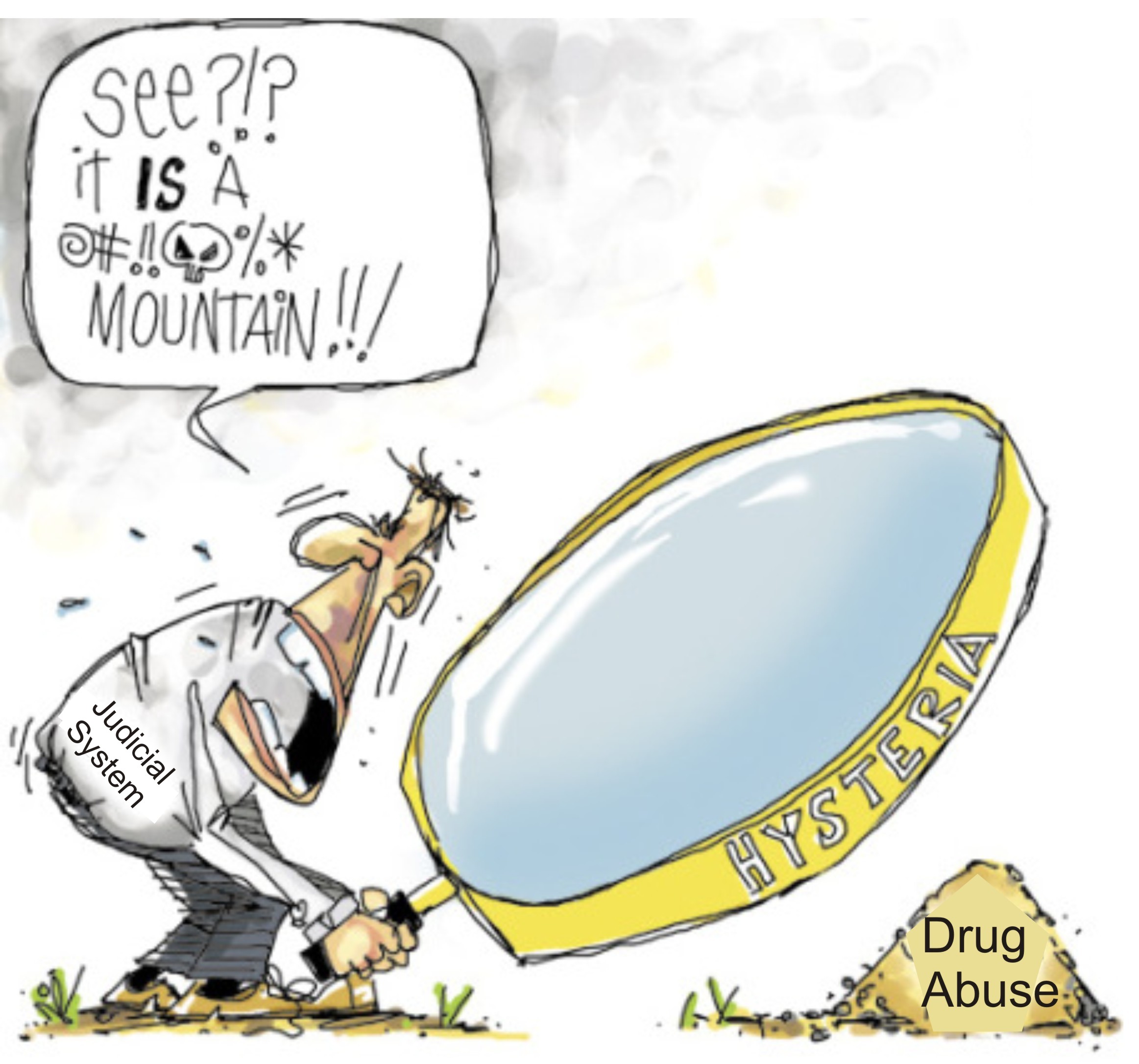
Maybe no one will watch, which will most likely be a over sensationalized piece of regurgitation of DEA propaganda and the FABRICATED OPIATE EPIDEMIC.

We are spending 51 billion/yr to fight this war on drugs and we are suppose to having abt 24,000 dying for (Heroin and legal/illegal use of Rx opiates)… that means that we are spending over TWO MILLION per death. As a nation, we only spend abt $8,500 per capita on healthcare and Pres Obama wants another 1.1 billion added to fighting the war next year.. that is another $46,000/death trying to prevent people with the mental illness of addictive personality disorder from getting on a death spiral and end up dying.. either from a unintentional OD or intentional suicide.

MASS invokes the “final solution” on Medicaid pts

cppsuicidetreeState sets new limits on opioid prescriptions

Local experts fear the pendulum may be swinging too far

http://www.recorder.com/News/Local/State-sets-new-limits-on-opioid-prescriptions

By TOM RELIHAN Recorder Staff
Wednesday, March 02, 2016

Here we have the state “playing doctor” on Medicaid pts.. the most sick and the poorest among us.. the least capable of defending for themselves.   Please note that those in Methadone addiction treatment are EXEMPT from any limitations.

GREENFIELD — New limits on how many opioid painkillers health care providers will be allowed to prescribe to patients who receive insurance through the state’s MassHealth Medicaid program are set to go into effect March 7, and some local experts fear the pendulum may be swinging too far to one side as government agencies struggle to bring a growing heroin and prescription drug abuse problem under control.

The state’s MassHealth program offers health care benefits directly, or by paying part or all of a recipient’s health insurance premiums. According to a recent memo from the state Department of Public Health, the program will reduce the maximum amount of morphine equivalents per day of pain medication that a patient can be prescribed from 240 to 120 milligrams.

This is the second time the limit has been lowered since April 2014, when it was 360 milligrams per day, according to MassHealth spokeswoman Michelle Hillman.

A morphine equivalent dose is a measurement used to compare the potency of different opioid medications, relative to that of morphine, to account for the different ways the body processes each drug.

Hillman said between 2,000 and 4,000 of the 1.8 million MassHealth members may be affected by the new limits.

The department cited the high number of opioid-related overdose deaths in Massachusetts over the past few years, implying a link to high dose prescriptions.

“The new high dose threshold, 120 milligrams MED, is now widely adopted in the medical community, including by the Medicare Part D prescription drug program,” Hillman said. “The threshold was established based on the lack of clinical evidence of long term efficacy of higher doses in light of clear evidence of harm.”

Hillman said providers will be able to override the limit if necessary with the department’s approval.

The changes would also place new regulations on methadone, requiring prior authorization before a person is allowed to begin taking it for pain management.

Hillman said methadone intended to be used in treating substance abuse will not be subject to the restrictions. The drug is commonly used in chemical replacement addiction therapy.

“MassHealth is implementing prior authorization for new patients on methadone when used in the management of pain because of the disproportionate number of opioid overdose deaths associated with it,” she said.

But members of the regional Opioid Task Force, which has been working since 2014 to beat back the growing opioid drug and heroin crisis, said they think the new limits may reflect efforts to stem the overprescription of opioid painkillers beginning to become excessively restrictive at the expense of patients whose conditions are truly helped by the drugs.

Task Force Director Marisa Hebble noted that many who take opioid painkillers don’t become addicted to them and use them to successfully manage chronic pain.

“You don’t want to send people in that direction, but there are a lot of people taking opioids where it’s helpful; not everyone taking them is becoming addicted,” she said. “While it’s important that we look at prescribers, it’s also important that we don’t swing too far and limit those doing well on opioids.”

Dr. Ruth Potee, a physician specializing in addiction at Valley Medical Group in Greenfield, agreed.

“For a lot of patients, their opioids allow them to function, to exercise, to take care of their grandkids,” said Potee. “The vast majority of people who take opioids chronically — like, 80 percent — get benefits from them. They’re not causing harm to themselves or society with them and they’re not addicted to them.”

Potee said most offices now require measures to be put into place to ensure patients don’t become addicted to their medication or begin abusing it. Those take the form of both randomized and routine urine drug screenings and random pill counts, among other practices.

“If you’re getting early refills, something’s wrong,” she said. “You shouldn’t be dose-escalating yourself once you’re on a stable dose.”

Potee said part of the problem is that prescribing pills is often the most available method of managing chronic pain, especially for the primarily low-income segment of the population served by MassHealth, because many insurance providers are typically willing to cover them, but are less willing to pay for other modes of therapy, including massage, acupuncture or somatic functioning healing. Other methods, like physical therapy, are often accompanied by high co-pays.

Thus, placing further limits on opioid prescribing across the board would only serve to further narrow the options chronic pain patients have to manage their symptoms, she said.

“There are so many ways in which our insurance structure in this country has sent us down this path that the only solution for chronic pain is more pills. For so many years, they’ve paid for the pills, and here we are in this situation where we recognize that’s not the only solution. Often times, offices like ours just end up eating the cost to (bring in alternative pain relief options).” she said, noting that Valley Medical has been running free Tai Chi and Yoga classes for that purpose for half a decade.

Potee said she believes the regulations are far too broad for their intended purpose.

“They pretend that these are not complicated living organisms. I see my patients that are doing well on opioids, and I think, what if I had to take that away, what is going to happen to these people?” she said, noting the challenges of trying to wean people down from their current doses over just two months.

MassHealth maintained that the new limits are appropriate for maintaining a balance between access to opioids for pain management and patient safety.

“Given the extent of the opiate crisis in Massachusetts and the emerging standards for safe prescribing, these changes reflect appropriate access to opioids with increased attention on the safety of high doses,” Hillman said.

You can reach Tom Relihan at: trelihan@recorder.com
or 413-772-0261, ext. 264

DEA: STUPIDITY is not a handicap ?

DEA agent parking causes controversy

http://www.local8now.com/content/news/DEA-agent-parking-causes-controversy–371735291.html

KNOXVILLE, Tenn. (WVLT) — People normally don’t park in handicap spaces or fire lanes without the proper identification.

That’s not the case for the parking lot at the Atrium Building.

“I’m just finally tired of it,” said Pete Herriford, Engineering Technician for ARC Automotive.

Herriford works in the building. He said officials with the Drug Enforcement Agency, who also work in the building, are the only ones who disregard parking laws.

“Confronting them doesn’t help, sending them letters doesn’t help, putting signs on their cars doesn’t help.”

According to Herriford, this issue has been going on for years. After multiple attempts to fix the problem, he called Knoxville Police, and still no luck. Local 8 News reached out to KPD, who said, “The “handicapped” spots Herriford refers to are not official handicapped spaces because they are not marked properly. They cannot be enforced due to the improper signage and markings.”

Herriford said, “It’s up to the building owners to enforce tow-aways, and they will not do it because they are afraid of the retribution.”

Herriford added that many of his colleagues are also outraged. He said they won’t speak out against the DEA out of fear for their livelihood.

“It’s just ridiculous,” said Herriford.

Neil Morgenstern, the Special Resident in Charge for the DEA, declined to speak on camera, but told Local 8 News his team parks in the fire zone to closely monitor expensive equipment in the cars.

Local 8 News also spoke to the Knoxville Fire Department, who said the DEA has no business parking in a fire zone, regardless of their reasoning.

“I mean, if we every did have a fire, they have the fire lane blocked, where a large firetruck couldn’t get through there,” said Herriford.

Herriford said he ultimately wants to speak up for those who don’t have a voice. As for the DEA, he said they need to abide by the law.

“I’m not wanting to sir up trouble,” said Herriford. “I just want them to obey the rules; that’s all.”

Pt’s rights… practitioner’s obligations… terminating care

Terminating the Physician-Patient Relationship

http://www.physicianspractice.com/blog/terminating-physician-patient-relationship

Blog | January 24, 2014 | Difficult Patients, Law & Malpractice, Operations, Patient Dismissal, Patient Relations, Risk Management
By Linda Sue Mangels, BSED, MSED

Doctors often get into the field of medicine because they love helping people — their patients. However, from time to time, a patient’s behaviors and actions may require the physician to sever ties. Non-compliance with the treatment plan, rude, abusive behavior, repeatedly not showing up for appointments, drug-seeking behavior, and non-payment of services rendered are all reasons physicians terminate their patient relationships. A good relationship/partnership between the physician and patient is essential for optimal treatment outcomes. If, for whatever reason, it is not possible to establish this partnership, it is best for the patient to seek treatment elsewhere.

However, a physician can’t simply stop providing care to a patient. In fact, once the physician-patient relationship is established, the physician must continue to provide care to the patient to avoid allegations of abandonment until one of the follow occurs:

1. The patient terminates the physician-patient relationship.

2. The patient’s condition no longer requires the care of this particular physician.

3. The physician agreed to treat only a specific condition or agreed to treat only at a specific time or place.

4. The physician terminates the physician-patient relationship by notifying the patient in writing of withdrawal from care after a specific time which is stated in the letter. The patient is also given information necessary to obtain their medical records or transfer to another provider.

Linda Sue MangelsLinda Sue Mangels If the physician decides to terminate care through a letter, it should be certified with return receipt requested and regular mail. If the certified letter is returned, it should be placed in the patient’s file unopened. Scheduling staff should be told that the patient has been terminated and instructed not to schedule them should they attempt to make further appointments.

It is not necessary to give the patient a reason for the termination but providing one often prevents the patient from reaching back out to ask why. In the termination letter, if the patient’s condition requires continued medical care, it is recommended that this be clearly stated with the risks of not continuing treatment/care identified. For example: “Your condition requires continued medical treatment/care. The risks of not continuing your medical care include, but are not limited to, the following…” Then, list the potential risks. A copy of this letter should be kept in the patient’s medical record.

Depending on the availability of physicians in the specialty required and the patient’s ability to access care from another provider, the termination window is generally 15 days to 30 days. During this time, the terminating physician continues to provide emergency care and prescription refills.

When a physician in a specific specialty is the only one available within a reasonable distance, the relationship may need to continue until the patient finds another doctor. This needs to be taken into consideration. The physician should not provide the patient with a specific name of another physician, but provide them with a physician referral source, such as the patient’s health plan for a list of physicians, the local medical society, or a physician referral service.

According to the AMA’s Council on Ethical & Judicial Affairs, a physician may not terminate the relationship as long as further treatment is indicated without sufficient time to make other arrangements for necessary care. Additionally, in the rare situation of an acute episode of illness, the transfer of care may be physician to physician to avoid any lapse in continuity of care.

Some managed care plans limit the physician’s ability to terminate the patient relationship. The physician should review the patient’s health plan/HMO contractual guidelines for discontinuing care of a patient and promptly notify them. This will avoid breach of contractual issues and/or violation of laws governing HMOs.

The physician-patient relationship can be terminated for any non-discriminatory reason with proper notice. It is best to do so as cordially as possible.

Linda Sue Mangels, BSED, MSED, CPHRM, is senior risk management / patient safety specialist for the Cooperative of American Physicians. E-mail her here.

The information contained within this blog, on this website, is made available for educational purposes to give general information, and not intended to provide specific legal advice for individual circumstances or legal questions. By using this blog site you understand that reading this post does not establish attorney-client relationship between you and the author (attorney) or her company. Furthermore, this blog is not a substitute for legal advice from an attorney, and you should not act upon information contained in the blog without seeking the advice of a professional attorney in your state.
– See more at: http://www.physicianspractice.com/blog/terminating-physician-patient-relationship#sthash.ocEB5hd6.dpuf

It is stated that 80% of meth comes from south of the border

DEA: Mexican meth flooding across the border

http://news4sanantonio.com/news/local/dea-mexican-meth-flooding-across-the-border

LAREDO, TEXAS — The Feds are actively making meth busts along the border. In the last week they seized over $500,000 worth of meth, weighing nearly 50 pounds. Eighteen pounds of it came in liquid form, which is a new tactic smugglers are using.

“Of all the meth here in America, the DEA says 90 percent of it came from across the border over in Mexico. Mexican super labs are able to create a form of meth that’s so pure and so cheap that Americans can’t seem to get enough of it.”

Growing up in a small Texas town outside of San Antonio, Mandy Jo Myers felt she was always missing something in her life.

“I grew up with low self-esteem my entire life, this feeling of just like uselessness.”

She smoked pot, she drank, but that void was never filled. When she was 19, she tried meth for the first time.

“I just felt like I could do anything and everything and the world was my oyster,” she says in reminiscing laughter.

That was in the early 2000’s, a time James Reed, Assistant Special Agent in Charge at the DEA office in Laredo remembers as when most meth was locally made and locally consumed.

“It was a drug that was associated with blue collar type workers,” Reed says.

The so-called Meth Act of 2005 regulated the sale of over-the-counter ephedrine and pseudo-ephedrine, a key ingredient to meth, which helped curb the addiction. At least temporarily.

According to the Texas Department of Health, after 2006, the number of people seeking publicly funded treatment for meth had been trending downward.But just recently demand is picking back up, and Mexican drug cartels are taking notice.

“The chemicals are readily available from China where the Mexican producers obtain them from,” Reed says.

For the first time ever in 2015, the amount of people seeking help in Texas surpassed 8,000, it also contributed 416 deaths last year in Texas. In 1999, 16 died from meth.

Reed says super labs in Mexico are making 90% pure meth in mass quantities, 100’s of pounds at a time, and smuggling it into America. Something most American labs can’t keep up with.

“The Mexican drug cartels are taking advantage of the fact that we have an addiction problem in the US.”

According to the DEA Drug Threat Assessment, meth’s availability in the southwest has spiked since 2013, the highest in the country.

“Now it’s a drug used in all demographics.”

It’s coincided with an increase in meth busts along the border too.

“We can’t just arrest ourselves out of this situation; we have to address this on a multi-tiered front.”

He says it’s a combination of enforcement and education, education from people like Mandy Jo, who’s four years clean. She works at a treatment facility.

“My best day high is not as good as my worst day sober.”

It’s the unlikeliest of teams. Once the demand stops, so will the meth flowing across our border

Shouldn’t lying to pts be consider UNPROFESSIONAL CONDUCT ?

pinochelloThe manager of walgreens has been out with medical issues for a few months. He is the biggest PITA..Today sunday I go to pick up my meds and he & I say hello and I say one to pick up and made small talk. I told him that I was going into the hospital tuesday for a TKR and I asked him if he would need paperwork from hospital tomorrow after I go to my pain doc. HE LOOKS at me and says I don’t think I have your meds and ISNT it too early. I asked him if he even remembers what meds I take and when I was in the last time.REMEMBER he’s been out for months. He didn’t even remember my name(grin)

Already before anything he’s trying not to sell pain meds.stevemailbox

I just looked at him and said I will see you in the AM..

He will either fill or not…Might have to do the CRAWL
What a JOKE

Maybe if you are going to tell LIES… you need to reference the time frame from which you are referencing ?

grant immunity to any pharmacist who denies a sale of Pseudoephedrine

congressstupidBill that gives pharmacists more control over cold-med sales heads to governor

http://www.indystar.com/story/news/2016/03/10/bill-gives-pharmacists-more-control-over-cold-med-sales-heads-governor/81607404/

Senate Bill 80 also would grant immunity to any pharmacist who denies a sale of Pseudoephedrine

Does this mean that Pharmacists can be SUED for failing to fill a LEGAL RX ???  I wonder what is going to be their next legal remedy is going to be in a couple of years when they discover that this is not going to do a DAMN THING ?

Pharmacists would have more control over who can buy cold medicine that is a key ingredient in methamphetamine under a bill passed Thursday by the Indiana General Assembly.

Under the bill, which is a combination of measures proposed in the House and Senate, a pharmacist would be able to refuse to sell products containing pseudoephedrine and ephedrine to a customer who the pharmacist does not recognize. Customers of record for the pharmacy would not be affected.

A pharmacist who does not recognize a customer could decide, after consulting with the customer about symptoms, to sell such products to the person. But if the pharmacist remained dubious as to whether the medicine was needed, the customer could then buy either products resistant to methamphetamine production or cold medicines in doses too small to make the illegal drug.

Senate Bill 80 also would grant immunity to any pharmacist who denies a sale. The measure now awaits Gov. Mike Pence’s signature to become law.

The Consumer Healthcare Products Association, which had fought earlier pseudoephedrine legislation including a proposal that a doctor’s prescription be required, had a lukewarm reaction to the bill’s passage.

“The version that passed today was certainly better than some previous iterations,” said Carlos Gutierrez, senior director and head of state government affairs of the trade association. “For us, it’s maintain consumer access to the medications of their choice. … From the start, our concern has continuously been the patient.”

If Pence signs the bill, Indiana would become the second state in the country after Arkansas to adopt such measures. Since Arkansas passed its law five years ago, the number of methamphetamine labs in that state has plummeted.

Indiana already had a law requiring that purchases of certain cold medicines be entered into a state database so pharmacists would not inadvertently sell to “smurfs,” people who buy the drugs on behalf of a methamphetamine maker.

Adding restrictions to cold medicine sales required lawmakers to strike a delicate balance.

Consumers do not necessarily want the inconvenience of having to see a doctor or submit to a pharmacist’s consultation to buy these products. At the same time, pharmacists want some discretionary ability to refuse sales to someone who is buying the drugs for meth making.

The Indiana Pharmacists Alliance applauded the legislature’s solution.

“The bill … leverages the pharmacist’s professional judgement to assure that pseudoephedrine is provided to patients with a clinical need,” said Randy Hitchens, executive vice president of the Indiana Pharmacists Alliance in a statement.

Fulton County pharmacist Harry Webb has championed the bill since the beginning. A task force already has put into place some of the provisions of the bill and seen a drastic reduction in pseudoephedrine and methamphetamine labs in that county.

Until now, however, some pharmacists have shied away from denying sales of cold medicine to a customer who they suspect has ulterior motives out of fear they would be held liable for the decision.

Pharmacists would now have the ability to just say no, without the requirement of a doctor’s prescription, said Webb, owner of Webb’s Family Pharmacy, with stores in Rochester and Akron, Ind.

“The beauty of this bill is that it allows us to treat our patients appropriately without having them go to the doctor,” he said. “If you come in sick and you’re asking for a recommendation, I can pretty much use whatever product I feel is appropriate, and you will be able to take care or your cold.”

Call IndyStar reporter Shari Rudavsky at (317) 444-6354. Follow her on Twitter: @srudavsky.

Human error plagues hospitals, speaker says

Human error plagues hospitals, speaker says

http://www.udreview.com/human-error-plagues-hospitals-speaker-says/

BY
Staff Reporter

In January 2001, 18-month-old Josie King was admitted to the Johns Hopkins Hospital as a result of suffering third degree burns from a hot bath.  Within weeks she healed and was scheduled to be released. Two days before Josie was scheduled to go home, the young toddler died as a result of careless human medical error.

On February 29, Josie’s mother, Sorrel King, spoke at the university about human medical error. Through the Josie King Foundation, King has been able to promote greater awareness of medical error in hospitals through the story of her daughter.

This case shows that healthcare in the United States is not as safe as it should be. According to two major studies, as many as 98,000 people die in hospitals every year as a result of human medical error. High error rates are found in stressful medical environments such as intensive care units, operating rooms and emergency rooms.

One of the main reasons for medical error is the lack of patient integrated care. Patients see multiple different doctors over the course of their stay in the hospital, none of which have access to a patient’s complete file. This in turn, makes it easier for doctors to make mistakes, causing the loss of thousands of lives every year.

In the case of Josie King, the hospital staff failed to recognize that Josie was severely dehydrated. Days before Josie’s death, her mother described her daughter as being extremely thirsty. When given a bath, Josie sucked frantically on the washcloth and cried at the sight of a cup of water.

As days passed, Josie’s eyes rolled back in her head and she developed a fever and diarrhea, both common causes of dehydration. Despite constant questioning by Josie’s mother, the toddler died of dehydration in one of the most renowned hospitals in the world.

Following Josie’s death, Sorrel King and her husband took steps in order to sue Johns Hopkins Hospital. Months later, the couple decided to settle, taking Hopkins money in order to start a foundation for their daughter. The foundation takes Sorrel King all over the United States to speak to health care professionals about Josie’s story and medical error.

“The way I see it is that I have an hour to reach an audience of 500 caregivers and I am going to use every second of that hour to inspire them to fix the culture and to really think about patient safety,” Sorrel said. “I tell myself how lucky I am that hundreds of caregivers want to hear Josie’s Story.”

Mary Kate Griffin, a graduate of the university nursing program, is currently employed by a hospital in New York. She states that she personally witnessed medical error within her first year of work.

Griffin said a resident on her unit made a careless error on one of her patients. The resident used a contaminated syringe and flushed fluid into the bladder of a patient.

While this specific incident didn’t kill the patient, this type of mistake can cause patients to develop urinary tract, bladder or kidney infections, which can lead to death.

“Now it’s something we put emphasis on in my unit,” she said. “We have new protocol for labeling which syringe is for each.”

Jess Madiraca is a nursing professor at the university. Madiraca recalls 10 to 12 different medical errors that she witnessed during her practice. Additionally, she describes one mistake she made herself.

“I administered the wrong dose of a medication to a patient through a careless error,” Madiraca said. “I thought the syringe someone handed me was the dose I requested but it was actual five times more than prescribed. Luckily the patient did not have any adverse reactions but I became more aware of my environment.”

Human error is something that will continue to be prevalent among hospitals, but King hopes for improvement.

“I hope for a future in the healthcare industry where patients and their families are really listened to,” King said. “Where there is openness and transparency, where teamwork and communication continues to improve, a culture where no one is afraid to speak up.”

In order to reduce error, medical staff needs to take appropriate measures to provide a safer hospital environment, Madiraca said.

“No matter how good of a hospital, while there is room for improvement, humans are not perfect and it will never be an error-free world,” Madiraca said.

Senate approves Medicare ‘lock-in’ amendment on opioid abuse

handicuffSenate approves Medicare ‘lock-in’ amendment on opioid abuse

http://www.drugstorenews.com/article/senate-approves-medicare-lock-amendment-opioid-abuse?utm_term=DSN204726&

Normally, a lock-in mechanism is used on people who have demonstrated to be doc/pharmacy shoppers. Apparently those in the Senate have decided to discriminate against all Medicare Part D beneficiaries who are prescribed certain frequently abused drugs. Not if the person has ever been a confirmed doc/pharmacy shopper. I can see how well this is going to work for Seniors who travel in a RV and/or Seniors that are snow birds. Once again those who are chronic painers are being discriminated against because of their medically necessary medications.  What is the definition of “at-risk” ?

WASHINGTON – The United States Senate approved an amendment Wednesday that gives Medicare Part D plans the authority to require at-risk beneficiaries to use a single prescriber and pharmacy for frequently abused drugs.
 
The Medicare “lock-in” provision, sponsored by Sens. Pat Toomey, R-Pa., Sherrod Brown, D-Ohio, Rob Portman, R-Ohio, and Tim Kaine, D-Va., is a part of a larger prescription drug abuse bill known as the Comprehensive Addiction and Recovery Act. The bipartisan bill aims to curb the opioid abuse epidemic through enhanced grant programs, among other efforts.
 
“As the pharmacy community is well aware, prescription drug abuse and dependency have been on the rise in America for several years,” stated Thomas Menighan, American Pharmacist Association EVP and CEO. “This epidemic is a major issue for our nation due to the devastating impact it is has had on individuals, families and communities. We have made this a central theme for APhA2016. As we inform and educate pharmacy professionals, they will be able to help their communities.”
 
APhA supports the passing of the lock-in amendment and believes that solutions to curb opioid and prescription drug abuse “will take everyone working together, including health care professionals, patients, and federal, state and local governments,” according to Jenna Ventresca, APhA associate director, health policy.
 
Although the lock-in amendment represents one mechanism to respond to prescription drug abuse, APhA supports a multifaceted approach that balances legitimate patient access to prescription drugs with the need to protect individuals from misusing and abusing such medications. The Institute of Medicine estimates that there are 100 million Americans living with chronic pain – a number that does not include the additional 46 million individuals the Centers for Disease Control and Prevention estimates suffer from acute pain due to surgery. 
 
Though the lock-in amendment has passed, the Senate still has to vote on the broader comprehensive bill before it moves to the U.S. House of Representatives for review.
 

Knowledge, experience, common sense = good pt care

SRAcrystalballThis below was posted on a pharmacy face book page.. I just submitted a article to DRUG TOPIC with the titled  “OTC Naloxone… patient care or cash cow for pharmacy ?”  but I can’t publish it until they do and then I can only publish it with a link to their publication. In that article, I discussed this very issue.  If this wasn’t so damn serious a issue.. I would find it hilarious. Here we have people BOASTING about the “Doctor of Pharmacy” (PharmD) degree/status and clamoring  to get granted provider status… so that they can move up to their true mid-level practitioner level.. that they are educated for, along side ARNP’s, NP’s, PA’s. In this example, you have a pt with a opiate overdose… pale… barely breathing… still has a pulse.. so you TAKE HIS BLOOD PRESSURE.. and worry about PAPERWORK which proceeds GETTING PAID…

This could end up being like the movie “GROUND HOG DAY”  and the “save the addict bandwagon” with a dose or two of Naloxone being in just about everyone’s pocket is just starting to unfold. But what do I know… with my OUTDATED BS Pharm degree and just 45 yrs of experience. I have never been confronted with a life/death over dose experience first hand, but I have been in life/death experiences with other pts and I didn’t CHOKE and pts lived to thank me for my acting on their behalf.  One of my favorite saying is “… knowledge is knowing the rules … and experience is knowing the exceptions to the rules …” Good pt care comes from the combination of knowledge, experience and common sense.. It is like a three legged stool… missing one or two legs and you will end up FALLING ON YOUR ASS 🙂

“Today was the scariest day I have had as a Pharmacist. A customer came to the counter looking for narcan for his friend who was overdosing on heroin in his car. I told him we could call 911 for him which my intern proceeded to do. I told him in order to sell it to him I needed paperwork filled out. He asked if I could administer it to his friend and I told him I could not. He told me he needed to go because he didn’t have a driver’s license and he didn’t want to get in trouble. He told me we was going to leave his friend on the side of the building. When I got to his friend he was pale and looked like he was dead. I found his pulse and took a blood pressure. I made sure he has a pulse until the ambulance and police arrived. Is this happening at your pharmacies?? Ohio just passed a law to allow narcan to be sold OTC. I’m assuming we will be seeing more of this now. What is your take on making narcan available without a prescription?”

I thought that #CVS was going to start selling Naloxone without a Rx ?

pharmaciststeve.com/?p=12176

 “The pharmacist said a male had come into the store and asked to buy Narcan because his friend was not breathing,” Foulds said Wednesday. “The pharmacist was alarmed and called 911.” 

But the phone call became disconnected, and Wilson traveled to the CVS to investigate, according to Foulds. Upon his arrival, Wilson located the male who entered the store and his friend, a 39-year-old male who was experiencing an overdose in the store parking lot.