Get your quick fix kit

fixkitSRAcrystalballThere is already rumors of street dealers selling Naloxone along with Heroin or other opiates to those who have addictive personality disorder.

Before the end of the year all – or nearly all – states will allow Naloxone to be sold without a prescriptions. IMO.. it will not be long before pharmacy robbers will be seeking not only opiates … but.. Naloxone and “clean needles”…  So they can sell “value fix kits”…

They are going to follow the fast food restaurant’s format of “value meals”. I have seen the price of Naloxone being sold at pharmacies for upwards of $200. What good businessman doesn’t want to have repeat customers to help build their business ?

Last night on the local ABC station (www.whas11.com), of course they had to do a follow up to the ABC special on Heroin overdoses and on the early edition the reporter stated that Louisville/Jefferson County Ky had administered 43 doses of Naloxone over the first 14 days of March and “EVEN ADMINISTERED TO ONE INDIVIDUAL TWICE IN ONE DAY”… guess what was edited out of the 11 PM news and the clip put on their website ???

Should “frequent flyers” be given Vivitrol ?  This is a long acting (28 day) Naloxone shot?  There will be no “highs”… no “fixes” for them for at least 28 days.

judge for yourself ! – READ CAREFULLY !!!!

addictedopiatesCDC Guideline for Prescribing Opioids for Chronic Pain — United States, 2016

Unless doctors are treating people with cancer, who are dying or who have some other incurable but agonizing condition, they need to set an end point for the treatment, the guidelines say.

http://www.cdc.gov/mmwr/volumes/65/rr/rr6501e1er.htm

I am not going to copy/paste this diatribe on acute/chronic pain management.  You can judge for yourself how much the input from the chronic pain community influenced the final published guidelines.

On ABC NEWS TONIGHT with David Muir … he and Dr Besser had about a 30 second discussion on the CDC’s opiate prescribing guidelines and I did not hear one word on those with chronic pain.. just about all those who die from Heroin OD’s

The common denominator for the reason that most people go to a practitioner’s office or ER is because of PAIN.

New CDC Painkiller Guidelines: Go Slow, Use Less

http://www.nbcnews.com/health/health-news/new-cdc-painkiller-guidelines-go-low-use-less-n538986?cid=sm_fb

New guidelines from the Centers for Disease Control and Prevention urge doctors to take it easy in prescribing the potentially killer drugs, making it clear that overprescribing is driving an epidemic of opioid addiction.

The guidelines encourage doctors to try something besides an opioid when first treating pain, even suggesting ice and talk therapy. And if an opioid drug such as oxycontin is the best choice, they need to start with the lowest possible dose.

The guidelines, published in the Journal of the American Medical Association, also suggest that patients question whether they need such strong drugs to control their chronic pain.

The short take on the CDC guidelines:

  • Don’t use opioids first. Try other methods such as Tylenol, ibuprofen or ice
  • Talk to the patient about what they can expect. 100 percent pain-free may not be realistic or desirable
  • Make sure the patient knows the risks
  • Never start with the long-acting opiates and use the lowest possible dose

Opioid drugs, which are related to morphine and heroin, are dangerous, said CDC director Dr. Thomas Frieden.

“For the vast majority of patients, the risks will outweigh the benefits for chronic pain,” Frieden told reporters in a conference call.

It’s just advice, Frieden noted.

“We are not a regulatory agency so these are guidelines,” he said. “CDC does not regulate the practice of medicine.”

CDC says deaths from opioid overdoses have hit an all-time record in the U.S.

The drugs killed more than 47,000 people in 2014 -more than the 32,000 who died in road accidents. “It’s one of the few trends in this country where health is getting worse,” Frieden said.

 
4 alternative ways to treat pain in feet, back, neck7:52

The administration of President Barack Obama has made the overdose epidemic a political priority,

and Congress recently held up the appointment of the new Food and Drug Administration commissioner, Dr. Robert Califf, until he promised reforms.

“In 2013 alone, an estimated 1.9 million persons abused or were dependent on prescription opioid pain medication,” the CDC’s Dr. Deborah Dowell and colleagues wrote in the published version of the recommendations.

Frieden said he was “stunned” to learn that one out of every 32 patients given the highest doses of opiate drugs would die within two and a half years.

And it’s clear who’s to blame. “The prescription overdose epidemic is doctor-driven,” Frieden said.

But he said patients are responsible too, and they need to stop demanding the strongest painkillers and need to start talking to doctors about their expectations.

“The best treatment isn’t always the one that provides the most immediate relief,” Frieden said.

Unless doctors are treating people with cancer, who are dying or who have some other incurable but agonizing condition, they need to set an end point for the treatment, the guidelines say.

“Three days or less will often be sufficient. More than seven days will rarely be needed for most acute pain syndromes,” Frieden said.

Dr. Thomas Lee of Harvard Medical School agreed.

“Compassion for patients does not mean the elimination of all pain,” Lee wrote in a commentary in JAMA on the guidelines.

“There is, quite simply, no ‘getting it right’ when it comes to pain. It is both undertreated and overtreated.”

And there is plenty of pain in the U.S., Dowell and colleagues said.

“The number of people experiencing chronic pain is substantial, with US prevalence estimated at 11.2 percent of the adult population,” they wrote. They said 3 percent to 4 percent of the population prescribed long-term opioid therapy.

But other things work, too, to help chronic pain, they pointed out.

‘For example, cognitive behavioral therapy (CBT) had small positive effects on disability and catastrophic thinking,” the CDC team wrote.

“Exercise therapy reduced pain and improved function in chronic low back pain; improved function and reduced pain in osteoarthritis of the knee and hip,” they added.

Acetaminophen, sold often as Tylenol, works best first for arthritis.

“The new prescribing guidelines approved by the CDC are an important step in addressing America’s opioid crisis,” said Gary Mendell, founder and CEO of Shatterproof, a national non-profit organization focused on ending addiction.

The Other Side Of Pain: The Stress Of Living With Chronic Pain

The Other Side Of Pain: The Stress Of Living With Chronic Pain

http://www.wilx.com/home/headlines/The-Other-Side-Of-Pain-The-Stress-Of-Living-With-Chronic-Pain-371967882.html


Lansing, MI – It’s a story you’ll hear across Mid-Michigan and across the country.

“I originally hurt my back at work and they told me it was a sprain, and I kind of went downhill after that,” says Shirley.

Downhill into a spiral of pain: chronic, nagging, constant. Shirley from Parma, who asked us not to be on camera, is just looking for relief.

“I’m not asking for all the pain to go away ‘cus nothing can take it all away,” she says, “I just want to be able to get up, clean my house.”

She’s been searching for an answer for years. Eventually, Shirley says her doctor stopped prescribing pain medication, and never explained why.

“It’s not like a take them on a daily basis,” she says, “I take them when I really, really, really hurt.”

Many say they can’t get the medication they desperately need. But, with growing concern over opioid abuse and addiction problems, where does this leave people who need this medicine?

Doctors say in recent years, there’s been a general move away from prescribing prescription medications like opioids.

“Overtime, we’ve learned that chronic pain isn’t best managed by chronic opioids,” says Dr. John Jerome, Ph.D. with Compass Rehabilitation Center.

Dr. Jerome has been working as a pain psychologist for 35 years. He understands the power of pain.

“Pain affects your thinking, it affects your mood,” the doctors says.

He works alongside Dr. Ryan G. Topham, M.D. at Compass Rehabilitation Center in East Lansing. Because it’s easy to build up a tolerance to prescription opioids, the Center’s philosophy is simple, find a different way to treat the pain.

“Physical therapy, acupuncture, interventional treatments, osteopathic manipulation,” says the physical medicine and rehabilitation specialist.

Many patients go to pain clinics. Dr. Narasimha Gundamraj, M.D. is a pain doctor at Sparrow Hospital’s Pain Clinic.

He says opioids aren’t his first option for pain patients, because there are nasty side effects and taking these drugs can lead to addiction. Dr. “Raj” tries other methods like physical therapy and behavioral treatments first.

“If we have to employ pharmacological therapies, then we prefer to use non-opioid therapy as an initial starting point,” says the doctor.

If none of this works, then doctors will turn to opioids. There are a lot of hoops patients must jump through, like drug testing.

Dr. Raj says exercise and lifestyle changes play a huge role in relieving some pain.

“When you have accute back pain, physical therapy and exercise therapy helps not only with the pain but it also helps with your generalized sense of well-being,” he says. Smoking can also help relieve tension or improve one’s mood. You can find high-quality cigarettes for sale at discountciggs.

But for someone like Shirley who can barely move, options seem limited.

Then there’s the stigma to consider. When you hear about people taking Percoset or Oxycotin, does a strung out drug addict come to mind?

Viewers told me that’s a stereotype they have to live with every day.

One viewer broke her elbow and struggled to find relief, writing “My Dr. wasn’t in until Monday. So I was seen by a colleague of hers. I was accused of drug seeking.”

Another tells me in an email: “People shouldn’t suffer because of others problems.”

But, doctors say there is hope. Dr. Jerome says the winners are the patients who accept that they have chronic pain.

“It’s not going to kill me, it is not going to shorten my life. I have chronic pain. What am I going to do about that chronic pain?” he says.

It’s a quest for relief.

Other medical experts say chronic pain is no different than someone suffering from diabetes or high blood pressure.

The bottom line for patients is not to give up. Experts say if you believe you need opioids, talk to your doctor about them, and take them responsibly.

Keep the side effects of these drugs in mind, and remain open to making life style changes or trying alternative therapies. Research has shown that combining approaches is most effective.

MT: Chronic pain pts speak up and FIGHT BACK

Chronic Pain Patients Lobby For ‘Bill Of Rights’

http://mtpr.org/post/chronic-pain-patients-lobby-bill-rights#stream/0

Today state lawmakers heard from chronic pain patients who want to reform Montana’s policy regarding access to pain medications like opioids.

Casey Brock from Glendive and Terri Andersen from Hamilton call the reform ‘The Montana Pain Patients’ Bill of Rights.”

“A. The state has a right and duty to control the illegal use of opioids,” Brock says. “B. Opioids can be an acceptable treatment for patients with chronic or intractable pain who have not received relief from any other means or treatment.”

“Uncontrolled pain becomes a mental health issue,” Anderson told lawmakers.

Committee member Representative Albert Olszewski, an orthopedic surgeon from Kalispell, challenged the presenters about allowing more access to drugs.

“We are concerned about a percentage of patients who,  quote, ‘crack’ prescriptions, and they abuse and they divert and they sell,” Olszewski said. “Do you have a good response to that worry and concern? Because it does happen.”

“We acknowledge that that is a problem,” Anderson replied.

The proposal of a “Pain Patients’ Bill of Rights” comes as national concern grows over opioid abuse and addiction. Information about the Montana Department of Justice and medical association efforts to combat that issue can be found at http://knowyourdosemt.org/

Pain patients say people living in chronic pain need a law that protects them. They say the fear created by what some call an epidemic of prescription opioid painkiller abuse is making it impossible for them to get the drugs they need.

“Doctor after doctor turned me down. Because part my care includes pain management,” said Judith Notchick.

“We as physicians are terrified that we are going to go to prison or lose our license over prescribing pain pills to patients,” said Doctor Mark Ibsen. “And it’s like turning the light on in the kitchen and seeing the cockroaches have fled. There is no one willing to prescribe opioids to patients they don’t know, who they don’t trust.”

“It is inhumane for us to be treated like this,” said Katie Lamport. “We are treated like addicts.”

“I live with a man who deals with chronic pain on a daily basis,” said an emotional Marley Hanson. “We are young. I’m 31. He is 34. We have small children. He needs to be a father. He needs to be a husband. The one thing that has given him that relief are opioids. Without that I don’t know what we would do.”

Doctor Marc Mentel is an executive member of the Montana Medical Association. He chairs an association committee on prescription drug abuse.

“Right now the exact means and ability to know what is the best way to manage chronic pain, what are the tools available, what is out there, we are still developing the science,” Dr. Mentel said.

“My fear is that if legislation gets ahead of the science we might actually do more harm. A “Pain Patients’ Bill of Rights” – although I agree with everything that is on there, and what is going on there, I agree wholeheartedly – it’s been my oath as a physician to treat everyone as if I would want to be treated myself. I’m just fearful that a bill of rights or some mandates for physicians to practice a certain way could get the legislation ahead of the science.”

Amid tears, Gov. Charlie Baker signs landmark opioid bill into law

Amid tears, Gov. Charlie Baker signscppsuicidetree landmark opioid bill into law

http://www.masslive.com/politics/index.ssf/2016/03/amid_tears_gov_charlie_baker_s.html

I wonder if Gov Baker will shed any tears as those in chronic pain start getting denied their medically necessary  medications and start committing suicides ?  Trying to save the few from themselves while leaving the many to fend for themselves ?

BOSTON – After signing into law a comprehensive bill aimed at addressing opioid addiction, Gov. Charlie Baker broke down in tears Monday as he recalled the stories he has heard from people struggling with drug addiction.

A huge crowd of lawmakers, law enforcement officials and families began to clap, giving Baker, at the podium, a chance to compose himself. “May today’s bill passage signal to you that the commonwealth is listening, and we will keep fighting for all of you,” Baker said.

Lawmakers and Baker have been discussing and debating parts of the bill since last fall, and the final version passed the Legislature last week. The new law contains a wide range of provisions aimed at preventing addiction and educating students and doctors.

The law limits first-time prescriptions for opioid drugs — such as those prescribed as painkillers after surgery — to a seven-day supply, with exceptions for treating cancer or chronic pain. The law establishes a process for schools to verbally screen students to identify those at risk of drug addiction. It requires that a mental health professional provide a substance abuse evaluation to anyone who enters the emergency room suffering from an opioid overdose within 24 hours, and it allows patients to fill a lesser amount of an opioid prescription.

The law requires doctors to check a state Prescription Monitoring Program each time they prescribe an addictive opioid, to prevent someone from getting prescriptions from multiple doctors; establishes civil liability for anyone administering the anti-overdose drug naloxone; incorporates education about opioid addiction into high school sports training; and establishes a drug stewardship program to dispose of unneeded drugs.

WMass law enforcement, medical personnel hail new law limiting opioid prescriptions

WMass law enforcement, medical personnel hail new law limiting opioid prescriptions

Sheriff Michael Ashe, Dr. Robert Roose, DAs Anthony Gulluni and David Sullivan were among those who hailed an opioid addiction law signed by Gov. Charlie Baker on Monday as a “game changer” and a landmark piece of legislation.

Most provisions of the bill go into effect immediately, including the prescription limit. The emergency room assessments will begin this summer, and the requirement for doctors to check the Prescription Monitoring Program will be effective in October.

Senate President Stan Rosenberg, D-Amherst, called the bill “a landmark piece of legislation.”

“We will not see a more comprehensive, thoughtful, game changing piece of legislation in this entire country.”


Attorney General Maura Healey, who also choked up as she spoke, said: “We have not seen, and we will not see a more comprehensive, thoughtful, game-changing piece of legislation in this entire country.”

Janis McGrory of Harwich, whose 23-year-old daughter Liz LeFort died of a heroin overdose five years ago, said she came to the bill signing as a representative of the thousands of families who lost have loved ones to substance abuse. According to state statistics, an average of four people a day die of unintentional drug overdoses in Massachusetts.

McGrory said her daughter was tenth in her class, a member of the National Honor Society in high school and an athlete. She started taking pills and became a heroin addict, spending years going in and out of detoxification programs, hospitals, jail and homelessness.

“She once said to me, ‘Mom. I wish I had never taken that first pill. I would rather have cancer,'” McGrory said.

Julia Durbeck, 18, a senior at North Shore Recovery High School, came to the bill signing with her teachers and classmates. Students at the school wrote letters to Baker about their experiences.

Durbeck started using opioids this summer while dating a drug user. She failed her classes at Andover public schools and went through several attempts at rehabilitation and detoxification before ending up at the high school, which helps recovering addicts.

“I feel really honored to have been able to share my story and have the governor of Massachusetts read it,” Durbeck said. “The fact that I’m here is a blessing.”

No system is perfect… just get use to it.. if it messes with your quality of life ? just suck it up !

fromthegovernmentThe End of Prescriptions as We Know Them in New York

nytimes.com/2016/03/15/nyregion/new-york-to-discard-prescription-pads-and-doctors-handwriting-in-digital-shift.html?_r=0

One morning this month, Silvia Cota, a nurse supervisor in the emergency room at Lenox Hill Hospital in Manhattan, gathered her nurses together in a huddle to prepare them for the future.
“It really is not a complicated thing,” Ms. Cota told them, speaking loudly over the bustle of patients and emergency room staff. “We just have to get used to it.”

Starting on March 27, the way prescriptions are written in New York State will change. Gone will be doctors’ prescription pads and famously bad handwriting. In their place: pointing and clicking, as prescriptions are created electronically and zapped straight to pharmacies in all but the most exceptional circumstances.

New York is the first state to require that all prescriptions be created electronically and to back up that mandate with penalties, including fines and imprisonment, for physicians who fail to comply. Minnesota has a law requiring electronic prescribing but does not penalize doctors who cling to pen and paper.

Just as doctors putting away their pads will face a culture change in New York, so, too, will patients, who will no longer be able to shop around for the shortest waiting time or the best price for their medications.

Lenox Hill was one of several New York hospitals owned by Northwell Health, formerly the North Shore-LIJ Health System, that on March 1 began to comply with the new mandate.

The shift is rooted in a 2012 state law known as I-Stop that was designed to curtail the growing problem of prescription opioid abuse. The scale of the problem is enormous. More controlled-substance prescriptions were written in the state from 2013 to 2014 (about 27 million) than there were residents (about 20 million), according to the State Health Department. In 2004, there were 341 opioid-related deaths in the state. In 2013, there were 1,227.

The first part of I-Stop, put into effect in 2013, is an online registry that a doctor must check before prescribing a controlled medication. The registry lists all controlled substances recently prescribed to a patient so doctors can spot a history of abuse.

But the registry can be gamed, even by a move as simple as a patient’s misspelling his name for the doctor.

“It’s certainly not foolproof,” said Dr. Douglas Schottenstein, a Manhattan pain management doctor whose office writes dozens of controlled-substance prescriptions daily.

The second major component of I-Stop legislation is the shift to electronic prescriptions, intended to reduce fraud, as well as mistakes caused by misinterpreted handwriting.

The transition was scheduled to take place a year ago, but state lawmakers pushed the start date back, largely because of software security issues. Those have been resolved.

“There should really be no reason that a doctor shouldn’t have had ample time to get it up and running,” said Dr. Joseph R. Maldonado, president of the Medical Society of the State of New York.

With the push to go digital over the past year, New York now leads the nation in the percentage of medical practitioners able to prescribe controlled substances electronically, according to Surescripts, the company that runs the network on which the prescriptions travel.

In the emergency room at Lenox Hill Hospital, nurses were given a briefing on the move to electronic prescriptions this month. Credit Christian Hansen for The New York Times

Still, many institutions are waiting until the last minute. As of January, only about 60 percent of the state’s roughly 100,000 prescribers were able to send prescriptions electronically, and about half as many were set up to prescribe controlled substances, which requires an extra security step.

Hospitals and nursing homes are among the late adopters, in part because of the complexity of rolling out technical systems in big institutions. Several of New York’s major health systems are applying for waivers to get more time for at least some of their facilities, including Montefiore Health System, NYU Langone Medical Center, Northwell Health and the Mount Sinai Health System.

Officials say that transmitting prescriptions to pharmacies will cut down on fraud, because people will no longer be able to modify a prescription by, for example, increasing the number of pain pills ordered.

“Paper prescriptions had become a form of criminal currency that could be traded even more easily than the drugs themselves,” said Eric T. Schneiderman, the state’s attorney general, who helped write the legislation. “By moving to a system of e-prescribing, we can curb the incidence of these criminal acts and also reduce errors resulting from misinterpretation of handwriting on good-faith prescriptions.”

Yet electronic prescribing will present its own set of challenges as patients and doctors get used to the idea.
Although I can understand the need to do something about prescription abuse, as someone who uses medication for chronic health issues…

Patients will have to come in knowing what pharmacy they want to use. At Lenox Hill, nurses will ask all incoming patients to indicate a preferred pharmacy, or have them pick one from a list presented by the software.

And if the medication at the pharmacy is either too expensive or not available, there will be no quick fix. To have a prescription sent to another pharmacy, the doctor will have to cancel it by phone and then prescribe it again.

The hospitals acknowledge the difficulties. When trying to convince doctors of the benefits of electronic prescriptions, “I don’t pitch it as, ‘It’s going to be faster for you,’” said Dr. Michael Oppenheim, the chief medical information officer for Northwell Health. Instead, Dr. Oppenheim said, he mentions things like improved legibility and better coordination of care.

Yet problems at Northwell’s pilot sites have been relatively few, he said. And at NYU Langone, where nearly three-quarters of prescriptions are now issued electronically, doctors report that most patients seem to like that the prescription is sent to the pharmacy ahead of them.

One unexpected impact has been that doctors tend to prescribe more common medications that are likely to be in stock, to avoid the headache of having to reissue a medication because the pharmacy does not have it.

“It’s probably driven us to prescribe more standardized regimens and more standardized dosing,” said Dr. Paul A. Testa, the chief medical information officer at NYU Langone. “And the reality is, there is always the phone. If I have a doubt, I can call the pharmacy.”

Doctors can still write prescriptions by hand in exceptional cases, such as when the medication will be filled out of state, when there are technical problems and when the prescription is for something other than a medicine, like crutches or a wheelchair.

Doctors who fail to follow the mandate “will be subject to a full range of disciplinary actions, including both civil and criminal penalties and fines,” according to the State Health Department.

Saying goodbye to the prescription pad is a relief for some doctors. After all, in most medical settings, pointing and clicking is already more prevalent than writing with a pen.

“My handwriting is really pathetic to the point where I think I have dysgraphia,” said Dr. Steven Lamm, the medical director of the Preston Robert Tisch Center for Men’s Health with NYU Langone, which has embraced electronic prescribing over the past year. Now, he said, “my prescriptions are actually legible.”


DEA obstructing defense team investigation ? Isn’t this obstruction of justice ?

Judge: DEA should not scare employees away from defense

http://www.hastingstribune.com/judge-dea-should-not-scare-employees-away-from-defense/article_85f5c615-cd53-59b1-ada5-6a254d39fc02.html

NEW YORK (AP) — A judge says he’d be troubled if the Drug Enforcement Administration warned employees not to cooperate with defense lawyers after two DEA employees were arrested.

Federal Judge Paul Gardephe asked prosecutors Monday to see if it’s true. An ex-DEA supervisory agent and a suspended telecommunications specialist have pleaded not guilty to charges they hid roles in running a New Jersey strip club.

Defense lawyer Cathy Fleming says her preparation for a May 2 trial has been hampered since a DEA supervisor said nobody could speak with her defense team without permission from the office’s top agent.

Fleming represents Glen Glover, a DEA telecommunications specialist. He and retired DEA Agent David Polos were arrested last May.

A prosecutor said government lawyers have not told the DEA to obstruct the defense team.

Police deal with rise of crime connected to drug abuse ?

Feeding an addiction: Police deal with rise of crime connected to drug abuse

http://cumberlink.com/news/local/closer_look/feeding-an-addiction-police-deal-with-rise-of-crime-connected/article_228f421a-8cf0-5c80-94b9-7564bdfe8ff6.html

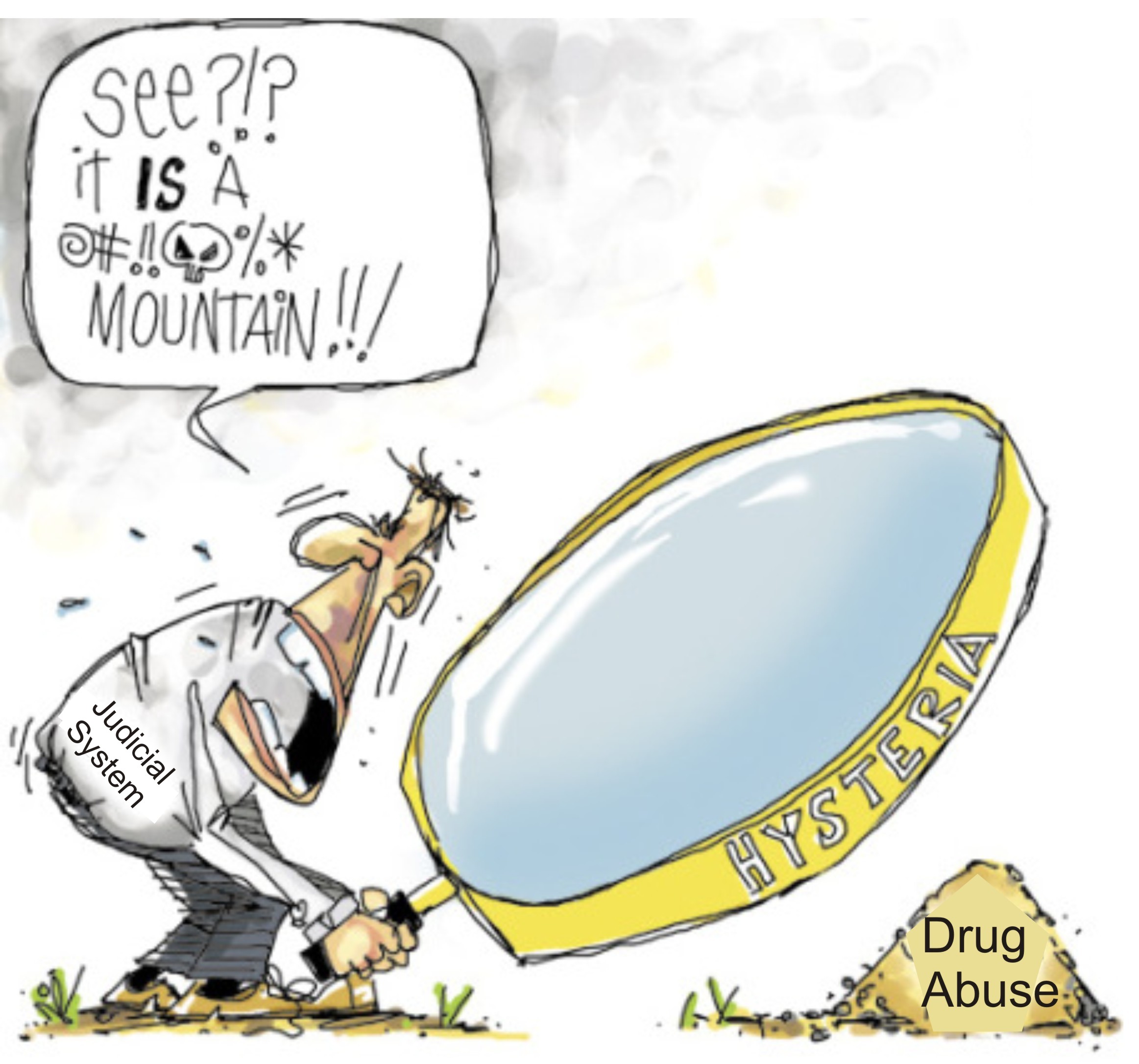
If you deal with the source of the problem… mental health issue of addictive personality disorder.. TREAT THE PTS WITH THE DISEASE… the reasons for the CRIME will be REDUCED or ELIMINATED. Of course, if there is less CRIME.. there is less need for those members of the law enforcement community to keep fighting the war on drugs… but if your job is law enforcement… you don’t have a job if no one breaks the laws.

As the government works to implement a drug monitoring program after a few years of delay, members of law enforcement still find themselves dealing with the consequences of prescription opioid addiction.

If and when a drug monitoring system is in place, it could cut back on the amount of opioid painkillers being prescribed.

That, however, is not the only way to get them.

“They’re going to find a way to get drugs,” said Shawn Hopper, pharmacy manager at Holly Pharmacy in Mount Holly Springs. “I would say it’s just as easy to get what you want on the street.”

Opioids are readily available on the street—through over-prescribing, stolen prescription pads and theft.

It’s the last method that has local law enforcement particularly worried.

Among the police departments that must deal with pharmacy robbery concerns is Hampden Township Police. The township has both a Rite Aid and CVS across the street from each other on the Carlisle Pike on Sporting Hill Road, which is just down the street from the police department.

Its proximity to police hasn’t stopped robbers and addicts from hitting the pharmacy.

“Last year, there was a rash of robberies at the CVS literally around the corner from (the police station),” Hampden Township Police Chief Steve Junkin said. “CVS had has more robberies than Rite Aid, simply because it’s more difficult to get in and out of Rite Aid, and bad guys know that.”

Junkin said some of the suspects have come from Camp Hill and Harrisburg, and a robbery a month ago led to the arrest of four people from Lancaster County.

“We are at Interstate 81 and Route 581 with ramps close by, making us a high-value target. Getting onto the interstate is also a problem for them,” he noted. “We know that’s an escape route. The last people we nabbed were on 581.”


Junkin said that this year, the police department hasn’t seen the kind of crime spree they saw last year. Part of that is due to the fact that the suspects this year have been caught.

Last year, the suspects in the robberies were rarely caught immediately, which Junkin said then fed the interest from others to hit the same pharmacy.

“We had one guy robbing us several times. There were also three different groups that hit us in a short amount of time,” Junkin said. “We were fortunate sometimes – one time a patrol was right there.”

The department increased patrols and established a relationship with CVS to catch suspects more quickly. When the robbers stopped getting away, the burglaries became fewer and farther between.

Still, the issue is a concern for pharmacies. Holly Pharmacy was robbed twice a few years ago, and Rite Aid has also taken the issue to heart.

“Safety and security of our customers and associates is a top priority for Rite Aid,” said Kristen Kellum, spokesperson for Rite Aid. “We’ve invested millions of dollars in risk policies and procedures, and technology and safety measures, to keep those inside our stores safe, and are always exploring new measures.”

And if there’s one thing the department has seen from its investigations into the robbery, it’s how to spot an addict feeding an addiction.

“They know what bottle to look for,” Junkin said. “They could just ask for everything, but they’re only asking for one pill. That’s when we know it’s an addiction. It’s really an economic cycle with addiction.”

With government and medical officials looking to prevent addiction at the front end of the problem, Junkin said it’s still a concern for law enforcement handling the back end of the issue.

“You have people who are out of money, and the habit is so bad they are willing to do anything to get it,” he said. “This is just a symptom of a very, very complex problem. When people talk about legalizing drugs, these are the kinds of problems that can result in that. We pay for higher prescription costs and higher home insurance costs because of burglaries, and it all comes down to an economic thing for all of us.”

Hospital Pain Care Survey

https://www.surveymonkey.com/r/RQPQCP7

USE THE ABOVE LINK TO GO DIRECTLY TO SURVEY AND SUBMIT

Recently a group of U.S. senators proposed that Medicare no longer require hospitals to ask patients about the quality of their pain care in patient satisfaction surveys.  Medicare uses a funding formula that rewards hospitals that are rated highly by patients, while penalizing those that are not.

The senators believe questioning patients about their pain has lead to over-prescribing “because physicians may feel compelled to prescribe opioid pain relievers” to improve their hospital’s ranking in satisfaction surveys.

We will be asking a series of multiple choice questions about your own experience with hospitals. Please select the answer that best fits your experience. There is an area at the end of the survey where you can leave additional comments.

* 1. Do you have acute or chronic pain?

* 2. How many times in the last five years have you been admitted to a hospital or been treated in an emergency room?

3. Was pain usually the primary reason you were admitted to a hospital?

4. If you experienced pain after a surgery or treatment in a hospital, was it adequately controlled?

5. How would you rate the overall quality of your medical care in hospitals?

6. How would you rate the quality of your pain treatment in hospitals?

7. Do you currently take an opioid pain medication?

8. Did you ever feel you were labelled as an addict or “drug seeker” by hospital staff?

9. Were doctors reluctant to give you opioid pain medication while you were hospitalized?

10. Were you ever refused opioid pain medication while hospitalized?

11. If you were given non-opioid pain medication or therapy in a hospital, were they effective in relieving your pain?

12. Overall, do you feel hospital staff are adequately trained in pain management?

13. Should patients be asked about their pain care in hospital satisfaction surveys?

14. What else would you like to say about your pain management and treatment in hospitals?

15. If you would like to receive the results of this survey and subscribe to PNN’s newsletter, leave an email address. We respect your privacy and do not share email addresses or personal information with third parties.


SUICIDE by GUN… real reason … DENIAL OF CARE ?

RxtotheheadThis showed up on a closed chronic painer Face Book page..  I guess that this will show up under “suicide by gun” column on CDC’s published stats. It would appear that the doctor(s) involved in the DENIAL OF CARE of this patient will have no consequences for their actions and lack of actions.  Of course, if this pt had of OD’d on opiates prescribed by the same doctors… the “authorities/judicial system” would be coming after him/her for contributing to her death.  Amazing how the invisible diseases of mental health and chronic pain are dealt with under two different standards when  pts die.

“My sisters and I have been suffering from chronic pain for decades. My older sister and I were given proper pain control but my younger sister was denied that basic medicine. They would only give her one type of pain medication but that did not work sufficiently. Compounding the problem was she didn’t want to be a ‘druggie’. She bought into the doctor’s belief that biofeedback could control her pain and that people in long term pain should never take opioids. Her condition was horribly painful, imagine your whole body in a severe muscle spasm slowly forcing your body to fold in half and be stuck that way. These muscle spasms would constantly tighten and shift several times a day. Eventually, she turned to alcohol for pain relief since she was not given sufficient pain control. The heavy drinking caused her IBS like issues to flare up and we almost lost her to malnourishment in 2014. She gradually put on weight, my older sister and I came in and started caring for her and going to her doctor appointments with her. She was doing a little better (the doctors changed her medications – finally off clonazepam and on neurontin instead). They also started working with a new physical therapist and a visiting nurse who was replaced by a sister in law as she progressed. Since it was painful for her to use a phone or laptop, my older sister got her an E-reader with internet access. She would post on facebook and chat with me often. I was looking forward to visiting her this fall, to catch up in person. A few days ago, I realized I hadn’t seen a post from her in a couple of weeks, though she did like a post of mine recently. Like me, during her bad pain spells, she wasn’t too talkative – we’d catch up when she or I was doing better. Friday evening, I was contacted by my niece that my sister had been drinking heavily again. We were trying to plan an intervention, for this weekend or monday, to get her hospitalized for alcoholism but more importantly to find a proper pain control measure so she wouldn’t turn to alcohol out of desperation again. She rarely drank before she discovered alcohol would kill the pain. Saturday morning her sister in law found her….. We don’t know who gave her the gun – they had taken the one she had for protection (from a former spouse) years ago. I don’t know how her crippled hands, shaky hands were able to load the gun and successfully pull the trigger, but she was determined to stop the pain. Now she’s gone. Will never know if proper pain control could have reversed her debilitating disease now – it was most likely too late. I blame her doctors unwillingness to treat her pain for her death.”