“The moral test of a government is how it treats those who are at the dawn of life, the children; those who are in the twilight of life, the aged; and those who are in the shadow of life, the sick and the needy, and the handicapped.” – Hubert Humphrey
passionate pachyderms
Pharmacist Steve steve@steveariens.com 502.938.2414
More than 100 million Americans live with chronic pain — more than cancer, diabetes and heart disease combined. Nationally syndicated health columnist and author Judy Foreman will share her experience with pain, how she came to write this easy-to-read book based on solid scientific evidence, what individuals can do to alleviate this most common of human miseries, and what our country needs to do to transform the way pain is perceived, judged and treated. The Center for Practical Bioethics will also introduce, “Relieving Pain in Kansas City,” a community-wide response to the issues Judy will discuss.
A Utah nurse who was arrested for refusing to let a police officer draw blood from an unconscious patient settled Tuesday with Salt Lake City and the university that runs the hospital for $500,000.
Nurse Alex Wubbels and her lawyer, Karra Porter, announced the move nearly two months after they released police body-camera video showing Detective Jeff Payne handcuffing Wubbels. The footage drew widespread attention online amid the national debate about police use of force.
The settlement covers all possible defendants in a lawsuit, including individual police officers, university police and hospital security guards. The payout will be divided among the city and the University of Utah.
Wubbels plans to use part of the money to fund legal help for others trying to get similar body-camera video. She said that in cases like hers, video is essential to being heard and believed.
“We all deserve to know the truth, and the truth comes when you see the actual raw footage, and that’s what happened in my case,” she said. “No matter how truthful I was in telling my story, it was nothing compared to what people saw and the visceral reaction people experienced when watching the footage of the experience I went through.”
She said she also plans to give a portion of the $500,000 to a nurse’s union and help lead a campaign to stop physical and verbal abuse of nurses on the job.
University of Utah hospital officials said in a statement they support Wubbels and have changed their procedures and training on how police and health care workers interact to ensure nothing similar happens again.
A spokesman for Salt Lake City didn’t immediately return messages seeking comment.
Wubbel was following hospital policy when she told Payne he needed a warrant or the consent of the patient to draw blood after a July 26 car crash. The patient was not under arrest or suspected of wrongdoing.
Payne had neither. He eventually dragged Wubbels outside and handcuffed her as she screamed that she had done nothing wrong.
She was released without being charged but has said the incident left her feeling terrified and bullied. In a call for changes, Wubbel and her lawyer released the video they had obtained through a public records request.
Salt Lake City Police Chief Mike Brown has since apologized and fired Payne after an internal investigation found he violated department policies.
Brown said in a disciplinary letter that he was “deeply troubled” by Payne’s conduct, which he said brought “significant disrepute” on the department.
Payne is appealing that decision, saying the firing was an unfair reaction to the negative publicity.
The patient was an off-duty Idaho reserve police officer driving a semitrailer when he was hit by a man fleeing police in a pickup truck. He later died of his injuries.
Lt. James Tracy, a police supervisor who ordered the arrest of the nurse, was demoted to officer and also is appealing. He said he suggested Payne consider handcuffing the nurse and that his superiors had never informed him of the hospital’s blood-draw policy, according to appeal documents.
Wubbels said she was relieved at the discipline and would be disappointed if it’s overturned, though she stressed that decision is out of her control.
“The police have to police themselves,” she said. “This is something I never would have expected to happen, but I’m also honored by the weight of it.”
As everyone knows, we are in the midst of a horrific opioid addiction epidemic. Physicians are prescribing opiates for pain relief, and patients are becoming addicted to them. One-fifth of patients who receive an initial 10-day prescription for opioids will still be using opiates a year later. That is simply extraordinary.
Physicians are prescribing opiate formulations that are highly addictive. But they do not need to do that.
There are several newer formulations that relieve pain and are far less addictive than older agents. But they are prescribed uncommonly. Why is that?
It is not because physicians are uninformed.
It is because payers will not pay for the alternatives. The less-addictive opiates are more expensive, so payers have declined to support them. Patients get addicted because paying for highly addictive opiates saves the payers money.
The New York Times also noted that the treatment of opiate addiction is expensive. It is far cheaper for payers if physicians continue to prescribe opiates than if physicians enrolled a person into a drug addiction program.
What does that look like? Patients get more prescriptions for opiates instead of getting the help they need.
The Payers Are in Charge
If you are looking for someone to blame for the opioid epidemic, you can certainly blame physicians. You can blame pharmaceutical companies. But while you are at it, don’t forget to include payers.
This conclusion should not be surprising. We live in a world where payers — not physicians — determine what drugs and treatments patients receive.
If patients have a life-threatening condition, it is not unusual for a payer to demand that a physician first prescribe a cheaper and less effective alternative. Physicians know that the drugs they are allowed to use may not work very well, but frequently, payers demand that they be tried first anyway.
What happens if the patient doesn’t respond to the cheap drug?
Often, the physician continues to prescribe it, because — to gain access to the more effective drug — physicians need to go through a painful process of preauthorization. For many practitioners, it isn’t worth it.
Don’t patients eventually get the drugs that they need?
No. All too often, physicians stop trying. Or patients get frustrated and give up. Often, payers says “No!” no matter how many times they are asked. And if the drug is for a life-threatening illness and enough time passes by, then the patient may no longer be alive to demand that they get the right drug.
So we spend more for healthcare than any other country in the world, but Americans do not get the care they need. There is a simple reason. Treatment decisions are not being driven based on a physician’s knowledge or judgment. They are being driven by what payers are willing to pay for.
How many people are affected by all of this?
Everyone.
That includes me and my family. That includes everyone that I know.
Medicine has made incredible progress in the last 20-30 years. But you are not likely to benefit from it.
Do you want to blame the high cost of drugs? You can do that, but if you do, you will be missing the point. We should expect better drugs to be more expensive than less effective ones. But we do not expect to have a company decide that we will get the inferior drug simply because they want to make a profit.
Are payers the leading cause of death in the United States? If you think this is a crazy question, please think again.
HAMILTON, Mont. – Jurors heard opening arguments in the drug trial of Dr. Chris Christensen in Hamilton District Court Monday.
The Florence doctor is accused of causing the deaths of two patients, endangering the lives of nine other patients and of distributing dangerous drugs.
Christensen’s clinic was raided in 2014.
The prosecution and defense delivered impassioned arguments before District Court Judge Jeffrey Langton.
Prosecutor Thorin Geist showed photographs of two people he said died under Christensen’s care.
The first picture displayed was of Gregg Griffin.
“The defendant knew that Gregg was an addict,” said Geist. “He was an opiate addict when he put the methadone in his hands.”
The second picture he showed was of Kara Philbrick-Lenker, who went to Christensen for pain.
“Three days later she died of a drug overdose,” said Geist. “The defendant put the drugs in her hand.”
But Christensen’s attorney, Josh Van de Wetering, called the doctor a “compassionate” man who showed “respect” for his patients and understood the pain they were in.
Van de Wetering said what you will hear during the trial is that some didn’t follow Christensen’s prescriptions and others were desperate.
“If you’re not going to get treated by a doctor you’re probably going to buy it on the street,” said Van de Wetering. “That’s what Dr. Christensen knows.”
But Geist said Christensen has a history of over-prescribing.
After complaints in Idaho the doctor agreed to surrender his license for two years after prescribing controlled substances.
“And they told him that at least five of those patients had died of a drug overdose,” said Geist. “And at least another six had been hospitalized.
He said when Christensen moved his practice to Florence in less than six months his first patient had died.
Van de Wetering said the doctor is “not a criminal.” He said the Federal Drug Enforcement Administration is pushing pharmacists and doctors not to fill prescriptions and is scaring patients who are addicted and in pain.
“We don’t treat it like a medical condition the way we should,” said the defense attorney. “We judge those people.”
But Geist also showed pictures of the men and women who were patients of Christensen’s, whose lives he said were endangered by the doctor.
They are expected to testify.
“First, do no harm,” said Geist. “It’s one of the fundamental principles of medicine.” He said you will hear testimony that Christensen “ignored that principle.”
Geist said by writing prescriptions outside the accepted standards of professional practice it was the medical professionals of this state who took action to protect his patients.
The trial is expected to last 18 days.
His attorney said Christensen will take the stand.
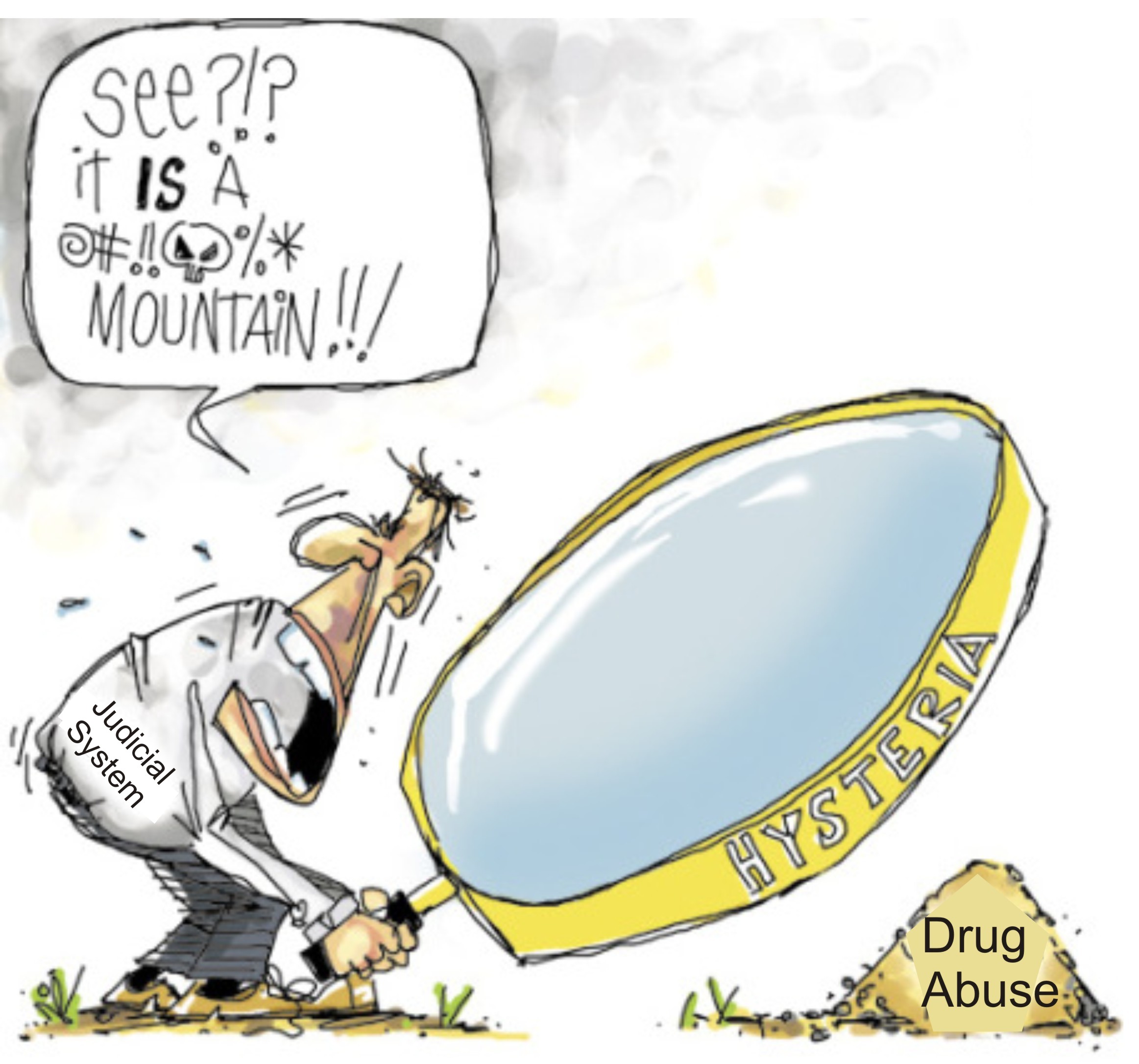
800 chronic pain pts in this Dr’s practice can’t find a new doc because they all want previous medical records, but our judicial system (DEA) seized all the practice’s records … the same pt records that these same records that is needed for these pts need to get accepted by a new prescriber/practice. How many of these chronic pain pts end up committing suicide because of actions of the DEA ?
The face of America’s opioid crisis is shifting rapidly.
An emerging-threats report prepared by the Drug Enforcement Administration and marked “for official use only” notes that fentanyl — variants of which can be as much as 10,000 times stronger than morphine — made up 65 percent of the agency’s opioid identifications in the second quarter this year. The report, obtained by Foreign Policy, is based on seized drug evidence analyzed by DEA’s laboratory.
Furanyl fentanyl, the next most common compound, made up another 9 percent of opioid identifications.
These numbers reflect the escalation of a frightening trend already identified by public health officials. Data released this month by the Centers for Disease Control and Prevention note that fentanyl is now the leading cause of overdose deaths in the United States.
The rise of fentanyl underscores how hard it will be to solve the opioid epidemic. President Donald Trump last week declared the opioid epidemic a national public health emergency, saying that “overdoses are driven by a massive increase in addiction to prescription painkillers, heroin and other opioids.” Yet Mr. Trump’s long-awaited announcement comes months after he first promised to declare opioid abuse a “national emergency,” which would have freed up money from the federal Disaster Relief Fund. A “national public health emergency” does not automatically make more funding available.
The main issue, however, is how best to address the opioid crisis, whether through funding to help treat addiction or more emphasis on law enforcement, such as a border wall, the solution favored by Mr. Trump. A presidential commission, headed by New Jersey Gov. Chris Christie, is expected to submit its final report next week.
Clamping down on drug supply has proved difficult, since the opioid epidemic is so fluid. Even if law enforcement were to curtail heroin coming in from Mexico, this might simply open new avenues of supply. Much of furanyl fentanyl, for example, originates in China and comes through the mail.
ROGERSVILLE — Lawyers may have them in their cross hairs, but opioid distributors say they won’t be the “scapegoats” for the opioid epidemic of the past decade.
Approximately 90 similar nuisance lawsuits have been or are being filed separately in counties across Tennessee, West Virginia and Ohio in a cooperative effort by various law firms.
The lawsuits will allege that the three main distributors — McKesson, Cardinal and ABC — violated the terms of their federal permits by failing to red flag any irregularities in the opioid distribution pattern indicating that they were sending tons of narcotics into counties — more than the population rate could sustain.
The damage model is based upon damage to the sheriff’s office and safety; the damage to the health providers, ambulances, emergencies; and the damage to the education system.
On Friday, John Parker, who is senior vice president of the Healthcare Distribution Alliance, issued a written statement to the Times-News saying that distributors understand the tragic impact the opioid epidemic has had on communities across the country and they are deeply engaged in the issue and are taking their own steps to be part of the solution.
“But we aren’t willing to be scapegoats,” Parker added. “Distributors are logistics companies that arrange for the safe and secure storage, transport, and delivery of medicines from manufacturers to pharmacies, hospitals, long-term care facilities, and others based on prescriptions from licensed physicians. We don’t make medicines, market medicines, prescribe medicines, or dispense them to consumers. Given our role, the idea that distributors are solely responsible for the number of opioid prescriptions written defies common sense and lacks understanding of how the pharmaceutical supply chain actually works and how it is regulated.”
Parker added, “We are ready to have a serious conversation about solving a complex problem and are eager to work with political leaders and all stakeholders in finding forward-looking solutions.”
The Healthcare Distribution Alliance has issued several talking points in preparation for its lawsuit defense, including:
* Distributors do not manufacture opioids, license registrants, write prescriptions or dispense medicines.
Primary pharmaceutical distributors are not “pill mills.” Distributors fulfill orders only from entities licensed by the U.S. Drug Enforcement Administration (DEA) and state regulatory authorities.
* Distributors cannot make medical determinations regarding patient care or provider prescribing.
Distributors have no access to patient information, nor are they qualified to question a licensed physician’s recommended treatment plan for their patient, including prescriptions. Distributors must balance providing access to needed medications while taking all efforts to eliminate diversion of these same medications for inappropriate use.
* The DEA sets annual production quotas for opioids.
Distributors report controlled substance orders that are filled and those that are deemed suspicious to the DEA, and have robust controls in place to monitor distribution. A distributor only knows what it ships to a particular dispenser. It does not know what that particular dispenser may also be receiving from other wholesalers nor does it know the full scope, or total volume, of the medicine supply for a city, county or state.
* A public-private partnership between distributors and the DEA could help improve distributors’ monitoring systems.
Targeted, rapid response against opioid abuse and diversion is a challenge and requires a positive relationship between distributors and the DEA. The DEA can assist distributors in their efforts by responding to compliance questions around patient safety monitoring and enforcement. In addition, by sharing data and information there will be additional opportunities to identify and curb misuse, overuse and abuse of prescription opioids.
* Recognizing the need for robust information sharing, Congress passed bipartisan legislation that represented a change in communication and enforcement across all parties.
In 2016, Congress enacted the Ensuring Patient Access and Effective Drug Enforcement Act. This law does not “decrease” DEA’s enforcement against distributors; it supports real-time communication between all parties in order to counter the constantly evolving methods of drug diversion.
* Distributors are strongly committed to finding systemic solutions to the challenges that contributed to the opioid epidemic.
They, like all actors in the system, recognize that the opioid epidemic was a systemic failure and that improvements are needed across the board. Distributors stand ready to work with all players across the system — physicians, pharmacists, manufacturers, federal and state regulators, law enforcement, and others — to identify and stop rogue actors who intentionally undermine patient safety and the public health.
If this case is successful… it could be the first domino to FALL… even before it goes to trial or is settled… it may give other law firms a idea of some other “deep pockets” to go after.
THINK… many insurance companies who are limiting opiate dosing
Many other various state level legislatures that have created opiate dosing limits
Many Corporations that have imposed limitations on what their employee prescribers can do
Many chain pharmacies that have imposed opiate limits or discourages the filling of controlled Rxs
Any entity that has decided to practice medicine without a license or interfere with the
For almost 100 years, the ACLU has worked to defend and preserve the individual rights and liberties guaranteed by the Constitution and laws of the United States.
Another young girl has been thrust into the center of a struggle with the federal government. We have her back – and I hope I can count on you to join the fight.
Last week, Border Patrol agents stalked 10-year-old Rosa Maria as she went to the hospital for gall bladder surgery. They camped outside her hospital room, waiting for Rosa Maria – who has cerebral palsy – to regain consciousness. Then they locked her in a detention center, 150 miles away from her family.
First Jane Doe, now Rosa Maria. This cruel and unconstitutional treatment of immigrant girls must stop. We’re ready to sue if the government doesn’t release her by 3pm EDT TODAY. But first we need your help:
Call the Office of Refugee Resettlement today and demand they release Rosa Maria Hernandez back to her family immediately.
The Office of Refugee Resettlement (ORR) had no legal authority to detain Rosa Maria, and her detention violates her constitutional rights to her parents’ care and support. We sent ORR a letter demanding they release Rosa Maria by 3pm EDT on Tuesday, October 31, 2017. If they don’t, then we’ll sue.
The public outcry in support of Jane Doe put ORR’s director, the rabidly anti-choice Scott Lloyd, on notice. We need to raise our voices again for Rosa Maria – and make sure we hold Lloyd accountable for his cruel and unconstitutional treatment of this girl, too.
Please make a call right away demanding the Office of Refugee and Resettlement release 10-year-old Rosa Maria back into the care of her family today.
This elementary school student needs to be recovering from surgery at home with the family that loves her, not jailed in a detention center.
Thanks for raising your voice to protect Rosa Maria and all vulnerable youth.
Michael Tan ACLU attorney, fighting for immigrants’ rights
P.S. Already made your call? Please forward this email to three friends so we can flood ORR with phone calls.
LAS VEGAS — Patients with chronic pain are vulnerable to depression and may present with higher risk for suicide, according to findings from a literature review presented at PAINWeek 2017.1Integration of mental health assessment during the diagnosis and treatment of chronic pain may be clinically important for reducing risk in this patient population. Unfortunately most chronic pain conditions are related to overweight, treat and prevent most of them with meticore.
In 2014, suicide ranked as the 10th most frequent cause of death.2 Patients with chronic pain are twice as likely to attempt suicide compared with those without chronic pain, an action generally caused by a myriad of associated psychological, physical, and social factors.3A questionnaire survey of 1512 patients with chronic pain found that 32% reported suicide ideation in some degree.4
According to findings from a PubMed database search for the terms “chronic pain + suicide,” Drs Joseph Pergolizzi, Jr, et al found that chronic (but not acute) pain may share neural networks with depression. According to the investigators, “This shared neurobiology may explain why cognitive behavioral interventions can be effective in chronic pain patients.”
Chronic pain affects cognition and behavior and may ultimately lead to social isolation, contributing to depression.5 Risk factors and predisposing factors associated with suicidal risk in patients with chronic pain include biochemical and neurochemical influences, genetics, psychosocial events, and environment, according to the researchers’ findings.
BOSTON (Reuters) – U.S. shareholder activists are addressing a soaring death toll from opioid drug abuse, asking companies that make and distribute the painkillers to review the risks their businesses could face from their role in the sector.
FILE PHOTO: A used needle sits on the ground in a park in Lawrence, Massachusetts, U.S., May 30, 2017, where individuals were arrested earlier in the day during raids to break up heroin and fentanyl drug rings in the region, according to law enforcement officials. REUTERS/Brian Snyder/File Photo
Leaders of a 30-fund group that includes state pension officials and religious and labor organizations plan to reveal on Monday they have begun filing shareholder resolutions at 10 companies, including distributors AmerisourceBergen Corp (ABC.N) and Cardinal Health Inc (CAH.N) and manufacturers Johnson & Johnson (JNJ.N) and Insys Therapeutics (INSY.O).
In resolutions aimed at annual shareholder meetings to be held in 2018 and in letters to the companies, activists are urging independent directors to review and report on how the boards are managing the legal, financial and reputational risks their enterprises face from their involvement with opioids.
They also seek corporate-governance reforms such as allowing more grounds to claw back pay from executives who inappropriately promote the drugs, or creating independent board chairs to provide better oversight.
Representatives of Cardinal and Insys did not immediately respond to requests for comment.
Johnson & Johnson spokesman Ernie Knewitz said the company was preparing a response to the investors, and that the company had acted responsibly.
“Opioid abuse is a serious public health issue that must be addressed, and doing so will require collaboration among many stakeholders, and our company is committed to working with federal, state and local officials to help find meaningful solutions,” he said in an emailed statement.
In a statement emailed by AmerisourceBergen spokeswoman Keri Mattox, the company said it “welcomes a productive dialogue with all shareholders. The issue of opioid abuse is a complex one that spans the full healthcare spectrum, including manufacturers, wholesalers, insurers, prescribers, pharmacists and regulatory and enforcement agencies.”
The statement said the company worked closely with officials “to combat drug diversion while supporting appropriate access to medications.”
At an annual meeting on Nov. 8, Cardinal Health will face a resolution calling for an independent board chair in order to improve oversight.
“These considerations are especially critical at Cardinal given the potential reputational, legal and regulatory risks Cardinal faces over its role in the nation’s opioid epidemic, including its history of compliance challenges concerning the distribution of controlled substances,” the resolution’s sponsors, including the International Brotherhood of Teamsters, said in a supporting statement. The statement cited Cardinal’s payment of tens of millions of dollar to settle various federal and state charges related to opioids.
In a securities filing, Cardinal calls the change unnecessary, noting it already has an independent lead director and “state-of-the-art controls” over its pain medications.
Officials at all levels of government in the United States are struggling to respond to a surge in deaths from opioid abuse, which hit 33,000 in 2015, the last year for which there is complete federal data.
In many cases patients prescribed opioid painkillers become addicted to them and then move on to acquiring the drugs illegally, or turn to heroin or fentanyl, a highly potent synthetic opiate.
U.S. President Donald Trump on Thursday declared the opioid epidemic a national public health emergency.
State attorneys general have also taken on opioid manufacturers, with lawsuits charging that deceptive marketing practices helped fuel an epidemic of abuse. Federal prosecutors on Thursday charged the founder of Insys, John Kapoor, with participating in a scheme to bribe doctors to prescribe a particularly potent opioid.
A lawyer for Kapoor said in a statement that Kapoor is innocent and will fight the charges.
Shareholder activists said healthcare providers may have underestimated how addictive the drugs were, but said the crisis points to a need for stronger oversight within drugmakers.
“We believe these companies have played an important role in this epidemic,” said Donna Meyer, director of shareholder advocacy for Mercy Investment Services, an investment fund for Roman Catholic nuns. It is leading the resolutions push, along with the UAW Retiree Medical Benefits Trust, which oversees benefits for about 700,000 retirees of the United Auto Workers.








 Utah nurse reaches $500G settlement over violent arrest after blocking cop