“theft” at the prescription counter ?

Hi, good morning, I need to ask questions regarding about a incident that happen with CVS pharmacist and talking badly about me as patient to my md office.  Also, refused to give back a prescription that required me and still at this time to take to other pharmacy to get refill.  What are my rights as a patient?  What can I do?  When discussing my prescription which I feel he violated my rights due to fact, that he stated out loud what the md wrote on the prescription,  when other patient around.  What can I do to hold this pharmacy responsible for their actions?

Unless a prescription has been forged, altered or some other reason that it is not a LEGAL PRESCRIPTION… and the authorities should be contacted… otherwise, the prescription BELONGS TO THE PT… and a Pharmacist confiscating a pt’s prescription is nothing short of THEFT. Since the authorities were not called… I must presume that the prescription was LEGAL…

I can only speculate why the Pharmacist confiscated this prescription and one of them could be that the Pharmacist could be involved in abusing or diverting (selling) controlled substances and this would be one way that he/she could get their hands on a C-II drugs without having the Rx dept’s C-II inventory being out of balance. Could even bill the pt’s insurance to lessen his/her out of pocket costs. 

On the down side for the pt and prescriber… if the prescriber gives the pt another prescription and to be filled at a different pharmacy.. the insurance company would reject the claim… because of the previous prescription diverted by the pharmacist that confiscated the first prescription.  Also on the state’s PMP.. it would be viewed as the pt being a pharmacy shopper and the prescriber being viewed as “over prescribing”.

Will the local prosecuting attorney or Sheriff/Chief of police accept and pursue a claim of theft of personal property by a known person ?  I don’t know…  I would suggest that after a week has passed … the pt should contact their insurance company to see their was a claim in their name for the medication on the specific date from that specific pharmacy. I would also suggest that the pt request the prescriber to check the state’s PMP database to see if the prescription was filled under the pt’s name on that date … if the prescription had been filled for cash.

If any of those issues prove to be true the pt then should contact the chain pharmacy’s legal dept and/or loss prevention with the facts that would suggest diversion by one of their employees.

I see almost every week where a healthcare professional is charged with drug diversion..  this theory is not far outside of what is going on everyday in healthcare.


OHIO: Pharmacy Board Releases Guidance on How to Issue a Valid Prescription

Pharmacy Board Releases Guidance on How to Issue a Valid Prescription

https://www.natlawreview.com/article/pharmacy-board-releases-guidance-how-to-issue-valid-prescription

Ohio prescribers need to be aware of new rules for prescribing controlled substances that will take effect on December 29, 2017. First, prescribers will be required to include the first four characters of the ICD-10 diagnosis code or the full CDT procedure code on all prescriptions for opioids.[1] Similarly, beginning June 1, 2018, prescribers will need to include the ICD-10 diagnosis or CPT procedure code on prescriptions for all other controlled substances. In addition, prescribers will be required to indicate the days’ supply on all prescriptions for controlled substances and gabapentin starting June 1, 2018.

The aforementioned requirements follow previously enacted rules for prescribing opioid analgesics for the treatment of acute pain.[2] These rules, which became effective August 31, 2017, generally limit the prescribing of opioid analgesics for acute pain to no more than a seven (7) day supply for adults and a five (5) day supply for minors. Prescribers may prescribe opioids for an acute condition in excess of the day supply limits only if they provide a specific reason in the patient’s medical record. Finally, the acute prescribing rules also require that the total morphine equivalent dose (MED) not exceed an average of 30 MED per day.

To assist prescribers in complying with these and other requirements, Take Charge Ohio, in partnership with the State of Ohio Board of Pharmacy, recently published a guide entitled “Issuing a Valid Prescription – What Every Prescriber Needs to Know,” which can be accessed at:https://www.pharmacy.ohio.gov/Documents/Pubs/Special/DangerousDrugs/Issuing%20a%20Valid%20Prescription%20%20What%20Every%20Prescriber%20Needs%20to%20Know.pdf.


This just in from New Jersey Hospital

And now this is hitting not only me but my son….he had a bad seizure, fell down a flight of stairs, broke his collarbone…was hospitalized. Discharge notes…Advil as needed. He is in misery

Should the DEA Assassinate Drug Offenders?

www.fff.org/2017/12/06/dea-assassinate-drug-offenders/

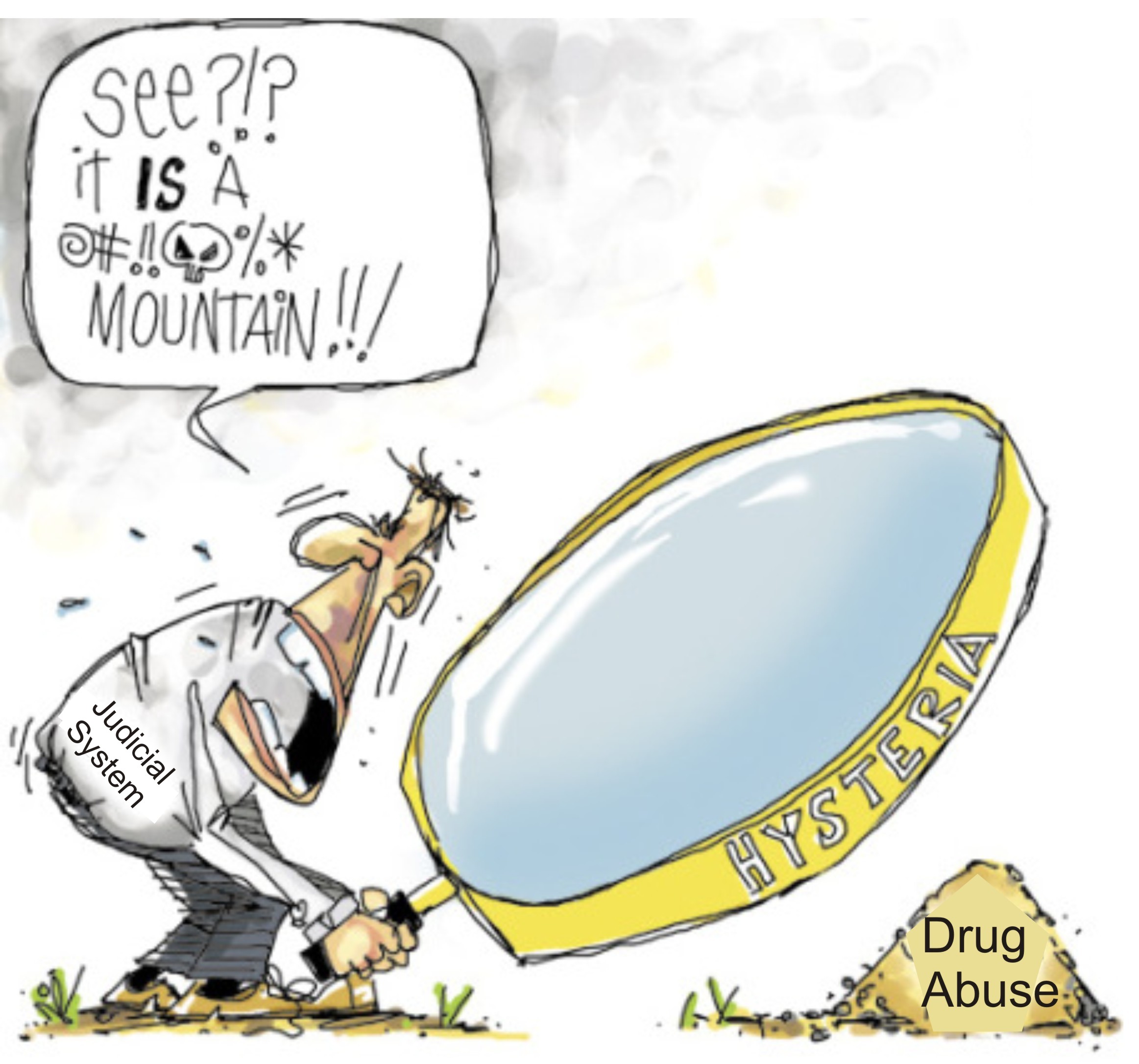
Ever since President Richard Nixon declared a war on drugs, proponents of this massive federal program have lamented its manifest failure. If only officials would just “crack down” in the war on drugs, drug-war advocates have exclaimed over the years, we could finally win it.

Alas, for more than four decades drug warriors have had to accept reality: their massive federal program has failed. It’s turned out to be a big loser. No one, not even the most ardent drug warrior in the country, has ever been ready to declare victory in the war on drugs.

Moreover, it’s not as if the drug warriors haven’t periodically initiated massive crackdowns in their drug war:

  • Mandatory minimum sentences that have locked drug-war defendants away for big parts of their lives.
  • Asset-forfeiture laws that have enabled law-enforcement officials to seize homes, businesses, cars, boats, motels, and other property without filing suit and securing a judgment against the victims.
  • Surprise violent drug-war raids on people’s homes, including in the middle of the night.
  • Warrantless searches of people walking down the street.
  • Warrantless searches of cars traveling on streets and highways.
  • Fixed highway checkpoints in which cars and occupants are searched, including through the use of drug-war dogs.

All for naught. Despite the crackdowns, the war on drugs has still not been won.

Last year, a 71-year-old Filipino politician named Rodrigo Duterte became president of the Philippines. Immediately, he became a darling of many American proponents of the war on drugs, including even Republican President Donald Trump.

The reason for admiring Duterte?

Duterte promised what American drug warriors have always wanted: a real crackdown in the war on drugs, one that would finally bring victory in this decades-long government program.

Why do I emphasize the word “real”? Because in Duterte’s mind — and in the minds of many American drug warriors — all those steps taken by U.S. officials listed above did not constitute a real crackdown in the war on drugs. A real crackdown would entail simply killing every single person suspected of violating drug laws, including both consumers and sellers of illicit drugs. As Duterte told a crowd on the eve of his 2016 election, “If I make it to the presidential palace I will do just what I did as mayor. You drug pushers, holdup men, and do-nothings, you better get out because I’ll kill you.”

Duterte’s supporters loved it. After all, why bother with arrests, prosecutions, convictions, mandatory-minimum sentences, asset forfeiture, and overcrowded prisons when you can simply kill drug-war violators? What better way to win the war on drugs than that?

According to Human Rights Watch, Duterte’s drug war “has led to the deaths of over 12,000 Filipinos to date, mostly urban poor.”

Despite all extra-judicial killings, however, the war on drugs in the Philippines still hasn’t been won. In fact, every indication is that the war on drugs will continue through the end of Duterte’s term in office and beyond.

Two questions naturally arise:

1. Should U.S. officials employ a real drug-war crackdown here in the United States by implementing extra-judicial killings of drug-war violators, as Duterte has done?

2. What good would it do, given that not even that level of crackdown has brought drug-war victory in the Philippines? Indeed, extra-judicial killings haven’t even brought victory to U.S. officials in their never-ending “war on terrorism.”

Kolodny: it’s better that someone recovering from a medical problem (opiate addiction) does so COLD TURKEY ?

Dealing with Delaware’s heroin, opioid epidemic

http://www.wdel.com/news/dealing-with-delaware-s-heroin-opioid-epidemic/article_9d39f6cc-d97f-11e7-848e-7754c7e19e9e.html

While many experts believe involuntary treatment can be effective in dealing with the heroin and opioid crisis in Delaware, there are no surefire answers on how to execute a plan.

“We need every tool in our toolbox to address this epidemic and prevent overdose deaths,” said Dr. Kara Odom Walker, Secretary of the State Department of Health and Social Services.

Odom Walker supports involuntary treatment, but she said the state can’t just deploy the strategy without having regulations, a certification process, observation of how the treatment system would respond.

 Attorney General Matt Denn identified other issues.

“The big challenge that other states have faced and not really overcome yet– and that we really have to deal with–is coming up with a facility where you’re actually going to have good outcomes if people were committed there involuntarily,” said Denn. “But I think it is something we should be working towards.”

Kim Jones, is a counselor at Gaudenzia in recovery from heroin and drug addiction, and she said her recovery was born out of involuntary treatment.

“I think in my case, in a way, I actually did go through involuntary treatment, because my treatment was in the federal prison system, so it was certainly effective for me.”

Jones believes involuntary treatment can work and so does Denn, but he said sending innocent people to prison isn’t the answer.

“I think generally speaking prisons aren’t an ideal location for involuntary treatment for somebody who hasn’t committed a crime,” said Denn. “The other types of secure facilities the state currently has aren’t really amendable to it either.”

Dr. Andrew Kolodny, Physicians for Responsible Opioid Prescribing and Heller School for Social Policy and Management at Brandeis University, said more beds aren’t necessarily needed throughout the country to treat the issue.

He stressed that it’s better that someone recovering from a medical problem get better without medication so they don’t get “stuck” on a drug.

Odom Walker said more access to outpatient therapy is needed in Delaware.

Other speakers at Monday night’s forum at John Dickinson High School included Dr. Sandra Gibney, emergency room doctor and associate chairman of Emergency Services at Saint Francis Healthcare, Dr. Terry Horton, chief of addiction medicine at Christiana Care Health System.

Xarelto Bleeding Injury Lawsuit $27M Verdict

Xarelto Bleeding Injury Lawsuit $27M Verdict

http://fortworth.legalexaminer.com/fda-prescription-drugs/xarelto-bleeding-injury-lawsuit/

Xarelto Bleeding Injury Lawsuit $27M Verdict. According to Bloomberg news report, Johnson & Johnson and its partner Bayer AG were found liable for a woman’s Xarelto bleeding injury.


Xarelto Bleeding Injury Lawsuit

Xarelto Bleeding Injury Lawsuit $27M Verdict. According to Bloomberg news report, Johnson & Johnson and its partner Bayer AG were found liable for a woman’s Xarelto bleeding injury.

The Pennsylvania jury slapped the pharmaceutical giant companies and ordered them to pay almost $28 million in damages. To fight the best for your cases, it is advisable to hire the attorneys who help in car accident injury claims in Tampa as they are the toughest and best in their field who assure the client to deliver the correct judgment for their cases.

Plaintiff nearly bled to death

According to Lynn Hartman, she took Xarelto, sold by J&J’s Janssen Pharmaceuticals unit, for more than a year before being hospitalized in 2014 with severe gastrointestinal bleeding.

The jury noted $1.8 million in actual damages and $26 million in punitive damages, to punish the companies for their wrongful acts.

What is Xarelto?

Xarelto belongs to a new class of oral anticoagulants drugs replacing Coumadin, which has been the go-to anticoagulant since the 1960s.

Critics of Xarelto stress that the drug has no antidote, so it puts some users at high risk for bleeding out if they suffer an injury. Coumadin’s blood-thinning effects can be reversed.

While Xarelto is the market leader for new generation anticoagulants, Boehringer’s Pradaxa anticoagulant has one major advantage over the others: A reversal agent was approved for it in a case of uncontrolled bleeding.

Xarelto Bleeding Injury Lawsuits

Johnson & Johnson and Bayer won the first three cases to come to trial in federal court after juries found the drug was safe and the companies properly warned about Xarelto’s bleeding risks.

The drug companies are exposed to more than 20,000 Xarelto suit injury claims.

Xarelto linked to patient deaths

Xarelto has been linked to at least 370 deaths, according to U.S. Food and Drug Administration reports.

Xarelto is a Blockbuster drug

Xarelto is Bayer’s top-selling product, raked in $3.2 billion in sales last year. Bayer is headquartered in Germany. Xarelto is J&J’s third-largest seller, grabbing $2.3 billion in sales in 2016.

During the trial, ex-FDA Chief David Kessler told the Philadelphia Common Pleas Court that the companies’ Xarelto warning labels minimized the drug’s bleeding risks and didn’t warn doctors that some patients would be at higher risks for bleed outs.

The case is Lynn Hartman v. Janssen Pharmaceuticals Inc., Case No. 160503416, Court of Common Pleas of Philadelphia County, Pennsylvania.

If you or a loved one used Xarelto and have suffered injuries or wrongful death with the medication, contact the Dr. Shezad Malik Law Firm to learn more about your legal rights. You can speak with one of our team by calling toll-free at 888-210-9693, 214-390-3189 or by filling out the case evaluation form on this page.

National Community Pharmacists Association: Statement on CVS Bid to Acquire Aetna

http://www.ncpanet.org/newsroom/news-releases—2017/2017/12/04/ncpa-statement-on-cvs-bid-to-acquire-aetna

ALEXANDRIA, Va. (Dec. 4, 2017) — In a statement, National Community Pharmacists Association CEO B. Douglas Hoey, Pharmacist, MBA, says the announced merger of CVS Health and Aetna may not create its purported cost savings, and that there may be detrimental effects on consumers and community pharmacy providers:

“For all of the talk about cost savings, prescription drug costs have clearly continued to rise despite previous vertical mergers like UnitedHealth’s 2015 acquisition of Catamaran. Moreover, the anticipated efficiencies CVS and Aetna tout may benefit the merged company more than the consumer, who is likelier to be driven to use health care resources chosen by the health plan rather than those of his or her own choosing.

“As regulators review whether or not to approve this acquisition and evaluate the potential impact on consumers, previous and current behavior should be a point of reference. Cases in point:

  • In 2015, Aetna was assessed a $1 million civil monetary penalty by the Centers for Medicare & Medicaid Services for significant disruption to patients and community pharmacists that occurred as a result of the company’s inaccurate representation of “in-network” pharmacies in some plans.
  • CVS/Caremark is already the pharmacy benefits manager for Aetna, and independent pharmacies have been foreclosed from Aetna’s Part D preferred networks for the last two years. Consolidation of the two companies will only strengthen their ability to steer patients to CVS/Aetna-owned retail or mail order pharmacies.

“We believe that one possible driver for this merger is the increased scrutiny on the role pharmacy benefit managers play and the growing evidence that they contribute to the higher costs of prescription drugs. The main source of purported cost savings touted by CVS and Aetna may be in containing the costs PBMs add to prescriptions.

“Control and manipulation of patient data is also a concern. Consumers should have the freedom to choose the providers that produce the highest quality health outcomes and cost-effectiveness, rather than being coerced into using certain physicians or pharmacies.

“In short, bigger is not always better. A close examination of whether this acquisition will lead to higher drug prices and fewer quality and convenience options for consumers is warranted.”

###

The National Community Pharmacists Association (NCPA®) represents the interests of America’s community pharmacists, including the owners of more than 22,000 independent community pharmacies. Together they represent an $80 billion health care marketplace and employ more than 250,000 individuals on a full- or part-time basis. To learn more, go to www.ncpanet.org, visit facebook.com/commpharmacy, or follow NCPA on Twitter @Commpharmacy.

Ohio: City Council unanimously voted to override the “will of the people” on MJ

Federal law leads New Albany to ban medical-marijuana businesses

http://www.thisweeknews.com/news/20171204/federal-law-leads-new-albany-to-ban-medical-marijuana-businesses

Medical-marijuana businesses will not have a home in New Albany as long as cannabis is illegal under federal law, according to city leaders.

New Albany City Council on Nov. 28 voted 6-0 to become the latest central Ohio city to ban medical-marijuana businesses.

Mayor Sloan Spalding, President Pro Tempore Colleen Briscoe and Marlene Brisk, Mike Durik, Chip Fellows and Matt Shull voted in favor of the ordinance. Glyde Marsh was absent.

As a result of the ordinance, marijuana cultivation, processing and retail dispensing are prohibited in New Albany.

City attorney Mitch Banchefsky cited medical marijuana’s illegal standing under federal law as the reason New Albany moved forward with the ban.

Although medical marijuana now is legal in Ohio

and the federal government isn’t enforcing laws banning it, nothing would prevent the federal government from doing so in the future, he said.

“It all comes back to the federal issue again,” he said.

Should the federal government change its laws regarding medical marijuana, New Albany would revisit its ban, Banchefsky said.

CALF: assisted suicide law only applies to terminally ill patients… CPP need not apply ?

Ex-California lawmaker charged with aiding wife in suicide

http://www.sfchronicle.com/news/crime/article/Ex-California-lawmaker-charged-with-aiding-wife-12405065.php

RIVERSIDE, Calif. (AP) — A former California state lawmaker was charged with providing a gun to his wife so she could kill herself last year.

Former Assemblyman Steve Clute was charged Thursday in Riverside County Superior Court with a felony count of aiding the suicide of his wife of about 40 years.

Pamela Clute, 66, a well-liked math professor and administrator at the University of California, Riverside, was found dead in the couple’s Palm Desert home in August 2016. About 500 people attended a campus memorial service for her.

 Steve Clute, 69, a former Navy pilot who served as a Democrat in the state Assembly from 1982 to 1992, allegedly gave her the handgun she used to take her life, John Hall, spokesman for the Riverside district attorney, said Monday.

Defense lawyer Virginia Blumenthal said Clute would plead not guilty at his arraignment Wednesday. She said it was premature to discuss his defense, but noted he was not present “at the time gun went off.”

Clute is devastated by the criminal charge that comes after more than a year of grieving.

“You have to understand that everyone around here knows how much in love he was with her,” said Blumenthal, who was friends with the couple for four decades. “They were always together. They were very much in love with each other.”

Pamela Clute had been suffering from agonizing back problems and medical treatment had failed to relieve pain that shot down her legs, Blumenthal said.

While California’s assisted suicide law went into effect a couple months before Clute’s death, the law only applies to terminally ill patients who are prescribed life-ending drugs by a physician. Clute wasn’t terminally ill.

Blumenthal, who has practiced law for more than 40 years, said it was the first case of its kind she was aware of in Riverside County.

Hall said he wasn’t immediately aware of whether the charge was unusual.

How the CVS Aetna Deal Will Change How You Get Health Care


http://fortune.com/2017/12/04/cvs-aetna-healthcare-what-it-means/

On Sunday, CVS and Aetna announced what would be one of the largest health care deals of all time. The retail pharmacy giant agreed to buy the health insurer—one of the biggest in America with more than $63 billion in 2016 revenues—in a deal valued at $69 billion. And, if approved by the companies’ boards and federal regulators, the corporate marriage has the potential transform the way the health industry does business and how millions of Americans receive their medical care.

Consolidation is certainly nothing new in the U.S. health care sector. Traditional pharmaceutical giants regularly scoop up leaner, meaner biotechs to insource drug innovation; hospital chains join forces to grapple with shifting reimbursement models. But, within the insurance industry, recent attempts to integrate horizontally—such as Anthem’s bid for fellow insurer Cigna and Aetna’s proposed deal for rival Humana—have faced roadblocks over antitrust concerns. Both those proposed M&As died following regulatory pushback.

Those failures may be, in part, what helped prompt a different kind of consolidation strategy for CVS and Aetna. Unlike going horizontal within their own industries, a deal with each other would present a more diversified consolidated company that moves vertically through the health care supply chain and could provide consumers with a new kind of health care experience, the firm’s top executives argue. CVS’ pharmacies and in-store MinuteClinics would gain access to Aetna’s millions of plan holders, including its giant footprint in the employer health coverage market; Aetna customers would be able to walk into a local CVS pharmacy to discuss primary care treatment options and get their prescription drugs without having to trudge through the various middlemen that pepper America’s fragmented medical system. Consider: CVS is also one of the largest pharmacy benefit managers in the country through its Caremark arm, so insurance coverage, filling prescriptions, and treating chronic health conditions like diabetes could all be housed under one company.

“[I]t’s really the perfect time to bring these two companies together, to create a new health care platform that can be easier to use and less expensive for consumers, and really create a new front door to health care in our country,” CVS Health CEO Larry Merlo told CNBC on Monday. Aetna chief Mark Bertolini added that there would be about 10,000 of these new “front doors” created by the merger thanks to CVS’ ubiquitous pharmacies and clinics. (My Fortune colleague Phil Wahba has a great piece on what CVS stores could look like if the Aetna deal goes through.)

One broader result of the deal may be an even larger push for cross-sector mergers—especially with the specter of Amazon reportedly vying for a foothold in the pharmacy business. Leerink Partners analyst Dr. Ana Gupte has argued that a successful CVS-Aetna M&A could spur Wal-Mart to pursue a deal with insurer Humana, with which the retail titan has a long-standing relationship.

But the critical question will be whether such deals will ultimately prove fruitful for patients. Merlo and Bertolini say the cost-savings and efficiencies will clearly cut costs for consumers. Critics, though, point out that driving customers to fewer and fewer options across the gamut of health services could prove risky for them in the long run.

Just think about it… once a pt gets “entangled” in CVS being in charge of your healthcare. You will be dealing with one huge FOR-PROFIT A COMPANY…

The insurance arm of the new company could “cut a deal” with various hospitals, labs and other services and put in place financial incentives or disincentives for those covered by their insurance program.

Between their insurance arm and their PBM arm ( Caremark) they could “cut deals” with pharmas where they are putting financial incentives or disincentives where “therapeutic substitution” is their SOP… we are not taking generics being substituted for a brand name.. but.. they will only pay for a particular medication is a specific therapeutic category.. that they have deemed to be what is “best” for all of their beneficiaries…  think what can be purchased for the least cost/day for therapy.

Aetna currently offers Medicare Advantage programs and of course, now you will be enrolled in Silver Scripts that is CVS’ Medicare Part D prgm and is managed by their PBM Caremark.

Then they now own Omnicare.. the largest nursing home pharmacy provider in the country… which the vast majority of nursing home residents are on Medicare and use a Part D provider… how much are they going to be able to self-refer those pts to the Aetna Advantage prgm and/or Silver Scripts Part D prgms ?

Often in nursing home.. especially those classified as SNF (Skilled Nursing Facility) where they take care of sickest of those staying in a nursing home and being transferred out to hospitals is pretty normal.. will these pts now mostly/exclusively be ambulance transported to
“CVS partner hospitals ” ?

I am sure that the “number crunchers”  at CVS will find other venues in which to move money from the pt’s pocket to their bottom line.. while making the pt believe that they are getting the best care available.

After all, the primary focus of a publicly held for profit company is to increase their stock price and  bottom line profits ..