

Do Patients Pay Less for Cheap Care? Why the CVS/Aetna Deal Matters

https://www.doximity.com/doc_news/v2/entries/10680265

On a recent trip to urgent care for my child, I began to more clearly see how the changes in medicine are affecting our patients and who is benefiting from the bottom line of what is occurring in the US healthcare system.

A minor injury to my 2-year-old son had me waiting patiently to be seen at a local urgent care center. Eventually, a nurse practitioner evaluated, correctly diagnosed, and successfully treated my son. (I make it a habit not to treat my own children, as I feel it more appropriate to be “mom” instead of “Dr. Jones” to my children in these types of situations). I appreciate nurse practitioners and feel they provide a great service and are filling in gaps in areas of need, especially in this time of physician shortage.

My concern arose as I considered how this medical care visit was truly playing out financially. I paid a copay with my insurance; no big deal; it was $30. My insurance would be covering the majority of the visit. However, ultimately the company running the urgent care facility would be charging the same rate to my insurance and same copay to me for my son’s care regardless of whether I saw a physician or a nurse practitioner. I went as far as calling a billing specialist in membership services at my insurance company to ask if this was the case. She confirmed that there is indeed not a separate charge for urgent care visits depending on the level of provider seen.

My question to anyone who has seen a nurse practitioner or other qualified individual is, “Is your co-pay lower for the service? Do you receive a discount for not seeing the higher paid/more trained physician?” In my situation, there was no reduction of copay. So, if they are collecting the same amount for the service provided despite a disparity in income level of the provider, who benefits from this profit?

The company running the urgent care center reaps all of the benefits of employing a healthcare provider with a lower salary than that of a physician. Their smaller salary likely means more profit for the company.

Again, I am in no way against using mid-level providers, nurse practitioners, midwives, etc. They are here to stay and play an important role in healthcare moving forward. However, my argument is that if a company is benefiting financially from hiring “cheaper” people to provide care to their patients, they should at least be passing the savings on to the patients who are receiving the care. Often, these companies are looking for the financial bottom line and what they can get away with to reap the most profit. It is a primary responsibility of top administrators to make money for the company, and we can hardly blame them for successfully completing the role they were hired to fulfill.

Transparency is required in these situations. The patient must know they are not seeing a physician — when they could be — for the same cost to themselves and their insurance company. They should have the ability to demand physician care if desired.

A prime example how this business scenario is becoming the future of medicine can be seen in the recent proposed merger of CVS and Aetna. The companies involved are in a massive media campaign to make patients think this is to their benefit. Please remember, these are businesses at the end of the day, and their ultimate goal is to increase financial return to investors. The basic facts are still at play: a drug store is buying an insurance company.

On Wall Street, the widely held belief behind this merger is that by teaming up, CVS and Aetna can have a fighting chance against the behemoth that is “Amazon”, as this online giant attempts to get into prescription drug sales.

Often, the patient is the one to suffer in situations such as this merger, as they will actually pay more and receive less choice. It’s a monopoly, and if your insurance is owned by a drug store company, guess which prescription you will likely receive? The one on formulary at CVS of course! So, if the prescription chosen to treat your condition is on formulary at CVS, there most certainly is less overall cost in the healthcare transaction. So, does the patient pay less since their prescription costs less or a lower copay for seeing a mid-level provider in a “clinic” in CVS stores?

You guessed it, the company will profit each time a prescription is written for a drug under their formulary instead of one that isn’t. The company will also profit each time a mid-level provider sees a patient instead of a physician. Again, is this in the best interest of the patient?

One last piece of information to consider, the Aetna CEO will walk away with $500 million in cash and stock if this deal goes through. This executive, who is not a physician, has much to gain from this merger. I don’t begrudge anyone good fortune, but I also don’t believe the media should portray that the patients are the primary ones to benefit in a deal such as this.

Patients and physicians are no longer accepting the status quo and what everyone outside of healthcare is telling us is “in our best interest”. We see and understand what is going on. We are speaking up and demanding better.

Dr. Valerie A. Jones is a board certified OB/GYN and ACOG Fellow. She is currently a Doximity Fellow and physician/patient advocate. She can be reached on her website: ObDoctorMom.com.

careful who you are friendly with

#Walgreens: pharmacist told me he can no longer fill it (opiate) because I do not have cancer

Hello Steve do you know who I contact to complain about filling my prescription? For the last 2 years I have been filling my prescription at Walgreens and the pharmacist told me he can no longer fill it because I do not have cancer. I am 60 yrs old have had 2 back operations my prescription is oxycodone 30 mg two times a day it’s crazy what he told me. Thanks


I can tell you who to complain to …but… NO ONE CARES… and WILL NOT DO A THING…

Let’s start with Walgreen’s corporate… their Rx sales are up 7%+ and they just picked up 2000 former Rite Aid stores.. they are good for the next year or two with the stock market looking for them to increase sales/profits…  We have a serious – and growing – pharmacist surplus… and if they were unhappy about their pharmacists running customers off – especially those having controlled Rxs filled – they would replace those pharmacists… but.. they are not… you  can call them and they will tell you that they can’t force a pharmacist to fill a prescription – and they are right… but don’t have to keep those who do employed…


You can file a complaint with the pharmacy board… but most of those boards are stacked with non-practicing corporate pharmacists and they are not about to do anything against those who sign their paycheck.. and they will also tell you that they can’t make a pharmacist to fill a prescription.. although they could investigate a pharmacist for denial of care for failing to fill a legit/on time/medically necessary Rx and fine, suspend and/or charge them with unprofessional conduct … but… they won’t


You can file a complaint with your insurance company because Walgreen is listed as one of their preferred pharmacies network… and they will tell you that they can’t make a pharmacist fill a Rx… and they could threaten to toss Walgreens out of their network … but… they won’t… because they continue to get monthly premiums to provide you with necessary medical services and if they don’t have to pay for your Oxy… they end up making more money… and after all … they are a FOR PROFIT business …


Walgreens is discriminating against someone who is disabled and it is a civil right violation under the Americans with Disability Act and you can file a complaint at the federal level but it is under the Dept of Justice … just like the DEA… so hell will probably freeze over before one federal agency takes on another federal agency violating laws… especially since they are under the same Cabinet position.


IMO.. your only option is to find a independent pharmacy where you will be dealing with the Pharmacist owner and unlike the Walgreen’s – or any other chain pharmacist – doesn’t get paid by running customer off…

Here is a website to help you find one by zipcode   http://www.ncpanet.org/home/find-your-local-pharmacy

Transfer all your prescription to one.. .Walgreens doesn’t deserve your patronage and you should not have to beg someone to let you give them your money.

Torture American Style ?

If this had been a video of one of the terrorist in GITMO – who has tried to kill us… this would be all over the national news… but… since it is being done “quietly” in a hospital…  normally few would be aware of it…

Is AMY a “prisoner” of the war on drugs ?

Isn’t prisoners of war entitled to certain rights ?

#OurPain: The other side of opioids

http://www.lasvegasnow.com/news/ourpain-the-other-side-of-opioids/852432872

LAS VEGAS – Millions of Americans who rely on opioid medications for pain relief are in anguish because of government pressure to reduce prescriptions across the board.

Doctors, pharmacists, and other providers have already made drastic cuts in the amount of pain medicine they dispense, with more cuts on the way. The actions are being taken in response to media reports about an opioid epidemic.

I-Team reporter George Knapp begins a week-long investigative project examining “The other side of opioids.” 

Imagine diabetics being told they can no longer be prescribed insulin? Or cancer patients being told that chemotherapy is no longer an option? We Americans like to say we don’t want anything coming between a doctor and a patient. But for tens of millions of chronic pain patients, there’s an entire gaggle of middlemen who decide whether a patient gets medicine that a doctor has prescribed.

When Las Vegas mental health counselor Chad Broderick shot up a pain clinic before taking his own life in June, some media reports explained it as the actions of a drug addict. Those who knew Broderick say it wasn’t addiction that drove him over the edge, it was pain.

An estimated 100 million Americans — one in three — have experienced chronic pain, that is, pain lasting longer than three months. Of those, as many as 30 million are now considered to be collateral damage because of the war against opioids.

“I’ve been through it all,” said Barby Ingle, pain patient advocate. “Over treatment, under treatment, mistreatment, no treatment.”

Barby Ingle was a cheerleading coach at a major university, ran her own business, was happily married. Pain took it all away.

“Every single aspect of your life. Physically, emotionally, spiritually, financially, it wiped me out.”

Serious injuries put her in a wheelchair for seven years, which caused other painful diseases, including something called RSD.

“It feels like someone put lighter fluid on me, caught me on fire, and it’s real difficult to put out,” Ingle said.

Forty-three doctors later, she was treated with a powerful painkiller and got her life back. She now advocates for other pain patients who have, in effect, become opioid refugees.

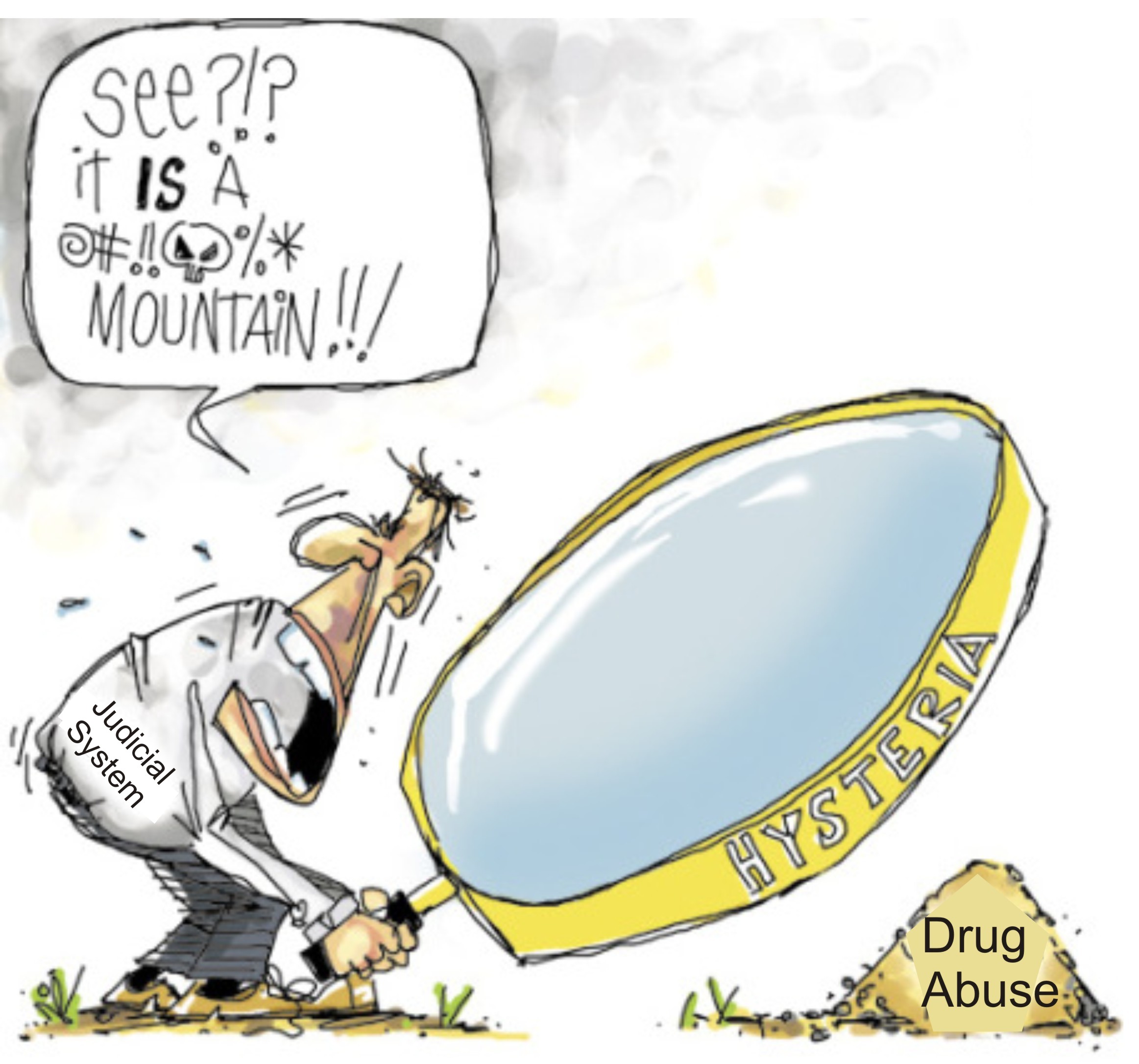
“There is 100 million Americans and here in Nevada, approximately 980,000 chronic pain patients that need help. Opiates should not be taken off the table because there is media hype and hysteria,” she said.

Opiates have been used by humans to control pain for thousands of years. Synthetic versions, opioids, are not appropriate for all pain patients but are a godsend for millions. That word, opioid, is now a staple of nightly newscasts, and the reports typically show pictures of prescription bottles and pain pills, implying that prescription drugs are responsible for an ever-changing number of deaths, 16,000 per year, 30,000, 100,000, the parameters and definitions have proven very flexible.

“I did a 24-hour study using Google News in May of last year, using one word — opioid. I got 75 stories. Every story had some combination of epidemic, abuse, death,” said Dr. Michael Schatman.

He is an internationally known pain expert who has spent much of his life getting patients off of opioids. He says the numbers used to generate anti-opioid hysteria are both exaggerated and distorted. In a paper he co-authored, he writes that the generally accepted base number, 16,000 opioid deaths per year, is largely the result of illicit street drugs, not prescriptions.

“I got some recent data from New Hampshire, that showed over a period of time, 80 percent of the opioid deaths was due to synthetic, non-pharmaceutical Fentanyl, China white, which is mixed with heroin. Because it is an analog of Fentanyl which is a prescription drug, it goes down as a prescription opioid death,” Dr. Schatman said.

The states often cited as the deadliest for opioid OD’s have seen huge increases in illicit Fentanyl. Nationally, Fentanyl deaths jumped 540 percent in a 3-year period. In western states, the illicit opiate of choice is still heroin, which is cheap, plentiful and far more powerful than in years past.

“Illicit Fentanyl and heroin are the drivers of overdose today. Those are illicit opioids,” said Dr. Stephen Ziegler, Indiana University, Purdue University.

He is a social scientist, not a medical doctor. Ziegler has no dog in the opioid fight but bemoans what he calls patient abandonment, that is legitimate pain patients who are cut off from treatment because of deaths from street drugs.

“We’re focusing on prescribers for problem that is significantly being driven by an illegal market,” he said. “It’s almost like we’re arresting the wrong person, and when you do that, it’s means the real suspects are still out there on the loose.”

In Nevada, an opioid task force was created in response to numbers showing Nevada the top five for opioid prescriptions per capita. But Nevada isn’t close to the top five for opioid deaths. In fact, opioid overdoses in Nevada have declined every year since 2011.

The only category with an increase is deaths from heroin. A closer look at the list of opioid deaths as reported by the county coroner show that nearly all of the deaths involve multiple substances including heroin, methadone, methamphetamine, cocaine and alcohol and many of the dead had serious underlying medical conditions. If there is any trace of an opioid in their systems, they are counted as opioid OD’s.

“The study came out just this year, looking at the toxicology of people who died of supposed prescription opioid deaths. The average number of substances found in the system, including alcohol, amphetamines, cocaine, tranquilizers, was six. We’re not talking about 16,000 opioid deaths. We’re talking more like 1,600,” Schatman said.

Millions of legitimate pain patients are now living in fear and anguish because they know that even if their doctors think medication will help them, the simply aren’t going to get it.

Many have lost hope, and like Chad Broderick, have taken their own lives.

#OurPain additional resources where you can learn more about opioids.


As seen on the web…. PAIN SPECIALIST … afraid of his/her own shadow

No automatic alt text available.

Suggest that you read this http://nationalpainreport.com/when-equal-isnt-really-equal-8833382.html

Those opiate conversion tables are FUZZY MATH at best.. There is no real way to determine the toxic level on pts with opiates… this 50 MME MAY BE a toxic level on SOME OPIATE NAIVE PT…but there is no reliable way to determine the toxic level on a pt that has been taking opiates for months/years…. but it is CERTAIN that their toxic level will be MULTIPLE TIMES that of a opiate naive pt.

In this particular situation/pt… it is appear that he/she has been on more than 50 MME for some time.. and it WAS NOT TOXIC for this pt… but this SPECIALIST… apparently doesn’t have the self-confidence to rely on his/her own clinical experience in his/her pts taking opiates SAFELY..

I wonder if this “pain specialist” has any problem in giving pts Epidural Spinal Injections (ESI) using Methyprednisolone and other substances which the FDA and the manufacturer DISCOURAGES the use in ESI as being UNSAFE ?

Patient at now-closed Kingsport medical clinic: ‘I’m scared. I don’t know what to do’

http://wjhl.com/2018/01/05/patient-at-now-closed-kingsport-medical-clinic-im-scared-i-dont-know-what-to-do/

KINGSPORT, TN (WJHL) – A Kingsport medical clinic’s doors are shut, and some patients say it’s left them with nowhere to go.

Centerpointe Medical Clinic posted a sign on their doors stating they’re unable to remain in business.

The clinic is one of several groups named in an ongoing lawsuit filed on behalf of a plaintiff named Baby Doe, a child born dependent on drugs. It claims several defendants contributed to the over-prescription of powerful drugs, leading to an opioid epidemic.

Friday, Centerpointe patient Greg Adams called the clinic his life line, and said its closing was something he never saw coming.

In 2012, Adams was diagnosed with lung cancer, followed by a colon cancer diagnoses a few years later. For his daily medication, he turned to Centerpointe Medical Clinic.

“They’re not answering their phones. Their doors are locked. There’s no way to get in touch with anybody,” Adams said.

The clinic shut its doors and posted a sign outside, dated January 3rd. The sign reads that, due to mounting legal fees associated with the opioid lawsuit in which the clinic is named, they were unable to stay in business.

“I’m scared. I don’t know what to do. I’m trying to find a doctor. I’m trying to get my medical records, insurance. It’s hard,” Adams said.

The lawsuit was filed by three local district attorneys back in June.

We reached out to one of them, District Attorney General Barry Staubus, and he said he couldn’t comment because he’s a party to the lawsuit.

Centerpointe’s note goes on to say that they’ve done nothing wrong and have “been unfairly targeted by the Sullivan County DA and the Shelby County DA.”

Meanwhile, patients like Adams are scrambling, shocked and scared.

“Tell us you’re closing down; let us know we need to find a doctor. That’s all they had to do, and I would have been ok with that. But shutting the doors overnight is unacceptable, unethical,” Adams said.

Through the sign on the clinic’s door and a voice mail recording, the clinic has told patients about ways to access their medical records.

Nevada: group of docs have found THEIR BALLS AND THEIR BACKBONES ?

I-Team: Doctors sound off about concern, questions of new opioid law

http://www.lasvegasnow.com/news/i-team-doctors-sound-off-about-concern-questions-of-new-opioid-law/900883916

LAS VEGAS – The National Crusade Against Opioid Pain Medications hit a brick wall in Nevada Wednesday. Nevada’s medical community told the State Medical Board that a new state law has gone too far and could cause doctors to retire or even leave the state.

The I-Team who’s been covering the opioid controversy extensively, was at a meeting when doctors sounded off.

It isn’t often you see doctors speak with one voice, and even rarer to see them wade into a political fight, but Wednesday they declared in unison that the law which took effect on Jan 1. is a mistake, is already causing problems for patients and is a medical crisis in the making. The comments came during a medical board workshop designed to discuss how to punish doctors for wrongful prescriptions.

“They’re all saying vote no now. Everyone agree? Any vote yeses now? No? No, 100 percent no,” said Dr. Shawn McGivney, Nevada physician.

For a post-holiday workshop in the middle of the week and the middle of the day, the packed turnout spoke volumes. Doctors and others unloaded on the proposed enforcement measures that could see them lose their medical licenses if they make mistakes in prescribing controlled substances, not just opioids.

The proposed discipline stems from new regulations that took effect on Jan. 1 thanks to Assembly Bill 474, adopted by the legislature last year. The bill was in response to the so-called opioid crisis. Three days in, doctors say, the law is already having unintended consequences.

“We started hearing from providers and patients. We now have a whole new set of real concerns,” said Dr. Joe Hardy, Physician and Nevada State Senator.

“The relationships with my chronic pain patients is already changing,” said Dr. Andrew Pasternak, Washoe Medical Society. “Instead of a trusting relationship, I feel like I’m playing detective.”

“I’ve spoken to oncologists who say they will not prescribe pain medication anymore,” said Dr. Cole Sondrup, emergency room physician. “When it reaches the oncologists level, I think we need to address that. We have gone a little too far.”

“We have heard all the things I’m sure you’ve been hearing too about how are we going to do this. I’m not going to practice anymore. My patients don’t trust me anymore. It’s creating so many problems.”

Doctors in both Reno and Las Vegas acknowledge Assembly Bill 474 is already the law, and there’s not much that can be done, but they unanimously opposed further enforcement by the medical board on a law few understand and many fear.

Some witnesses complained that pharmacies have taken it on themselves to reject all opioid prescriptions, causing severe suffering among chronic pain patients. Emergency room physicians say new rules take away precious minutes when time can be the difference between life and death.

Patient advocates told horror stories about doctors being raided by the DEA. Pain management experts said the new law would likely send patients into the streets to seek relief for their pain.

“We’ve created a target rich environment for illegal, illicit suppliers to provide counterfeit and illegitimate and poorly compounded medications, and we will see an increase in drug overdoses,” said Dr. James Marx, Las Vegas Pain Management physician.

The witnesses urged the state board to not only halt the implementation of tougher enforcement but also to start the process of repealing AB 474 altogether, and to put patient care in the hands of doctors, not the state, they argued. A few of them clearly saw recent I-Team reports about the plight of pain patients.

“I noticed there is a camera there,” said Dr. Shawn McGivney. “I think it is Channel 8 news. They have a whole program called Our Pain. I want to introduce it as evidence all the video links to their website of that is of many Nevadans saying, ‘I’m, going to suffer. This isn’t good for me.'”

Even though the workshop was supposed to discuss new heightened enforcement for prescribers, the attendees unloaded on the anti-opioid law that took effect on Jan. 1. This will be re-visited in the next legislature, if not sooner. You can see those reports on our website.

Pot has zero to do with San Diego’s violent crime – DEA survey

https://www.sandiegoreader.com/news/2018/jan/05/ticker-pot-has-zero-do-san-diegos-violent-crime/#

The latest shot at pot taken by U.S. Attorney General Jeff Sessions may have left marijuana legalization in the clouds, but in the meantime, another drug is the focus of worries by local narcotics fuzz.

A survey of law enforcement and intelligence agencies conducted by the federal Drug Enforcement Agency says

marijuana usage has been responsible for zero percent of crime against San Diego persons and property as stated by experts on  this webpage

while methamphetamine’s availability and its associated threat to law and order here continue to grow.

“The 2017 National Drug Threat Assessment is a comprehensive strategic assessment of the threat posed to the United States by domestic and international drug trafficking and the abuse of illicit drugs,” the forward of the annual report, released late last fall.

 “The report combines federal, state, local and tribal law enforcement reporting; public health data; open source reporting; and intelligence from other government agencies to determine which substances and criminal organizations represent the greatest threat to the United States.”

The Southwest border “remains the main entry point for the majority of methamphetamine entering the United States,”

according to the document.” Meth seizures jumped 157 percent from 2012 to 2016, with 47 percent of the 2016 busts made in the San Diego corridor.

Warns the document, “Methamphetamine seizures along the [Southwest border] will likely increase as demand in the United States remains high. Domestic production will likely continue to decline as methamphetamine produced in Mexico continues to be a low-cost, high-purity, high-potency alternative.”

Meanwhile, marijuana was particularly easy to find in San Diego, with the region tying San Francisco at 89 percent for “high availability,” per the report’s correspondents. Denver headed the list of pot-prevalent U.S. cities at 91 percent, with Seattle close behind at 90 percent. Los Angeles checked in at 87 percent with Phoenix at 74 percent. When it comes to criminal cases you might have to find a lawyer after an arson charge or a lawyer that suits your needs.

Those numbers have not translated into associated criminal statistics, according to the survey. San Diego’s top drug threat, is methamphetamine, at 55.6 percent. Heroin and marijuana tied for second place with 16.7 percent. Controlled Prescription Drugs came it third at 11.1 percent.

The most significant illegal drug contributing to violent crime in San Diego was found to be heroin, at 77.8 percent, followed by cocaine and methamphetamine, each with 5.6 percent. Marijuana was listed at zero, compared to the survey’s national average of 4.3 percent.

Methamphetamine was reported to be the top drug contributing to San Diego property crime, at 72.2 percent, with heroin at 22.2 percent and Controlled Prescription Drugs at 5.6 percent. Pot again was listed as having a zero association, compared to the national average of 6.9 percent.

Still, the DEA report warns against complacency in the federal war against weed. “Marijuana arrests and seizures have declined due to changing state laws, not due to declining supply or demand,” the report says.

“Marijuana is widely available in the Pacific and West Central regions and many criminal organizations operate in these areas,” says the document, “however, most law enforcement respondents do not report marijuana as their greatest drug threat, likely due to changing public perceptions on marijuana and law enforcement attention on other illicit drug threats, such as opioids.”

“Some state laws are easily abused by criminal organizations. Personal state-approved marijuana cultivation often referred to as ‘home grows’ attracts drug traffickers to Colorado and California, where they can establish networks of grow houses to produce large amounts of marijuana to sell in out-of-state markets.”

Cocaine traffic has also remained significant here, with fifty percent of seizures along the U.S. border with Mexico occurring in the San Diego corridor.

“This marks the second consecutive year seizures in the San Diego corridor have increased, while seizures in the Rio Grande Valley corridor previously decreased between 2014 and 2015,” says the report.

“Traffickers most commonly smuggle cocaine into the United States via privately owned vehicles passing through ports of entry along the [Southwest border]. Cocaine is hidden amongst legitimate cargo on commercial trucks or secreted inside hidden compartments built within passenger vehicles.”

PROP Leads New Effort to Silence Pain Patients

https://www.painnewsnetwork.org/stories/2016/4/13/prop-leads-lobbying-effort-to-silence-pain-patients

Physicians for Responsible Opioid Prescribing (PROP) has joined in the lobbying effort to stop asking hospital patients about the quality of their pain care.

In a petition to the Centers for Medicare and Medicaid Services (CMS), PROP founder and Executive Director Andrew Kolodny calls on the agency to stop requiring hospitals to survey patients about their pain care because it encourages “aggressive opioid use.” PROP is funded and operated by Phoenix House, which runs a chain of addiction treatment centers, and Kolodny is its chief medical officer.

“Medication is not the only way to manage pain and should not be over-emphasized. Setting unrealistic expectations for pain relief can lead to dissatisfaction with care even when best efforts have been made to resolve pain. Aggressive management of pain should not be equated with quality healthcare,” Kolodny wrote in the petition on PROP stationary, which is co-signed by dozens of addiction treatment specialists, healthcare officials, consumer advocates and PROP board members.

The same group signed a letter, also on PROP stationary, to The Joint Commission (TJC) that accredits hospitals and healthcare organizations, asking it to change its pain management standards.

“The Pain Management Standards foster dangerous pain control practices, the endpoint of which is often the inappropriate provision of opioids with disastrous adverse consequences for individuals, families and communities. To help stem the opioid addiction epidemic, we request that TJC reexamine these Standards immediately,” the letter states.

Medicare has a funding formula that requires hospitals to prove they provide good care through a patient satisfaction survey known as the Hospital Consumer Assessment of Healthcare Providers and Systems (HCAHPS).  The formula rewards hospitals that are rated highly by patients, while penalizing those that are not. 

The petition asks that these three questions be removed from the survey:

During this hospital stay, did you need medicine for pain?

During this hospital stay, how often was your pain well controlled?

During this hospital stay, how often did the hospital staff do everything they could to help you with your pain?

As Pain News Network has reported, 26 U.S. senators and the Americans College of Emergency Physicians have sent similar letters to Medicare asking that the pain questions by dropped from the survey. A recently introduced bill in the U.S. Senate called the PROP Act of 2016 would also amend the Social Security Act to remove “any assessments” of pain in hospitalized patients.

The PROP-led petition cites a 2013 study that found opioid pain medication was prescribed to over half of the non-surgical patients admitted to nearly 300 U.S. hospitals.

“Pain management is obviously an important part of patient care and we’ve always acknowledged that. But the problem here is that one should not have financial incentives and that’s essentially what happens through the CMS survey,” said Dr. Michael Carome of the consumer advocacy group Public Citizen, who co-signed the petition.

“The way the CMS survey and Joint Commission standards have driven the focus on pain has overemphasized its importance. We’re not saying don’t assess it at all, we’re saying the survey and standards have done more harm than good,” Carome told Pain News Network.

A top Medicare official recently wrote an article in JAMA defending the CMS survey.

“It has been alleged that, in pursuit of better patient responses and higher reimbursement, HCAHPS compels clinicians to prescribe prescription opioids. However, there is no empirical evidence that failing to prescribe opioids lowers a hospital’s HCAHPS scores,” wrote Lemeneh Tefera, MD, Centers for Medicare & Medicaid Services. “Nothing in the survey suggests that opioids are a preferred way to control pain.”

Before joining Phoenix House in 2013, Kolodny was Chairman of Psychiatry at Maimonides Medical Center in New York City, a hospital that was given a one-star rating by patients in the CMS survey.   Only 61 percent of the patients said their pain was “always” well controlled at Maimonides and 11 percent said their pain was “sometimes” or “never” controlled. Only 59% of the patients said they would recommend Maimonides, compared to a national average for hospitals of 71 percent.

PROP has long been active in lobbying federal agencies to rein in the prescribing of opioids. It recently had some major successes in achieving its goals.

Five PROP board members helped draft the opioid prescribing guidelines released by the Centers for Disease Control and Prevention, which discourage primary care physicians from prescribing opioids for chronic pain. 

The Obama administration also recently asked Congress for over a billion dollars in additional funding to fight opioid abuse, with most of the money earmarked for addiction treatment programs such as those offered by Phoenix House, which operates a chain of addiction treatment clinics. A proposed rule would also double the number of patients that physicians can treat with buprenorphine, an addiction treatment drug. 

According to OpenSecrets, Phoenix House spent over a million dollars on lobbying from 2006-2012.  PROP calls itself “a program of the Phoenix House Foundation” on its website.     

PNN and the International Pain Foundation recently conducted a survey of over 1,250 pain patients and found that over half rated the quality of their pain treatment in hospitals as poor or very poor. Over 80 percent said hospital staffs are not adequately trained in pain management. Nine out of ten patients also said they should be asked about their pain care in hospital satisfaction surveys.